Mastering the Human Connection Paradox in the Age of AI
The modern consumer landscape is defined by a profound and compelling tension, a phenomenon we’re calling the Human Connection Paradox. It’s a reality where technological advancement, primarily in artificial intelligence, has become an undeniable force in shaping purchasing decisions, yet simultaneously, a deep, almost primal yearning for authentic human interaction is growing stronger than ever. Brands navigating this intricate ecosystem are grappling with a fundamental challenge: how to leverage the unparalleled efficiency and insight of AI without alienating a customer base increasingly starved for genuine connection and transparency. This paradox isn't merely a fleeting trend; it’s a foundational shift that demands a strategic re-evaluation for any brand aiming to thrive by 2026.
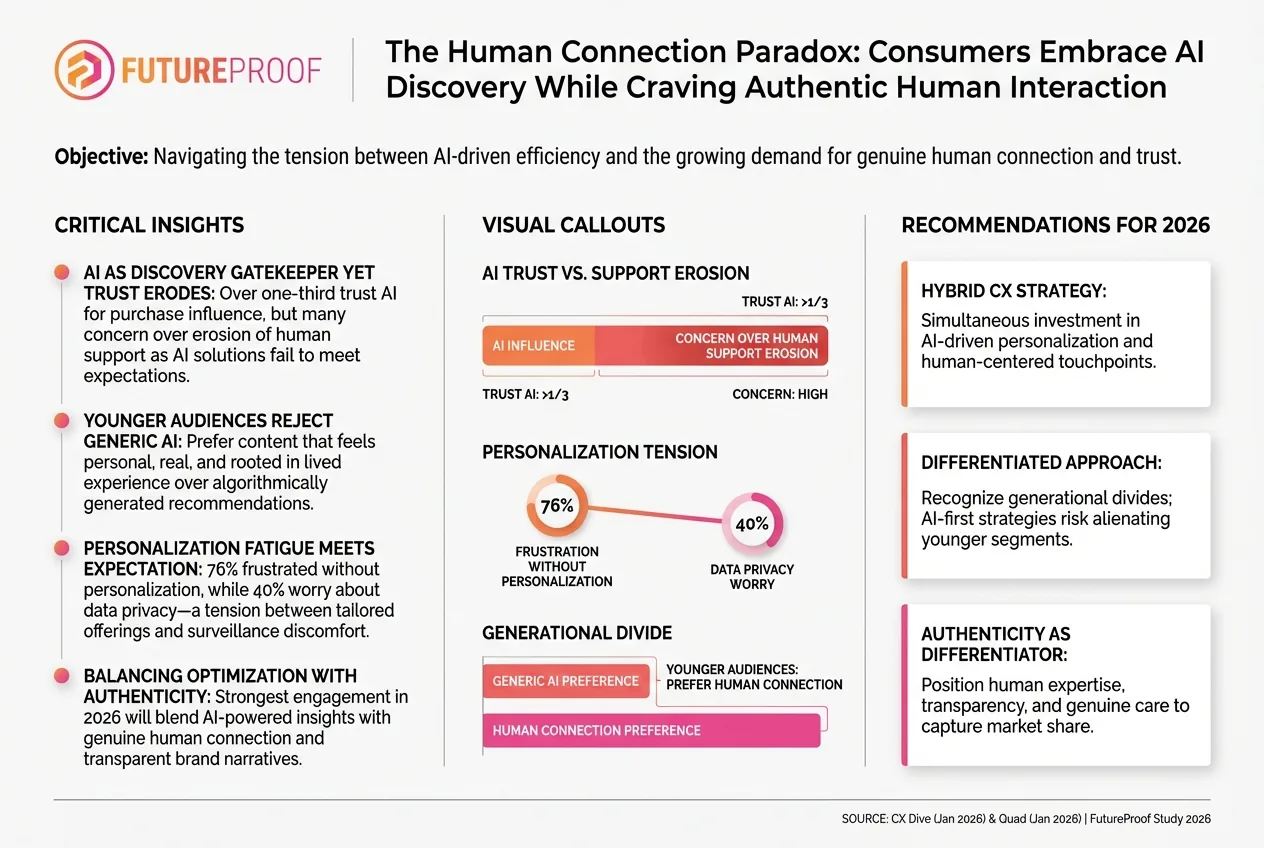
At the heart of this paradox lies the indisputable rise of AI as a primary discovery gatekeeper. We are living in an era where over one-third of consumers now trust AI to influence their purchases, a statistic that underscores the pervasive impact of algorithms on everything from product recommendations to content consumption. AI-powered search engines, personalized feeds, intelligent assistants, and data-driven e-commerce platforms have become the default navigators of our digital lives. They streamline choices, anticipate needs, and offer a level of convenience and customization that was unimaginable just a decade ago. For brands, this represents an enormous opportunity to scale personalization, optimize targeting, and unlock efficiencies across the entire customer journey. AI excels at processing vast datasets to identify patterns, predict future behaviors, and deliver hyper-relevant experiences at a scale human teams simply cannot match. This capability allows for more precise market segmentation, dynamic pricing strategies, and tailored content delivery, theoretically leading to higher engagement and conversion rates. Yet, beneath this veneer of technological prowess, a significant unease brews.
The very efficiency and automation that AI champions have given rise to growing concerns about the erosion of human support. As automated solutions become more prevalent across customer service, sales, and even marketing, many consumers report a palpable frustration when these systems fail to meet their expectations. Generic, scripted chatbot responses, the inability to connect with a human agent for complex issues, and the sheer impersonality of some AI interactions leave customers feeling unheard and undervalued. The promise of seamless self-service often devolves into a labyrinth of irrelevant FAQs or an endless loop of unhelpful digital assistants. This perceived loss of empathy and personalized problem-solving is driving a wedge between brands and their customers, diminishing loyalty and fostering resentment. The cold logic of algorithms, while efficient for routine tasks, often falls short when faced with nuanced human emotions, unique situations, or the simple desire for a compassionate ear.
This frustration is particularly pronounced among younger audiences, who are increasingly rejecting generic AI-driven experiences. This demographic, often perceived as digitally native and tech-savvy, is demonstrating a distinct gravitation toward content and brand interactions that feel personal and rooted in lived experience. They seek authenticity, purpose, and stories that resonate on a deeper, more human level. Unlike older generations who might prioritize efficiency above all else, Gen Z and younger millennials are often willing to trade a degree of speed for genuine connection, ethical practices, and a sense of shared values. They are drawn to creators and brands that showcase real people, real struggles, and real triumphs, rather than slick, algorithmically optimized campaigns that feel manufactured. This shift highlights a crucial insight: while AI can facilitate discovery, it often struggles to forge the emotional bonds that drive true brand affinity and long-term loyalty. The quest for "realness" in an increasingly artificial world is becoming a powerful differentiator.
Adding another layer of complexity to this paradox is the inherent tension between personalization and privacy. The data confirms this tightrope walk: 76 percent of consumers feel frustrated without personalization, craving experiences tailored to their individual preferences and needs. They expect brands to remember their past purchases, anticipate their next desires, and offer relevant suggestions. Yet, simultaneously, a significant 40 percent worry about data privacy, expressing unease about how their personal information is collected, stored, and utilized. This creates a challenging dilemma for brands: how can they deliver the highly personalized experiences consumers demand without crossing the invisible line into perceived intrusion or surveillance? The pursuit of hyper-personalization, if not executed with extreme care and transparency, can erode trust and lead to consumer backlash. Brands must navigate a delicate balance, providing value through tailored interactions while respecting individual boundaries and safeguarding sensitive data. The specter of data breaches, coupled with evolving privacy regulations like GDPR and CCPA, further amplifies this concern, making trust the ultimate currency in the digital age.
The solution to winning in 2026 is clear, yet multifaceted: brands must embrace a hybrid strategy that seamlessly blends AI-powered insights with authentic human connection and transparent storytelling. This isn’t about choosing one over the other, but rather about intelligently integrating both to create a synergistic customer experience that leverages the strengths of each. The core message emanating from market insights is unequivocal: consumers trust AI for discovery while simultaneously expressing concern about reduced human support, and younger audiences are increasingly seeking deeper human connection (CX Dive, Quad). This confluence of desires necessitates a strategic pivot towards a more balanced, empathetic, and data-informed approach.
The first pillar of this hybrid strategy involves harnessing AI-powered insights as the foundational engine for understanding and optimization. AI should be viewed not as a replacement for human interaction, but as an incredibly powerful augmentation tool. Its ability to analyze vast amounts of customer data can uncover crucial trends, predict future needs, and segment audiences with unprecedented precision. For instance, AI can identify patterns in browsing behavior, purchase history, and even sentiment analysis from customer interactions to inform more effective product development, targeted marketing campaigns, and proactive customer service. Brands can use AI to personalize recommendations at scale, optimize pricing strategies in real-time, and streamline operational efficiencies by automating repetitive tasks. In an SEO context, AI is invaluable for understanding complex search intent, identifying emerging keyword trends, and optimizing content for conversational search, ensuring brands remain discoverable on platforms where AI acts as the primary gatekeeper. This intelligent application of AI allows brands to be more responsive, relevant, and efficient, ensuring that when human intervention is required, it is informed, precise, and impactful.
The second, equally critical pillar is the cultivation of authentic human connection at pivotal touchpoints along the customer journey. While AI can handle the mundane, humans must excel at the meaningful. This means strategically identifying those moments where empathy, nuanced problem-solving, creative thinking, and genuine relationship-building are paramount. Think complex customer service issues that require a compassionate ear, high-stakes sales conversations that demand trust and rapport, or community engagement initiatives that foster a sense of belonging. Brands must empower their human teams with the insights gleaned from AI, enabling them to offer truly personalized and informed support, rather than generic responses. This hybrid approach allows human agents to focus on high-value interactions, leveraging AI to quickly access relevant customer history and context, transforming potentially frustrating experiences into opportunities for deep connection. Investing in training that emphasizes emotional intelligence, active listening, and problem-solving skills for human teams becomes paramount. Creating physical and virtual spaces for genuine interaction, whether through live events, moderated online communities, or personalized one-on-one outreach, can help bridge the gap created by pervasive automation, satisfying the younger audience's craving for "lived experience" and realness.
The third and perhaps most crucial pillar binding the entire hybrid strategy together is transparent storytelling. In an era rife with data privacy concerns, brands must be upfront and clear about how they are using AI and customer data. This means articulating privacy policies in plain language, explaining the benefits of personalization without being intrusive, and giving consumers meaningful control over their data. Beyond data, transparent storytelling extends to how brands communicate their values, purpose, and the human elements behind their operations. Authentic marketing narratives that showcase real people, real challenges, and the brand’s genuine commitment to its mission can build profound trust. This could involve sharing behind-the-scenes glimpses of product development, highlighting employee stories, or demonstrating tangible social impact. When a brand clearly articulates its "why" and backs it up with actions, it resonates deeply with consumers seeking authenticity and purpose. This transparency not only addresses data privacy concerns but also fuels the desire for genuine connection, fostering a bond built on honesty and mutual respect.
Implementing this hybrid model requires a strategic and iterative approach. Brands must begin by auditing their current customer experience, identifying where AI is effectively enhancing efficiency and where the lack of human connection is causing friction. This involves mapping customer journeys and pinpointing critical touchpoints where human empathy is indispensable. Next, clear boundaries for AI's role versus human intervention need to be established, ensuring that automation frees up human capacity rather than replacing essential interactions. Significant investment in human capital is vital, empowering employees to leverage AI insights while simultaneously honing their "human skills" – empathy, communication, and creative problem-solving. Fostering a culture of transparency, both internally and externally, will be key to building trust. Finally, brands must move beyond purely efficiency-based metrics, measuring not only AI's performance but also human sentiment, customer satisfaction (CSAT), Net Promoter Score (NPS), and the quality of human interactions through qualitative feedback. Continuous feedback loops will be essential to refine the blend, ensuring the hybrid strategy remains agile and responsive to evolving consumer expectations.
In conclusion, the Human Connection Paradox is not merely a challenge but a profound opportunity for brands willing to adapt. The tension between AI’s powerful influence on discovery and consumers' simultaneous desire for authentic human support, particularly among younger audiences, defines the competitive landscape for 2026. The brands that will emerge victorious are those that strategically embrace a hybrid approach, leveraging AI-powered insights to enhance efficiency and understanding, while deliberately fostering genuine human connection at critical junctures. By combining advanced technology with transparent storytelling and an unwavering commitment to human empathy, brands can build stronger relationships, cultivate deeper loyalty, and create experiences that are both seamlessly intelligent and profoundly human. The future of brand success hinges on mastering this delicate dance between silicon and soul, recognizing that while AI can open doors to discovery, it is authentic human connection that truly builds lasting trust. As the data consistently shows, consumers trust AI for discovery while simultaneously expressing concern about reduced human support, and younger audiences are increasingly seeking deeper human connection – a truth underscored by insights from CX Dive and Quad, shaping the imperative for a human-AI integrated future.