The Future of Shopping Is a Single Conversation Powered by AI
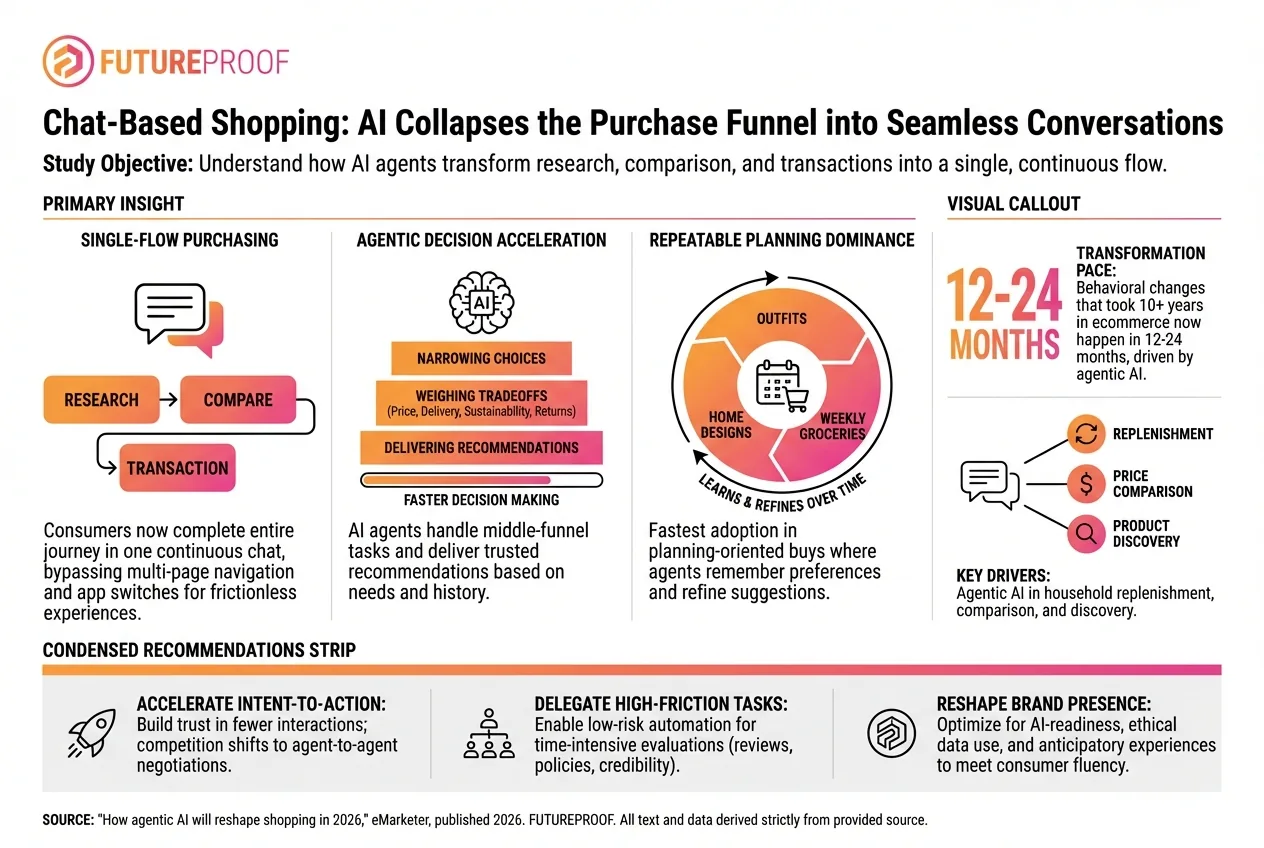
The landscape of online shopping is undergoing a seismic shift, fundamentally altering how consumers discover, evaluate, and acquire products. At the heart of this revolution is chat-based shopping, an innovative paradigm where artificial intelligence agents are rapidly collapsing the traditional multi-step purchase funnel into a single, fluid conversational flow. This isn't just about convenience; it's a complete re-imagination of the customer journey, moving from a fragmented, click-driven process to an intuitive, dialogue-based experience where research, comparison, and purchase converge seamlessly. Consumers are no longer navigating endless product pages, opening multiple browser tabs for reviews, or manually sifting through options; instead, they are engaging in dynamic conversations with sophisticated AI that understands their needs, remembers their preferences, and guides them directly to the ideal solution.
This profound transformation is most strikingly visible in what can be termed "planning-based purchases." Think about the intricate process of assembling an outfit for a specific occasion, designing a room from scratch, selecting the perfect gift for a discerning friend, or even curating a weekly grocery list that aligns with dietary needs and family preferences. Historically, these tasks involved significant cognitive load, requiring users to synthesize information from various sources, compare countless options, and make nuanced decisions. Now, AI agents are stepping into this role, acting as personal concierges that not only understand immediate requests but also learn and evolve over time. These intelligent assistants recall past interactions, deduce emerging patterns in consumer behavior, and proactively offer improved recommendations, anticipating desires before they are explicitly articulated. The AI doesn't just process data; it builds a relationship, becoming an indispensable partner in the purchasing journey, thereby fostering a level of personalization previously unimaginable in mass-market retail.
For brands, the implications of this shift are immediate and far-reaching. The advent of AI agents fundamentally redefines where value is created and trust is earned in the purchasing process. Traditionally, brands invested heavily in middle-funnel activities: detailed product descriptions, persuasive ad copy, comparison charts, customer reviews, and engaging content designed to educate and convince a prospective buyer. These were the touchpoints where consumers would weigh tradeoffs, filter options based on specific criteria, and ultimately narrow down their choices. With AI agents now handling much of this intricate middle-funnel decision work, from evaluating product specifications against user requirements to presenting curated selections, brands face unprecedented pressure. The opportunity to build trust through prolonged engagement or extensive informational content is diminishing. Instead, trust must be established much earlier, often at the point of initial interaction with the AI, or through the inherent quality and reputation embedded within the product data that the AI agent accesses. Brands must ensure their core value proposition, their unique selling points, and their commitment to quality are not just compelling, but also digestible and verifiable by an intelligent agent operating on behalf of the consumer.
The imperative for brands extends beyond merely conveying value; it now encompasses an urgent need for "AI readiness." This means that product data, pricing information, inventory levels, customer service protocols, and brand narratives must all be structured, organized, and optimized for consumption by artificial intelligence. Disorganized or inconsistent data will hinder AI agents from effectively representing a brand's offerings, potentially leading to missed opportunities or, worse, misrepresentations to the end consumer. Brands must invest in robust data architectures that allow AI to seamlessly access, interpret, and leverage accurate, up-to-date information. This isn't just about having an e-commerce website; it's about having an "AI-native" presence, where every piece of information is designed to inform, persuade, and facilitate decisions through an intelligent conversational interface. The focus shifts from optimizing for human-readable web pages to optimizing for AI-interpretable data streams.
The pace of this retail transformation is perhaps the most astonishing aspect. Changes that once unfolded over a decade are now compressing into a mere 12 to 24 months. The foundational shifts that defined early e-commerce – the transition from brick-and-mortar to online storefronts, the gradual adoption of digital payments, the evolution of search engine optimization – were incremental, often taking 10 or more years to fully embed into mainstream consumer behavior. However, the current wave driven by agentic AI is accelerating at an unprecedented velocity. As eMarketer highlights, "Consumer behavior shifts that took 10 plus years during early ecommerce are now occurring in 12 to 24 months as agentic AI transforms replenishment, price comparison, and discovery." This rapid acceleration is not merely a technological upgrade; it's a fundamental rewiring of consumer psychology and market dynamics. AI's ability to learn, adapt, and scale across millions of users simultaneously means that new shopping paradigms are becoming mainstream with startling speed. Whether it's automated replenishment services anticipating needs before stock runs low, AI-powered agents negotiating the best prices in real-time, or personalized discovery algorithms unearthing novel products tailored to individual tastes, the entire purchasing ecosystem is being reshaped at warp speed.
This swift evolution demands an equally agile response from brands. Those who hesitate risk being left behind in a new retail landscape dominated by conversational commerce. The traditional marketing funnel, with its distinct stages of awareness, interest, desire, and action, is no longer a linear path but a dense, interconnected web where AI acts as the primary orchestrator. Brands must rethink their entire customer acquisition and retention strategies, focusing on how their products and services are presented, understood, and recommended by AI agents. This includes ensuring brand messaging is clear, concise, and trustworthy, enabling AI to articulate value effectively. It means investing in digital assets that are not just visually appealing but also semantically rich, providing AI with the context it needs to make intelligent recommendations. Moreover, the emphasis on a seamless, frictionless purchase experience becomes paramount, as AI agents are designed to guide consumers to completion with minimal effort.
In essence, chat-based shopping and AI agents are not just another technological advancement; they represent a foundational paradigm shift in commerce. They are creating a world where the act of shopping becomes an intimate, personalized conversation, collapsing decades of e-commerce evolution into a few short years. For consumers, this means unparalleled convenience, hyper-personalization, and a dramatically simplified path to purchase. For brands, it signals an immediate call to action: to adapt, innovate, and prepare for a future where their success will hinge on their ability to build trust, provide AI-ready data, and integrate seamlessly into the intelligent conversational flows that now define the cutting edge of retail. The future of shopping is here, and it’s talking to us.