The Rise of Conversational Commerce Transforming the Future of Retail
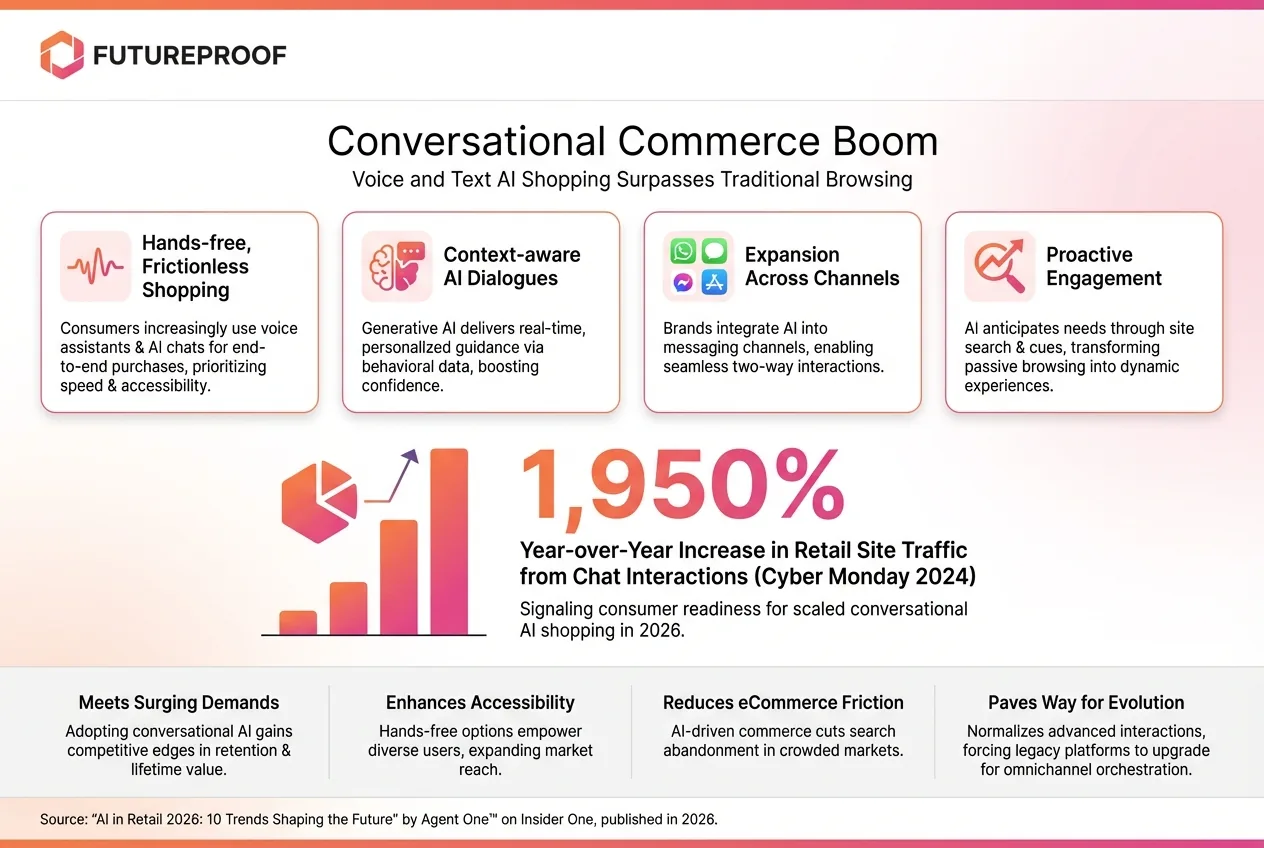
The landscape of retail is undergoing a profound transformation, driven by an accelerating shift towards conversational commerce. Shoppers are increasingly embracing the power and convenience of voice and text AI for their end-to-end purchasing journeys, signaling a new era where frictionless, hands-free interactions dictate the consumer experience. This isn't merely a passing trend; it's a fundamental recalibration of how people discover products, make informed decisions, and receive essential post-sale support. Brands that are quick to integrate sophisticated conversational AI across crucial channels like WhatsApp, Messenger, and their own mobile applications are not just adapting, they are thriving, consistently reporting tangible benefits such as significantly lower bounce rates and demonstrably higher order values. The days of reactive customer service are swiftly fading, replaced by a proactive, context-aware engagement model that is not just reshaping purchasing habits but also redefining the very essence of retail competition. This innovative approach ensures that every interaction is personalized, efficient, and ultimately, more valuable for both the consumer and the business.
The rapid ascendancy of conversational AI in retail isn't an arbitrary phenomenon; it’s a direct response to evolving consumer expectations for speed, convenience, and personalization. In a world where time is a premium, the ability to interact with a brand via natural language, whether spoken or typed, removes layers of friction inherent in traditional shopping models. Imagine effortlessly asking a virtual assistant to find a specific product, compare its features with alternatives, check its availability, and even complete the purchase, all without navigating complex websites or filling out tedious forms. This hands-free, intuitive interaction mirrors human conversation, making the shopping experience feel less like a transaction and more like a helpful dialogue. The underlying AI technology goes beyond simple keyword recognition; it leverages advanced natural language processing (NLP) to understand intent, context, and even sentiment, allowing for a much richer and more effective engagement. This profound shift resonates particularly well with modern consumers who are accustomed to instant gratification and expect brands to meet them wherever they are, on whichever platform they prefer. From initial product discovery, where AI can suggest items based on past purchases or expressed interests, to the complex decision-making process, offering real-time comparisons and reviews, all the way through to seamless post-purchase support, handling returns, tracking orders, or answering FAQs – conversational commerce streamlines every touchpoint.
The data unequivocally supports this narrative of rapid adoption and consumer readiness. A compelling illustration of this readiness comes from Adobe, which reported an astounding 1,950 percent year-over-year increase in retail site traffic originating from chat interactions during 2024 Cyber Monday. This monumental surge, as highlighted in the "AI in Retail 2026: 10 Trends Shaping the Future" report by Agent One on Insider One, serves as a powerful testament to consumers' growing comfort and preference for AI-driven shopping experiences at scale. This isn't just a minor uptick; it's a nearly twenty-fold explosion in engagement, demonstrating a clear appetite for conversational interfaces during peak shopping periods. Such a dramatic increase underscores the operational efficiency and enhanced customer satisfaction that conversational AI brings to the table, especially when handling high volumes of inquiries and transactions. For retailers, this data point is a stark reminder that neglecting conversational commerce is not just missing an opportunity, but falling behind a rapidly evolving industry standard. It proves that consumers are actively seeking out these interactions, finding value and efficiency in them, and rewarding brands that provide them with their trust and their wallets.
The competitive landscape of retail is fundamentally being reshaped by this paradigm shift. Brands that have successfully integrated conversational AI are not just improving customer experience; they are building more resilient and profitable business models. By providing always-on, instant support and personalized guidance, these brands foster deeper customer loyalty and significantly enhance engagement. When customers can quickly resolve queries or find information through a chatbot on WhatsApp, rather than waiting on hold for a call center, their satisfaction levels naturally soar. This enhanced satisfaction translates directly into reduced churn and increased repeat purchases. Moreover, the data gathered from these conversational interactions provides invaluable insights into customer preferences, pain points, and purchasing patterns, allowing brands to continuously refine their offerings and marketing strategies. This feedback loop is a goldmine for product development and personalized recommendations, ensuring that future interactions are even more relevant and effective.
The strategic implementation of conversational AI extends far beyond simple Q&A. It empowers brands to move from a purely reactive assistance model to one of proactive, context-aware engagement. Instead of waiting for a customer to encounter a problem, AI can anticipate needs, offer timely suggestions, and even preemptively address potential issues. For instance, if a customer frequently browses a particular category, an AI assistant can proactively notify them about new arrivals or relevant promotions. If an item is in their cart but they haven't checked out, the AI can offer assistance or clarify details, nudging them towards completion. This proactive approach feels less like selling and more like helpful guidance, building trust and strengthening the customer-brand relationship. The contextual awareness of these AI systems is critical; they remember past interactions, preferences, and purchase history, ensuring that every conversation builds upon previous ones, creating a seamless and highly personalized journey. This depth of understanding transforms a transactional interaction into a relationship-building dialogue, elevating the overall brand perception and customer lifetime value.
The practical applications of conversational commerce are vast and continue to expand. Within mobile apps, AI chatbots provide immediate in-app support, guiding users through features, troubleshooting issues, or facilitating purchases without forcing them to leave the application. On messaging platforms like WhatsApp and Messenger, which boast billions of users globally, conversational AI enables brands to meet customers where they already spend their time. This means order tracking, personalized product recommendations, appointment scheduling, and even payment processing can all happen within a familiar chat interface. This seamless integration into existing digital habits removes barriers to engagement and simplifies the entire customer journey. The result for businesses is a significant improvement in key performance indicators. Lower bounce rates occur because users find immediate answers and clear pathways, preventing frustration and abandonment. Higher order values are achieved through intelligent cross-selling and up-selling driven by AI’s understanding of customer preferences and purchase intent. Furthermore, the operational efficiencies gained through automating routine inquiries free up human agents to focus on more complex, high-value customer interactions, optimizing resource allocation and reducing operational costs.
Developing a robust conversational commerce strategy requires a multifaceted approach. At its core lies the sophisticated capability of Natural Language Processing (NLP), which allows AI systems to understand, interpret, and generate human language. This is not just about keyword matching; it's about comprehending the nuances of intent, sentiment, and context, enabling truly natural and intuitive conversations. Coupled with powerful personalization engines, NLP ensures that each interaction is tailored to the individual, drawing upon their past behaviors, preferences, and demographic data to offer relevant recommendations and solutions. An effective conversational commerce framework also demands an omnichannel strategy, guaranteeing a seamless transition for customers across different interaction points. Whether a customer starts a conversation on a brand's website, continues it on WhatsApp, and later follows up via a mobile app, the AI system must retain context and history, providing a unified and consistent experience. This continuity is vital for building trust and preventing customer frustration. Moreover, successful conversational AI is deeply integrated with backend systems such as Customer Relationship Management (CRM) platforms, inventory management systems, and payment gateways. This integration ensures that the AI has access to real-time information – product availability, order status, customer profiles – and can execute actions like processing payments or initiating returns directly within the conversational interface, providing a truly end-to-end service.
While AI excels at handling routine and data-driven interactions, the human element remains invaluable. A critical component of a successful conversational commerce strategy is the implementation of a human-AI hybrid model. This involves strategically designing handover protocols where the AI gracefully transitions a conversation to a live human agent when queries become too complex, require empathy, or fall outside the AI's programmed capabilities. This ensures that customers always receive the most appropriate and effective support, maintaining trust and satisfaction. The ability to seamlessly escalate to a human expert prevents frustration and ensures that complex issues are resolved efficiently, complementing the AI’s speed and scalability. Furthermore, continuous improvement is paramount, which is where robust data and analytics come into play. Brands must actively monitor conversational data, analyze interaction patterns, identify common pain points, and measure key metrics like resolution rates, customer satisfaction scores, and conversion rates. This data-driven approach allows for ongoing refinement of the AI's understanding, responses, and capabilities, ensuring that the conversational commerce platform evolves in tandem with customer needs and business objectives.
Looking ahead, the evolution of conversational commerce promises even more transformative advancements. Voice AI is set to become even more sophisticated, capable of understanding complex commands, managing multimodal interactions that combine voice with visual cues, and operating seamlessly across an expanding ecosystem of smart devices. Predictive AI will move beyond simple recommendations, anticipating customer needs even before they are explicitly articulated, offering hyper-personalized experiences that border on prescience. The integration of conversational AI with emerging technologies like Augmented Reality (AR) and Virtual Reality (VR) could create immersive shopping experiences where customers can virtually try on clothes or visualize furniture in their homes, guided by an intelligent assistant. Ethical considerations surrounding AI, particularly regarding data privacy, transparency in AI interactions, and algorithmic bias, will become increasingly critical, requiring brands to adopt responsible AI practices to maintain consumer trust. Crucially, the scalability of conversational AI means it will no longer be the exclusive domain of large enterprises; small and medium-sized businesses will increasingly leverage these technologies to compete effectively, level the playing field, and offer sophisticated customer experiences previously out of reach. The future of retail is undeniably conversational, driven by intelligent agents that empower consumers with unprecedented convenience and brands with unparalleled engagement. This isn't just about selling; it's about forging deeper, more meaningful connections in a digitally driven world. The time for brands to embrace this future is now, transforming their customer interactions into seamless, intelligent, and highly valuable dialogues that drive sustained growth and loyalty.