The Collapse of the Shopping Funnel and the Rise of Agentic Commerce
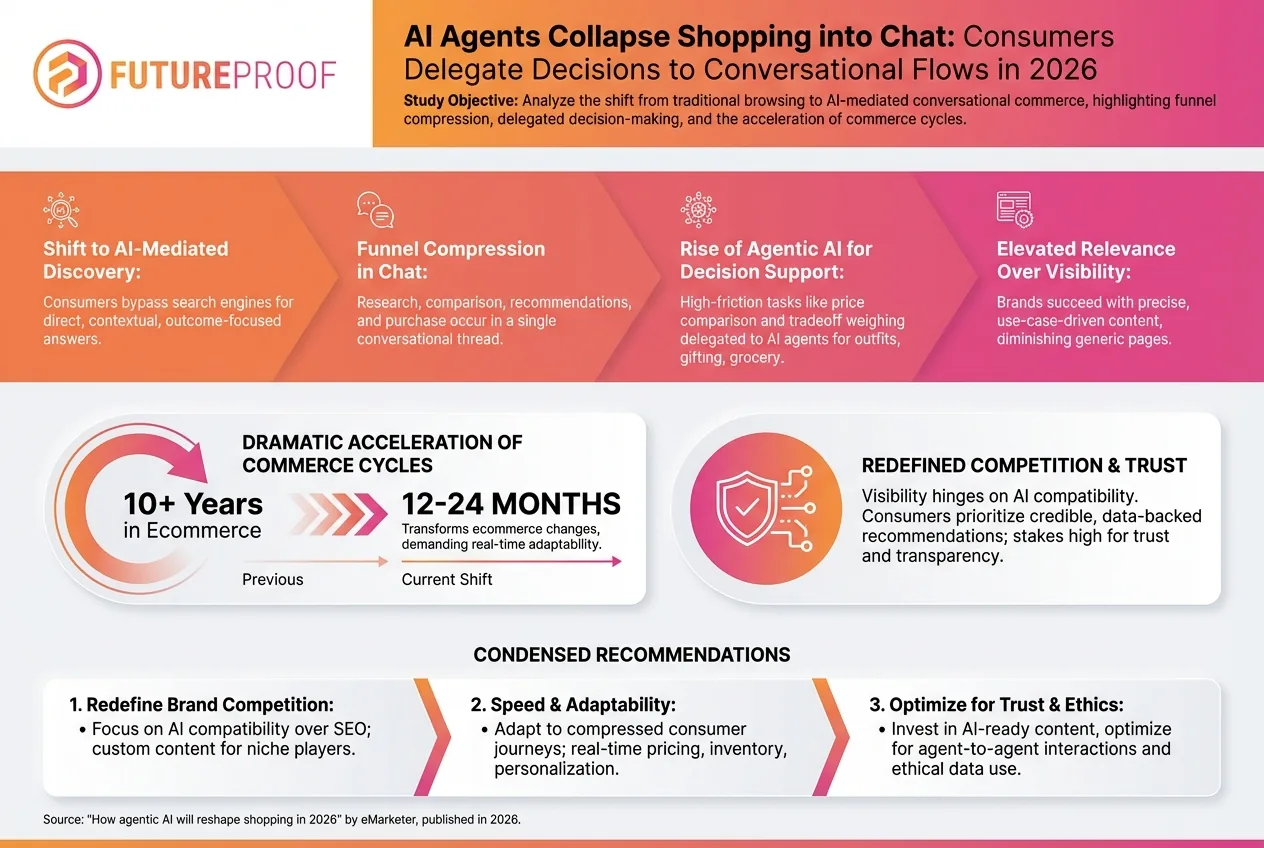
The traditional shopping journey, once a meandering path through endless aisles or countless web pages, is undergoing a rapid, fundamental transformation. We are witnessing the collapse of the shopping funnel, not just a streamlining, but a complete reimagining driven by the advent of agentic AI. Consumers are no longer content with browsing or even searching; they are bypassing these conventional steps, instead turning to sophisticated chat-based interfaces that effortlessly handle discovery, comparison, and purchase, all within a single, seamless conversational flow. This profound shift is accelerating at an unprecedented pace, promising to redefine not just how we shop, but how brands connect with their customers in an increasingly intelligent digital world.
At the heart of this revolution lies agentic AI – a class of artificial intelligence designed not just to respond, but to act. Unlike reactive chatbots or basic search algorithms, agentic AI operates with a degree of autonomy, understanding complex requests, setting goals, breaking down tasks, and executing multi-step processes to achieve a desired outcome. For shopping, this means a conversational partner capable of much more than answering FAQs or fetching direct product links. It’s an intelligent assistant that comprehends context, anticipates needs, and proactively guides the user from an initial query like "I need a gift" to a completed transaction, delivering a highly personalized and efficient experience. This isn't just automation; it's intelligent assistance that mimics the best human personal shoppers, but with instant access to vast amounts of data and the ability to execute decisions at lightning speed.
Consider the inherent friction in many common shopping tasks that agentic AI is now transforming. Planning an outfit for a specific occasion, for instance, typically involves endless scrolling through fashion sites, comparing styles, colors, and prices across multiple retailers, and trying to visualize how different pieces might come together. A gift search often devolves into a desperate scramble for ideas, trying to match interests, budget, and recipient personality, often without clear direction. Even the weekly grocery run, seemingly routine, can be a time-consuming chore of list-making, price-checking, and navigating store layouts or online categories. Agentic AI eliminates these pain points entirely. Imagine simply telling your AI agent, "I need an outfit for a casual outdoor wedding next month in Tuscany," or "Find a unique birthday gift for my sister who loves vintage cameras and has a budget of $200," or "Create a grocery list for a week of low-carb family meals, prioritizing organic produce." The agent doesn't just return search results; it understands the nuance, considers your preferences, cross-references inventory across retailers, compares prices, checks reviews, and then presents a curated selection of options, often with direct links to purchase, or even initiating the order on your behalf. The entire high-friction task collapses into a single, effortless conversational thread.
For brands navigating this rapidly evolving landscape, the implications are nothing short of monumental. The traditional metrics of broad visibility – top search rankings, extensive ad placements – are becoming less potent. In a world where AI agents are doing the heavy lifting of discovery and comparison, merely being "visible" isn't enough; relevance now hinges on providing precise, use-case-driven content that these intelligent agents can easily surface, comprehend, and recommend. An AI agent doesn't "browse" a brand's entire catalog; it retrieves the exact product or service that perfectly matches a user's highly specific, context-rich request. This necessitates a fundamental re-evaluation of content strategy. Brands must shift from generic product descriptions to rich, structured data that details every conceivable attribute, benefit, and use case. Think beyond simple keywords to semantic understanding: how does your product solve a specific problem in a particular scenario? How does it compare to alternatives? What unique value does it offer in a niche context? This level of detail, meticulously organized and transparently presented, is what makes a brand "AI-compatible."
Furthermore, trust and transparency are no longer just good business practices; they are foundational requirements for AI-driven relevance. Agentic AI relies on verifiable, accurate information to make its recommendations. If a brand's product claims are vague, inconsistent, or lack substantiation, the AI agent, designed to serve the consumer's best interest, will simply bypass it for more reliable alternatives. Brands must cultivate an unimpeachable reputation for honesty, ethical practices, and clear communication about their products' origins, ingredients, sustainability, and performance. This trust extends beyond the consumer to the AI itself, which acts as a gatekeeper. A brand that is deemed trustworthy by the AI, through consistent data quality and verifiable claims, will be prioritized and recommended. Conversely, brands that fail to adapt to these new standards of clarity and integrity risk being effectively invisible to the AI and, by extension, to the consumer.
The speed of this transformation is perhaps the most startling aspect. According to eMarketer's 2026 report, "How agentic AI will reshape shopping," this technology is not just incrementally improving e-commerce; it's reshaping the middle of the shopping funnel and compressing change cycles that once spanned a decade into as little as 12 to 24 months. This isn't a future trend to casually monitor; it's a present imperative demanding immediate, strategic action. The typical lifecycle of e-commerce innovation, from the early days of online storefronts to the rise of mobile commerce and social shopping, has historically unfolded over many years, allowing brands ample time to adapt and integrate new technologies. Agentic AI, however, is an accelerant, driven by exponential improvements in AI capabilities and rapid consumer adoption of conversational interfaces. This means brands do not have the luxury of slow, incremental adjustments. Those who hesitate risk falling irretrievably behind, losing market share to competitors who embrace and adapt to the agentic future today.
To thrive in this new retail paradigm, brands must adopt a proactive and adaptive strategy. The first step is a comprehensive audit of existing content. Is it structured for AI consumption? Does it provide the granular detail and use-case context that an agentic AI needs to make a precise recommendation? This involves moving beyond SEO for human search engines to "AIO" – AI Optimization – focusing on semantic understanding, rich metadata, and answering specific questions that an AI agent might pose on behalf of a user. Brands should invest heavily in structured data, utilizing schema markup and other technical SEO best practices to ensure their product information is easily parseable and understandable by AI systems. This means not just stating what a product is, but what it does for whom, under what circumstances, and why it's the optimal choice.
Furthermore, brands need to consider how they can directly integrate with or become a preferred source for these agentic AI platforms. This might involve developing robust APIs that allow AI agents to seamlessly access product inventories, pricing, and fulfillment capabilities. It also means thinking about your unique value proposition in an AI-driven world. If an AI agent can find similar products from multiple sources, what makes your brand stand out? Is it unparalleled quality, superior sustainability, exceptional customer service, or a truly unique product feature? These differentiators must be clearly articulated and verifiable, making them easy for an AI to identify and highlight. Developing your own brand-specific conversational interfaces, even as an overlay to external agents, can also be a strategic move, allowing you to maintain a direct relationship with the customer and ensure brand voice and values are accurately represented.
Finally, embracing transparency isn't just about ethics; it's about competitive advantage. Brands that are open about their processes, sourcing, ingredients, and even potential limitations will build deeper trust with both the AI and its users. This means being ready to provide detailed information about every aspect of your product lifecycle, verifiable claims, and a commitment to data integrity. The era of vague marketing speak is over; the agentic AI demands facts, context, and clarity. The future of shopping is here, and it’s conversational, intelligent, and incredibly fast. Brands that understand this fundamental shift, reorient their content and data strategies, and prioritize trust and AI compatibility will be the ones that not only survive but truly flourish in the agentic commerce era. The opportunity is immense, but so is the urgency.