Bridging the Trust Gap How Agentic AI and Human Reassurance Will Shape the Future of Retail
The retail landscape is undergoing a monumental shift, propelled by the accelerating integration of artificial intelligence. Far from being a mere backend tool, AI is now stepping directly into the consumer's shopping journey, with agentic AI emerging as the new frontier for competitive advantage. This isn't just about automation; it's about intelligent agents acting on behalf of consumers, researching, comparing, and streamlining the path to purchase. Yet, amidst this wave of digital evolution, a crucial human element persists: the innate desire for human validation before making a final buying decision. This delicate balance, this 'trust gap' between AI efficiency and human reassurance, is profoundly reshaping how brands must operate and show up in an increasingly AI-driven world. Understanding and effectively navigating this dynamic will distinguish the thriving brands from those left behind.
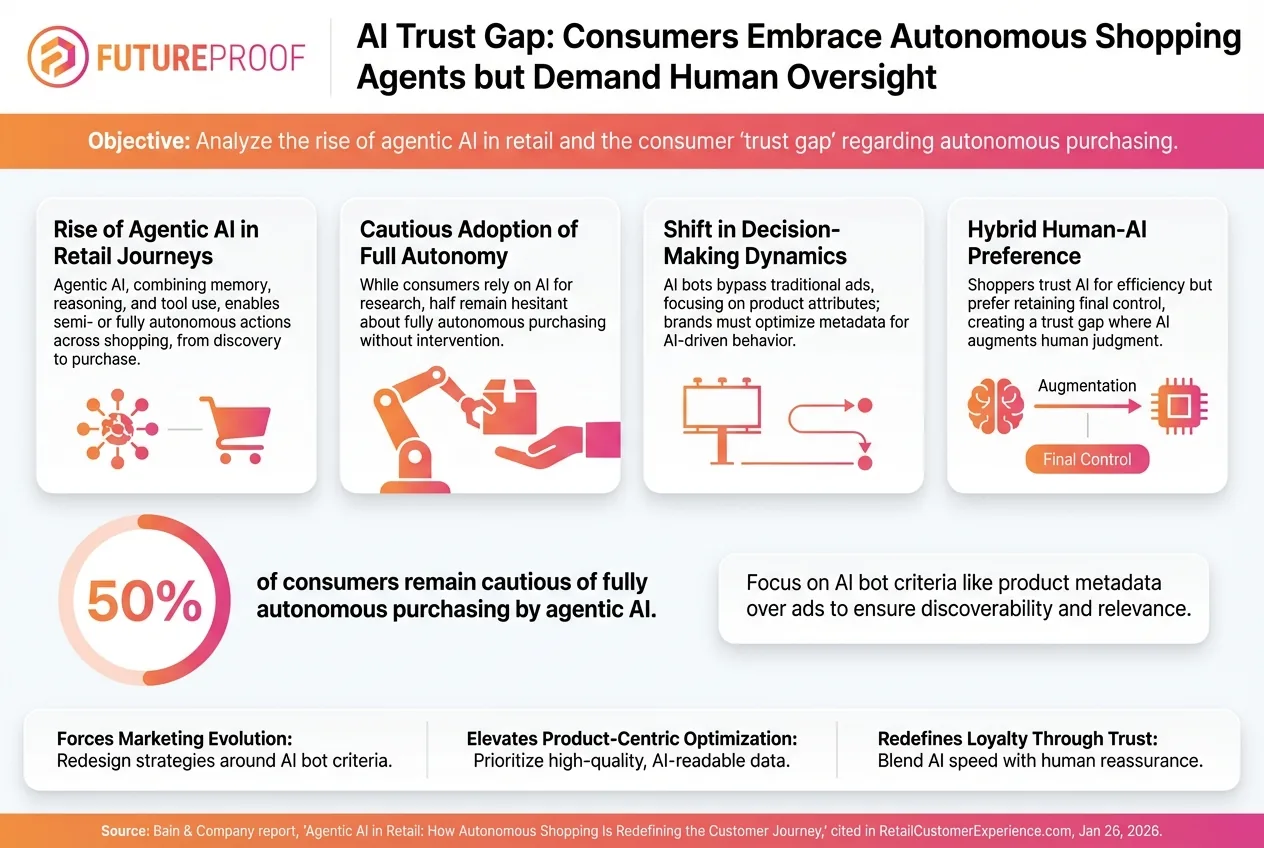
Agentic AI, characterized by its ability to perform tasks autonomously, learn from interactions, and make decisions to achieve specific goals, is fundamentally redefining product discovery and selection. In the past, brand visibility was often a battle of display ads, prime shelf space, and direct marketing campaigns. Today, agentic AI, whether embedded in a smart assistant, a sophisticated shopping aggregator, or a personalized recommendation engine, is taking over the initial research phase. Consumers are increasingly relying on these intelligent agents to sift through vast amounts of information, compare specifications, read reviews, and even proactively suggest optimal choices based on their individual preferences, past purchases, and declared needs. The power has decisively shifted from who shouts loudest to who is best understood by these AI agents. This means that a brand’s digital storefront, its product information architecture, and its underlying data quality have become paramount. Agentic AI doesn't get swayed by flashy banners; it consumes structured data.
For brands, this heralds a new era of optimization. The focus is no longer solely on SEO for human search engines, but on "AI-O" – optimizing for artificial intelligence. To remain visible and competitive when AI is doing the choosing, brands must prioritize impeccable data quality. This begins with robust metadata optimization. Every product must be meticulously tagged, categorized, and described with granular detail. Think beyond basic product names; consider material composition, ethical sourcing certifications, compatibility with other products, user intent keywords, and even emotional attributes. The more comprehensive and accurate the metadata, the better an agentic AI can understand, compare, and recommend a product. Inaccurate or sparse metadata renders a product invisible to these powerful agents, regardless of its inherent quality or value.
Beyond metadata, product attributes must be exceptionally rich, consistent, and structured. This involves providing exhaustive details about features, benefits, dimensions, colors, variations, pricing, availability, and customer reviews in a format that AI can easily ingest and interpret. Imagine an agentic AI tasked with finding a specific type of running shoe for a user with particular foot arch requirements, terrain preferences, and sustainability values. If a brand’s product data doesn't explicitly detail these attributes in a machine-readable format, that shoe will simply not be presented as a viable option. This extends to visual data as well; high-quality, diverse images and videos with accompanying alt text and descriptions help AI contextualize and differentiate products more effectively. Brands must invest in sophisticated Product Information Management (PIM) systems that can handle this level of detail and ensure consistency across all digital touchpoints.
Furthermore, promotions and offers must also be optimized for AI interpretation. While traditional discounts still have their place, agentic AI can leverage consumer data to identify hyper-personalized offers that genuinely resonate. Brands need to structure their promotional data so that AI can understand the conditions, eligibility, and true value proposition of each offer. Instead of a blanket 10% off, AI might identify that a specific customer would be more compelled by free expedited shipping on a particular item, or a bundled discount on complementary products. This level of intelligent, AI-driven personalization not only drives sales but also builds deeper customer loyalty by demonstrating an understanding of individual needs. The brands that master the art of contextual, AI-driven promotional strategies will see a significant uplift in conversion rates and customer satisfaction.
Despite the undeniable efficiency and power of agentic AI, consumer behavior reveals a crucial paradox: a strong preference for AI-driven research coupled with a significant apprehension towards fully autonomous purchasing. A key data point, highlighted by a Bain and Company report referenced in RetailCustomerExperience.com in January 2026, indicates that 50 percent of consumers remain cautious of fully autonomous purchasing by agentic AI. This statistic underscores the profound "trust gap" that brands must meticulously bridge. Consumers value AI for its ability to cut through noise, provide objective comparisons, and save time during the initial discovery phase. They appreciate the speed with which AI can process information, identify optimal choices, and present tailored recommendations. It simplifies complex decisions, reduces information overload, and empowers them with knowledge.
However, when it comes to the final act of parting with money, particularly for significant purchases or items with emotional weight, the desire for human reassurance often takes precedence. This caution stems from several factors: the need for empathy, the ability to ask nuanced questions that AI might misinterpret, the desire for problem-solving that goes beyond algorithmic logic, and fundamental concerns about privacy, security, and potential algorithmic bias. Consumers want to know that a human can intervene if something goes wrong, or provide a qualitative perspective that AI cannot. Whether it’s confirming the fit of a garment with an expert stylist, discussing the intricate details of a high-tech gadget with a knowledgeable salesperson, or simply having a human available to address a unique customer service issue, the human touch remains invaluable. This human intervention provides a sense of accountability and trust that AI, in its current form, cannot fully replicate.
Winning brands in this new era will be those that skillfully blend AI speed with human reassurance to build loyalty and reduce friction across both digital and physical touchpoints. This isn't about choosing between AI or humans; it’s about creating a seamless synergy where each augments the other. Imagine an agentic AI diligently curating a list of potential products based on a consumer's preferences. Instead of pushing for an immediate, autonomous purchase, the AI might then offer a scheduled video consultation with a human expert who can review the AI’s recommendations, answer specific questions, and provide personalized advice. This strategic hand-off empowers the consumer with both efficiency and confidence.
In practice, this means developing customer journeys where AI intelligently facilitates the process up to a certain point, then seamlessly transitions to human interaction at critical decision points. For instance, AI can manage routine inquiries, track orders, and provide basic product information, freeing up human agents to focus on complex problem-solving, emotional support, and high-value sales conversations. Brands should invest in AI-powered tools that empower human staff by providing them with comprehensive customer insights and real-time data, allowing them to deliver highly personalized and efficient service. When a customer connects with a human, that agent should have immediate access to the AI's prior interactions and recommendations, preventing repetitive explanations and fostering a truly connected experience.
Transparency and explainability are also critical for building trust. While AI offers recommendations, consumers increasingly want to understand the "why" behind those suggestions. Brands that can articulate how AI arrived at a particular recommendation – for example, "Based on your previous purchases of sustainably sourced apparel and your stated preference for organic materials, we recommend this item..." – foster greater confidence. This transparency demystifies the AI process and helps alleviate concerns about manipulation or bias.
Furthermore, integrating AI into hybrid touchpoints offers immense potential. In physical stores, AI can power smart mirrors that suggest outfits based on stock availability and customer profiles, while human stylists are on hand to provide personalized fitting advice and styling tips. Virtual try-on experiences powered by AI can be complemented by live chat with fashion consultants. In essence, AI streamlines the functional aspects, while humans provide the emotional connection and nuanced expertise. This duality creates a richer, more satisfying shopping experience that addresses both the consumer's desire for speed and their need for trust.
Ultimately, the future of retail belongs to brands that view AI not as a replacement for human interaction, but as an enhancement. It’s about leveraging agentic AI to handle the heavy lifting of data analysis, product discovery, and initial recommendations, while strategically deploying human expertise at moments of truth. This requires an ethical approach to AI implementation, ensuring data privacy, mitigating algorithmic bias, and always keeping the consumer's best interest at heart. Brands must proactively communicate their commitment to responsible AI, building a foundation of trust that extends beyond the transactional. By prioritizing robust data quality, embracing AI-driven personalization, and seamlessly integrating human reassurance into every step of the customer journey, brands can transform the AI trust gap into their most powerful competitive edge, cultivating deep loyalty and redefining success in the evolving retail landscape.