How AI Shopping Assistants Are Rewriting the Future of Consumer Discovery and Brand Success
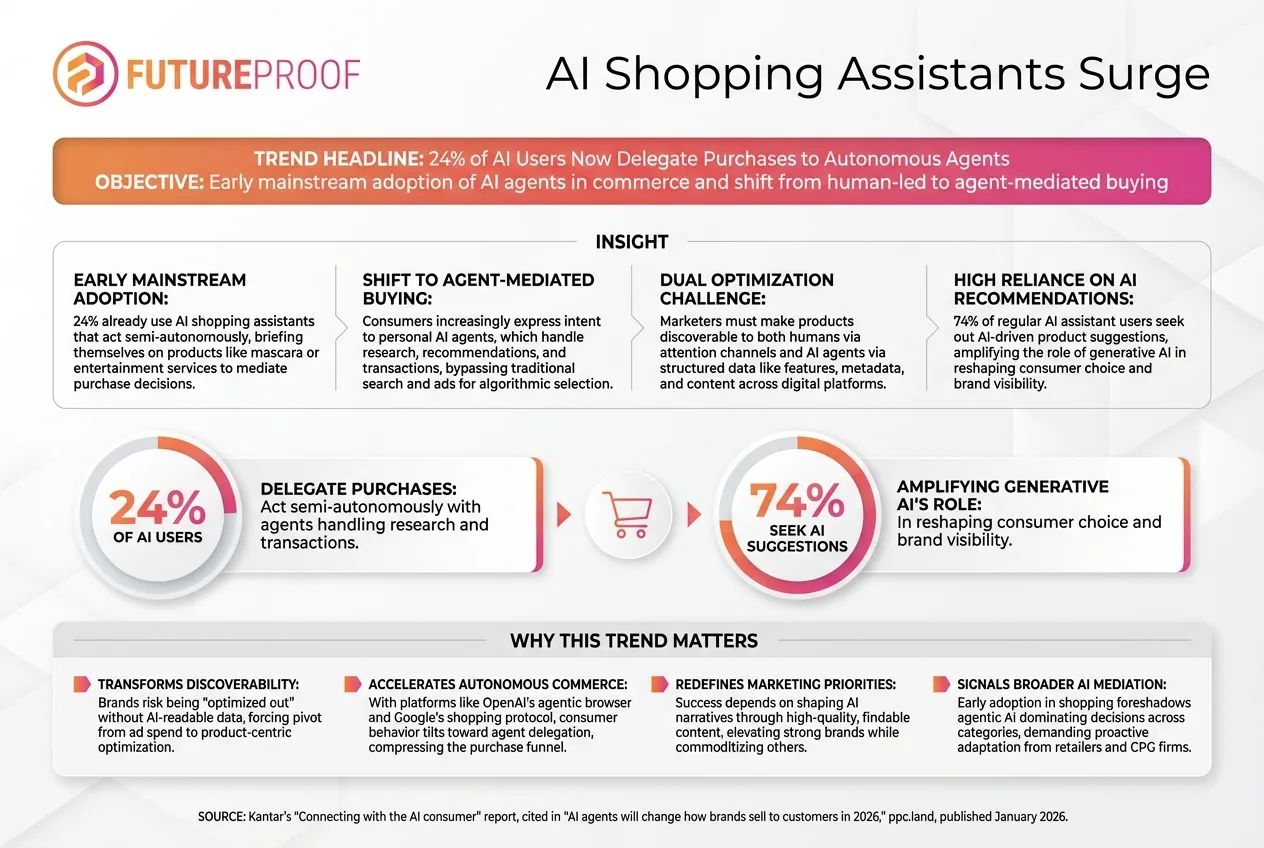
The landscape of consumer discovery and purchase is undergoing a profound and rapid transformation, catalyzed by the escalating mainstream adoption of AI shopping assistants. What many once envisioned as a futuristic novelty has swiftly become a present-day reality, with data indicating that a significant 24% of AI users are already leveraging these autonomous agents to navigate their purchasing journeys. This shift is not merely an evolution; it represents a fundamental redefinition of how brands connect with consumers, forcing marketers to recalibrate their strategies for an era where artificial intelligence mediates an increasingly large portion of buying decisions.
These AI shopping assistants are far more than glorified search engines; they are sophisticated digital concierges capable of researching, comparing, and recommending products with unprecedented speed and personalization. They delve deep into product specifications, cross-reference reviews, analyze pricing across multiple retailers, and even infer user preferences based on past behavior and explicit queries. This comprehensive analytical capability allows them to construct highly curated consideration sets, effectively acting as the initial gatekeepers to a consumer’s purchasing journey. As these agents become more entrenched in the pre-purchase phase, the traditional path to brand discovery, once heavily influenced by advertising, organic search, and social media, is being irrevocably rewritten. Brands can no longer solely rely on captivating storytelling or broad awareness campaigns to capture consumer attention; they must now contend with an algorithmic intermediary that prioritizes data, clarity, and consistency.
For marketers, this paradigm shift presents a multifaceted challenge. The core objective remains discoverability, but the audience for this discoverability has expanded. Products must now be discoverable not only by human consumers but, critically, by AI. This dual optimization requires a strategic pivot that extends far beyond traditional SEO or content marketing. It necessitates a deep dive into the underlying architecture of product information and the digital signals a brand broadcasts. Optimizing for AI means moving beyond the metrics of attention and engagement to focus intently on structured data, the unambiguous clarity of features, and the consistency of digital signals across all touchpoints. The era of vague descriptions and marketing fluff is drawing to a close, replaced by a demand for precision and verifiable information.
The urgency of this adaptation is underscored by the fact that 74% of regular AI assistant users actively seek AI-driven product recommendations. This statistic is a clarion call for brands: robust, accurate, and easily digestible product information is no longer a secondary concern; it is becoming as critical to market success as compelling storytelling. While human emotions and aspirations will always play a role in purchase decisions, the initial filtering process is increasingly devoid of sentiment, driven instead by algorithms parsing factual attributes. An AI assistant evaluating a smart home device isn't swayed by aspirational imagery; it's comparing processing power, compatibility, privacy features, and user reviews, all distilled from structured data and natural language understanding. Brands that fail to provide this foundational layer of information in a machine-readable and easily interpretable format risk being omitted from the AI-generated recommendation list, effectively becoming invisible in a crucial phase of the customer journey.
This trend unequivocally signals the dawn of an autonomous commerce era. In this new landscape, AI actively shapes consideration sets long before a human consumer consciously engages with a brand or product. The traditional marketing funnel, with its distinct stages of awareness, consideration, and conversion, is being subtly yet powerfully reengineered. AI assistants are short-circuiting portions of this funnel, moving consumers directly to a curated list of options based on their perceived needs and the available data. This means that if a brand’s product data is incomplete, inconsistent, or not optimized for AI ingestion, it may never even enter the consideration phase, regardless of the quality of its marketing campaigns or the strength of its brand identity. The battle for market share is increasingly being waged on the algorithmic front, where product specifications, metadata, and digital integrity hold sway over traditional advertising spend.
The first-mover advantage in this autonomous commerce environment is significant. Brands that adapt early, understanding the nuances of AI discoverability and integrating robust data strategies, are positioning themselves to win in a marketplace that is progressively filtered by algorithms rather than overt advertisements. This adaptation involves several strategic imperatives. Firstly, brands must audit their entire digital ecosystem to ensure product information is standardized, rich, and consistent across websites, e-commerce platforms, product feeds, and digital catalogs. This often means investing in Product Information Management (PIM) systems, which serve as a single source of truth for all product-related data, ensuring accuracy and consistency at scale.
Secondly, the meticulous implementation of structured data, particularly schema markup (such as Product, Offer, and AggregateRating), is no longer optional but essential. Schema.org vocabulary helps search engines and AI assistants understand the context and attributes of products, enabling them to surface relevant information more effectively. This goes beyond basic SEO keywords; it’s about semantic understanding, allowing AI to grasp the intricate relationships between product features, benefits, and user intent. For instance, clearly tagging a product’s material, dimensions, compatibility, warranty details, and sustainability attributes allows an AI to precisely match it to a user's specific, nuanced query, such as "durable, eco-friendly coffee maker with a 5-year warranty."
Thirdly, clarity of features and benefits must be paramount. While traditional marketing often aims for evocative language, AI prioritizes precision. Brands need to present product features in clear, concise, and unambiguous terms that are easily parsed by natural language processing algorithms. Bullet points, standardized terminology, and a focus on measurable attributes will outperform flowery prose in the eyes of an AI assistant. This doesn’t mean abandoning storytelling altogether, but rather segmenting communication: compelling narratives for human engagement and precise data for AI consumption.
Furthermore, maintaining consistent digital signals is vital. An AI assistant doesn't just look at product descriptions; it evaluates the entire digital footprint of a product and brand. This includes the recency and quality of customer reviews, responsiveness to customer service inquiries, accuracy of inventory levels, and consistency of pricing across different channels. Any discrepancies or negative signals can lead an AI to deprioritize a product or brand, regardless of its inherent quality. Proactive reputation management, responsive customer service, and real-time inventory synchronization become critical components of an AI-optimized marketing strategy.
The rise of voice search and conversational AI further underscores the need for optimized product information. When a user asks an AI assistant a question like, "What's the best noise-canceling headphone for long-haul flights under $300?", the AI isn't browsing advertising banners; it's sifting through structured data, product specifications, and user reviews to formulate a concise, relevant recommendation. Brands that have optimized their product data for these conversational queries, anticipating the language and intent of users, will naturally appear in these AI-driven recommendations.
Ultimately, this shift towards autonomous commerce and AI-mediated brand discovery demands a holistic rethinking of digital strategy. It’s no longer enough to generate traffic; brands must generate trust and understandability for both human and artificial intelligences. This means fostering a culture of data integrity, investing in technological infrastructure, and adopting a consumer-centric approach that anticipates how AI will interpret and present their offerings. The marketplace is evolving rapidly, with algorithms increasingly dictating consideration sets. Brands that embrace this change, adapting their strategies to speak the language of AI while still captivating human hearts, are the ones poised for sustained success in this exhilarating, algorithm-driven future of commerce. The competitive edge will belong to those who not only understand the power of AI but also master the art of being discovered by it, ensuring their products are not just seen, but recommended.