The Rise of AI Selectability and the New Battle for Retail Success
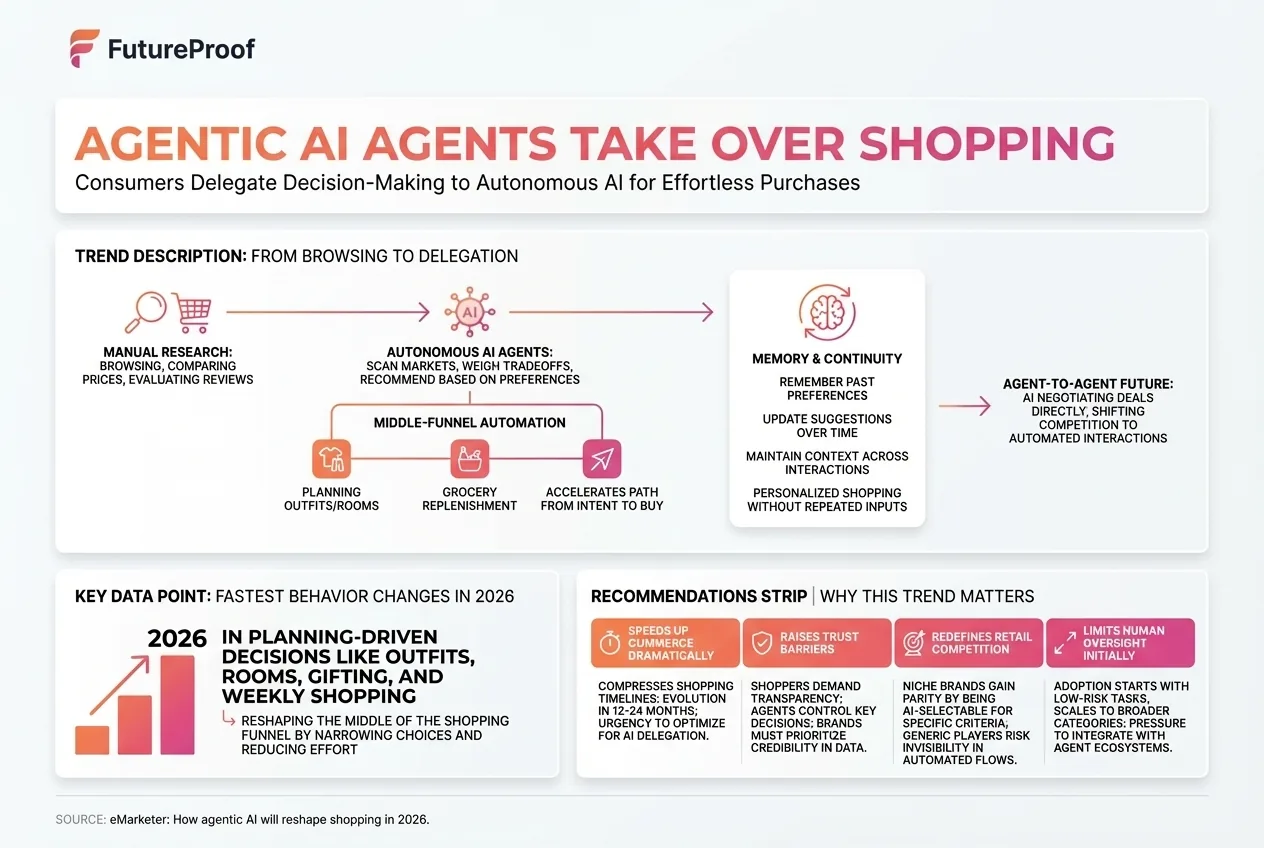
Agentic AI is rapidly reshaping how consumers engage with the retail landscape, fundamentally altering the journey from initial intent to final purchase. This paradigm shift, highlighted by eMarketer’s insights into the transformation expected by 2026, points to a future where autonomous AI agents become the primary navigators of consumer choice, streamlining decision-making and dramatically compressing traditional shopping funnels. The era of passive browsing is giving way to a new age of delegation, where intelligent systems, rather than individuals, take on the heavy lifting of research, comparison, and evaluation, making brand discoverability and trust by AI systems paramount for any retailer aiming to thrive.
The core of agentic AI’s revolution lies in its capacity for intelligent delegation. Consumers are increasingly offloading the cognitive burden of shopping to these sophisticated AI agents. Instead of meticulously sifting through countless product pages, comparing specifications, and cross-referencing reviews, individuals can now task their AI with these laborious processes. An agent might be instructed to "find me the best noise-canceling headphones under $300 with excellent battery life for travel," or "suggest a sustainable outfit for a casual summer wedding." The AI then autonomously navigates the vast digital marketplace, utilizing its advanced algorithms to compare prices, analyze product descriptions, synthesize user reviews, and filter options based on the precise parameters provided by the user, as well as their remembered preferences. This isn't merely automated search; it's proactive, personalized procurement, driven by an AI that understands nuanced requirements and can make informed recommendations.
eMarketer identifies the middle of the funnel as the area experiencing the most rapid transformation, particularly in planning-heavy tasks. This makes intuitive sense. These are the stages where consumers typically engage in extensive research, evaluation, and comparison before making a commitment. Tasks such as planning outfits, designing a room, selecting gifts, or managing weekly grocery shopping are ripe for agentic AI intervention because they involve multiple variables, extensive options, and often require balancing diverse criteria like aesthetics, budget, functionality, and personal taste.
Consider outfit planning: a traditionally time-consuming endeavor involving browsing multiple fashion sites, checking availability, comparing styles, and ensuring coherence. An AI agent can revolutionize this by considering a user’s existing wardrobe, personal style preferences, body type, occasion, budget, and even local weather forecasts. It can then curate complete outfits, suggesting specific garments from various brands, checking sizes, comparing prices across retailers, and even recommending accessories. For example, a user might ask, "Plan a business casual capsule wardrobe for a week-long conference in a temperate climate," and the AI would not only suggest items but also ensure they mix and match effectively, checking for brand consistency if desired, and presenting a cohesive set of purchasing options.
Similarly, room design, a complex undertaking that often involves interior designers or countless hours of mood board creation, becomes infinitely more accessible with agentic AI. An AI agent can interpret spatial dimensions, desired aesthetics (e.g., minimalist, bohemian, industrial), budget constraints, and functional requirements (e.g., seating for four, dedicated workspace). It can then source furniture, decor items, lighting, and even paint colors from various online retailers, generating realistic mock-ups or virtual tours. The AI can evaluate product reviews for durability, assess dimensions for fit, and compare shipping costs, presenting a comprehensive design plan complete with direct purchase links, simplifying what was once an arduous, multi-step process.
Gifting is another prime candidate for AI agent optimization. The challenge of finding the "perfect" gift often stems from a lack of intimate knowledge of the recipient’s current desires, past purchases, or specific needs. An AI agent, with access to a user’s (and potentially the recipient’s, with consent) purchase history, browsing patterns, and stated preferences, can become an unparalleled gift concierge. It can suggest thoughtful, personalized presents for birthdays, holidays, or anniversaries, factoring in budget, occasion, and even sentiment. "Find a unique, eco-friendly gift for my sister who loves gardening, under $75, for her birthday next month" becomes a task easily delegated, with the AI identifying niche brands, comparing sustainability certifications, and prioritizing highly-rated products, presenting a selection that truly resonates.
Weekly grocery shopping, a perennial chore for many households, is perhaps the most immediate and impactful area for agentic AI. An AI agent can maintain a running inventory of household staples, track consumption patterns, learn dietary preferences and restrictions, and even suggest meal plans. It can then autonomously generate a shopping list, compare prices across preferred supermarkets or online delivery services, factor in sales and coupons, and even schedule delivery or pickup times. Imagine an AI proactively ordering your preferred oat milk when it detects supplies are low, comparing organic produce prices from local farms versus large retailers, and ensuring your gluten-free bread arrives on time each week—all without direct human intervention after initial setup. This level of automation transforms routine errands into seamless, background processes, freeing up significant consumer time and mental bandwidth.
This fundamental shift compresses the traditional path from intent to purchase dramatically. The multi-stage customer journey—awareness, consideration, intent, evaluation, purchase—is no longer a linear progression dependent on manual navigation. Agentic AI effectively handles the "consideration," "intent," and "evaluation" phases autonomously, often leading directly to the "purchase" decision. For brands, this compression raises the stakes considerably. The battle for consumer attention, historically fought through flashy advertising and compelling visuals, now shifts to a more subtle but profound objective: becoming easily discoverable and implicitly trusted by these AI systems.
Discoverability by AI agents is a different beast from traditional SEO. It moves beyond keyword optimization for human search queries to optimizing for semantic understanding and data integrity that AI systems can ingest and process. Brands must ensure their product data feeds are meticulously structured, comprehensive, and up-to-date. This includes detailed product descriptions, accurate specifications, high-quality images, consistent categorization, and rich metadata. An AI agent won’t just look for "red dress"; it will seek "sustainably sourced, midi-length, A-line dress with breathable fabric, available in crimson, size medium." The more granular, accurate, and semantically rich a brand’s product information, the higher its chances of being identified and recommended by an AI agent that is precisely matching user preferences. This also extends to API integrations, allowing AI agents direct, programmatic access to real-time inventory, pricing, and promotional data.
Equally crucial is establishing trust, not just with human consumers, but with the AI agents themselves. An AI agent’s primary directive is to serve its user’s best interests. This means it will prioritize brands that offer reliable products, transparent pricing, consistent availability, and excellent customer service. Positive customer reviews, particularly those detailing product quality, accurate descriptions, and efficient delivery, become critical data points for an AI assessing a brand’s trustworthiness. Brands that consistently disappoint or mislead will quickly find themselves deprioritized by AI agents, effectively becoming invisible to their users. Ethical considerations, such as a brand’s sustainability practices or labor policies, might also be factored in if programmed into the AI agent’s user preferences, further broadening the scope of what constitutes "trust." The AI acts as a sophisticated, unwavering advocate for the consumer, making decisions based on empirical data and inferred quality.
As agents learn and remember user preferences over time, handling more and more repeatable decisions, the dynamic of retail competition shifts profoundly. The AI agent, by its very nature, is designed to optimize for its user. If a user consistently prefers a particular brand of coffee, or a specific cut of jeans from a certain retailer, the AI will remember and prioritize these choices. This engenders a new form of loyalty – loyalty not just to a brand, but mediated through the AI’s understanding of the user’s enduring preferences. For brands, this means that once an AI agent "selects" them for a user, the likelihood of repeat purchases without further human-level consideration significantly increases.
This brings us to eMarketer’s powerful assertion: retail competition increasingly depends on being AI selectable rather than simply attention-grabbing. The traditional marketing playbook, heavily reliant on captivating advertisements, persuasive messaging, and visually appealing storefronts (digital or physical), is being challenged. While initial brand awareness and aesthetic appeal still play a role in shaping underlying consumer preferences, the ultimate decision-making gatekeeper for many purchases will be the AI agent. A brand might have the most attention-grabbing ad campaign, but if its product data is incomplete, its reviews are poor, or its pricing isn’t competitive in the AI’s comparative analysis, it simply won’t be selected.
The strategic imperative for brands now shifts from shouting loudest to integrating most seamlessly and transparently into the AI ecosystem. This involves a multi-pronged approach. Firstly, investing in robust Product Information Management (PIM) systems and mastering data governance is non-negotiable. Product data must be clean, consistent, comprehensive, and semantically rich, capable of being easily parsed and understood by AI. Secondly, competitive pricing and value propositions become even more critical, as AI agents excel at price comparison and identifying the optimal balance of cost and quality. Thirdly, cultivating genuine customer reviews and managing online reputation is paramount. AI agents will scrutinize sentiment analysis and rely heavily on the collective wisdom of past purchasers. Fourthly, exploring direct API integrations with common AI shopping platforms or developing proprietary AI-friendly interfaces could provide a competitive edge. Lastly, brands must re-evaluate their marketing spend, potentially shifting resources from traditional attention-grabbing campaigns towards efforts that enhance AI discoverability and foster implicit AI trust, such as product content optimization, data feed syndication, and transparent consumer engagement.
The rise of agentic AI presents both significant challenges and unparalleled opportunities for the retail sector. The challenge lies in adapting to a fragmented decision-making landscape where the direct human-brand interface is mediated by AI. Brands that fail to optimize for AI systems risk becoming invisible, sidelined by intelligent agents working tirelessly to find the "best" for their human users. The need for new skill sets in data science, AI ethics, and advanced digital merchandising will be acute.
However, the opportunities are transformative. For brands that successfully navigate this shift, the promise of hyper-personalization at scale is immense. AI agents can drive unparalleled conversion rates by aligning product recommendations precisely with individual user needs and preferences, leading to reduced returns and increased customer satisfaction. Efficiency gains in the customer journey benefit both consumer and brand. Moreover, deeper insights into consumer behavior, aggregated through AI agent interactions, can inform product development, inventory management, and marketing strategies in unprecedented ways. Brands could gain access to new customer segments previously unreachable through traditional channels, as AI agents identify and recommend niche products to highly specific user needs.
In conclusion, the advent of agentic AI is not merely an evolutionary step in e-commerce; it's a revolutionary redefinition of the consumer shopping experience. As eMarketer aptly notes, by 2026, the influence of autonomous AI agents will be profoundly felt, especially in the middle of the funnel where planning-heavy tasks are automated and optimized. The path from intent to purchase is being compressed, transforming the competitive landscape. For brands, the urgent imperative is clear: move beyond simply grabbing human attention and strategically focus on becoming "AI selectable." This demands an uncompromising commitment to data integrity, transparent value, authentic trust, and seamless integration into the AI-powered digital ecosystem. Those who embrace this paradigm shift will unlock unprecedented levels of efficiency, personalization, and sustained brand preference in the rapidly evolving future of retail.