AI Has Redefined the Front Door of Commerce
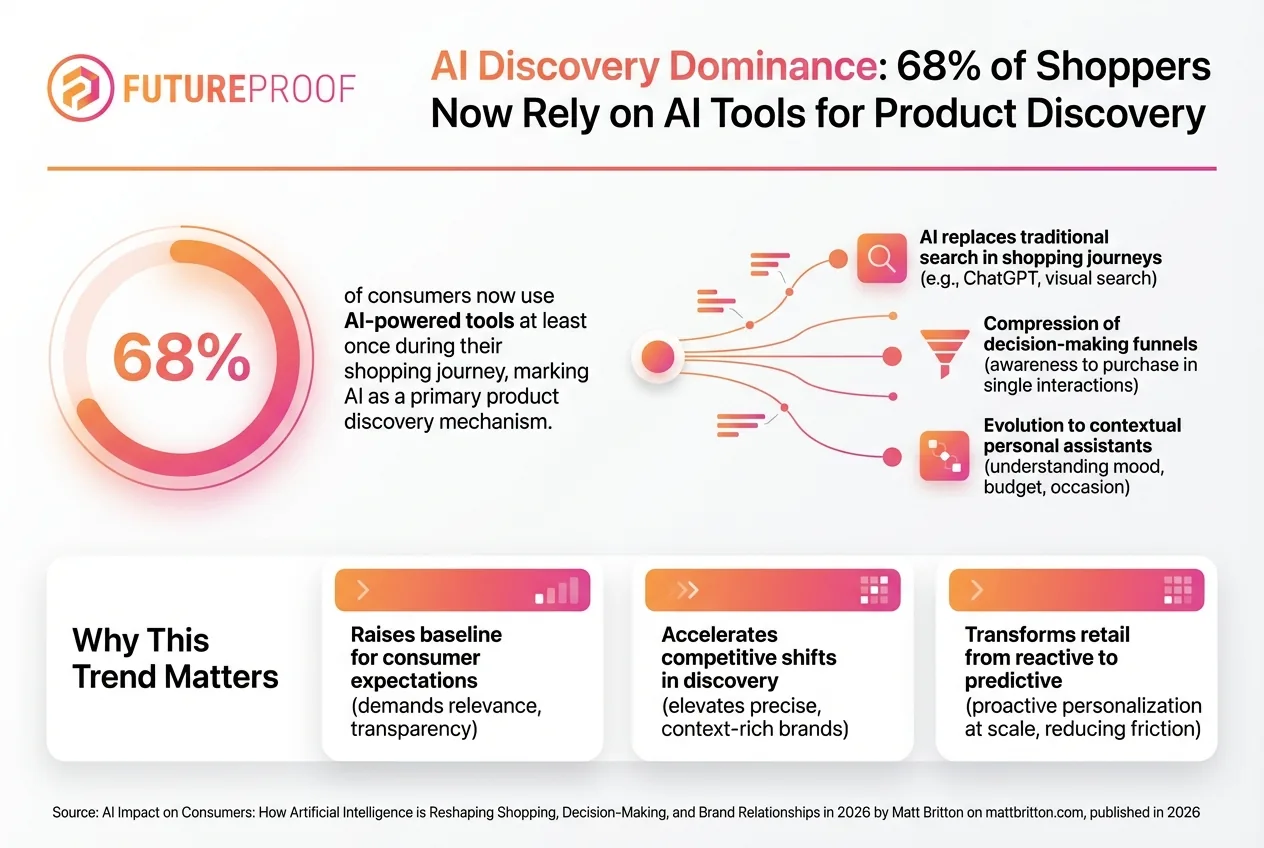
The landscape of commerce is undergoing a profound and irreversible transformation, spearheaded by the silent yet pervasive influence of artificial intelligence. What was once the domain of traditional search engines and carefully constructed marketing funnels is now being rapidly reshaped by intelligent algorithms, conversational interfaces, and predictive analytics. The front door of commerce has been officially redesigned by AI, and new data underscores its undeniable dominance: 68% of consumers now rely on AI tools at least once in their shopping journey, cementing AI as a primary product discovery channel. This isn't a futuristic prediction; it's a present reality, as highlighted by the "AI Impact on Consumers by Matt Britton 2026" report, signaling a permanent shift in how people find, evaluate, and ultimately purchase products and services.
This seismic shift represents more than just an incremental update to existing technologies; it’s a fundamental change in consumer behavior and expectation. Shoppers are actively bypassing the familiar routines of endless scrolling through search results and navigating static product categories. Instead, they are gravitating directly towards the immediacy, relevance, and intuitive nature of AI-powered tools. Conversational AI, visual search capabilities, and sophisticated AI-curated feeds are becoming their preferred gateways to discovery. This isn't just about convenience; it's about intelligence. These AI mechanisms are designed to understand context, anticipate needs, and deliver hyper-relevant recommendations with unprecedented speed, effectively collapsing the traditional awareness and consideration stages of the purchasing journey into a single, intelligent interaction. For brands, this redefines the playing field, demanding an immediate and strategic pivot. Generic content, once a passable baseline, is now an irrelevance. Real-time relevance isn't a competitive edge; it's a fundamental expectation. The brands that will not only survive but thrive in this AI-driven era are those that quickly adapt, embracing transparent data practices and committing to delivering deeply personalized experiences that resonate with individual consumer needs and preferences.
The traditional path to product discovery, often a labyrinthine journey involving numerous clicks, comparisons, and generic keyword searches, is fast becoming a relic of a bygone era. Consumers, armed with powerful AI tools, are now navigating directly to their desired outcomes with remarkable efficiency. This transition is not merely a preference for convenience but a full-scale adoption of superior methods of interaction and information retrieval. When we delve deeper into why 68% of consumers are choosing AI as their primary product discovery channel, the reasons become crystal clear: speed, unparalleled relevance, and personalized engagement that traditional methods simply cannot match.
Conversational AI stands at the forefront of this revolution. Tools like advanced chatbots integrated into e-commerce sites, voice assistants such as Siri, Alexa, and Google Assistant, and even sophisticated messaging apps now serve as intelligent concierges for shoppers. Instead of typing broad keywords into a search bar, consumers are posing natural language questions: "Find me running shoes specifically designed for flat feet and overpronation," or "What's the best anti-aging moisturizer for sensitive skin with SPF 30?" These AI systems don't just return a list of links; they interpret intent, analyze preferences, and often recommend specific products, offer comparisons, or even guide the user through a guided decision-making process. This instant, interactive dialogue transforms discovery from a search-and-find mission into a conversational experience, mimicking the personalized advice one might receive from a knowledgeable sales assistant, but at scale and available 24/7.
Complementing conversational AI is the transformative power of visual search. Imagine seeing an exquisite lamp in a friend's home or a stylish outfit on a stranger and instantly being able to find it online, or similar alternatives. This is precisely what visual search technologies enable. Platforms like Pinterest Lens, Google Lens, and integrated visual search features within brand apps allow consumers to snap a photo of an item and immediately be presented with shoppable links. This eliminates the laborious process of describing a visual item with keywords, which can often be imprecise. For fashion, home decor, and inspiration-driven purchases, visual search isn't just a convenience; it's a game-changer, turning passive observation into immediate purchasing potential. It bridges the gap between the physical and digital worlds, making real-world inspiration instantly actionable in the e-commerce sphere.
Furthermore, AI-curated feeds represent a highly personalized form of product discovery that feels almost serendipitous. Think of TikTok’s endlessly engaging "For You Page," Instagram's Explore tab, or the personalized recommendation carousels on platforms like Amazon and Netflix. These feeds leverage sophisticated AI algorithms to analyze a vast array of data points – past browsing history, purchase behavior, engagement patterns, demographic information, and even real-time interactions – to proactively present products and content that are highly likely to resonate with the individual user. This isn't just about showing products a user has explicitly searched for; it's about predicting desires, revealing items they didn't even know they needed, and fostering a sense of discovery that feels inherently tailored. This proactive, intelligent curation transforms the shopping journey from a chore into a delight, making AI an indispensable companion for modern consumers.
One of the most profound impacts of AI on commerce is the radical restructuring of the traditional consumer journey. Historically, marketers have relied on a multi-stage funnel – awareness, interest, consideration, intent, evaluation, purchase, and loyalty – meticulously guiding consumers through each step. AI, however, is fundamentally collapsing this linear progression, particularly the initial awareness and consideration phases, into a single, intelligent interaction. This isn’t a gradual compression; it’s an abrupt redefinition of how consumers move from recognizing a need to making a decision.
In the AI-powered era, the traditional funnel gives way to a fluid, often instantaneous, decision-making process. A consumer might ask a voice assistant, "What's the best noise-canceling headphone for long-haul flights under $300?" The AI doesn't just surface a list of brands; it might directly recommend a specific model, present a quick comparison of its top features against competitors, highlight user reviews, and even offer a direct link to purchase, all within seconds. Here, awareness and consideration aren't separate stages; they're intertwined in an intelligent interaction that immediately addresses the user's need with highly relevant information. This speed and efficiency foster an environment of "micro-moments," where immediate answers and solutions are not just preferred but expected. Consumers no longer have the patience for protracted research when AI can deliver precisely what they need, exactly when they need it.
This shift has significant ramifications for how brands connect with potential customers. The passive presence on broad search queries is no longer sufficient. Brands must now optimize their presence and product information for AI interpretation across a multitude of touchpoints. This means more than just traditional SEO; it involves optimizing for voice search queries, ensuring product information is structured and tagged for rich snippets, and providing comprehensive data feeds that AI systems can easily parse and present. If AI is the new gatekeeper, then brands must ensure their 'front door' is not just visible but also intelligently designed to welcome and inform AI systems. The imperative is to be present, accessible, and intelligently represented wherever AI interacts with consumers, ensuring that their products and services are surfaced instantly and compellingly at the precise moment of discovery and intent.
This radical evolution in product discovery undeniably raises the bar for brands. The era of generic, one-size-fits-all content and passive digital presence is rapidly fading, replaced by an urgent demand for highly specific, real-time relevant, and deeply personalized experiences. Those who cling to outdated strategies risk becoming invisible in an AI-driven marketplace where intelligence and relevance are paramount.
Generic content is no longer acceptable – in fact, it’s actively detrimental. AI-powered discovery engines thrive on specificity, nuance, and genuine value. A conversational AI will not recommend a blog post stuffed with keywords but lacking substance. Instead, it seeks authoritative, precise, and genuinely helpful information that directly addresses a user's query. This means SEO strategies must evolve beyond simple keyword matching to encompass semantic relevance, entity understanding, and deep intent matching. Brands must invest in creating content that is not only optimized for search engines but, more critically, optimized for AI’s interpretation of human needs and preferences. Every piece of content, from product descriptions to blog posts and FAQs, must be crafted with an eye towards being the most helpful, accurate, and unique answer to a potential customer’s specific question or need. Brands must become subject matter experts, not just advertisers, providing truly valuable insights that AI can confidently surface.
Real-time relevance is rapidly transitioning from a competitive advantage to a baseline expectation. Consumers engaging with AI expect recommendations and information that are not just personalized but contextual and current. This demands dynamic content delivery, where offers and product suggestions adapt based on a user’s immediate behavior, location, time of day, and even mood, as inferred by AI. Leveraging real-time data to anticipate needs means a customer browsing winter coats in a sudden cold snap receives targeted ads for cold-weather gear, rather than summer swimwear. It requires an agile content management system and a robust data infrastructure capable of processing continuous streams of information and responding with lightning speed. Brands need to move beyond static, pre-scheduled campaigns to embrace a continuous, adaptive engagement model driven by AI insights.
This leads directly to the imperative of hyper-personalization at scale. Beyond simple segmentation, AI enables individualized experiences that were once unimaginable. AI’s ability to analyze vast, complex datasets from individual customer journeys – including browsing history, past purchases, social media interactions, loyalty program data, and even emotional responses inferred from text analysis – allows for the creation of truly 1:1 experiences. This isn't just recommending similar products; it's about tailoring the entire customer journey. Imagine product pages dynamically adjusting to highlight features most relevant to a specific user, email campaigns personalized down to the specific product imagery and call-to-action, or ad creatives that resonate with an individual's unique aesthetic preferences. This level of personalization fosters deeper engagement, higher conversion rates, and stronger brand loyalty because consumers feel truly understood and valued.
However, with great personalization comes great responsibility. The intensive use of consumer data to power these AI experiences makes transparency and data ethics paramount. Consumer trust is fragile, and any perception of data misuse can severely damage a brand’s reputation. Brands must adopt clear, concise data privacy policies that are easily understandable. They must be transparent about how AI uses consumer data to provide value, explaining the benefits of personalization rather than simply collecting information. Ethical AI practices – ensuring algorithms are unbiased, data collection is secure, and consent is explicit – will not merely be a compliance requirement but a significant differentiator. Brands that champion transparent data practices will build a foundation of trust, transforming data collection from a necessary evil into a mutually beneficial exchange that empowers both the consumer with relevant experiences and the brand with invaluable insights.
To thrive in this AI-powered commerce era, brands must implement a multi-faceted strategy that re-imagines everything from content creation to customer service. The shift isn't just about adopting new tools; it's about cultivating an AI-first mindset that permeates every aspect of the business.
Firstly, embracing an AI-first content strategy is non-negotiable. This goes far beyond traditional keyword optimization. Brands must prioritize structured data optimization through schema markup (JSON-LD) for every piece of product information, FAQs, reviews, and even articles. This makes content machine-readable and easily digestible by AI, ensuring products are surfaced accurately and richly in conversational AI responses and visual search results. Voice search optimization demands a shift towards natural language queries, meaning content needs to answer questions conversationally and directly, using long-tail keywords that mimic spoken language. For visual search readiness, high-quality product images, comprehensive alt-text, and detailed tagging are crucial, allowing AI to accurately identify and categorize items. Finally, semantic SEO takes precedence over keyword density, focusing on entities, topics, and user intent to build comprehensive, authoritative content hubs that AI recognizes as reliable sources of information.
Secondly, investing in robust AI infrastructure and tools is critical. This means deploying advanced conversational AI platforms beyond basic chatbots, capable of understanding complex queries, managing multi-turn conversations, and even processing sentiment. AI-driven personalization engines are essential for delivering the hyper-relevant experiences consumers now expect, dynamically adjusting product recommendations, website layouts, and promotional offers. Furthermore, a centralized Customer Data Platform (CDP) is vital. A CDP collects, unifies, and activates customer data across all touchpoints, providing a single source of truth that feeds and empowers all AI initiatives, from personalized marketing to predictive customer service.
Thirdly, cultivating a culture of data transparency and trust is paramount for sustained success. Brands must establish clear, easily accessible privacy policies that explain data usage in plain language. Implementing robust opt-in mechanisms for data collection empowers consumers and fosters trust. Crucially, brands need to communicate the direct benefits of data-driven personalization to consumers. Explain how sharing data leads to better recommendations, more relevant offers, and a more tailored, enjoyable shopping experience. This open dialogue transforms data collection from an intrusive act into a value exchange, building loyalty and encouraging data sharing.
Fourthly, redefining the customer experience with AI offers immense opportunities. AI can power proactive customer service, anticipating potential issues before they arise, such as alerting a customer to a potential delay or suggesting complementary products based on past purchases. AI can orchestrate highly personalized journeys from the initial discovery phase, through purchase, and into post-purchase support, offering tailored product care tips or reorder reminders. Predictive analytics, driven by AI, can optimize inventory management, forecast demand more accurately, and even identify customers at risk of churn, allowing for proactive retention efforts.
Finally, actively collaborating with AI platforms and understanding their ecosystems is crucial. Brands need to understand the nuances of how different AI discovery platforms – be it Google’s Shopping Graph, Amazon’s recommendation engine, TikTok’s For You Page, or Pinterest’s visual search – function and optimize their product feeds and digital assets accordingly. This might involve adapting product descriptions for specific platform requirements, ensuring high-quality imagery for visual search engines, or even exploring new advertising models specifically designed for AI-driven discovery, where context and relevance trump traditional demographic targeting. Staying agile and experimenting with these diverse AI channels will be key to maximizing product visibility and driving conversions.
The shift we are witnessing is not a temporary trend but a fundamental recalibration of commerce itself. AI is no longer just a technological enhancement; it is the new paradigm through which consumers engage with brands and discover products. The data from "AI Impact on Consumers by Matt Britton 2026" paints an unequivocal picture: 68% of shoppers are already leveraging AI, establishing it as the primary gateway to their purchasing decisions. This isn't just about making things a little faster or a little smarter; it's about completely redefining the relationship between human desire and product availability.
This profound transformation means that the future is not some distant horizon; it is now. AI's ability to collapse the traditional awareness and consideration stages into a single, intelligent interaction fundamentally alters how brands must approach their market. It demands a heightened sense of urgency and adaptability. Generic content, once merely ineffective, is now an active barrier to discovery. Real-time relevance and hyper-personalization are no longer competitive differentiators; they are foundational requirements for brands aiming to connect with discerning, AI-empowered consumers. The brands that proactively embrace this reality, investing in transparent data practices, sophisticated AI infrastructure, and a genuinely AI-first content strategy, are the ones that will not only survive but will dominate the commerce landscape of tomorrow. The evolving synergy between AI, consumers, and brands will continue to accelerate, rewarding those who are agile, innovative, and deeply committed to meeting the elevated expectations of an intelligent shopping journey.
In essence, AI has unequivocally reshaped the front door of commerce. The consumer journey has been irrevocably altered, with AI tools now serving as the primary channels for product discovery and decision-making. For brands, this demands an urgent and comprehensive adaptation. The imperative is clear: embrace hyper-personalization, ensure real-time relevance, practice transparent data ethics, and optimize for AI's discerning algorithms. The future of commerce is AI-driven, and proactive adaptation is not just an advantage, but a necessity for sustainable growth and continued relevance in this rapidly evolving digital ecosystem.