AI Is Becoming the New Copilot for a Proactive Health Future
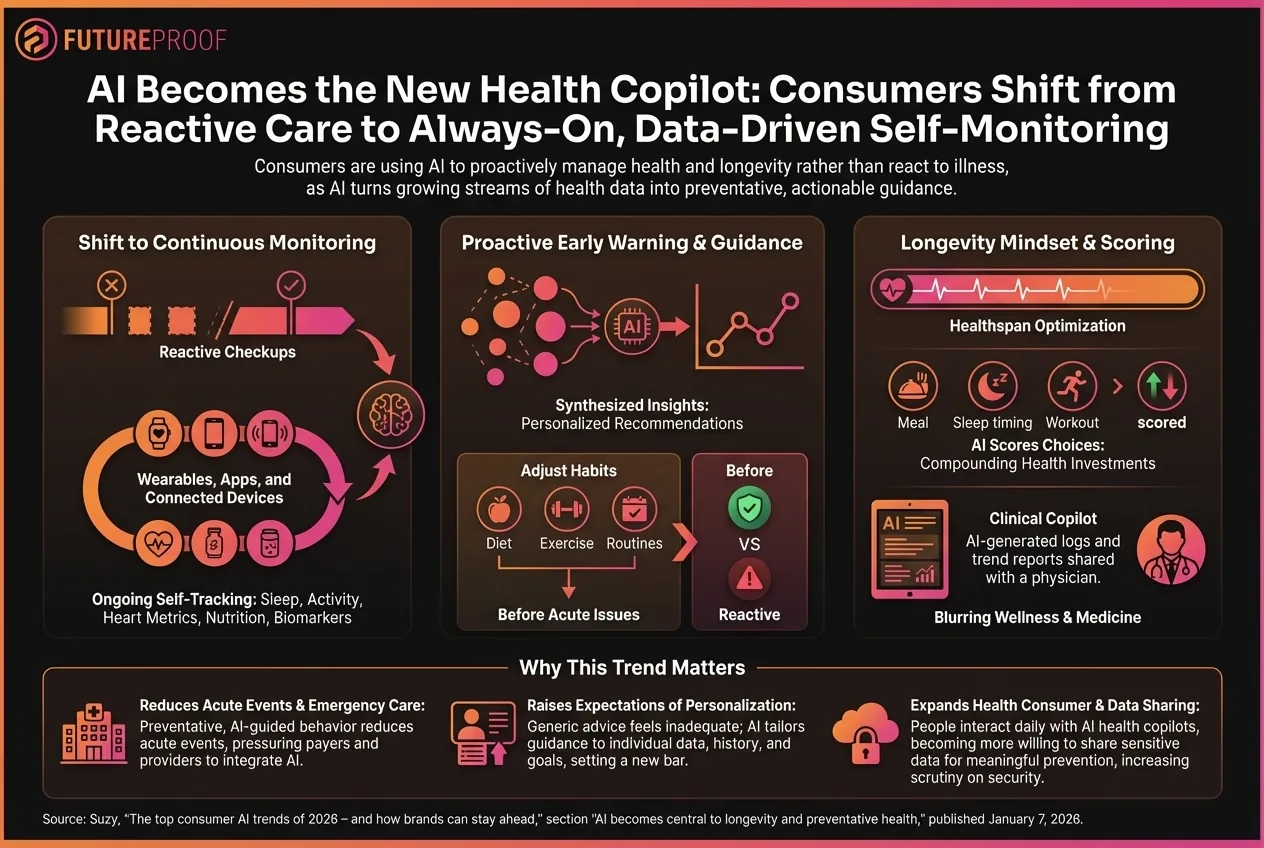
The landscape of personal health is undergoing a profound metamorphosis, propelled by the relentless march of artificial intelligence. We are witnessing a monumental shift from a healthcare paradigm rooted in reactive intervention to one defined by continuous, data-driven self-monitoring. AI is rapidly emerging as the indispensable health copilot, guiding consumers beyond the traditional boundaries of illness management toward an era of always-on health optimization. This transformative trend empowers individuals to take unprecedented control over their well-being, moving proactively to safeguard and enhance their longevity.
At the heart of this revolution is the ability to continuously track a myriad of personal health metrics. Gone are the days when health data was confined to periodic doctor visits or emergency room charts. Today, smart wearables, advanced sensors, and sophisticated mobile applications perpetually monitor vital signs like sleep patterns, heart rate variability, and blood oxygen levels. Beyond these foundational metrics, consumers are increasingly engaging with tools that track nutritional intake with granular detail, analyze exercise performance, and even monitor complex biomarkers through non-invasive or minimally invasive means. This constant influx of personal health data creates an unparalleled digital twin of an individual’s physiological state, offering a real-time, dynamic portrait of their health journey. This continuous stream of information, once overwhelming in its raw form, is now meticulously processed and interpreted by AI algorithms.
The true power of AI as a health copilot lies in its capacity to convert this vast ocean of data into personalized early warning insights. Rather than merely presenting raw numbers, AI systems analyze patterns, detect anomalies, and predict potential health risks before they manifest into serious conditions. Imagine an AI notifying you of subtle changes in your sleep architecture that suggest an impending period of high stress, or detecting a gradual increase in resting heart rate and reduced heart rate variability, prompting a recommendation to prioritize recovery and reduce strenuous activity. These are not generic alerts; they are insights tailored to an individual’s unique baseline, historical data, and lifestyle. This predictive capability is a game-changer, moving us from merely reacting to symptoms to pre-emptively mitigating risks, fostering a proactive approach to well-being that was previously unattainable.
These AI-driven insights are not just informational; they are actionable. People are increasingly using AI to guide everyday decisions that, when compounded over time, lead to significant long-term health gains. From recommending optimal hydration levels based on activity and environmental factors to suggesting specific dietary adjustments to balance blood glucose, or proposing a particular type of exercise to improve cardiovascular health, AI acts as a personal, omnipresent health advisor. This consistent guidance helps individuals make smarter choices about their diet, exercise, sleep, and stress management. The cumulative effect of these small, daily, AI-informed decisions is profound, laying the groundwork for sustained health improvements and disease prevention. This integrated approach elevates daily routines into powerful strategies for achieving enduring wellness, fundamentally altering how we perceive and manage our physical and mental states.
This profound shift marks a mainstream move toward healthspan optimization, a concept gaining significant traction globally. Healthspan refers to the period of life spent in good health, free from chronic disease and disability, in contrast to lifespan, which is simply the total number of years lived. AI is proving instrumental in expanding our healthspan by empowering individuals to live healthier, more vibrant lives for longer. By continuously monitoring and providing personalized guidance, AI helps people proactively address potential issues, maintain peak physical and cognitive function, and delay the onset of age-related decline. This proactive pursuit of sustained well-being represents a cultural evolution, where optimizing vitality and functional capacity becomes as important, if not more important, than merely extending life.
Furthermore, this AI-driven health revolution is blurring the lines between traditional wellness tools and clinical support. What were once considered simple fitness trackers are evolving into sophisticated diagnostic aids, capable of detecting atrial fibrillation or monitoring blood glucose levels. AI-powered mental wellness apps offer therapy-like interventions, while nutritional AI coaches provide dietary recommendations traditionally offered by registered dietitians. This convergence means that a significant portion of health management, historically confined to clinical settings, is now accessible directly to consumers through smart devices and applications. While AI is not replacing medical professionals, it is augmenting their capabilities and providing continuous, preventative support that complements clinical care, democratizing access to health insights and empowering self-management like never before.
Why It Matters: Reshaping Expectations Across Industries
The profound emergence of preventative, AI-guided behavior is fundamentally reshaping expectations across a spectrum of industries, from healthcare providers and insurance companies to fitness brands and nutrition enterprises. In healthcare, patients no longer passively await illness; they expect their providers to leverage their continuous health data for proactive interventions, personalized preventative care plans, and AI-assisted diagnoses. This demands a new level of digital integration and data literacy from medical professionals. For insurance companies, the traditional reactive model of paying for treatments after illness strikes is giving way to a preventative paradigm. Insurers are exploring models that incentivize healthy behaviors, leverage AI for risk assessment, and offer personalized wellness programs, potentially leading to dynamic, health-outcome-based premiums. The fitness industry is experiencing a seismic shift, moving beyond generic workout plans to hyper-personalized AI coaches that adapt routines based on real-time performance, recovery metrics, and even biomarker data. Nutrition brands are similarly transforming, with AI-driven apps offering bespoke meal plans, ingredient recommendations, and dietary adjustments based on an individual’s unique metabolism, gut microbiome, and health goals, creating a truly personalized approach to food as medicine.
Why It Matters: Personalization as the New Baseline
In this evolving health ecosystem, personalization is no longer a luxury; it has become the new baseline expectation for consumers. The era of one-size-fits-all health advice is rapidly fading. Consumers now expect guidance that is meticulously tailored to their unique physiological data, lifestyle choices, genetic predispositions, and personal health objectives. AI excels in delivering this level of personalization by analyzing vast datasets specific to an individual – from their sleep patterns and heart rate variability to their dietary preferences and activity levels – to generate insights and recommendations that are precisely relevant and actionable. This bespoke approach fosters a deeper sense of engagement and efficacy, as individuals receive advice that truly resonates with their body’s unique rhythms and requirements. This demand for hyper-personalization is driving innovation across all health-related sectors, compelling brands to invest heavily in AI-powered solutions that can understand and respond to individual needs with unprecedented granularity.
Why It Matters: Rising Willingness to Share Sensitive Health Data
A crucial indicator of this transformation is the rising willingness of consumers to share sensitive health data. This phenomenon underscores a growing trust in the value proposition of AI-powered health tools. Individuals are increasingly recognizing that sharing their continuous health metrics – from sleep cycles and heart rhythms to nutritional intake and activity levels – is a necessary step towards receiving the highly personalized and preventative insights that can genuinely improve their healthspan. However, this increased willingness comes with a heightened responsibility for brands. The bar for trust, privacy, and transparency is higher than ever before. Consumers demand clear communication on how their data is collected, stored, analyzed, and shared. Robust data security protocols, stringent privacy policies, and transparent algorithmic practices are not merely good practice but essential prerequisites for building and maintaining consumer confidence in the AI health ecosystem. Brands that prioritize these ethical considerations will be best positioned to thrive in this data-driven health landscape.
Why It Matters: Expanding Opportunities for Prevention-Focused Products
The broader engagement of consumers with health tools on a daily basis is unlocking a vast and expanding array of opportunities for prevention-focused products and services. As more people integrate continuous self-monitoring into their daily lives, the market for innovative solutions grows exponentially. This includes the development of more advanced wearable devices with enhanced sensor capabilities, smart home health technologies that integrate seamlessly into living spaces, and AI-powered diagnostic tools for early disease detection. Beyond hardware, there's a burgeoning market for AI-driven coaching platforms, personalized nutrition services, mental wellness apps, and proactive chronic disease management programs. This shift creates fertile ground for startups and established companies alike to innovate in areas ranging from precision medicine and genetic health insights to personalized fitness regimens and proactive mental health support. The focus is overwhelmingly on preventing illness and optimizing well-being, rather than simply treating symptoms, opening up entirely new categories of health products and services tailored to the proactive consumer.
According to a pivotal report by Suzy, "The top consumer AI trends of 2026 and how brands can stay ahead," published on January 7, 2026, consumers are now decisively using AI to proactively manage their health and longevity, rather than merely reacting to illness. This comprehensive analysis highlights how AI is deftly converting the ever-growing streams of personal health data – encompassing everything from daily steps and sleep quality to heart rate variability and dietary choices – into truly actionable preventative insights. This data-driven proactivity, as identified by Suzy, is a cornerstone of the new health paradigm, empowering individuals to make informed decisions that compound into significant long-term health gains. The report underscores the mainstream adoption of AI as an essential tool for personal health governance, solidifying its role as a key enabler of a future where wellness is a continuous, informed, and highly personalized journey.
The implications of AI becoming the new health copilot are profound and far-reaching. This isn't just a technological advancement; it's a fundamental redefinition of our relationship with health and well-being. By moving from a reactive stance, where we respond to illness, to an always-on, data-driven self-monitoring approach, we are empowering individuals to become active architects of their healthspan. AI-driven personalization ensures that health guidance is relevant and effective, while the increasing willingness to share data underscores a growing trust in these intelligent systems. This transformation is reshaping entire industries, creating new opportunities for innovation, and ultimately promises a future where living a longer, healthier, and more vibrant life is not just an aspiration but an achievable reality for a broader segment of the population. The era of the AI health copilot is not just arriving; it is already here, guiding us towards a healthier, more optimized future.