How AI Agents Are Collapsing the Shopping Funnel and Redefining Consumer Commerce
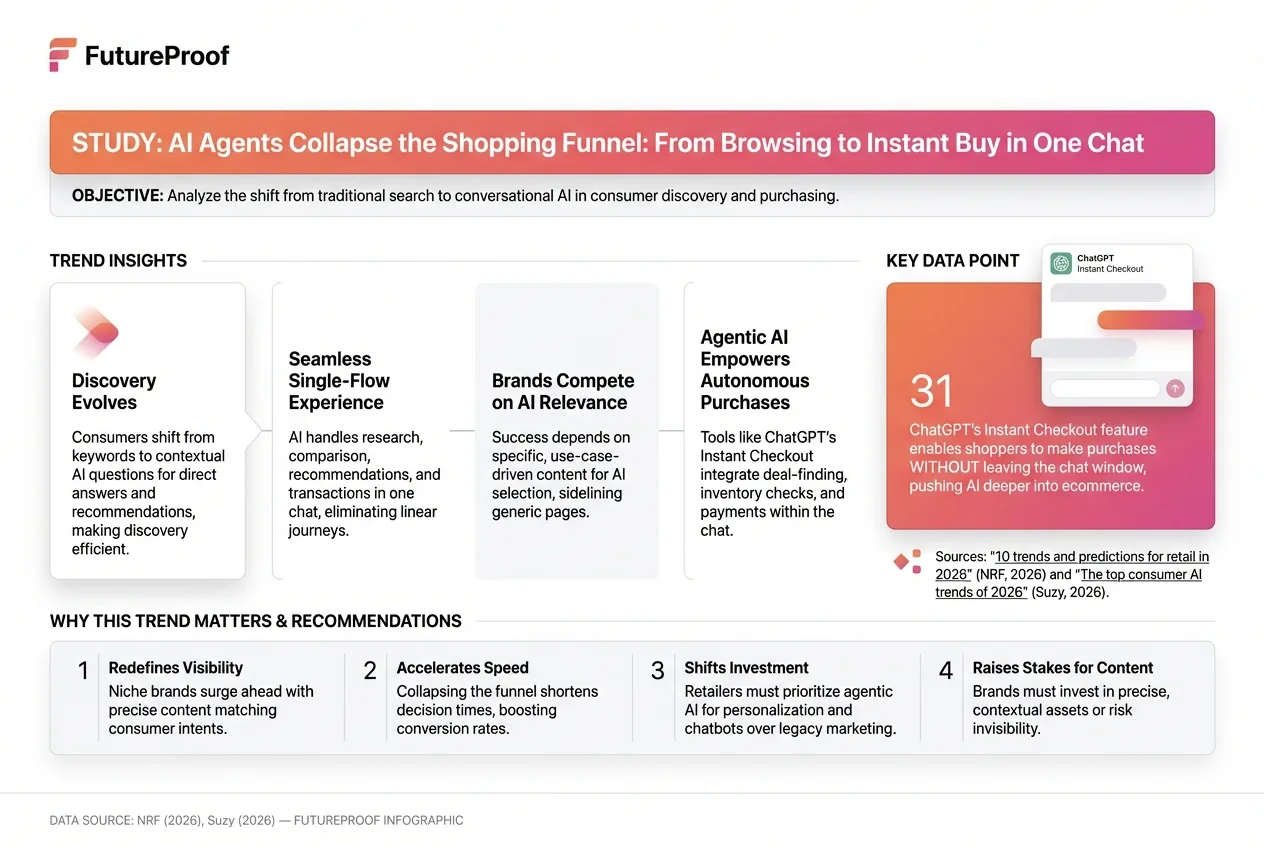
The landscape of consumer commerce is undergoing a radical, irreversible transformation, driven not by new search algorithms or social media trends, but by the fundamental shift in how consumers interact with information itself. AI agents are not just optimizing the shopping funnel; they are fundamentally collapsing it, reshaping the very fabric of how discovery, comparison, and purchase coalesce into a single, seamless conversational journey. Brands that fail to recognize this seismic shift, clinging to outdated notions of keyword visibility, risk being left in the digital dust. The new imperative is not to be the most visible answer, but to be the most contextually relevant one, delivered precisely when and where the consumer needs it most.
For decades, the shopping funnel has been a meticulously designed, multi-stage pipeline: awareness, interest, consideration, intent, evaluation, purchase, and loyalty. Each stage represented a distinct touchpoint, often fragmented across various platforms—search engines for discovery, brand websites for information, comparison sites for evaluation, and separate e-commerce platforms for transactions. Marketers poured resources into optimizing each stage, crafting content for specific keywords and deploying retargeting campaigns to shepherd consumers through the labyrinthine journey. This linear, often disjointed path, however, is rapidly becoming a relic of a bygone era.
The advent of sophisticated AI, particularly large language models powering conversational agents, has profoundly altered consumer behavior. Consumers are no longer content with typing fragmented keywords into a search bar, sifting through pages of results, clicking multiple links, and performing mental gymnastics to synthesize information. Instead, they are engaging in natural language conversations, posing complex questions, describing nuanced needs, and expecting immediate, comprehensive answers. This shift from keyword search to conversational journeys means that the traditional funnel, with its distinct, drawn-out stages, is being compressed and integrated into a single, fluid interaction. Discovery, comparison, and purchase now happen concurrently, often within the same chat interface, mimicking the natural flow of human conversation rather than a rigid sales process.
This radical compression of the shopping funnel demands a complete re-evaluation of marketing and sales strategies. Brands no longer win by dominating broad keyword rankings or having the loudest ad campaigns. The new competitive edge lies in being the most contextually relevant answer. What does this mean in practice? It means an AI agent, acting as an intelligent intermediary, doesn't just pull up a product page based on a keyword match. Instead, it understands the user's underlying intent, their expressed preferences, their implicit needs based on prior interactions, and even external factors like weather, time of day, or current events, to surface the exact product or service that aligns with their unique situation. This nuanced understanding moves far beyond traditional SEO, demanding a depth of content and data integration that can inform AI models with unparalleled precision.
The most potent accelerator of this collapsed funnel paradigm is the emergence of functionalities like ChatGPT’s Instant Checkout. This feature represents a watershed moment in e-commerce, dissolving the final barrier between intent and transaction. The key data point underscores this monumental shift: ChatGPT’s Instant Checkout now supports end-to-end buying inside the chat window, from deal finding to payment. (Source: NRF 2026 Trends and Suzy Consumer AI Trends 2026) This is not merely an incremental improvement; it is a fundamental restructuring of the purchasing process. Consumers can now articulate a need, discover relevant options, compare features, get personalized recommendations, find the best deal, and complete the payment—all within a single, continuous chat session. The friction points of navigating to external websites, filling out forms, or even remembering passwords are eliminated. The path from question to transaction truly becomes a single, frictionless flow.
For brands, the implications of Instant Checkout are profound and necessitate an immediate strategic overhaul. The imperative is no longer just to generate traffic to a website but to embed the entire purchasing journey within the conversational interface. This demands an unprecedented level of integration between product catalogs, inventory management systems, pricing engines, customer relationship management (CRM) data, and secure payment processing, all accessible and actionable by an AI agent. The "moment of intent" is no longer a theoretical concept but a tangible, real-time opportunity that must be capitalized on instantly, within the chat window, or the sale is lost to a more agile competitor.
In this new AI-driven commerce ecosystem, the quality and structure of content become paramount. The era of generic product descriptions and broad informational articles is waning. Instead, brands must focus on creating precise, use case-driven content that AI can readily understand, process, and surface at the exact moment of need. This means moving beyond simple product specifications to develop content that anticipates specific consumer questions and scenarios. For example, instead of just listing features of a vacuum cleaner, content should detail its performance on pet hair on hardwood floors versus carpets, its suitability for small apartments versus large homes, or how it compares to a specific competitor model in terms of noise level and battery life.
This content must be meticulously structured and semantically rich, allowing AI to extract specific data points, compare attributes, and generate tailored recommendations. Think of detailed comparison charts, benefit-driven narratives, specific "how-to" guides for various applications, and FAQs optimized not just for search queries but for conversational prompts. The content should be atomized and modular, allowing AI to dynamically assemble answers based on the evolving context of the conversation. Brands must invest in natural language processing (NLP) optimized content strategies, ensuring that their product information, customer support documentation, and marketing messages are not just readable by humans but are also highly machine-readable and understandable by AI agents tasked with guiding purchase decisions.
The bar for retailers has been unequivocally raised. They must now anticipate the exact questions consumers will ask and provide answers that are not only accurate but also directly actionable within the conversational flow. This requires a deep understanding of customer pain points, buying motivations, and product usage scenarios. Retailers need to think like an AI, anticipating the full spectrum of user queries from initial discovery ("I need a gift for my tech-savvy uncle who loves outdoor gadgets") to specific comparisons ("Is the new Smartwatch X better than Smartwatch Y for tracking triathlons?") to final transactional details ("What's the return policy if it doesn't fit? Can I pay with Apple Pay?").
The strategic imperative for brands in this collapsed funnel era is multifaceted. Firstly, data integration is no longer optional; it’s existential. Product catalogs, inventory levels, pricing, customer reviews, historical purchase data, and customer service interactions must be seamlessly accessible to AI agents to provide personalized, relevant, and accurate information. Secondly, AI-powered content strategy is crucial. Brands need tools and processes to generate, optimize, and maintain vast libraries of precise, use case-driven content. This includes leveraging AI itself to identify content gaps, analyze conversational data for emerging trends, and even draft initial content iterations. Thirdly, personalization at scale becomes the standard. AI agents can leverage individual customer data to offer truly bespoke recommendations, promotions, and support, creating a highly tailored shopping experience that builds loyalty directly within the chat. Finally, embracing the full chat journey means retailers must shift their mindset from driving traffic to external sites to owning the entire customer journey within the conversational interface, from initial query to post-purchase support.
In conclusion, the AI-driven collapse of the shopping funnel is not a distant future trend; it is the present reality. With AI agents facilitating discovery, comparison, and purchase within single conversational flows, and features like ChatGPT’s Instant Checkout transforming questions into immediate transactions, brands must adapt or face obsolescence. The era of being merely visible is over; the new competitive arena demands unparalleled contextual relevance. Retailers that invest in precise, use case-driven content, deeply integrated data, and a holistic AI-first approach to customer engagement will be the ones that thrive, navigating this revolutionary shift and capturing the loyalty of a new generation of AI-powered shoppers. The future of commerce is conversational, immediate, and profoundly intelligent, and the brands that master this new paradigm will unlock unprecedented opportunities for growth and customer connection.