2026: The Year AI Becomes an Indispensable Consumer Tool
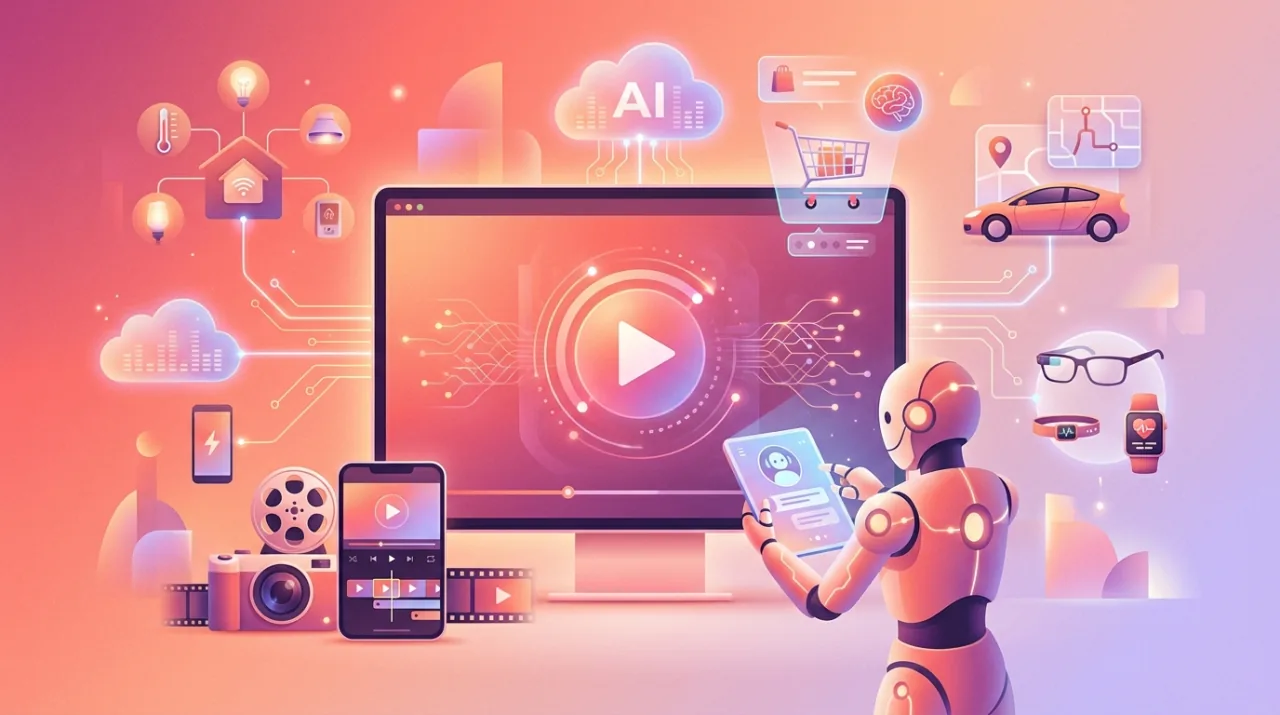
In the dynamic tapestry of technological innovation, few threads have proven as transformative as Artificial Intelligence. For years, the narrative around AI has largely been dominated by its enterprise applications – powering back-office automation, optimizing supply chains, and fueling sophisticated data analytics for large corporations. However, a significant paradigm shift is on the horizon, one that promises to bring AI from the boardrooms directly into the daily lives of billions. A recent TechCrunch piece, published on January 8, 2026, featuring insights from VC Vanessa Larco, boldly declares that 2026 will be “the year of the consumer” for AI, marking an inflection point driven by the rapid adoption of AI-powered concierge-like services and sophisticated agent-style experiences. This isn't merely an incremental upgrade; it represents a fundamental reorientation of how we interact with technology and conduct our lives online, a shift so profound it will reshape industries and redefine convenience.
The journey of AI has been characterized by waves of innovation, each building upon the last. Initially, the focus was on foundational research and the development of core algorithms. Then came the era of specialized enterprise solutions, where AI delivered tangible, albeit often invisible, value within organizations. Companies invested heavily in AI to streamline operations, enhance security, and gain a competitive edge in various business functions. Yet, despite the impressive capabilities demonstrated in corporate settings, the direct, personal impact of AI on the average individual remained somewhat peripheral. Voice assistants offered basic commands, recommendation engines subtly guided our choices, and smart home devices began to integrate, but a truly seamless, proactive, and deeply integrated AI experience for the consumer was still largely aspirational.
Larco's perspective, highlighted in the TechCrunch report, posits that this is about to change dramatically. She observes that while enterprise AI rollouts are often slowed by layers of bureaucracy, complex integration challenges, and the inherent difficulty of identifying clear starting points within vast organizational structures, consumers operate with a refreshing clarity of purpose. People intuitively understand what they want AI to do for them: plan trips, manage mundane tasks, simplify shopping, facilitate learning, and generally alleviate the mental load of modern life. When an AI tool directly addresses these everyday problems with efficacy and ease, consumers quickly adopt it and, crucially, stick with it. This direct, demand-driven adoption cycle is the engine poised to propel consumer AI into its breakout year, transforming it from a niche novelty into an indispensable utility. The "prosumer" segment – individuals who demand professional-grade tools for personal use – will further accelerate this trend, blurring the lines between personal efficiency and professional productivity with powerful, accessible AI agents.
AI as the Internet's New Operating System: The Rise of Conversational Commerce
Perhaps one of the most compelling aspects of this impending shift is the emergence of chatbot-based consumer AI as an "operating system" for the internet. For years, operating systems have defined how we interact with devices, providing the graphical user interface (GUI) and the underlying framework for applications. In the desktop era, Windows and macOS dominated; in mobile, iOS and Android took center stage. Now, AI is poised to become the conversational layer that orchestrates our digital lives, moving beyond mere search or Q&A into the very transactional fabric of the internet.
OpenAI's strategic integration of applications into ChatGPT serves as a powerful harbinger of this future. The TechCrunch article explicitly mentions users’ newfound ability to shop at Target, browse homes on Zillow, book travel with Expedia, or build Spotify playlists without ever leaving the chat interface. This is not just about convenience; it's about a fundamental re-imagining of the user journey. Instead of navigating multiple websites, downloading separate apps, or juggling various logins, the AI acts as a unified gateway. You articulate your need, and the AI agent intelligently connects with the relevant service, executes the request, and presents the results, all within a single, coherent conversational thread.
This pushes AI further into the transactional layer of consumer life. Previously, AI might have helped you find a product or research a travel destination. Now, it directly facilitates the purchase, the booking, or the configuration. This means that the AI platform itself becomes a central hub for commerce, a digital bazaar where users can initiate and complete complex tasks with minimal friction. Imagine asking your AI to "find me a flight to London next month under $800, leaving after 2 PM" and receiving not just search results, but actionable booking options directly within the chat, complete with payment processing. Or instructing it to "order my usual groceries from Target for delivery tomorrow," and having it intelligently populate your cart, apply discounts, and schedule the delivery based on your preferences.
The implications of this "conversational operating system" are vast. For consumers, it promises unparalleled ease and efficiency, consolidating fragmented digital experiences into a streamlined, intuitive flow. For businesses, it presents both an immense opportunity and a significant challenge. The ability to integrate seamlessly into dominant AI platforms will be crucial for discovery and conversion, necessitating new API strategies and a shift in how brands engage with their customer base. The battle for the AI "desktop" is on, and the victor will control not just attention, but direct transactional power.
The Rise of Concierge AI: Specialized Agents vs. General-Purpose Assistants
As AI matures and integrates deeper into our daily routines, Larco predicts a natural evolution towards “concierge-like services” that proactively execute end-to-end tasks on a user’s behalf. This moves beyond simply answering questions or providing information; it's about intelligent agents that anticipate needs, manage complex processes, and take action autonomously, truly acting as a digital personal assistant.
Consider the complexity of planning a vacation. Traditionally, it involves researching destinations, comparing flights and hotels, reading reviews, planning itineraries, booking activities, and managing budgets. A concierge AI would abstract away much of this complexity. You might simply state: "Plan a romantic weekend getaway to a European city for my partner and me in early autumn, keeping budget around $2,000, including flights and a boutique hotel." The AI would then leverage its integrations with travel platforms like Expedia, analyze your preferences (perhaps gleaned from past travel or linked calendars), scout for deals, present a curated list of options, and upon your approval, proceed to book everything, sending confirmations directly to your digital wallet and calendar.
This vision of end-to-end task execution raises a fundamental strategic question for the future of consumer AI: which use cases will favor specialized agents versus general-purpose assistants?
Specialized AI Agents are designed for deep expertise within a narrow domain. Think of an AI that is solely dedicated to financial planning, a health AI that manages appointments and medication reminders, or an educational AI that tutors in specific subjects. These agents can achieve unparalleled accuracy and nuanced understanding within their specialized scope. They might tap into vast, domain-specific databases, employ tailored algorithms, and offer highly personalized insights that a generalist might miss. The benefit here is precision and depth. If you need highly specific legal advice, a specialized "legal agent AI" would likely be more reliable than a general-purpose assistant. However, a user might need to interact with multiple specialized agents for different aspects of their life, potentially leading to a fragmented experience.
General-Purpose Assistants, epitomized by platforms like advanced versions of ChatGPT, aim to be the universal interlocutor. They are designed to handle a broad range of queries and tasks, leveraging their vast knowledge bases and extensive API integrations. The advantage of a generalist is convenience and centralization. You interact with one AI for everything from ordering pizza to scheduling a meeting, from drafting an email to researching a historical event. The challenge, however, lies in maintaining depth and accuracy across such a wide spectrum of tasks. A generalist might provide adequate information for many topics but may lack the granular detail or specialized functionality of a dedicated agent. The "jack of all trades, master of none" dilemma could plague overly ambitious generalist AI.
The market will likely see a hybrid ecosystem evolve. General-purpose assistants might serve as the primary interface, capable of handling most routine requests, but seamlessly delegate complex, domain-specific tasks to specialized agents. For instance, your general assistant might initiate a health query, then hand you off to a "medical diagnostic agent" for a more in-depth consultation, or connect you with a "financial advisor agent" when you discuss investment strategies. The integration and interoperability between these various AI entities will be key to creating a truly seamless and powerful consumer experience, blurring the lines between broad utility and deep expertise. This strategic choice – whether to build an all-encompassing AI or a niche specialist – will shape product development and competitive landscapes for years to come.
Disintermediation and the Platform Power Struggle
One of the most profound implications of AI becoming the primary front-end for online activity is the potential for disintermediation of legacy consumer brands. If AI front-ends control discovery and conversion, traditional websites and apps for travel, health, advice, and even retail could see their direct traffic diminish significantly.
Consider a consumer who wants to book a flight. In the current paradigm, they might open the Expedia app, go to Google Flights, or visit an airline's website. In the "Year of the Consumer AI," they simply tell their AI assistant, "Book me a round trip to Paris for spring break." The AI, leveraging its integrations and understanding of user preferences, processes the request, selects optimal flights and accommodations, and presents the user with a ready-to-book itinerary. The user never directly interacts with Expedia's interface, Zillow's search engine, or Target's product pages. The AI becomes the gatekeeper, the trusted curator, and the transaction facilitator.
This shift poses an existential threat to brands that have built their business on direct user engagement and proprietary user interfaces. How do they maintain brand loyalty and drive revenue if the AI is making the choices and completing the transactions? Legacy brands must adapt by ensuring their services are accessible and optimized for AI integration, providing APIs and data feeds that allow AI agents to seamlessly access their offerings. They will need to focus on product differentiation, competitive pricing, and building a strong "AI brand identity" that ensures their services are favored by the AI algorithms making selection decisions.
Compounding this challenge is the looming issue of platform power and the "platform tax." If platforms like ChatGPT (or its future equivalents) become the dominant consumer gateway, they will wield immense control over market access. Just as app stores take a percentage of in-app purchases, these AI platforms may impose a "platform tax" on transactions facilitated through their interface. Larco specifically flags this, raising questions about whether companies like Airbnb – which relies heavily on direct bookings and its own brand experience – would participate if a significant percentage of their transaction revenue is siphoned off by an AI gateway.
This creates a high-stakes strategic dilemma. For a brand, refusing to integrate with a dominant AI platform could mean losing access to a vast and growing user base, effectively becoming invisible in the new digital landscape. Participating, however, could mean ceding control over customer relationships, potentially commoditizing their offerings, and accepting a significant cut of their revenue. This tension will drive complex negotiations and potentially lead to the rise of new business models, where brands might prioritize unique experiences or subscription services directly through their own channels, even while integrating basic transactional capabilities with AI platforms. The battle for the future of digital commerce will not just be about product innovation, but also about the balance of power between service providers and the AI orchestrators.
Voice-First Interaction: Redefining the User Interface
Amidst the evolution of AI agents and transactional capabilities, the interface itself is undergoing a profound transformation. The TechCrunch article notes a decisive shift toward voice-first interaction. For many everyday questions and tasks, speaking to an AI already feels more natural and intuitive than typing. This natural language processing capability is not merely a convenience; it is fundamentally reshaping how designers think about form factors and multimodal experiences.
Our default mode of communication as humans is speech. Typing, while efficient for complex tasks, often feels like an unnatural barrier for quick queries or simple commands. As AI's ability to understand context, nuance, and intent through spoken language improves, the friction associated with interacting with technology diminishes dramatically. Instead of pulling out a phone, unlocking it, opening an app, and typing a query, we can simply articulate our needs: "AI, what's the weather like tomorrow?", "AI, play my workout playlist," or "AI, add milk to my shopping list."
This shift has significant implications for product design and hardware development. Screens, while still important for visual confirmation and rich media, may become secondary interfaces in many contexts. We are already seeing this with the proliferation of smart speakers and hearable devices that prioritize audio interaction. Future form factors could be even more ambient and integrated into our environments – AI chips embedded in glasses, clothing, or furniture, responding to voice commands seamlessly.
Multimodal experiences will become the norm, where voice input triggers visual feedback on a nearby screen, haptic responses from a wearable, or even contextual information through augmented reality. Imagine asking your AI about a landmark you're looking at through smart glasses, and the AI providing a voice narration while overlaying historical facts on your vision. This blend of sensory inputs creates a richer, more immersive, and more natural interaction paradigm, moving us closer to a future where technology truly blends into the background of our lives, responding to us as a natural extension of our thoughts and intentions. While challenges such as accuracy, privacy, and maintaining context in multi-turn conversations remain, the momentum towards voice-first interaction is undeniable, promising a more effortless digital existence.
The Inflection Point: From Novelty to Necessity
The convergence of these trends – the shift to consumer focus, AI as an internet operating system, the rise of concierge agents, the battle for platform power, and the embrace of voice-first interaction – all point to one resounding conclusion: 2026 is the inflection point where consumer AI agents move from novelty to the primary way people discover, decide, and act online. What was once an experimental feature or a futuristic concept will rapidly transition into an indispensable tool, woven into the fabric of daily life.
This means a fundamental change in consumer behavior and expectation. Users will increasingly expect AI assistance across all their digital interactions. The friction of navigating multiple interfaces, manually comparing options, or meticulously planning complex tasks will be seen as an antiquated burden. The AI will become the trusted co-pilot, anticipating needs, offering proactive suggestions, and streamlining processes with an efficiency that human effort alone cannot match.
This transformation necessitates the development of entirely new monetization models and product strategies across the consumer tech landscape. Companies can no longer simply build an app and expect users to find it. They must consider:
- Subscription Models: Advanced, personalized AI agents offering premium features or deeper integrations might command subscription fees.
- Transaction-based Fees: The "platform tax" issue will define how revenue is shared between AI platforms and service providers.
- Data Monetization (Ethical & Private): Leveraging anonymized and aggregated user data (with strict privacy controls) to refine AI services and provide insights.
- AI-Native Product Design: Products will be designed from the ground up to be AI-first, leveraging conversational interfaces, proactive assistance, and deep integration into AI ecosystems.
- Brand Partnerships: Strategic alliances between legacy brands and AI platform developers will be crucial for maintaining visibility and driving conversions.
- Value Beyond the Transaction: Brands may need to emphasize unique experiences, brand identity, and customer service that AI platforms cannot fully replicate, even while facilitating transactions through AI.
The companies that understand and adapt to this new AI-centric consumer landscape will thrive. Those that cling to outdated models risk being disintermediated and rendered irrelevant. The competitive edge will belong to those who can create the most intelligent, intuitive, and seamless AI experiences for the consumer.
Conclusion: Looking Ahead in the Consumer AI Landscape
The insights from TechCrunch and Vanessa Larco paint a vivid picture of 2026 as a truly pivotal year for Artificial Intelligence. The shift from enterprise-centric applications to pervasive, indispensable consumer AI agents represents a monumental leap forward, promising to fundamentally redefine convenience, efficiency, and human-technology interaction. From managing our daily chores with concierge-like precision to transacting seamlessly across the internet through conversational interfaces, AI is poised to become the invisible hand guiding our digital lives.
This impending transformation is not without its challenges – questions of platform power, disintermediation, and the intricate balance between specialized and generalist AI agents will shape the competitive landscape. Yet, the overwhelming momentum suggests an era where AI moves beyond novelty to become a primary, essential utility for consumers. Businesses and developers must heed this call, adapting their strategies, innovating their products, and embracing the voice-first, agent-driven future. The "year of the consumer" for AI in 2026 will not merely be a calendar marker; it will be a foundational moment in the ongoing story of human-machine co-evolution, ushering in an era of unprecedented personalization and efficiency for everyone.