The Future of Retail Discovery Is Visual AI Shopping
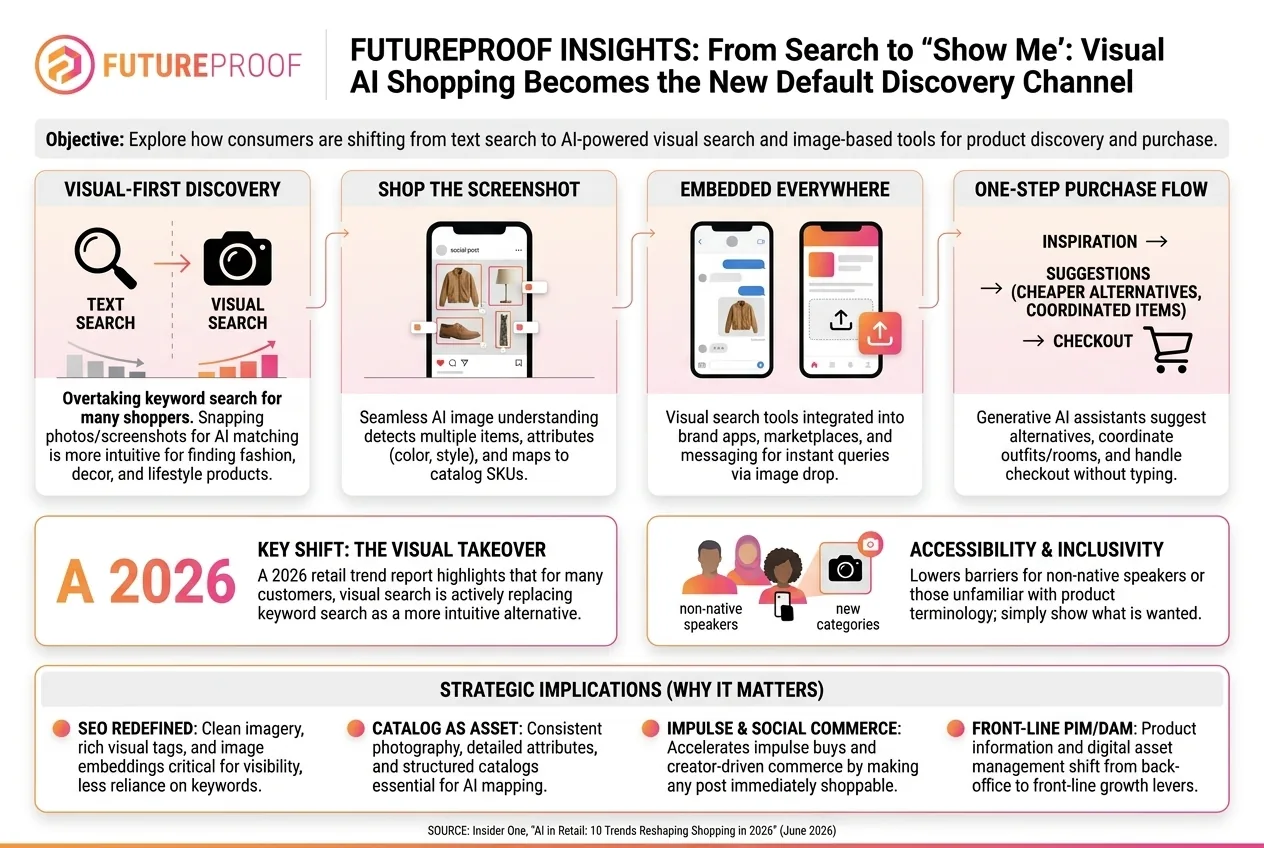
The landscape of online shopping is undergoing a seismic transformation, moving irrevocably beyond the confines of keyword-driven discovery to embrace the intuitive power of visual AI. For years, our digital shopping journeys began with a typed query into a search bar, a careful selection of keywords to articulate a desire. Today, however, a new default is emerging: the "show me" economy, where a simple photo or screenshot instantly unlocks a universe of similar products. This profound shift, powered by advanced artificial intelligence, is not merely an incremental improvement; it is fundamentally reshaping how retailers must approach search, content, and the critical path to conversion, marking visual AI shopping as the new frontier of retail discovery.
The catalysts for this change are multifaceted, driven by both technological leaps and evolving consumer behaviors. Foremost among these is the undeniable fact that visual search is rapidly becoming the preferred discovery method, particularly in highly aesthetic and trend-driven categories such as fashion, home decor, and even art. For countless shoppers, the abstract effort of describing a specific style, pattern, or texture with words feels clunky and imprecise compared to the immediate clarity of an image. How does one accurately keyword-search for a "boho-chic, distressed denim jacket with intricate embroidery on the back and a faded wash"? It's a verbose and often frustrating exercise. In contrast, snapping a photo of such a jacket seen on social media or in a magazine, or even a screenshot from a video, allows AI to instantly parse its unique attributes and surface perfectly matched or closely similar items. This intuitive "I know it when I see it" approach is actively replacing traditional keyword search for many consumers, offering a frictionless and far more satisfying discovery experience.
Underpinning this revolution is the astonishing sophistication of modern AI, particularly in the fields of computer vision and deep learning. Today's AI can do far more than simply identify an object; it can intricately dissect an image, detecting multiple distinct items within a single frame – a sofa, a coffee table, a lamp, and a rug in one living room shot, for instance. Crucially, it then maps a vast array of attributes like color, style, pattern, material, brand, and even abstract aesthetic qualities directly to corresponding catalog SKUs with unparalleled accuracy. This granular understanding allows AI to bridge the gap between a visual inspiration and a purchasable product, creating a seamless connection that was previously impossible. Imagine a shopper uploading a picture of an entire outfit; the AI can identify the dress, shoes, handbag, and accessories, offering direct links to each item or suggesting alternatives that complete the look.
Furthermore, the ubiquity of visual search capabilities across an ever-expanding ecosystem of digital touchpoints is propelling its adoption. It's no longer confined to niche apps; visual search is now seamlessly integrated across popular retail apps, vast online marketplaces, and even direct messaging platforms. Consumers can effortlessly upload or paste an image into their favorite shopping environment, bypassing the need to type out a single word. This pervasive integration means that inspiration can strike anywhere – on Instagram, Pinterest, TikTok, a friend's WhatsApp message, or even a screenshot from a streaming service – and immediately translate into a shoppable moment. This continuous, always-on potential for discovery meets consumers exactly where they are, transforming passive content consumption into active, intent-driven shopping.
The power of visual AI is further magnified when layered with the emergent capabilities of generative AI. Beyond merely finding similar items, intelligent assistants powered by generative AI can now act as personalized stylists or interior designers. A shopper might upload a photo of a dress they like and ask the AI to "recommend accessories to complete this look" or "build a full outfit for a semi-formal event around this dress." The AI can generate visual recommendations, mix-and-match items from various categories, and even facilitate a complete checkout flow, all within a single, conversational interaction. This elevates visual discovery from a simple product match to a holistic, guided shopping experience, personalizing recommendations and streamlining the purchase journey to an unprecedented degree.
For retailers, understanding these drivers is paramount, as the implications for their business models are profound and urgent. The shift from text-based SEO to visually optimized catalogs is perhaps the most significant immediate challenge and opportunity. In this new paradigm, product discovery is less about meticulously crafted keywords and more about the quality, richness, and structure of a retailer's visual assets and associated data. High-quality imagery is no longer just a nice-to-have; it becomes the primary indexing mechanism for AI-powered visual search engines. This means investing in diverse, high-resolution photographs that showcase products from multiple angles, in various contexts (lifestyle shots), and with consistent lighting and staging. Each image needs to be accompanied by robust, granular, and consistently structured product data – metadata that meticulously describes every attribute an AI might detect, from color swatches and material composition to specific patterns, styles, and even the emotional tone or occasion suitability of an item. This rigorous approach to catalog hygiene and visual asset management will become a strategic differentiator, directly impacting a retailer's discoverability and, consequently, their market share.
Indeed, product imagery, metadata, and catalog hygiene are no longer peripheral concerns; they are now strategic differentiators. In a visual-first shopping environment, a retailer's collection of images is their new search index, and the richness of their metadata is the fuel that powers AI's ability to connect inspiration with product. An AI's ability to accurately match a customer's visual query depends entirely on the clarity and descriptive detail of the retailer's product information. This means moving beyond generic descriptions to embrace granular attributes that allow AI to understand nuances. For example, a "blue dress" needs to be tagged with "navy," "royal," "sky blue," or "teal" as appropriate, along with "A-line," "midi," "rayon," "floral print," and "bohemian style." Retailers who prioritize this level of detail and consistency across their entire catalog will find themselves at a distinct advantage, improving search accuracy, enhancing conversion rates, and even reducing returns by setting clear visual expectations. The investment in robust Product Information Management (PIM) systems and AI-powered catalog enrichment tools is no longer optional; it is essential for survival and growth.
This visual revolution also dramatically accelerates social and impulse commerce, transforming virtually any image into a potential shoppable entry point. Consider a shopper scrolling through Instagram, seeing an influencer wearing a captivating pair of sneakers. With integrated visual search, that image can instantly lead them to the product page, reducing the friction and cognitive load traditionally associated with finding and purchasing an item. This "see it, want it, buy it" phenomenon shortens the path from inspiration to conversion, capitalizing on fleeting moments of desire. Platforms like Pinterest, Instagram, and TikTok are already heavily investing in making their visual content shoppable, but visual AI takes this to the next level by empowering any image to become a direct portal to a product. Retailers who can effectively leverage user-generated content (UGC), influencer collaborations, and real-time visual streams, making them instantly shoppable through visual search, will tap into powerful new channels for driving serendipitous discovery and accelerating sales.
Beyond convenience and commercial gain, visual search expands accessibility for a broader global audience and anyone struggling to articulate their desires with words. Language barriers often create significant friction in traditional text-based search. A shopper in one country might describe a certain pattern as "paisley," while another uses a different term. Visual search transcends these linguistic differences, allowing universal understanding through images. Similarly, individuals who might know precisely what they want but lack the specific vocabulary to describe it – perhaps a niche vintage item, a specific shade of an uncommon color, or an abstract style – are empowered by visual AI. They no longer need to approximate their desires with cumbersome keywords; they can simply "show" the AI what they're looking for. This democratization of product discovery empowers a wider range of consumers, making online shopping more inclusive and user-friendly for everyone. As a 2026 retail trends report from Insider One titled "AI in Retail: 10 Trends Reshaping Shopping in 2026" starkly highlights, for many customers, visual search is indeed replacing keyword search as a more intuitive way to find products, underscoring the urgency for retailers to adapt.
To effectively navigate this shift, retailers must embark on a multi-pronged strategy. First, a thorough audit of existing product catalogs is essential. This involves assessing the quality and consistency of all imagery, the completeness and accuracy of product attributes, and the overall structure of their product data. This foundational work ensures that AI has clean, rich data to work with. Second, investment in specialized AI tools and platforms is crucial. This includes visual search engines, image recognition APIs, and advanced catalog enrichment solutions that can automatically extract attributes from images and suggest improvements to metadata. Third, a proactive approach to imagery is necessary: moving beyond basic product shots to embrace high-resolution, diverse angles, contextual lifestyle imagery, and even 360-degree views or short product videos. Fourth, refining product data management to ensure granular attributes, standardized taxonomies, and robust metadata for every single visual asset becomes a non-negotiable. Finally, retailers must integrate visual search capabilities seamlessly across all customer touchpoints – their website, mobile app, and potentially even social media and messaging channels – and continually monitor analytics to understand how customers are interacting with these new tools, iterating and optimizing based on real-world usage patterns. This cross-functional effort, spanning marketing, merchandising, IT, and data science, is critical for successful implementation.
Looking ahead, the evolution of visual AI in retail promises even more groundbreaking advancements. We can anticipate deeper integration with augmented reality (AR) and virtual reality (VR), allowing shoppers to virtually "try on" clothes, place furniture in their homes, or explore entire virtual stores with visual cues guiding their journey. Personalized styling AI will become increasingly sophisticated, learning not just from explicit preferences but from subconscious visual cues, proactively suggesting items and building complete looks before the customer even thinks to search. The vision of an AI-powered shopping assistant that intuitively understands our visual desires, anticipates our needs, and curates entire shopping experiences based on what we "show" it, rather than what we type, is fast approaching reality. This shift portends a future where retail becomes an even more immersive, intuitive, and deeply personalized experience, blurring the lines between inspiration, discovery, and purchase. Ethical considerations around data privacy and algorithmic bias in visual recommendations will, of course, also need careful navigation to ensure equitable and trustworthy systems.
In conclusion, the days of keyword supremacy in online retail are waning. The ascent of visual AI shopping represents not merely a technological upgrade but a fundamental reorientation of the discovery process, mirroring our inherent human tendency to understand and react to the world visually. From a casual screenshot on social media to a sophisticated AI assistant building a personalized ensemble, the ability to "show me" what one desires is becoming the new default. Retailers who embrace this paradigm shift, investing in visually optimized catalogs, robust metadata, and integrated visual search capabilities, are not just adapting to a trend; they are securing their position at the forefront of the next generation of e-commerce. As the Insider One report definitively states, visual search is replacing keyword search for many customers, making the imperative for retailers clear: the future of discovery is visual, and those who fail to see it will be left behind in the digital dust. The time to transition from text-based SEO to a visual-first strategy is now, creating more intuitive, accessible, and ultimately more human-like shopping experiences for an increasingly visually literate consumer base.