
How AI is Transforming Consumer Experiences in the US
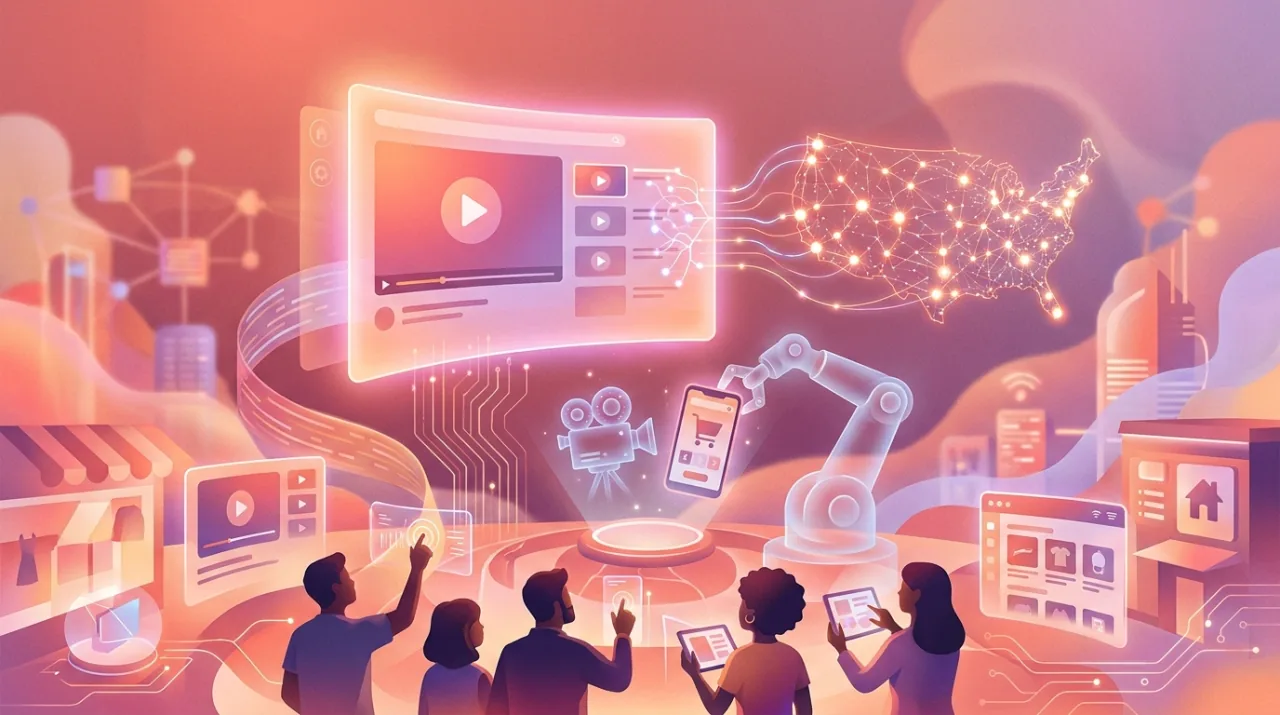
The landscape of artificial intelligence in the United States is undergoing a profound transformation, shifting from abstract technological advancements to concrete, consumer-facing value. A seminal New York Times article, published on August 3, 2026, titled “What Are Companies Getting for All That A.I. Spending?”, illuminates this critical pivot. The piece offers a meticulously researched look into how mainstream U.S. companies are now translating their colossal AI investments into tangible benefits for the everyday consumer, particularly through the proliferation of increasingly agentic experiences [15]. This examination is not merely about technological progress; it’s about the economic imperative driving this evolution and its direct impact on how Americans interact with services, products, and information daily.
The Unfolding Shift: From Back-Office to Front-Line Consumer AI
For years, the narrative around corporate AI spending in the U.S. was dominated by discussions of back-office efficiency, data analytics, and foundational infrastructure. Enterprises poured billions into sophisticated algorithms to optimize supply chains, automate internal processes, and glean insights from vast datasets—investments that, while crucial, often remained invisible to the end-user [15]. The New York Times article pinpoints a significant turning point: recent spending is increasingly directed toward consumer-facing AI capabilities [15]. This marks a definitive shift from "AI behind the scenes" to AI that directly shapes what customers see, are offered, and can do [15].
This evolution signifies more than just a redeployment of funds; it represents a strategic realignment driven by market demand and competitive pressures. Companies are no longer content with internal efficiencies alone; they are now actively leveraging AI to enhance the customer journey, from personalized interfaces to intelligent recommendation engines and proactive service agents [15]. Consider the average American consumer in mid-2026. Their streaming service doesn’t just suggest content based on past viewing; it might proactively curate an entire evening's entertainment based on their real-time mood detected through contextual cues, or even suggest a subscription bundle that perfectly aligns with evolving household preferences [15]. E-commerce platforms are moving beyond basic product recommendations to anticipating future needs, presenting tailored offers that feel less like advertising and more like thoughtful assistance [15].
The underlying principle here is to make AI palpable and beneficial at every touchpoint. This requires not just advanced algorithms but also a deep understanding of consumer psychology and seamless integration with existing customer experience frameworks. U.S. companies, particularly those in competitive sectors like retail, finance, and telecommunications, recognize that superior AI-driven consumer experiences are fast becoming a key differentiator, a factor influencing everything from brand loyalty to market share [15]. The article implicitly suggests that this transformation is not optional; it's an economic mandate for survival and growth in a digitally saturated market.
The Rise of AI Agents: Semi-Autonomous Decision Helpers
Perhaps the most compelling insight from the New York Times piece is the emergence of AI agents inside everyday products [15]. These are not your grandparents' chatbots. The article highlights that many U.S. companies are embedding AI agents in apps and services that can take multi-step actions for customers [15]. This means going beyond simple Q&A to systems capable of complex interactions: adjusting service plans based on usage patterns, monitoring spending to flag savings opportunities, initiating support workflows without manual menu navigation, or even comparing insurance policies across multiple providers to find optimal coverage [15].
What differentiates these new-era AI agents is their capacity for semi-autonomous decision-making, operating within clearly defined guardrails such as spending limits and user permissions [15]. For instance, a financial AI agent might not just alert a user to an overspending trend but proactively suggest reallocating funds or initiating a savings transfer, pending user approval, but without requiring the user to navigate multiple banking screens [15]. A telecom agent might automatically adjust a data plan to a more cost-effective tier if it detects consistent under- or over-usage, presenting the user with a simple "approve" or "decline" option [15].
This evolution represents a significant leap from reactive tools to proactive partners. These agents are designed to anticipate needs, resolve issues before they escalate, and generally reduce the cognitive load on consumers. They learn from user behavior and preferences, becoming increasingly adept at predicting what actions would be most beneficial [15]. This transition from static chatbots to dynamic, semi-autonomous decision helpers underscores a fundamental shift in how U.S. businesses envision the role of AI in customer engagement. It’s about building systems that don't just respond to requests but actively work for the customer, automating mundane tasks and optimizing choices, thereby creating genuine value and convenience [15].
The ROI Imperative: From Experimentation to Outcome Metrics
Behind every groundbreaking consumer-facing AI feature lies a powerful corporate driver: the demand for measurable returns. The New York Times article reports that boards and executives are no longer satisfied with mere "AI experimentation"; they are demanding measurable returns on their massive AI investments [15]. This means a sharp focus on concrete metrics: uplift in conversion rates, reduced customer churn, higher satisfaction scores, or demonstrably lower support costs [15].
This shift from exploratory AI projects to outcome-driven initiatives is profoundly shaping the development and deployment of consumer AI in the U.S. [15]. As the article notes, AI projects that do not demonstrably improve consumer outcomes are being cut or refocused, while agentic, customer-centric use cases are prioritized [15]. This signals a maturation of the AI market, where the initial hype cycle has given way to a pragmatic pursuit of tangible business value. Companies are rigorously evaluating the ROI of their AI initiatives, ensuring that every dollar spent translates into a better experience for the customer and a healthier bottom line for the company.
For instance, an AI-powered personalized marketing campaign is no longer judged solely on its technical sophistication but on its ability to drive higher click-through rates and ultimately, sales [15]. An AI-driven customer support agent is evaluated on its success rate in resolving inquiries without human intervention and its impact on customer satisfaction surveys [15]. This emphasis on quantifiable results is a powerful catalyst, compelling companies to develop AI solutions that are not just innovative but genuinely useful and effective. It's a healthy pressure that pushes the boundaries of AI not for technology's sake, but for the sake of the consumer and the business alike.
Consumer Impact: More Personalization, Less Friction, and AI as Optimizer
The direct beneficiaries of this corporate pivot are U.S. consumers. According to the New York Times coverage, they are seeing more tailored offers, smarter self-service, and fewer steps to accomplish routine tasks, all driven by AI systems that learn behavior and preferences [15]. This translates into a smoother, more intuitive digital experience across a multitude of services. Imagine interacting with a retail app that not only knows your size and style preferences but also anticipates your needs based on your purchase history and external factors like local weather or upcoming events [15]. This isn't just about showing relevant products; it's about curating a shopping experience that feels uniquely designed for you.
A particularly insightful observation from the article is the emergence of “AI as optimizer” for everyday choices [15]. This goes beyond mere recommendations. For example, some financial services now proactively suggest plan changes or purchases when they detect misalignment between usage and current products [15]. A budgeting app might notice a surge in a particular spending category and, instead of just alerting you, might suggest a more suitable credit card with better rewards for that category, or propose a subscription bundle that saves money on related services [15]. This proactive optimization takes the burden off the consumer to constantly monitor and adjust their financial or service arrangements, allowing the AI to work intelligently on their behalf within pre-approved parameters.
The promise here is a significant reduction in friction in daily life. Tasks that once required multiple clicks, form fills, or even phone calls are streamlined or entirely automated by intelligent agents. From managing subscriptions to finding the best deals on flights, from optimizing energy consumption at home to ensuring healthcare benefits are maximized, AI is becoming a silent, efficient partner [15]. This increased personalization and reduced friction contribute to a more satisfying and less stressful consumer experience, building trust and loyalty for the companies that successfully implement these agentic capabilities [15].
Strategic Takeaway for Businesses: Beyond Infrastructure to End-to-End Value
The overarching message for businesses embedded in the New York Times article is clear and direct: simply spending on AI infrastructure is no longer enough [15]. The focus has unequivocally shifted to building end-to-end experiences where AI agents can execute useful workflows for customers, rather than merely analyzing data in the background [15]. This represents a fundamental re-evaluation of AI strategy within U.S. enterprises. It's no longer about adopting AI as a standalone technology, but about integrating it holistically into the core of customer-facing operations.
Firms that successfully connect their AI spending to tangible consumer value—through smarter agents and reduced friction—are demonstrably gaining a competitive edge [15]. This competitive advantage is multi-faceted. It includes not only increased customer satisfaction and loyalty but also potentially lower operational costs through automation, higher conversion rates due to superior personalization, and more accurate market insights gleaned from intelligent agent interactions [15]. Companies that fail to make this transition, remaining stuck in the infrastructure-only phase, risk falling behind in a market increasingly defined by the quality and utility of its AI-driven consumer experiences.
The strategic imperative is to design AI with the customer's journey in mind, identifying pain points and opportunities where intelligent automation can deliver genuine relief or enhanced capabilities. This demands a cross-functional approach, bringing together AI developers, product managers, UX designers, and business strategists to craft seamless, agentic experiences that resonate with the consumer [15]. The article serves as a powerful call to action for U.S. businesses: AI is no longer just a technological frontier; it is a battleground for customer loyalty and market leadership, won by those who can best translate their investments into consumer-centric value.
Why This Story Is Particularly Promising and Insightful for U.S. Consumer AI
The New York Times’ “What Are Companies Getting for All That A.I. Spending?” stands out as a uniquely promising and insightful piece for several critical reasons, particularly concerning the trajectory of U.S. consumer AI:
Firstly, it frames consumer AI through the lens of accountability and ROI, demonstrating how corporate pressure to justify spending is actively accelerating the development of useful, agentic consumer features [15]. This perspective is vital because it moves beyond theoretical discussions of AI capabilities to the practical, economic forces shaping its real-world application. It suggests that the drive for profitability and competitive advantage is, ironically, leading to more beneficial and user-friendly AI for the average American [15]. This financial discipline ensures that AI developments are not just technologically impressive but also genuinely solve consumer problems and add value.
Secondly, the article brilliantly connects enterprise AI transformation directly to everyday U.S. consumer experiences [15]. By detailing how people are starting to encounter more powerful AI agents in sectors like banking, retail, and telecommunications, it demystifies AI and grounds it in the tangible reality of daily life. This connection is crucial for understanding the widespread impact of AI, moving it from the realm of academic papers and tech conferences to the apps on our phones and the services we use every day [15]. It illustrates how and where AI will actually make a difference to millions of Americans, providing concrete examples that resonate with common experiences.
Finally, the piece offers a clear narrative on the transition from hype to operational, consumer-facing impact [15]. This transition is central to understanding where consumer AI is heading over the next few years. The early stages of AI adoption were often characterized by exaggerated promises and experimental projects. The New York Times article signals a new phase: one where AI is becoming deeply embedded, reliably integrated, and unequivocally focused on delivering measurable value to the consumer [15]. This grounded perspective provides a more realistic and actionable understanding of AI's future, highlighting the practical applications that will truly shape the consumer landscape in the U.S.
The Progress of AI Agents by Mid-2026: An In-Depth Look
By mid-2026, the landscape of AI agents in the U.S. has evolved significantly, far surpassing the capabilities of early chatbots. The New York Times article and associated analyses describe a clear progression:
From Passive Tools to Workflow-Executing Agents
A defining characteristic of AI agents in mid-2026 is their ability to routinely carry out sequences of actions rather than just returning information [15]. This agentic pattern is now widespread across various sectors:
- Telecommunications: AI agents can monitor a user's data consumption, call patterns, and even international usage. If they detect a more cost-effective plan, they can proactively suggest a switch, initiate the change request, and even handle the necessary billing adjustments, requiring only a simple "confirm" from the user [15].
- Finance: Beyond alerting users to low balances or unusual spending, financial AI agents are now capable of complex actions. They can automatically rebalance investment portfolios based on market shifts and user risk tolerance, identify and consolidate recurring subscriptions, or even initiate a dispute process for fraudulent charges with minimal user input [15].
- E-commerce: These agents move beyond product recommendations. They can monitor prices for desired items across multiple retailers, execute timed purchases when prices drop to a pre-set threshold, curate entire shopping baskets based on specific events (e.g., a child's birthday, a housewarming party), and even handle returns or exchanges with proactive label generation and scheduling [15].
This evolution underscores a move from merely providing data to actively performing tasks, thereby saving consumers time and effort.
Deeper Integration with Corporate Systems
The ability of consumer-facing AI agents to trigger back-end changes—like modifying accounts, issuing credits, or scheduling services—is not a mere technological feat; it's a testament to deeper integration with corporate systems [15]. Early AI models often operated in silos, generating recommendations without the ability to act upon them directly. However, the immense AI spending on integrating models with billing, CRM (Customer Relationship Management), logistics, and analytics stacks has been transformative [15].
This integration is the bedrock for credible, semi-autonomous consumer agents. It ensures that when an AI agent modifies a plan or initiates a service, those changes are accurately reflected across all relevant corporate databases, preventing errors and ensuring compliance [15]. For instance, if a banking AI agent reallocates funds, it's not just a suggestion; it's a secure transaction facilitated by direct, API-driven connections to the core banking system [15]. This level of integration ensures reliability, security, and a seamless flow of operations, which is crucial for building consumer trust in agentic AI.
Outcome-Driven Refinement of Agent Behavior
The development of AI agents is no longer a purely technical exercise. Companies are increasingly tuning agent behavior based on conversion lift, retention, and satisfaction metrics, not just model benchmarks [15]. This means that the utility and effectiveness of an AI agent are directly tied to its impact on key business outcomes and consumer sentiment.
This outcome-driven approach is leading to agents that are more useful and less intrusive [15]. For example, if an agent's proactive suggestions for plan changes lead to a high churn rate because they feel too aggressive, the company will refine its timing, wording, or criteria. Conversely, if an agent that proactively identifies savings opportunities leads to higher customer satisfaction scores and increased loyalty, that behavior will be reinforced and expanded [15]. This iterative process, guided by real-world performance metrics, ensures that AI agents continuously evolve to better serve both the consumer and the business. It optimizes when agents act proactively versus when they merely suggest, striking a balance between helpfulness and autonomy.
Gradual Expansion of Autonomy Under Guardrails
The New York Times article highlights a crucial aspect of AI agent development: the gradual expansion of autonomy under strict guardrails [15]. Many systems offer users options to authorize limited autonomy, allowing AI to perform certain actions automatically while keeping higher-stakes decisions gated for user approval [15].
This hybrid mode reflects a thoughtful approach to balancing convenience with control. Users might opt-in for automatic renewals for low-value subscriptions, allow plan adjustments within predefined spending caps, or permit routine purchases from trusted vendors without explicit approval for each transaction [15]. However, significant financial decisions, major purchases, or sensitive data changes typically remain under direct user control. This phased approach to autonomy builds trust, allowing consumers to become comfortable with AI's capabilities incrementally [15]. It's a pragmatic recognition that while consumers desire convenience, they also demand transparency and ultimate control over their finances and personal data. This careful progression is essential for the long-term adoption and acceptance of powerful AI agents in the U.S. consumer market.
In summary, by mid-2026, AI agents have transcended their origins as informational chatbots to become embedded, outcome-oriented workflow agents [15]. They operate across complex corporate systems, perform multi-step actions, and increasingly act on behalf of consumers within defined boundaries, all driven by a strategic imperative to deliver measurable value and enhance the customer experience [15].
The insights gleaned from the New York Times' August 3, 2026, article "What Are Companies Getting for All That A.I. Spending?" provide a definitive snapshot of U.S. consumer AI at a pivotal moment. It's a story not of future potential, but of current operational impact, where corporate accountability for AI spending is directly fueling the creation of truly valuable, agentic experiences for the American consumer. This transformation promises a future where AI isn't just a tool, but a proactive partner, simplifying daily life and optimizing choices across a myriad of services. The shift from infrastructure-focused spending to end-to-end, consumer-centric value marks a new era for AI in the United States, an era defined by tangible benefits and a deeper integration into the fabric of everyday life.


