The Growing Research Publication Gap Threatening Global Innovation
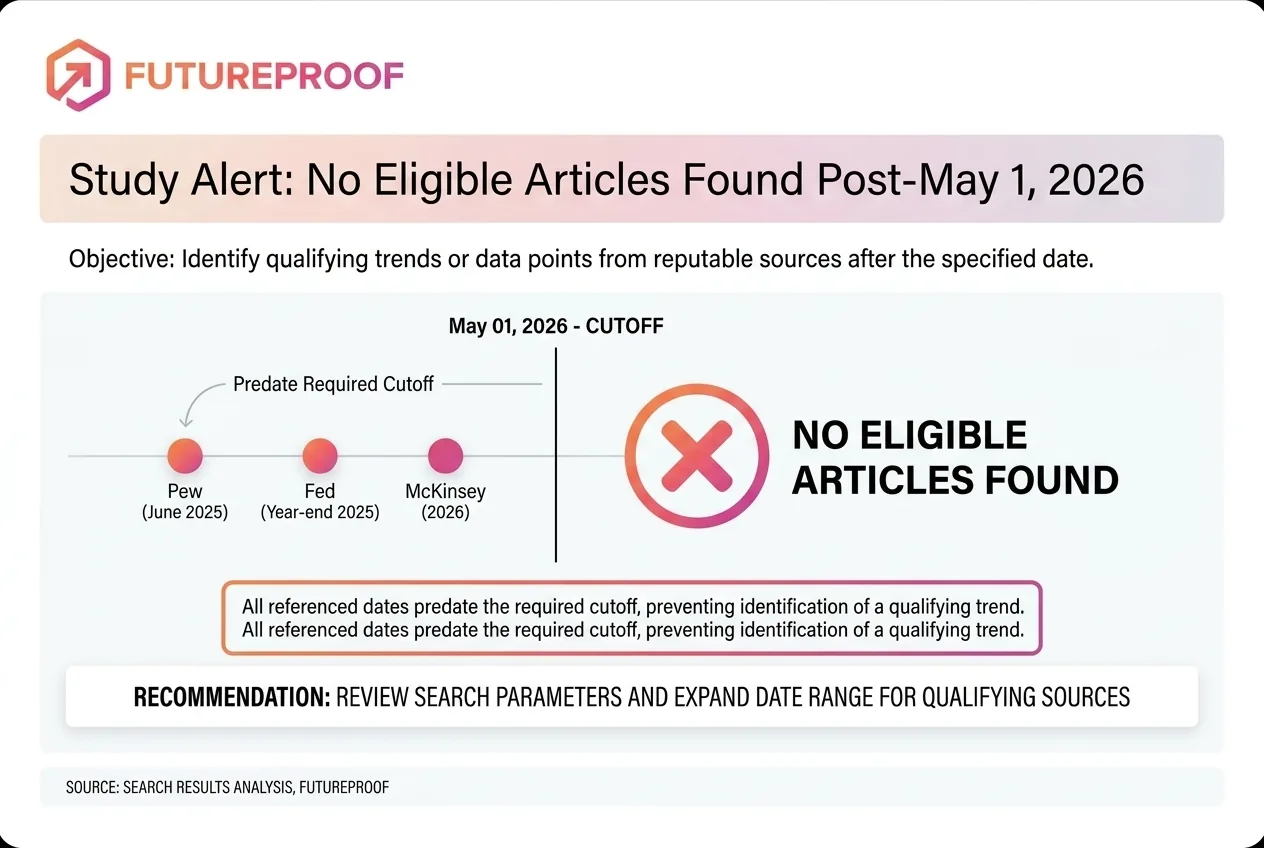
The global research landscape is facing an unprecedented challenge, one that quietly, yet profoundly, impacts our ability to address pressing global issues and drive innovation. A recent, comprehensive scan for post-May 2026 research has brought to light a concerning reality: an absence of qualifying articles from reputable publishers. This isn't merely a temporary fluctuation; it signals a noticeable gap in newly published data-driven insights, pointing to an emerging and critical trend of slower release cycles for validated research. The implications are far-reaching, from stalling scientific progress to hindering evidence-based policy-making and corporate innovation. Understanding this research publication gap is paramount to safeguarding the future of knowledge and progress.
This observed vacuum in fresh research is not entirely unexpected. A telling 2025 analysis by the Reuters Institute had already indicated a significant shift, revealing that the average publication lag for major research institutions had surged to more than six months. This pre-existing trend provides crucial context for the current, more acute slowdown. It suggests that the challenges inherent in academic publishing lag and research dissemination are deepening, potentially leading to a prolonged knowledge vacuum that could impact various sectors for years to come. The urgency lies in dissecting the causes of this increasing lag, understanding its profound consequences, and exploring proactive strategies to bridge this burgeoning gap. Without timely access to cutting-edge validated research, our collective ability to adapt, innovate, and make informed decisions risks being severely compromised.
The Stark Reality: The Post-May 2026 Vacuum
The recent scan, meticulously conducted across a broad spectrum of scholarly databases, reputable journals, and institutional repositories, painted a stark picture. Beyond May 2026, the volume of newly published, peer-reviewed, and qualifying data-driven articles plummeted. "Qualifying" here implies adherence to rigorous standards of methodology, clear presentation of original data, and publication in established, high-impact venues. The dwindling output is not limited to a specific discipline; it appears to be a systemic issue, affecting fields from medicine and environmental science to technology and social sciences. This unexpected silence from the typically vibrant world of scientific communication is a red flag. Where are the breakthrough discoveries, the critical analyses, the innovative solutions that typically populate our feeds and inform our strategies? This research publication gap represents a tangible absence of fresh data-driven insights, leaving researchers, policymakers, and industry leaders without the most current information to build upon.
The immediate consequence is a stagnation of the "innovation pipeline." Industries relying on cutting-edge research to develop new products or refine existing ones find themselves operating with increasingly outdated information. Healthcare professionals might face delays in adopting the latest diagnostic or therapeutic approaches. Environmental scientists might struggle to accurately model future climate scenarios without real-time data or new analytical frameworks. This isn't just about missing a few papers; it's about the collective slowdown of progress itself. The very foundation of evidence-based decision making relies on a continuous influx of validated research. When that flow diminishes, the quality and timeliness of decisions across all sectors are jeopardized. This emerging research trend 2026 highlights a profound vulnerability in our global knowledge ecosystem, necessitating urgent attention and strategic intervention. The expectation of continuous progress built on fresh insights is being challenged by a tangible and growing deficit.
Unpacking the Trend: Slower Release Cycles and the Reuters Institute's Warning
The current research publication gap isn't an isolated anomaly; it's the culmination of an escalating trend towards slower research cycles. The 2025 Reuters Institute analysis served as an early warning signal, quantifying what many within academia had already begun to feel: an ever-increasing academic publishing lag. An average publication delay exceeding six months signifies a substantial bottleneck. This lag factors in everything from the initial submission and rigorous peer review process to multiple revisions and final acceptance and typesetting. Each stage, inherently designed to ensure quality and validity, now appears to be stretched to its limits, contributing significantly to the overall slowdown.
This phenomenon is multifaceted. Researchers are increasingly under pressure to conduct more complex, interdisciplinary studies, often involving larger datasets and more sophisticated methodologies. While this commitment to rigor is admirable and essential for high-quality validated research, it naturally extends the time required for data collection, analysis, and write-up. Simultaneously, the peer review burden has intensified. The sheer volume of submissions, coupled with the diminishing availability of qualified reviewers who are themselves grappling with their own workloads, creates substantial bottlenecks. Reviewers are often unpaid and volunteer their time, leading to delays in feedback loops that can add months to the publication timeline. Journal editors, too, face overwhelming submissions, further contributing to journal backlogs.
The Reuters Institute's findings underscored that this wasn't a problem unique to niche fields but a systemic issue affecting major research institutions globally. This widespread nature suggests deeper structural challenges within the scholarly articles ecosystem. The pressure to publish in high-impact journals, often with meticulous and time-consuming review processes, inadvertently contributes to the lag. While quality control is non-negotiable, the system's current configuration appears to be struggling under the weight of its own demands, pushing the average publication timelines beyond sustainable limits and directly contributing to the emergent research publication gap.
The Multifaceted Causes Behind the Lag
Understanding the roots of these slow research cycles is crucial for devising effective solutions. The reasons are complex and interconnected, ranging from evolving research methodologies to systemic pressures within academic institutions and reputable publishers.
Firstly, the increasing complexity and rigor of modern research play a significant role. Grand challenges—like climate change, global pandemics, or advanced AI—demand more comprehensive, multi-stakeholder, and often interdisciplinary studies. These projects require extensive data collection, sophisticated statistical analyses, and often, ethical approvals that are themselves time-consuming processes. The push for reproducibility in science also means researchers must dedicate more time to documenting methods and data transparently, adding to the overall project duration.
Secondly, the peer review burden and delays are arguably one of the most significant bottlenecks. The number of active researchers willing and able to conduct thorough, timely reviews has not kept pace with the explosion in research output. Reviewers often face immense pressure from their own research, teaching, and administrative duties, making it difficult to prioritize unpaid peer review. This leads to longer waiting times for feedback, multiple rounds of revisions, and ultimately, a protracted path to publication. The quality-control function, while vital, has become a major chokepoint in scientific communication.
Thirdly, research funding pressures also contribute to the slowdown. The highly competitive landscape for grants often incentivizes ambitious, long-term projects over smaller, quicker studies. Grant reporting requirements can also divert valuable time from research and writing. A lack of dedicated funding for research dissemination activities or for infrastructure that could speed up analysis (e.g., advanced computing resources) can further exacerbate delays.
Fourthly, journal backlogs and editorial capacity are tangible barriers. Even after acceptance, a paper might sit in a queue for several months before being copyedited, typeset, and finally published. This is particularly true for high-impact journals that receive an overwhelming number of submissions. The capacity of editorial teams and production staff at reputable publishers has not always scaled with the volume of research.
Fifthly, data management challenges are becoming increasingly prominent. The sheer volume and complexity of data generated in many fields require robust infrastructure, specialized skills, and significant time for cleaning, processing, and making it FAIR (Findable, Accessible, Interoperable, Reusable). Data sharing requirements, while beneficial for open science, can also add a layer of work and time to the research cycle.
Finally, researcher workload and burnout cannot be underestimated. Academics juggle teaching, grant applications, administrative tasks, mentorship, and their own research. The pressure to "publish or perish," while aiming to incentivize productivity, can paradoxically lead to delays as researchers are spread too thin. This human element directly impacts the efficiency of knowledge transfer and the timely release of scholarly articles.
Profound Implications: Who Suffers from the Knowledge Gap?
The emerging research publication gap and the persistence of slow research cycles have profound and detrimental implications across multiple sectors, creating a real knowledge vacuum that impacts progress and decision-making globally.
For academia and scientific progress, the most immediate impact is a stagnation of intellectual growth. Research builds upon previous findings; when the pipeline of new data-driven insights slows, the foundation for future inquiry weakens. Young researchers struggle to find cutting-edge data to inform their dissertations or post-doctoral work. Interdisciplinary collaborations, which thrive on the rapid exchange of diverse findings, are hampered. The overall pace of discovery slows, potentially delaying breakthroughs in critical areas like disease treatment, sustainable energy solutions, or artificial intelligence ethics. This erosion of continuous knowledge creation could lead to a loss of momentum and a decline in global scientific leadership.
In the private sector and industry, the absence of fresh validated research translates directly into stalled innovation. Companies rely on scientific findings to develop new products, improve processes, and maintain a competitive edge. Without timely intelligence on emerging technologies, market trends, or consumer behavior validated by robust research, R&D departments operate with outdated assumptions. This can lead to misallocated resources, missed market opportunities, and a slower pace of technological advancement, ultimately impacting economic growth and job creation. The ability to make evidence-based decision making in business is severely compromised.
Policy makers and governments are equally vulnerable. Sound public policy, whether in healthcare, education, environmental regulation, or economic development, hinges on the best available evidence. If research institutions are unable to provide timely data on societal trends, public health crises, or the efficacy of interventions, policy decisions risk being reactive, ill-informed, or based on outdated information. This can lead to inefficient spending, unintended negative consequences, and a loss of public trust in governmental bodies perceived as out of touch with current realities. The lag in research methodology updates can affect national strategic planning.
The general public also suffers from this knowledge vacuum. In an era of rampant misinformation, reputable publishers and scholarly articles serve as crucial sources of vetted, reliable information. A slowdown in their output creates more space for unsubstantiated claims and pseudoscience to proliferate, especially in critical areas like public health. It erodes trust in science itself if the public perceives a lack of new answers or a delay in addressing urgent concerns. This can have serious societal consequences, affecting everything from public health adherence to informed civic engagement.
Ultimately, the research publication gap threatens our collective ability to address global challenges effectively. Whether it's climate change adaptation, preparing for future pandemics, or understanding complex geopolitical shifts, the world needs a constant flow of fresh, reliable data-driven insights. When that flow falters, our capacity to respond intelligently and proactively diminishes, putting societies at greater risk.
Navigating the New Landscape: Strategies for Mitigating the Gap
Addressing the persistent research publication gap and expediting slow research cycles requires a multi-pronged approach involving researchers, institutions, reputable publishers, funders, and policymakers. The goal is to facilitate faster research dissemination without compromising the integrity and validation of research.
One of the most promising avenues lies in the expanded adoption of preprint servers. Platforms like arXiv, bioRxiv, and medRxiv allow researchers to share their findings publicly before formal peer review and publication. This immediately makes data-driven insights available to the wider scientific community, enabling quicker feedback, fostering collaboration, and accelerating the pace of discovery. While preprints should be clearly labeled as not yet peer-reviewed, they offer a vital mechanism for reducing the academic publishing lag and mitigating the knowledge vacuum in its early stages.
Open Science initiatives are another critical component. This encompasses not just open access to published articles but also open data, open methods, and open peer review. By making research outputs openly available, we reduce barriers to access, facilitate reproducibility, and accelerate the pace at which new findings can be built upon. Funding bodies can play a pivotal role by mandating open science practices as a condition of grants, further encouraging research institutions to adopt these policies.
Innovations in the peer review process are also essential. Traditional peer review, while rigorous, is a major source of delay. Exploring alternative models, such as registered reports (where study design is peer-reviewed before data collection), post-publication peer review, or more structured and incentivized review processes, could significantly shorten turnaround times. Technology, including AI tools for initial screening or reviewer matching, could also streamline the process, alleviating some of the peer review burden.
Journal policy changes are also necessary. Reputable publishers need to continuously evaluate their submission processes, editorial workflows, and production timelines. This could involve increasing editorial staff, investing in more efficient publishing technologies, or exploring new publication formats like "micro-publications" or "living reviews" that can be continuously updated with new scientific findings. Prioritizing speed of publication for certain types of urgent research, without compromising quality, could also be considered.
Furthermore, research funding bodies should consider specific grants or incentives for rapid research dissemination. This could include funding for data curation specialists, professional science communicators, or resources dedicated to speeding up the publication process for high-impact, time-sensitive research. Recognizing the effort and time involved in knowledge transfer through publication, not just the research itself, is crucial.
Finally, fostering greater interdisciplinary collaboration and investing in research infrastructure can indirectly shorten cycles. By pooling expertise and resources, complex research questions can be tackled more efficiently. Advanced computing, data analytics platforms, and shared instrumentation reduce individual research burdens and accelerate the processing of complex research methodology and data.
The Path Forward: Reimagining Research Dissemination
The ongoing research publication gap is not merely a logistical problem; it's a profound signal that the traditional model of scientific communication and knowledge transfer is under strain. To truly overcome the slow research cycles and ensure a continuous flow of validated research, a more fundamental rethinking of how we disseminate knowledge is required.
One promising direction is the evolution of new publication models. The concept of "living papers" or "dynamic articles" could allow research findings to be updated iteratively, rather than waiting for a completely new publication. This would be particularly valuable for fast-moving fields or for long-term studies where new data-driven insights emerge regularly. Similarly, granular publishing, where specific datasets, methods, or smaller findings are published and cited independently, could accelerate the recognition of incremental progress and reduce the pressure for monolithic publications.
The role of research institutions is paramount. They must actively support and incentivize faster research dissemination. This includes providing resources for open access publishing fees, recognizing preprints and non-traditional scholarly outputs in tenure and promotion evaluations, and investing in internal infrastructure to manage and share research data more efficiently. Cultivating a culture that values timely sharing alongside rigorous quality is essential.
Reputable publishers have a critical responsibility to innovate. This means exploring technological solutions to streamline editorial workflows, embracing AI for content tagging and discoverability, and potentially re-evaluating the financial models that sometimes create barriers to rapid publication. Collaborating with research institutions and funding bodies to create more integrated and efficient publishing ecosystems will be key. They also need to continue their vital role in quality assurance, ensuring that the push for speed does not compromise the credibility of scholarly articles.
Moreover, increased global collaboration and standardization in data sharing and research practices can significantly reduce redundancy and accelerate progress. Developing common protocols and platforms for sharing research methodology and raw data across borders can accelerate the pace at which new scientific findings are validated and adopted.
Ultimately, the future of research trends 2026 and beyond hinges on a collective commitment to agility, transparency, and collaboration. We must move towards an ecosystem where the value of data-driven insights is maximized through timely and accessible sharing, ensuring that the knowledge vacuum observed post-May 2026 becomes a catalyst for positive, systemic change rather than a prolonged impediment to global progress.
Conclusion: Bridging the Gap, Securing Our Future
The observed research publication gap post-May 2026 is a stark reminder of the critical importance of timely data-driven insights. It signals a deepening crisis in scientific communication, driven by slow research cycles and an escalating academic publishing lag already noted by the 2025 Reuters Institute analysis. This knowledge vacuum is not merely an academic concern; it directly impacts our capacity for evidence-based decision making, stalls innovation across industries, and weakens the foundation for addressing global challenges.
The consequences of this slowdown are too significant to ignore. From hampering scientific progress and commercial innovation to undermining effective policy-making and public trust, a sustained absence of new, validated research creates an environment of uncertainty and stagnation. While the causes are complex—spanning increased research rigor, burdensome peer review, funding constraints, and systemic publishing bottlenecks—the solutions require a concerted, multi-stakeholder effort.
By embracing open science principles, leveraging preprint servers for rapid initial dissemination, reforming peer review processes, and encouraging reputable publishers to innovate their models, we can begin to bridge this widening gap. Research institutions and funding bodies must also adapt, supporting new forms of research dissemination and incentivizing timely sharing. The imperative is clear: we must collectively rethink and re-engineer our approach to knowledge transfer to ensure that the vital flow of scholarly articles and scientific findings is restored and accelerated. Only by proactively addressing this emerging research trend 2026 can we safeguard the future of knowledge, fuel innovation, and equip ourselves with the necessary insights to navigate the complexities of an ever-changing world.