Gen Alpha Is Redefining the Future of AI Driven Consumer Behavior
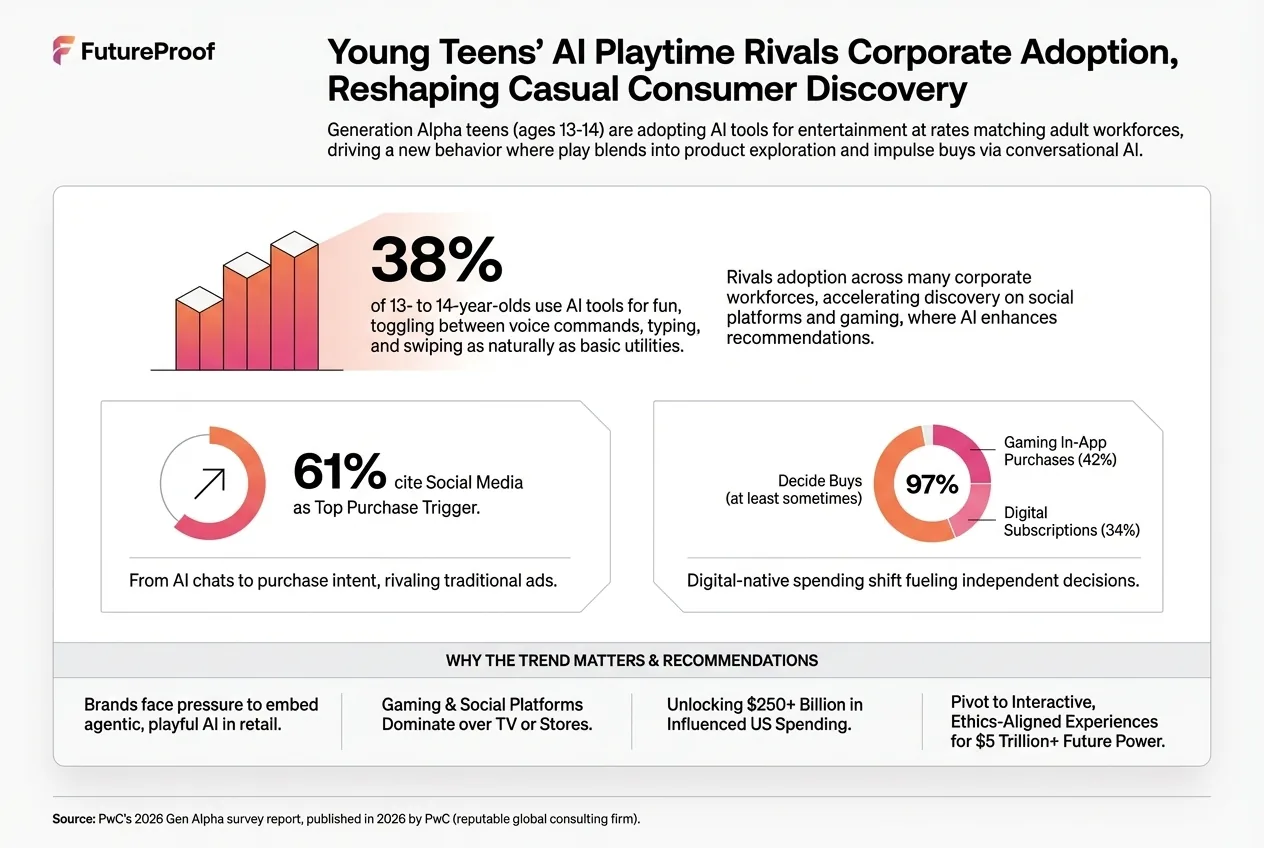
The digital landscape is undergoing a profound transformation, driven not by the boardrooms of tech giants, but by the bedrooms and living rooms of a new generation. Gen Alpha, born into a world where touchscreens were ubiquitous and digital assistants were already household names, is not just adapting to artificial intelligence; they are playing with it, shaping it, and redefining its role in everyday life. This isn't merely a technological shift; it's a fundamental recalibration of consumer behavior, product discovery, and purchase decisions that brands ignore at their peril. The playful interaction of Gen Alpha teens with AI at rates mirroring corporate adoption signals a seismic shift in how young consumers will engage with the world, influencing over $250 billion in US spending today and building towards a staggering $5 trillion in future economic power.
At the heart of this revolution is an astonishing statistic: 38% of 13 to 14-year-olds are already using AI tools for fun. This isn't a forced adoption for schoolwork or a reluctant engagement with parental guidance; it's genuine, recreational use. They are effortlessly moving between voice commands, text prompts, and touch interactions, integrating AI into their daily habits with an intuitive ease that astounds previous generations. This statistic is particularly striking because it rivals the adoption rates observed in many corporate workforces, where AI integration is often a strategic imperative driven by efficiency and competitive advantage. For Gen Alpha, AI is simply another layer of their digital playground, a default gateway for their insatiable curiosity, boundless entertainment, and continuous exploration. Their comfort and fluency with AI aren't just skills; they are foundational expectations for how technology should interact with them, setting a new benchmark for brand engagement.
This playful experimentation with AI is far from trivial; it has profound implications for product discovery. Gen Alpha's recreational chats with AI are subtly, yet powerfully, influencing what catches their eye across social platforms and within the immersive worlds of gaming. Consider a scenario where a teen uses an AI chatbot to generate story ideas for a fictional universe they're building. During the conversation, the AI might suggest characters, settings, or even specific items that align with popular culture, trending games, or digital collectibles. This organic, conversational discovery process feels less like an advertisement and more like a collaborative exploration. These AI-informed explorations then feed into their most potent discovery channel: social feeds. With 61% of Gen Alpha citing social feeds as their top purchase trigger, the intermingling of AI-driven insights and social validation creates a powerful, self-reinforcing discovery loop. A product or concept casually mentioned by an AI companion might suddenly appear in an influencer's post, a friend's story, or a gaming community discussion, lending it immediate credibility and desirability. Brands need to understand that their social media strategy is no longer just about content; it's about anticipating and integrating with the conversational AI experiences that subtly shape the desires of this AI-native generation.
The rise of AI-influenced discovery is directly bolstering Gen Alpha's spending autonomy. New data reveals that a remarkable 97% of 7 to 14-year-olds make independent buying decisions at least some of the time. This generation is not waiting for parental approval for every digital transaction; they are empowered, informed, and accustomed to making choices in real-time within their digital ecosystems. This unprecedented level of autonomy is largely facilitated by the seamless, often micro-transaction-based nature of their preferred digital environments. Their spending priorities clearly reflect their digital-first lifestyle: in-app gaming purchases account for 42% of their independent spending decisions, followed closely by digital subscriptions at 34%.
The dominance of in-app gaming purchases highlights the deep integration of gaming into Gen Alpha's social fabric and identity. These aren't just games; they are virtual worlds, social hubs, and canvases for self-expression. Spending on skins, power-ups, virtual currency, and battle passes is not merely about enhancing gameplay; it's about social status, belonging, and participating fully in their online communities. An AI chatbot might help a teen strategize in a game, inadvertently recommending a specific upgrade or cosmetic item that enhances their experience or standing among peers. Similarly, digital subscriptions—for streaming services, premium game access, creative tools, or educational apps—represent ongoing commitments to platforms that provide continuous entertainment, utility, and self-improvement. An AI assistant could recommend a new coding app subscription based on a teen's expressed interest in game development, or suggest a new streaming service with content tailored to their conversational preferences. For brands, this means moving beyond one-off transactions and building sustainable relationships through subscription models and value-added digital content that resonates with Gen Alpha's self-directed learning and entertainment needs.
For retail and consumer companies, the implications are crystal clear: AI is no longer an optional add-on; it's becoming the default gateway for Gen Alpha's engagement with brands. To keep pace with this rapidly evolving cohort, brands must pivot towards creating experiences that are not just digitally present but are inherently playful, deeply conversational, and rigorously ethically aligned.
Playful AI Experiences:
This goes beyond gamification. It involves embedding AI into interactive storytelling, augmented reality filters, virtual try-on experiences, and creative content generation tools that empower Gen Alpha. Imagine an AI fashion stylist that helps a teen design custom outfits for their avatar, linking directly to purchasable digital and physical items. Or an AI-powered co-creator within a virtual world that helps them build unique spaces and suggests related decor or assets. Brands need to think about AI as a partner in play, fostering creativity and exploration rather than simply a tool for transactions. This could involve AI-driven challenges, scavenger hunts for new products, or personalized, interactive narratives that unfold based on a user's choices. The key is to make interaction feel like an extension of their daily digital fun, not a chore.
Conversational AI Experiences:
Gen Alpha expects natural, intuitive communication. This means sophisticated natural language processing that understands slang, context, and nuanced intent across voice and text. Brands need to develop AI assistants that can engage in meaningful dialogue, offer personalized recommendations, and provide seamless, proactive customer support. This isn't just about answering FAQs; it's about AI anticipating needs, suggesting solutions, and even engaging in casual, brand-aligned banter. An AI assistant could, for example, help a teen plan a birthday party by suggesting themes, decorations, and even relevant food items, integrating brand products organically into the conversation. This level of conversational depth fosters a sense of relationship and loyalty that traditional advertising simply cannot achieve. The fluidity between text, voice, and touch that Gen Alpha exhibits with AI must be mirrored in brand interactions, removing friction and making engagement feel effortless.
Ethically Aligned AI Experiences:
Perhaps the most crucial, yet often overlooked, aspect is ethics. Gen Alpha, having grown up amidst debates about data privacy, social media addiction, and digital well-being, is highly attuned to authenticity and transparency. Brands must develop AI systems that prioritize data privacy, offer clear explanations of how data is used, and actively work to mitigate biases. Trust is paramount for this generation, and any perceived breach of trust, privacy, or fairness can lead to swift and widespread brand rejection. Ethical AI means transparent algorithms, opt-in data sharing, and a genuine commitment to creating positive, safe digital environments. Brands that lead with ethical AI practices will build deeper, more enduring relationships with Gen Alpha, who value corporate responsibility and authentic brand values. This includes designing AI experiences that promote positive mental health, encourage responsible digital habits, and avoid manipulative tactics.
The financial stakes are too high to ignore. With Gen Alpha influencing over $250 billion in US spending today and poised to control more than $5 trillion in future economic power, understanding and adapting to their AI-centric behaviors is not merely an advantage; it’s an existential necessity for brands. This generation is not just an early adopter; they are the baseline. Their expectations for AI will shape the entire consumer landscape for decades to come.
Looking ahead, the integration of AI into Gen Alpha's lives will only deepen. We can anticipate AI becoming even more invisible, woven seamlessly into every aspect of their digital existence, from personalized learning environments to hyper-customized entertainment. The "AI-influenced decision" will become the norm, where recommendations, discoveries, and even creative impulses are subtly guided by sophisticated algorithms. Brands that invest now in developing playful, conversational, and ethically sound AI strategies will not only capture a significant share of the youth market but will also be future-proofing their entire business model. This requires continuous learning, experimentation, and a willingness to iterate based on Gen Alpha's evolving preferences and values. The future of commerce is conversational, personalized, and powered by AI, and Gen Alpha is leading the charge, dictating the terms of engagement with their playful, intuitive mastery of this transformative technology. The brands that embrace this new reality with creativity, empathy, and integrity will be the ones that thrive in the decades to come.