AI Becomes the New Front Door of Product Discovery
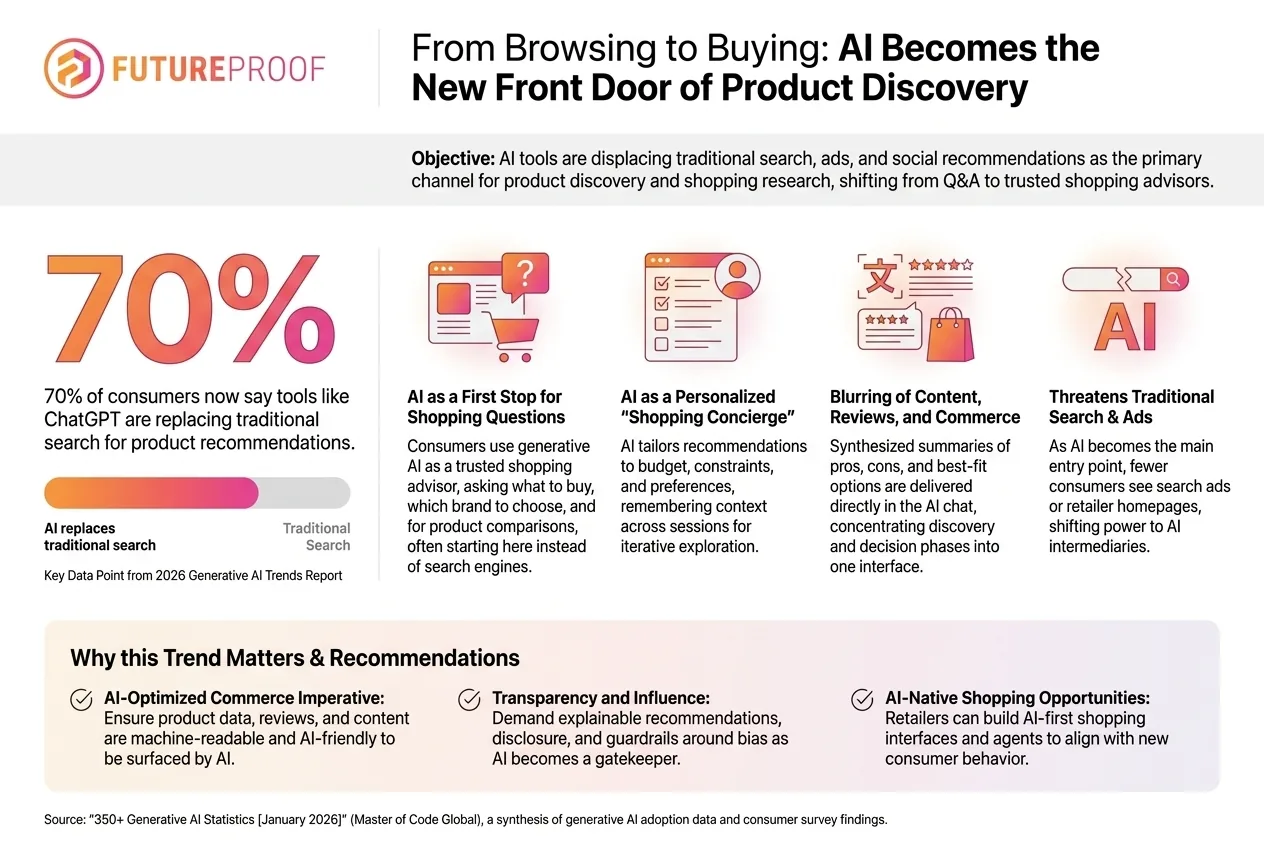
The landscape of consumer product discovery is undergoing a profound transformation, moving away from the familiar pathways of traditional search engines and social media feeds. A seismic shift is occurring as artificial intelligence emerges as the definitive new front door, reshaping how individuals explore, evaluate, and ultimately purchase products. This isn't merely an incremental change; it's a fundamental re-architecture of the initial stages of the buying journey, dictating a new era for brands, retailers, and the entire e-commerce ecosystem.
Shoppers are increasingly bypassing conventional methods, opting instead to initiate their product quests with sophisticated AI assistants. These intelligent tools are rapidly becoming the preferred starting point for a vast array of purchasing decisions, from identifying "what to buy" in a crowded market to discerning "which brand to choose" among myriad options, and even conducting intricate "how products compare" analyses. The era of typing generic keywords into a search bar or endlessly scrolling through curated social feeds is giving way to conversational interfaces that offer a deeply personalized and efficient path to purchase.
A compelling data point from a 2026 Generative AI Statistics and Trends report by Master of Code Global underscores this monumental shift: a striking 70% of consumers now report that tools like ChatGPT are actively replacing traditional search mechanisms for product recommendations. This statistic is not just a number; it represents a significant behavioral pivot that redefines the very essence of digital commerce. It signifies a clear preference for AI's capability to distill vast amounts of information into actionable, tailored suggestions, outperforming the often overwhelming and less personal results offered by conventional search engines. The days of sifting through pages of organic links and sponsored ads are becoming a relic of the past for a substantial segment of the online shopping population.
At the heart of this revolution is AI's role as a hyper-personalized shopping concierge. Far beyond simple keyword matching, these AI assistants are adept at understanding the nuanced interplay of a consumer's budget, specific preferences, and a myriad of real-world constraints. Imagine asking an AI for "a durable, eco-friendly coffee machine under $150 that fits a small kitchen counter and makes excellent espresso," or "the best noise-canceling headphones for remote work, prioritizing comfort for long hours and compatibility with Mac, priced around $200." Traditional search engines would struggle to provide a cohesive, ranked list based on such complex criteria without extensive manual filtering by the user. An AI concierge, however, can swiftly process these multifaceted requirements, cross-reference them with product specifications, reviews, and market availability, and then present a refined, highly relevant set of recommendations. This level of tailored guidance transforms a potentially frustrating search into a seamless and enjoyable discovery process.
What truly distinguishes this AI-driven approach is the unprecedented integration of discovery, comparison, and decision-making into a single, cohesive interface. Consumers no longer need to navigate between multiple browser tabs – jumping from a product page to a review site, then to a price comparison tool, and finally back to a retailer's checkout. Instead, the AI serves as a comprehensive hub, capable of presenting product options, summarizing key features and drawbacks from countless reviews, comparing specifications side-by-side, highlighting competitive pricing, and even checking stock availability – all within the ongoing conversational flow. This streamlined workflow dramatically reduces friction in the buyer's journey, making product acquisition not just easier, but profoundly more efficient and satisfying. The cognitive load on the consumer is significantly diminished, leading to quicker, more confident purchase decisions.
The implications of this shift are far-reaching and critical for every stakeholder in the digital economy. One of the most immediate and impactful consequences is the reduced visibility for traditional search, advertising, and affiliate models. If a substantial majority of shoppers are bypassing Google, Amazon search, or social media platforms to begin their product discovery with AI, then the established channels for brand exposure will inevitably see their traffic and conversion rates decline. Brands that have invested heavily in SEO, PPC campaigns, and influencer marketing for years must now confront a landscape where their carefully constructed digital storefronts may be unseen by the growing segment of AI-first shoppers. The familiar pathways that once guaranteed reach and engagement are becoming less traveled, necessitating a fundamental re-evaluation of marketing and sales strategies.
This paradigm shift forces brands to confront a new imperative: optimizing product data for AI recommendations. Much like how the advent of search engines necessitated Search Engine Optimization (SEO) to make content discoverable, the rise of AI as a product discovery engine demands a new form of optimization. This isn't about keywords alone; it's about rich, structured, semantic product data that AI can readily interpret and leverage. Brands must meticulously detail every attribute of their products – materials, dimensions, specific use cases, target demographics, certifications (e.g., organic, fair trade), sustainability claims, compatibility, customer service options, and warranty information. The goal is to provide AI with a comprehensive "product graph" that connects individual items to a vast network of relevant attributes, user intents, and competitive offerings. A product description like "stylish running shoe" is no longer sufficient; AI needs to understand if it's for trail or road, pronators or supinators, high arches or flat feet, what its cushioning technology is, and how it compares in weight and durability to its peers. The ability of a brand's product to be accurately and favorably recommended by an AI hinges entirely on the quality, completeness, and structure of this underlying data.
Consequently, AI rapidly becomes a new gatekeeper for product visibility. Just as Google's algorithm dictated which websites ranked highest, AI's algorithms will determine which products are suggested to consumers. This raises critical questions about transparency and ranking logic. How do these AI systems decide which product recommendations to prioritize? Are there inherent biases in the data they are trained on, or in the algorithms themselves? Will brands be able to pay for preferred placement within AI-generated recommendations, and if so, how will this be disclosed to consumers? The power to influence consumer choice is immense, and the mechanisms by which AI exerts this influence will be subject to intense scrutiny. Brands and regulators alike will grapple with ensuring fairness, preventing manipulation, and maintaining consumer trust in an opaque, algorithmically driven environment.
Despite the challenges, this new landscape also presents a significant opening for forward-thinking retailers and innovative startups. The opportunity lies in creating truly AI-native shopping experiences that seamlessly align with this evolving consumer workflow. This isn't about bolting AI onto existing platforms; it's about building entirely new commerce paradigms where AI is fundamental to the user experience from the ground up. Imagine a retail platform where the storefront itself is dynamically generated by AI based on a user's real-time conversational inputs, or where product bundles are intelligently curated based on inferred needs and past behaviors, rather than static categories. Voice commerce, where entire purchases are completed through natural language interactions with an AI assistant, could finally move beyond niche applications to mainstream adoption. Startups specializing in conversational commerce, AI-powered product matching, and personalized storefront generation are poised to capture significant market share by addressing these nascent consumer demands with bespoke, AI-first solutions. The focus shifts from merely presenting products to proactively guiding and enriching the entire purchasing decision process through intelligent interaction.
To thrive in this AI-first product discovery era, businesses must undertake several strategic imperatives. Firstly, a robust data strategy is non-negotiable. Brands need to invest in data governance, ensuring their product information is not only comprehensive and accurate but also structured in a way that AI systems can easily ingest and interpret. This involves moving beyond basic SKU data to rich metadata, semantic tags, and context-aware descriptions. Secondly, an aggressive AI integration strategy is vital. This could involve partnering with leading AI recommendation providers, integrating AI chatbots directly into their own websites, or even developing proprietary AI models to understand their specific product catalog and customer base. The goal is to ensure their products are discoverable and favorably presented wherever AI is interacting with consumers.
Thirdly, businesses must fundamentally re-evaluate their customer journey mapping. The traditional funnels, which often assumed initial discovery through search or social, are becoming outdated. New funnels need to account for AI as the initial point of contact, understanding how consumers interact with AI, what questions they ask, and how decisions are influenced. This requires a deep dive into conversational analytics and AI interaction patterns. Fourthly, new metrics and analytics will be required to track performance in this AI-driven environment. Traditional metrics like impressions and clicks from search engines may become less relevant. Instead, businesses will need to focus on metrics related to AI recommendations, conversion rates from AI-generated leads, and customer satisfaction with AI-guided purchases.
Finally, proactive engagement with ethical AI development and transparency will build consumer trust. As AI becomes a gatekeeper, consumers will demand to know how recommendations are generated and if they are truly unbiased. Brands that champion transparent AI practices and demonstrate a commitment to fairness in their product recommendations will likely gain a significant competitive advantage. This includes being clear about any sponsored content within AI recommendations and ensuring that algorithms do not perpetuate biases.
The shift towards AI as the primary front door for product discovery is not a future possibility; it is a current reality, as evidenced by the significant percentage of consumers already relying on generative AI tools for their shopping recommendations. This profound transformation mandates an urgent re-evaluation of long-held digital marketing and e-commerce strategies. Brands and retailers who embrace this change by optimizing their product data for AI, developing AI-native shopping experiences, and committing to transparency will not only survive but thrive in this exciting new era of intelligent commerce. Those who cling to traditional methods risk being left behind, their products increasingly invisible to a new generation of AI-empowered shoppers who expect a personalized, seamless, and intelligent path from browsing to buying. The journey from discovery to purchase is no longer just digital; it is deeply intelligent, conversational, and AI-driven.