Gen Alpha and the Rise of the AI Native Consumer Revolution
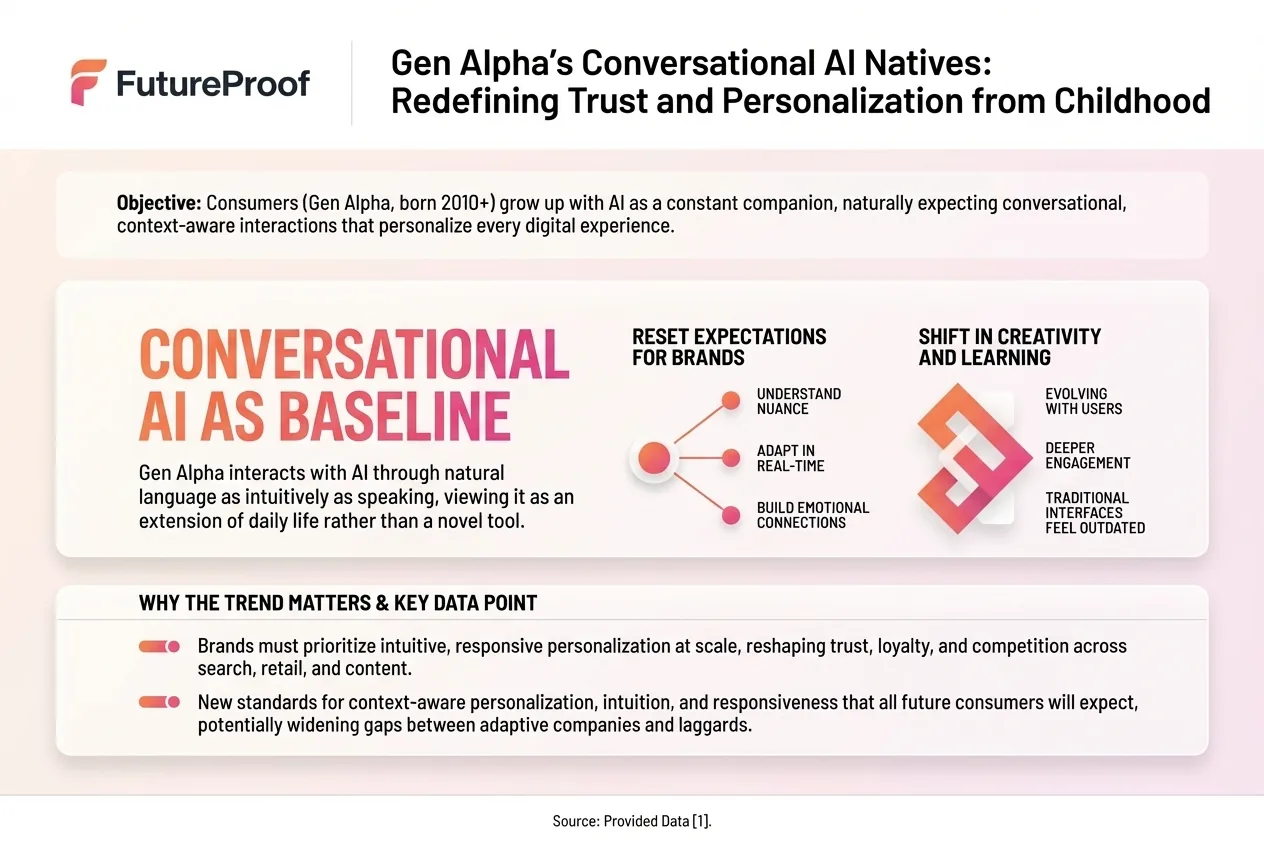
Gen Alpha is rapidly emerging as the defining force shaping the future of digital consumer experiences. Unlike any generation before them, this cohort has never known a world without artificial intelligence as a constant, integral presence in their daily lives. From the moment they touch their first smart device or interact with a voice assistant, AI has been an invisible yet profoundly influential companion. They engage with AI not as a novel technology, but as a fundamental, intuitive layer of interaction, leveraging natural language with the same ease as they communicate with another human. This profound, early immersion in an AI-driven environment is fundamentally reshaping their expectations, setting a new, significantly higher bar for what constitutes a compelling, trustworthy, and effective digital experience.
For Gen Alpha, AI is simply part of the fabric of existence. It’s embedded in their educational apps, suggesting personalized learning paths. It's a character in their video games, adapting narratives in real-time. It powers the smart devices in their homes, anticipating needs and automating tasks. This seamless integration means they treat AI as a given, a foundational element that should inherently understand context, adapt dynamically, and facilitate meaningful connections. They expect systems to be intelligent, intuitive, and anticipatory. Traditional, static interfaces, clunky navigation, or generic, one-size-fits-all interactions feel increasingly archaic and impersonal to a generation accustomed to personalized, conversational, and hyper-responsive digital environments. This shift isn't just a preference; it's a deeply ingrained behavioral pattern that will dictate their loyalty, trust, and engagement with brands across every digital touchpoint.
The AI-native mindset of Gen Alpha extends far beyond simple familiarity with technology; it defines their cognitive approach to problem-solving, creativity, and exploration. Growing up with intelligent tutors, creative AI assistants, and responsive digital companions has cultivated a unique set of expectations. They expect immediate understanding when they speak or type, regardless of nuance or intent. They anticipate systems that remember past interactions, preferences, and even emotional states, using this data to proactively offer relevant solutions or content. This isn't just about convenience; it's about building a digital rapport, a sense of being truly seen and understood by the systems they interact with. When a digital experience fails to meet these intuitive standards – when it doesn’t understand, adapt, or connect – it doesn't just feel inefficient; it feels broken. This deeply embedded expectation for always-on, context-aware personalization is a direct result of AI being embedded in their daily life, a crucial data point that underscores the urgency for brands to adapt.
This profound generational shift presents an undeniable imperative for businesses across every sector. As Gen Alpha matures into a dominant consumer group, their AI-native behaviors will meticulously define the new standards for trust, personalization, and loyalty across search, retail, and content. Brands that cling to outdated digital strategies will not merely lag behind; they risk becoming irrelevant. The future belongs to companies that proactively build intuitive, conversational, and deeply personalized experiences at scale, leveraging AI not as an add-on, but as the core engine of their consumer engagement strategy.
The AI-Native Mindset: Understanding Gen Alpha's Digital DNA
To truly grasp the magnitude of this shift, businesses must delve into the core of Gen Alpha’s AI-native mindset. Their earliest interactions with technology were likely conversational and highly personalized. Think of toddlers talking to smart speakers, asking complex questions, and receiving natural language responses. This isn’t a novelty for them; it’s the standard for interaction. They expect systems to listen, comprehend, and respond intelligently, often with a degree of personalization that mimics human interaction.
This upbringing instills a powerful expectation for contextual understanding. When a Gen Alpha consumer interacts with an online store, they expect the system to remember their previous purchases, browsing history, wish lists, and even preferences communicated through chat. They don't want to re-explain themselves; they expect the system to pick up where they left off, offering relevant suggestions based on a holistic understanding of their past and present intent. This contrasts sharply with previous generations who might tolerate generic recommendations or repeated data entry. For Gen Alpha, the absence of contextual memory is a sign of a deficient system.
Furthermore, real-time adaptation is a non-negotiable expectation. Digital experiences must be dynamic, fluid, and responsive to their immediate needs and moods. If they express interest in a product category, they expect related content, products, and services to appear instantaneously and consistently across all touchpoints. If their preferences shift, the system should adapt with equal agility, without requiring manual resets or extensive re-training. This dynamic fluidity fosters a sense of empowerment and control, making the digital experience feel tailor-made and responsive to their evolving desires.
The concept of meaningful connections also takes on a new dimension through the lens of Gen Alpha and AI. While AI doesn't possess human emotion, its ability to remember, understand, and anticipate can create a powerful sense of rapport. When a brand’s AI-powered chatbot offers empathetic responses, remembers a past customer service issue, or proactively suggests a solution before a problem fully materializes, it builds a deep layer of trust and loyalty. This isn't just about efficient service; it's about feeling valued and understood on a deeply personalized level. For Gen Alpha, these intelligent, responsive interactions are the bedrock upon which brand loyalty is built.
Resetting the Bar: What Gen Alpha Demands from Digital Experiences
This inherent AI-native perspective translates into concrete demands for digital experiences across the board. Brands must recognize that the traditional metrics of user experience are being rewritten.
1. Hyper-Personalization as the Default: Gone are the days when a simple "recommended for you" sufficed. Gen Alpha expects hyper-personalization that considers not just their demographic or past purchases, but their real-time context, mood, location, and immediate intent. This means AI-driven dynamic content that changes based on browsing behavior, product suggestions that adapt based on social media trends they follow, and service interactions that are informed by every prior touchpoint. It's about delivering the right message, product, or service to the right individual, at the precise moment it's most relevant.
2. Conversational Interfaces as the Gateway: For Gen Alpha, natural language is the most intuitive interface. This mandates a shift towards conversational AI as the primary mode of interaction for many digital experiences. Voice assistants, advanced chatbots, and intelligent search functions are not just supplemental tools; they are becoming the preferred method for everything from product discovery and customer service to content consumption and task management. Brands need to invest heavily in natural language processing (NLP) and natural language understanding (NLU) to ensure these conversational touchpoints are seamless, efficient, and genuinely helpful. The ability to "talk" to a brand, ask questions, and receive intelligent, nuanced responses will be a core differentiator.
3. Seamless, Frictionless Journeys Powered by AI: Gen Alpha has zero tolerance for friction. Clunky navigation, arduous checkout processes, or disjointed customer service experiences will quickly lead to abandonment. They expect AI-driven seamless journeys where every step is optimized for efficiency and ease. This means predictive search that anticipates queries, AI-powered product configurators that simplify choices, and automated customer support that resolves issues proactively. From the initial search query to post-purchase support, AI should orchestrate a fluid, intuitive path that minimizes effort and maximizes satisfaction.
4. Authenticity and Trust through Intelligent Transparency: While Gen Alpha embraces AI, they are also highly attuned to authenticity and transparency. They expect brands to leverage AI responsibly and ethically. Building trust means not just delivering intelligent experiences, but also being transparent about how AI is used, how data is protected, and how interactions contribute to a better, more personalized service. AI can foster trust by being consistently reliable, fair, and respectful of privacy, creating connections that feel genuine, even if mediated by algorithms.
The Business Imperative: Adapting to the Gen Alpha Revolution
The implications for businesses are stark and urgent. Failing to adapt to these AI-native expectations will mean falling behind competitors who embrace these new paradigms.
Redefining Search for the Conversational Era
The days of purely keyword-based SEO are dwindling. Gen Alpha's search behavior is increasingly conversational and intent-driven. They will ask complex, nuanced questions to AI assistants, expecting detailed answers, not just lists of links. Brands must evolve their SEO strategies to optimize for natural language queries, long-tail conversational phrases, and the semantic understanding required by generative AI search experiences. This means focusing on providing comprehensive, authoritative content that answers specific questions and anticipates user intent, rather than simply stuffing keywords. Voice search optimization, schema markup for rich snippets, and optimizing for AI-summarized answers will be paramount.
Transforming Retail with AI at its Core
For Gen Alpha, shopping will be an intrinsically AI-powered experience. Imagine virtual try-ons enhanced by AI that accurately project clothes onto your body, personalized style assistants that learn your fashion preferences, or predictive inventory systems that ensure your desired product is always in stock. Retailers must move beyond static e-commerce sites to dynamic, AI-driven platforms that offer hyper-personalized product discovery, intelligent recommendation engines, and conversational shopping assistants. Augmented Reality (AR) and Virtual Reality (VR) experiences, seamlessly integrated with AI, will provide immersive shopping environments that blur the lines between physical and digital.
Evolving Content Strategies for Adaptive Engagement
Content consumption for Gen Alpha is no longer passive. They expect AI-generated personalized content that adapts to their learning style, interests, and even real-time emotional state. This could range from interactive articles that change based on user engagement, to adaptive educational modules that adjust difficulty based on performance, or dynamic social media feeds curated by AI to resonate deeply with individual users. Brands will need to invest in AI tools for content creation, curation, and personalization, moving towards a model of highly responsive, context-aware content delivery that fosters active participation rather than just passive viewing.
Building AI-Native Infrastructure and an Ethical Framework
To meet these demands, businesses must invest in robust AI-native infrastructure. This means adopting advanced machine learning platforms, leveraging big data analytics for deep consumer insights, and building agile development pipelines to continuously integrate new AI capabilities. More importantly, this transition requires a strong commitment to ethical AI. Data privacy, transparency in AI operations, and mitigating algorithmic bias are not just compliance issues; they are foundational elements for building trust with Gen Alpha. Brands must demonstrate a genuine commitment to responsible AI, ensuring that personalization is empowering, not intrusive, and that automation is helpful, not alienating. This also necessitates upskilling existing teams and hiring new talent with expertise in AI development, data science, and AI ethics.
The Future Landscape: The Cost of Inaction
The implication for businesses that fail to adapt is clear and severe. They will rapidly fall behind. Brands that do not embrace intuitive, conversational, and personalized AI experiences will be perceived as outdated, out of touch, and ultimately, irrelevant to Gen Alpha. This generation will simply migrate to competitors who seamlessly integrate AI into their offerings.
The cost of inaction includes not just loss of market share but a profound erosion of brand loyalty. Gen Alpha will not tolerate generic interactions or systems that fail to understand their context. Their trust is built on intelligent, respectful, and consistently responsive engagement. Brands that cannot deliver this will find themselves unable to forge the deep, lasting connections necessary for sustained growth. Moreover, businesses will miss out on the incredible efficiencies and innovations that AI can unlock, from predictive analytics that optimize operations to generative AI that sparks new product development.
The future of consumer engagement is not a distant concept; it is being defined right now by Gen Alpha's innate relationship with artificial intelligence. Their expectations for always-on, context-aware personalization are not merely preferences; they are foundational requirements that will dictate success in the coming decades. Brands have a critical choice: either proactively embrace this AI-native future, fundamentally redesigning their digital experiences to meet these evolving demands, or risk becoming relics in a rapidly accelerating, intelligent world. The time to adapt is now, for Gen Alpha is not just the next generation of consumers; they are the architects of the next era of digital interaction.