The Future of Retail Is Conversational How AI Agents Are Collapsing the Shopping Journey
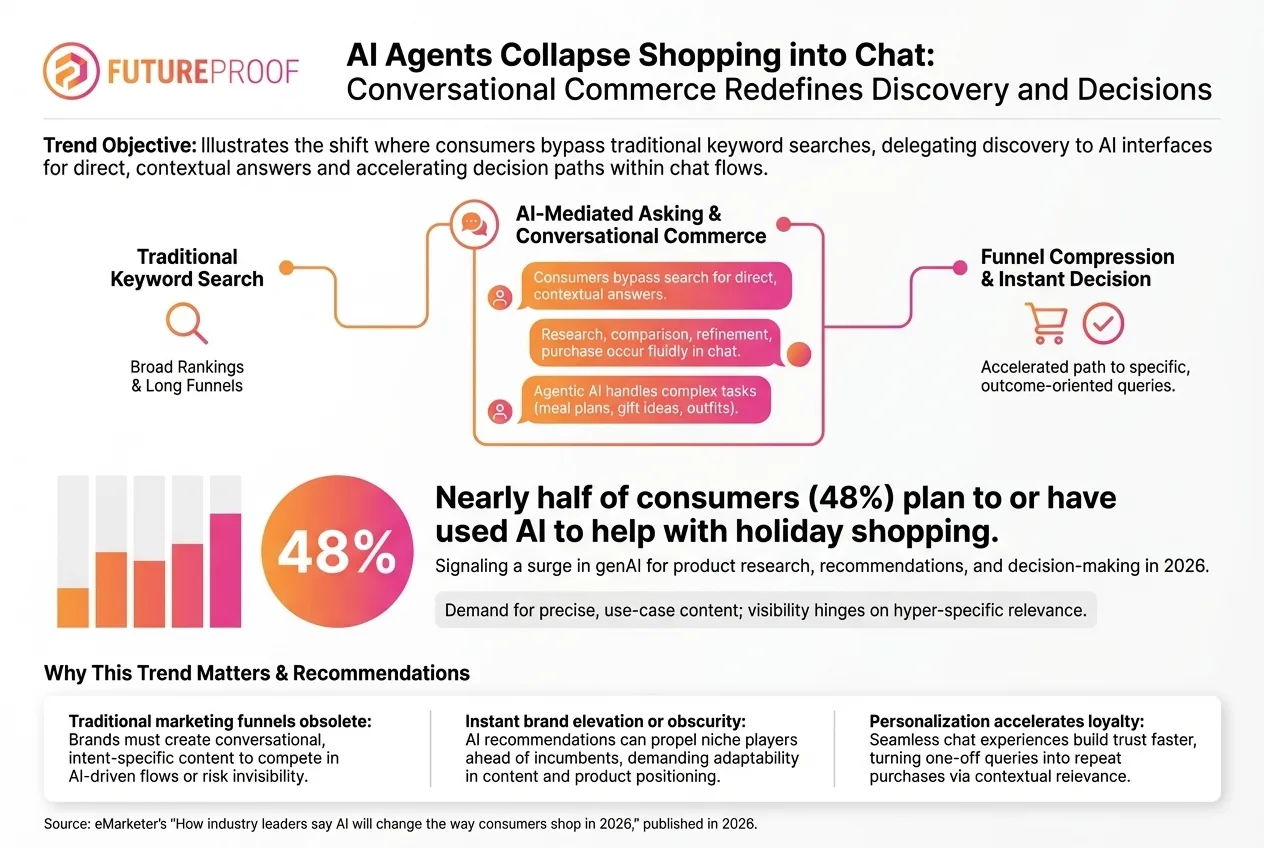
The landscape of consumer commerce is undergoing an unprecedented metamorphosis, driven by the emergence of sophisticated AI agents. This isn't merely an incremental improvement; it's a fundamental architectural shift that collapses the traditional, fragmented shopping journey into a single, cohesive conversation. The era of meticulous, multi-step searching is rapidly receding, giving way to a future where consumers bypass search engines entirely, opting instead to simply ask. As the processes of discovery, comparison, and ultimate decision-making converge seamlessly within interactive chat interfaces, brands face an urgent imperative to adapt their strategies with unparalleled speed and precision, or risk being left behind in this transformative wave.
The implications of this shift from "searching" to "asking" are profound for every facet of retail and e-commerce. Historically, the consumer journey has been a labyrinthine path. A consumer might begin with a broad search query on a search engine, navigate through countless results, click on various links, visit multiple retailer websites to compare products, read reviews across different platforms, add items to a cart, abandon it, return later, and eventually make a purchase. Each step represented a distinct cognitive load, a moment of friction, and an opportunity for disengagement. AI agents are dismantling this friction. They are not merely sophisticated search tools; they are intelligent navigators, capable of understanding complex intent, synthesizing vast amounts of information, and guiding the user directly to a solution or purchase within a single, continuous dialogue.
Imagine a consumer no longer typing "best noise-cancelling headphones" into a search bar, but instead saying, or typing into an AI agent, "I need headphones for my commute that block out subway noise, are comfortable for long wear, and have good battery life, ideally under $300." The AI agent, leveraging its understanding of product specifications, user reviews, brand reputations, and real-time pricing, can instantly surface a curated recommendation, explain why it's suitable, compare it to a relevant alternative, and even facilitate the purchase process. This exemplifies the collapsed journey: discovery, comparison, and decision-making are no longer discrete stages but rather interwoven elements of an ongoing conversation. The consumer gains unparalleled efficiency and personalization, while the brand gains a direct, high-intent pathway to conversion.
The new paradigm also brings with it a dramatic escalation in consumer expectations. Shoppers no longer want AI to just find products; they expect it to tackle complex, multi-faceted tasks that traditionally required significant human effort or multiple applications. This extends far beyond simple product recommendations. Consider the challenge of meal planning for a family with diverse dietary restrictions and preferences. An AI agent can now field a prompt like, "Plan a week of healthy, gluten-free meals for four people, including a vegetarian option on Tuesdays, using mostly ingredients from my local supermarket, and generate a shopping list." The AI can then propose recipes, integrate them into a coherent weekly plan, account for nutritional balance, suggest ingredient substitutions, create a categorized shopping list, and even initiate an online grocery order.
Similarly, the often-stressful task of gift curation transforms from a tedious obligation into an enjoyable experience. A user might tell an AI, "I need a unique birthday gift for my sister, who loves vintage fashion, reads a lot of historical fiction, and is trying to reduce her plastic consumption. My budget is around $75." The AI, tapping into a rich database of product knowledge and understanding nuanced preferences, could suggest anything from a sustainably sourced, handcrafted piece of vintage-inspired jewelry to a collectible edition of a classic novel from an independent bookstore, complete with eco-friendly wrapping options. These scenarios highlight how AI is not just selling products but solving broader life problems, acting as a personal concierge for daily needs and special occasions alike. Brands that can integrate their offerings into these complex, problem-solving conversations will secure a distinct and powerful advantage.
This fundamental shift mandates an equally radical transformation in content strategy and SEO. Traditional SEO has largely focused on keywords, backlinks, and technical optimization to rank high on search engine results pages (SERPs). While foundational SEO principles remain relevant, the emphasis now shifts dramatically towards precise, intent-driven content that generative AI can confidently surface and leverage in context. AI agents don't just "read" keywords; they understand intent, context, and semantic relationships. This means content must be crafted not just for search algorithms, but for conversational agents that are designed to answer questions, solve problems, and provide comprehensive solutions.
Visibility in this new landscape depends on offering content that directly addresses specific user needs and provides robust, trustworthy information. Product descriptions must evolve beyond bulleted features to rich narratives that explain benefits, use cases, and how a product integrates into a customer's life. Instead of just listing "material: cotton," brands need to elaborate: "Crafted from 100% organic Pima cotton, this shirt offers exceptional softness and breathability, ideal for sensitive skin and warm climates, ensuring comfort from morning commutes to evening relaxation." Detailed FAQs, comprehensive guides, comparison matrices, and even user-generated content structured for easy AI ingestion become paramount. Semantic optimization, ensuring that content covers a breadth of related terms and concepts, will help AI agents grasp the full context of an offering and confidently present it as the optimal solution for a given query. Furthermore, embracing structured data and schema markup becomes even more critical, as it provides AI with unambiguous, machine-readable information about product attributes, pricing, availability, and customer reviews, allowing it to rapidly process and integrate these details into conversational responses. The goal is to become the authoritative, most helpful source of information, making your brand the confident recommendation of an AI assistant.
Retailers who are proactively integrating agentic AI into their operations are already seizing a significant competitive edge. These pioneering brands are not just observing the shift; they are actively shaping it, embedding conversational pathways directly into their customer journeys. Consider a fashion brand that offers an AI stylist, allowing customers to describe an occasion, their preferences, and even upload a photo of themselves, receiving personalized outfit recommendations complete with direct purchase links. Or a home goods retailer deploying an AI interior designer, guiding users through decor choices based on room dimensions, existing furniture, and aesthetic preferences, generating visualizations, and curating shopping lists. These integrations move beyond mere chatbots; they are sophisticated, proactive agents that anticipate needs, offer genuine assistance, and facilitate a frictionless path to purchase. By becoming an indispensable part of the consumer's decision-making process, these brands cultivate deep loyalty and establish a unique, defensible position in the market. They are building proprietary knowledge graphs and conversational interfaces that make their products and services inherently more discoverable and desirable within the AI-driven ecosystem.
Conversely, retailers who fail to adapt to this conversational revolution risk being rendered invisible and losing critical market share. Without robust conversational pathways, brands will find themselves increasingly cut off from the core discovery process. If consumers are interacting with AI agents that guide their entire shopping journey from inception to purchase, and a brand's products or services are not optimized for discovery and presentation within these AI interfaces, they simply won't be recommended. This leads to a severe erosion of both discovery and loyalty. Customers, accustomed to the convenience and personalization offered by AI-powered platforms, will naturally gravitate towards environments that provide that seamless experience. Brands reliant on outdated search strategies will watch their traditional traffic dwindle, their products overlooked in favor of those actively participating in the conversational commerce ecosystem. The cost of inaction isn't just a missed opportunity; it's a direct threat to brand relevance and long-term viability. The future of shopping is being built now, and those not contributing to its architecture will find themselves on the periphery.
The urgency of this transformation is underscored by compelling data. According to eMarketer, a staggering 48 percent of consumers plan to or have already used AI to help with their holiday shopping in 2026. This isn't a speculative distant future; it's a rapidly approaching reality, demonstrating the swift and widespread adoption of generative AI for research and recommendations. This statistic serves as a stark warning and a powerful call to action. The consumer appetite for AI-assisted shopping is not theoretical; it is already manifesting in concrete behaviors and purchasing decisions. Brands that wait to see how the landscape evolves will find themselves scrambling to catch up to an already established consumer expectation. The time to invest in AI-optimized content, conversational interfaces, and agentic commerce strategies is not tomorrow, but today.
The collapse of the shopping journey into a single conversation, facilitated by intelligent AI agents, marks a pivotal moment in commerce. Consumers are moving from searching to simply asking, expecting AI to navigate complex purchasing decisions with ease and personalization. Brands that embrace this shift by crafting precise, intent-driven content, integrating conversational pathways, and leveraging agentic AI will not only maintain visibility but also forge deeper, more meaningful connections with their customers. Those that hesitate risk becoming footnotes in the history of a rapidly evolving digital marketplace. The future of retail is conversational, and success hinges on mastering this new dialogue.