The Rise of Personal AI Agents: Zuckerberg's Vision for Our Digital Future
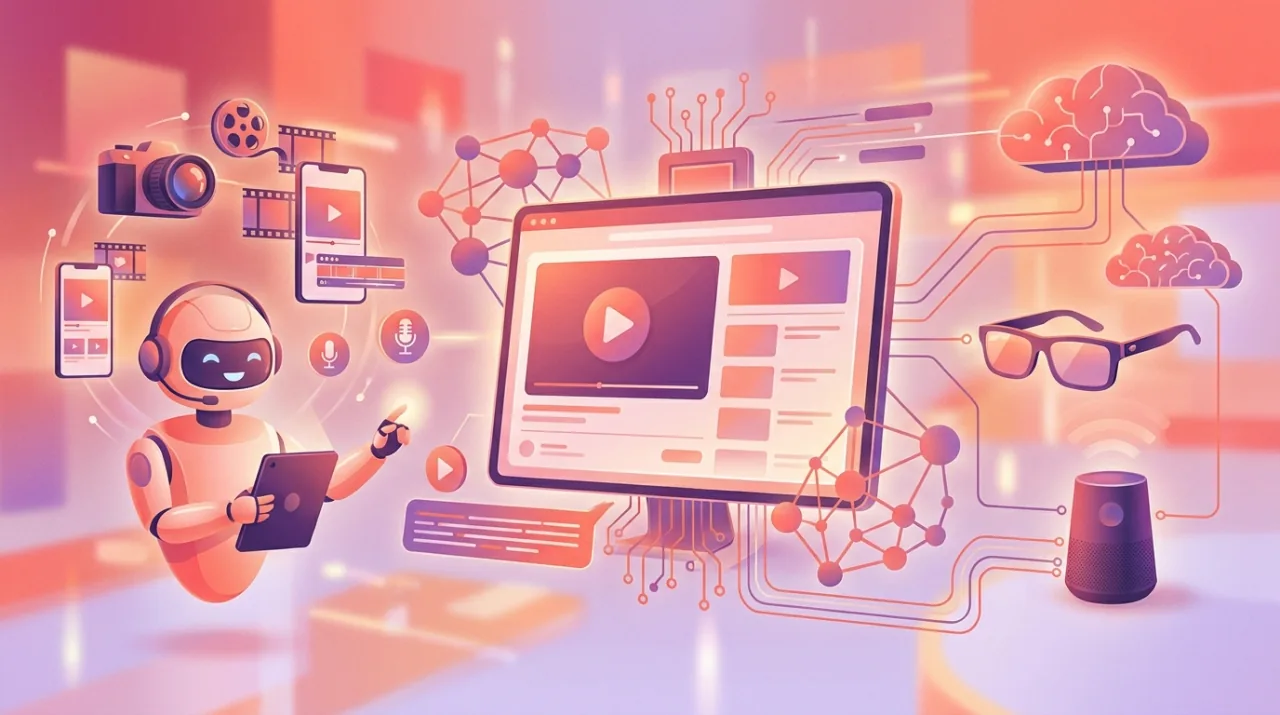
The digital landscape is on the precipice of a monumental transformation, one predicted by Mark Zuckerberg that promises to redefine our interaction with technology and reshape our daily lives. According to a TechCrunch report, Zuckerberg envisions a future where billions of people will possess personal AI agents within the next five years [2]. This isn't merely an incremental upgrade to existing tech; it signifies a profound shift, framing consumer AI as a mass-market product that transcends enterprise applications and academic research, poised to become mainstream infrastructure embedded deeply within our digital existence [2].
Zuckerberg's bold prediction serves as the clearest US-centric signal of a new era, moving AI agents from the realm of experimental assistants to ubiquitous, essential components of our digital fabric [2]. The core of this signal is unmistakable: AI agents are transitioning from novelty tools to mainstream consumer infrastructure, a foundational layer akin to how the internet or smartphones became indispensable. This next phase isn't just about crafting better chatbots; it's about the emergence of truly personal agents, seamlessly integrated into our everyday digital life and services, capable of acting autonomously on our behalf [2]. The broader context of 2026 data reinforces this trajectory, showing an escalating consumer demand for more useful AI experiences, particularly those offering automated, personalized, and real-time support [8, 15].
This vision implies a consumer-AI market where these personal AI agents evolve into the default interface for managing personal tasks, receiving tailored recommendations, and accessing support across a myriad of applications and platforms [2]. It marks a significant milestone in the evolution of AI agents, signaling a departure from isolated, prompt-driven interactions to an always-available, intelligent software companion that anticipates needs, remembers context, and takes initiative for the user [2]. The implications of such a future are vast, promising to fundamentally alter how we work, communicate, learn, and live.
The Dawn of the Personal AI Agent Era: Zuckerberg's Vision Unpacked
Mark Zuckerberg’s prediction, as highlighted in the TechCrunch report [2], is not just a technological forecast; it’s a strategic declaration of intent regarding the future trajectory of consumer AI. When Zuckerberg speaks of "billions of people" having personal AI agents within half a decade, he is articulating a scale of adoption that mirrors the proliferation of the internet itself or the ubiquitous presence of smartphones. This isn't a niche market for early adopters or tech enthusiasts; it's a vision of AI deeply integrated into the lives of the global populace, making it a truly mass-market phenomenon.
This projection directly contrasts with how AI is often perceived today—primarily as sophisticated chatbots for customer service, complex tools for enterprise data analysis, or abstract concepts debated within research labs. While these applications are valuable, they represent a fragmented and often reactive engagement with artificial intelligence. Zuckerberg’s insight suggests a pivot: instead of AI being a tool we occasionally use, it will become an ever-present, proactive entity in our digital ecosystem.
The aggressive "five years" timeline underscores the urgency and rapid pace of innovation expected. This isn't a distant, speculative future but one that is actively being built now, necessitating rapid advancements in AI capabilities, hardware integration, and user experience design. The shift from AI being predominantly an "enterprise or research trend" to a "mass-market product" [2] is perhaps the most critical takeaway. It signifies that the focus of development will increasingly be on creating AI solutions that are intuitive, accessible, and indispensable for the average consumer, rather than solely catering to businesses or academic pursuits. This move promises to democratize advanced AI capabilities, putting intelligent assistance directly into the hands of individuals on an unprecedented scale.
From Experimental Assistants to Mainstream Consumer Infrastructure
The core signal emanating from Zuckerberg’s prediction is the transformation of AI agents from experimental tools into foundational, mainstream consumer infrastructure [2]. To understand the magnitude of this shift, consider how the internet or mobile phones evolved from specialized technologies to essential utilities that underpin modern life. Initially, these were complex, expensive, and often experimental, accessible only to a select few. Over time, they became ubiquitous, deeply integrated into our daily routines, and formed the very backbone of countless services and interactions. Zuckerberg believes personal AI agents are on the same trajectory.
Currently, many "AI assistants" operate as experimental tools, offering limited scope and requiring specific prompts or commands for designated tasks. Think of voice assistants that can play music or set timers but struggle with complex, multi-step requests, or productivity tools that automate singular workflows. These are siloed, reactive, and often lack a deep, persistent understanding of the user’s broader context or goals. They are assistants in the narrowest sense, waiting for explicit instruction.
The concept of "mainstream consumer infrastructure" entails something far more profound. It suggests that personal AI agents will be:
- Always-on and Always-available: Not just when summoned, but continuously monitoring, learning, and anticipating needs.
- Deeply Integrated: Operating seamlessly across all devices, platforms, and services, dissolving the boundaries between different applications.
- Foundational: Becoming a primary interface through which individuals interact with the digital world, reducing the need to navigate countless apps or websites manually.
This shift fundamentally redefines the human-computer interaction paradigm. Instead of users adapting to the limitations of technology, personal AI agents will adapt to the nuances of human behavior, preferences, and intent. They will learn our habits, understand our priorities, and proactively offer solutions, effectively becoming digital extensions of ourselves. This isn't just about convenience; it's about fundamentally enhancing human capabilities and freeing up cognitive load from mundane digital management.
Beyond Better Chatbots: The Promise of Personal Agents in Everyday Life
The "next phase" of AI, as outlined by the TechCrunch report, distinctly moves beyond merely "better chatbots" to the creation of truly "personal agents" deeply embedded in our everyday digital life and services [2]. It’s crucial to differentiate these two concepts, as the distinction highlights the leap in functionality and integration that Zuckerberg foresees.
Current chatbots, while often helpful, primarily function as reactive, session-based interfaces. They respond to specific queries, follow predefined scripts, and frequently lose context between interactions. If you close a chat window or switch to another task, the chatbot often "forgets" your previous conversation, requiring you to start anew. Their utility is largely confined to specific applications or customer service scenarios, acting as digital receptionists rather than true personal assistants.
Personal AI agents, in contrast, represent a paradigm shift. They possess several key characteristics that elevate them far beyond simple conversational interfaces:
- Proactive Capabilities: Unlike reactive chatbots, personal agents will anticipate user needs. They might suggest leaving for an appointment based on real-time traffic, offer to order groceries when supplies are low, or flag important emails based on learned priorities, all without explicit prompting.
- Persistent Memory and Context: These agents will retain a deep, ongoing understanding of a user’s preferences, history, ongoing projects, and long-term goals. They will remember previous interactions, learn from past behaviors, and apply this knowledge across various contexts, creating a truly personalized experience that evolves over time.
- Omnipresent Integration: The vision is for these agents to be "embedded in everyday digital life and services" [2]. This means they won't be confined to a single app or device but will operate seamlessly across smartphones, smart home devices, vehicles, wearables, and enterprise platforms. They will act as a unified, intelligent layer that unifies a user’s digital footprint.
- Autonomous Action: Perhaps the most significant differentiator is their ability to "act on a user’s behalf" [2]. This moves beyond merely providing information or suggestions. Personal agents will be authorized and capable of executing complex tasks, such as managing schedules, booking travel, handling financial transactions, drafting communications, or even coordinating with other agents on behalf of their user.
Imagine a personal agent that manages your entire travel itinerary: booking flights, reserving hotels, arranging ground transportation, adjusting for delays, and even recommending local attractions—all with minimal input from you, based on your learned preferences and previous travel history. Or an agent that streamlines your work life, prioritizing emails, scheduling meetings, drafting routine reports, and syncing with your team's project management tools. These agents will not just assist; they will genuinely empower, handling the digital minutiae of life and work, freeing human users to focus on higher-level tasks, creativity, and personal well-being. This deeper, more proactive, and pervasive integration is what truly sets personal AI agents apart from the chatbots of today.
The Demand Signal: Why Consumers Are Ready for AI Agents
Zuckerberg's vision isn't just a technological possibility; it's a response to an escalating demand from consumers. The broader context of 2026 data reveals a clear and rising appetite for more useful AI experiences, especially those that provide automated, personalized, and real-time support [8, 15]. This demand signal indicates that consumers are not just open to AI, but actively seeking solutions that address existing frustrations and enhance their digital interactions.
What constitutes "useful AI experiences" in the eyes of the consumer?
- Automated Efficiency: People are increasingly burdened by repetitive digital tasks—scheduling, data entry, managing notifications, navigating complex interfaces. The desire to offload these mundane, time-consuming activities is high. Consumers want technology that works in the background, handling the digital busywork so they can focus on more engaging or critical endeavors.
- Hyper-Personalization: Generic digital experiences are no longer sufficient. Users expect products and services to understand their unique preferences, habits, and context. From content recommendations to shopping suggestions, there’s a strong desire for experiences that feel tailor-made and relevant to the individual, rather than a one-size-fits-all approach. Current personalization often feels superficial or incomplete; personal AI agents promise a deeper, more holistic form of individual tailoring.
- Real-time, Proactive Support: The frustration of waiting for customer service, sifting through endless FAQs, or struggling to find information precisely when needed is universal. Consumers crave instant, relevant assistance that is available exactly when and where they need it. This includes proactive support—where an AI anticipates a problem before it escalates or offers a solution before being asked.
Current digital experiences often fall short of these expectations, creating a palpable demand gap. We navigate dozens of apps daily, each with its own interface and limitations. We manually manage schedules across multiple calendars, sift through overwhelming email inboxes, and contend with customer service systems that feel impersonal and inefficient. This fragmentation and inefficiency fuel the desire for a more cohesive, intelligent, and supportive digital ecosystem.
Market indicators consistently point towards this readiness. Surveys frequently show consumers expressing interest in AI that can simplify their lives, manage their health, or streamline their finances. The success of early, albeit limited, AI assistants demonstrates a foundational acceptance. As AI capabilities improve, promising more robust automation, deeper personalization, and genuinely proactive real-time support, consumer readiness will only accelerate. The market isn't just waiting for personal AI agents; it's actively pulling for their arrival, creating fertile ground for Zuckerberg's vision to materialize.
Personal AI Agents as the Default Interface: A New Digital Paradigm
Zuckerberg's prediction isn't just about having AI agents; it fundamentally implies a new paradigm where these personal AI agents become the default interface for interacting with the digital world [2]. This signifies a profound shift away from our current app-centric, screen-tapping, and keyboard-typing modes of interaction. Instead, natural language, voice commands, and even ambient context will become the primary means through which we engage with technology.
Imagine a world where you no longer need to open specific apps for most tasks. Instead, you articulate a need or a desire to your personal AI agent, and it intelligently executes the task across various platforms and services behind the scenes.
- Personal Tasks: Need to schedule a doctor's appointment? Your agent consults your calendar, finds available slots with your preferred physician, cross-references insurance details, and books it, then sends you a confirmation. Want to plan a family dinner? The agent checks everyone’s availability, suggests restaurants based on dietary restrictions and preferences, and makes a reservation.
- Hyper-Personalized Recommendations: Beyond simple "you might also like" suggestions, your agent truly understands your evolving tastes. It recommends movies, books, music, news articles, or even educational courses that align perfectly with your interests and current learning goals. When shopping, it presents products that fit your style, budget, and ethical considerations, sifting through millions of options to present only the most relevant choices.
- Seamless Support Across Apps and Platforms: Facing an issue with a product or service? Instead of navigating customer support menus, your agent can directly interface with the company's AI, explain your problem, and often resolve it autonomously. It can coordinate information across your travel apps, banking apps, health trackers, and productivity suites, presenting a unified understanding of your life and providing seamless support wherever you are.
This vision represents a definitive "shift from isolated prompts to always-available personal software that can act on a user’s behalf" [2]. Current interactions often involve isolated prompts—a specific command to a specific app. Personal AI agents will break down these silos, becoming a continuous, intelligent layer that understands context, anticipates needs, and orchestrates actions across the entire digital ecosystem. They will manage complexity for the user, turning fragmented digital interactions into a unified, intuitive experience where technology recedes into the background, leaving users to focus on their goals and intentions. This redefinition of the default interface promises a level of digital fluidity and empowerment previously unimaginable.
Key Capabilities and Features of Future Personal AI Agents
To fulfill Zuckerberg's vision of personal AI agents becoming mainstream infrastructure for billions, these agents will need to embody a sophisticated set of capabilities, far surpassing the current generation of digital assistants. Their effectiveness will hinge on their ability to integrate deeply, learn continuously, and act autonomously while maintaining user trust.
1. Contextual Understanding: This is paramount. A truly personal agent must possess a deep grasp of the user's current situation, historical interactions, immediate goals, and long-term aspirations. This goes beyond simple data points; it involves understanding nuances, inferring intent, and recognizing patterns in behavior, location, time of day, and even emotional state. It allows the agent to provide relevant assistance without explicit prompting.
2. Learning and Adaptability: Personal AI agents won't be static programs. They will continuously learn from every interaction, every piece of feedback, and every action taken on the user's behalf. This adaptability means they will evolve their understanding of user preferences, optimize their decision-making processes, and become increasingly proficient over time, making them truly personalized companions.
3. Multi-modal Interaction: While natural language processing (NLP) will be crucial for voice and text commands, future agents will engage across multiple modalities. This includes understanding gestures, analyzing facial expressions (with user consent), interpreting biometric data from wearables, and even, in more advanced speculative futures, potentially interpreting subtle cognitive signals. This allows for more natural, intuitive, and less intrusive interaction.
4. Interoperability Across Platforms and Services: A key challenge and defining feature will be the ability of these agents to work seamlessly across different applications, devices, and ecosystems, regardless of the underlying vendor. For an agent to manage your travel, finance, health, and communication, it must be able to securely access and orchestrate actions across disparate apps and services from various companies. This requires robust API integrations and potentially industry-wide standards.
5. Proactive Assistance and Anticipation: Moving beyond reactive responses, personal AI agents will anticipate needs. They might proactively suggest a route change due to traffic, remind you of an upcoming bill, or prepare a summary of unread communications based on your learned priorities. This predictive capability transforms the agent from a tool to a genuine foresight engine.
6. Delegation of Complex Tasks: The ability to "act on a user’s behalf" [2] implies a high degree of autonomy and the capacity to execute multi-step, complex tasks. This could involve booking an entire trip, managing a portfolio of investments, coordinating a household's utilities, or even negotiating certain aspects of a purchase. Users will delegate responsibilities, trusting the agent to handle the intricacies.
7. Robust Security and Ethical Frameworks: Given the immense amount of personal data these agents will handle and their capacity for autonomous action, robust security protocols are non-negotiable. Furthermore, they must operate within clear ethical frameworks, prioritizing user privacy, ensuring data transparency, avoiding biases, and providing users with ultimate control over their data and the agent's actions. Trust will be the bedrock of widespread adoption.
These capabilities collectively paint a picture of highly intelligent, deeply integrated, and continuously evolving digital companions. They are designed not just to process information but to understand, predict, and act in ways that genuinely enhance human experience and capability, fundamentally shifting our relationship with technology.
Challenges and Considerations for Widespread AI Agent Adoption
While the promise of personal AI agents is immense, the path to widespread adoption for billions of people within five years is fraught with significant challenges and critical considerations. Addressing these hurdles will be paramount to realizing Zuckerberg’s vision responsibly and effectively.
1. Privacy and Data Security: Personal AI agents, by their very nature, will require access to an unprecedented amount of highly sensitive personal data—financial records, health information, communication history, location data, preferences, and behaviors. Ensuring the absolute security of this data from breaches and misuse is a monumental task. Furthermore, establishing clear, transparent privacy policies and giving users granular control over their data will be essential to build trust. Without ironclad privacy, mass adoption will be severely hampered.
2. Bias and Fairness: AI models are trained on vast datasets, and if these datasets reflect existing societal biases, the agents themselves will perpetuate or even amplify them. Ensuring that personal AI agents are fair, equitable, and non-discriminatory in their recommendations, decisions, and actions across diverse user demographics is a complex ethical and technical challenge. Algorithmic transparency and rigorous auditing will be crucial.
3. Interoperability Standards and Ecosystem Fragmentation: For a personal AI agent to be truly effective, it must operate seamlessly across a multitude of devices, applications, and services from various vendors (e.g., Apple, Google, Amazon, Meta, Microsoft, and countless others). Currently, the tech ecosystem is highly fragmented. Developing universal interoperability standards and encouraging cooperation among competing tech giants will be critical to prevent vendor lock-in and enable a truly unified agent experience. Without this, agents risk becoming siloed within specific ecosystems, limiting their utility.
4. User Trust and Control: Handing over significant autonomy to a digital agent requires a profound leap of trust. Users need to feel in control, understanding how their agent makes decisions, being able to override its actions, and having a clear "off switch." Over-automation or a perceived lack of control could lead to user frustration and rejection. Building intuitive interfaces for managing agent permissions and understanding its reasoning will be vital.
5. Digital Divide and Equitable Access: If personal AI agents become essential for navigating modern life, their accessibility must be universal. There's a risk that advanced, highly effective agents could exacerbate the digital divide, creating a two-tiered society where those with access to sophisticated AI enjoy significant advantages in productivity, convenience, and access to information, while others are left behind. Ensuring equitable access, affordability, and digital literacy will be important considerations.
6. Economic and Societal Impact: The widespread automation facilitated by personal AI agents will undoubtedly have significant economic consequences, potentially displacing jobs in certain sectors while creating new ones. Society will need to grapple with questions of workforce retraining, universal basic income, and the redefinition of human work. Beyond economics, there are profound philosophical questions about human agency, decision-making, and our relationship with increasingly intelligent machines.
7. Technical Hurdles: The computational power required for billions of always-on, learning, and proactive AI agents is immense, posing challenges for energy consumption, data storage, and real-time processing capabilities. Advancements in edge computing, more efficient AI models, and next-generation hardware will be necessary to support this scale.
8. Ethical Frameworks and Governance: Beyond individual company policies, there will be a need for broader ethical frameworks and potentially governmental regulations to guide the development and deployment of personal AI agents. This includes defining accountability for agent actions, establishing norms for human-AI interaction, and protecting fundamental rights in an AI-pervaded world.
Successfully navigating these multifaceted challenges will require unprecedented collaboration among technologists, policymakers, ethicists, and civil society. The journey to a world of pervasive personal AI agents is not just a technological race but a societal undertaking of immense complexity.
The Impact on Industries and Society
The widespread adoption of personal AI agents, as predicted by Mark Zuckerberg, will not just revolutionize individual digital experiences; it will send ripple effects across every industry and societal structure. This shift from isolated prompts to always-available personal software that can act on a user’s behalf [2] will catalyze innovation, disrupt established models, and redefine our understanding of efficiency and service.
1. The Tech Industry: This is where the initial transformation will be most visible. The race to develop the most capable, trustworthy, and interoperable personal AI agents will intensify competition among tech giants. New ecosystems will emerge around these agents, fostering innovation in AI models, hardware (e.g., AI-optimized chips, ambient computing devices), and software (e.g., agent-centric operating systems, specialized AI apps). Companies that fail to adapt their products and services to integrate seamlessly with personal AI agents risk obsolescence.
2. E-commerce and Retail: Imagine hyper-personalized shopping where your agent monitors your pantry, anticipates needs, compares prices across stores, and places orders autonomously, adhering to your budget and ethical preferences. Returns will be automated, and customer support will be instant and context-aware. Physical retail might pivot further towards experiential elements as transactional aspects become largely automated.
3. Healthcare: Personal AI agents could revolutionize proactive health management. They could monitor vital signs via wearables, remind users to take medication, analyze dietary intake, suggest exercise routines, schedule appointments with specialists, and even synthesize medical information for discussions with doctors. This could lead to a significant shift towards preventative care and highly personalized health journeys.
4. Education: Learning will become profoundly personalized. AI agents could act as adaptive tutors, tailoring curricula to individual learning styles, identifying knowledge gaps, providing real-time feedback, and managing study schedules. They could access vast libraries of information, making learning more accessible and effective for diverse populations.
5. Customer Service: The demand for automated, personalized, real-time support [8, 15] will be fully met by personal AI agents that can directly interface with enterprise AI systems. This will free human customer service agents to handle complex, empathetic, or highly unusual cases, while routine inquiries and issue resolution are handled seamlessly and instantly by AI, leading to higher customer satisfaction and lower operational costs.
6. Workplace and Productivity: Personal AI agents will become indispensable digital co-pilots. They will manage schedules, prioritize communications, automate data entry, draft routine documents, conduct research, and even coordinate tasks within teams. This will free human workers from mundane, repetitive tasks, allowing them to focus on creativity, strategic thinking, problem-solving, and interpersonal collaboration, potentially redefining the nature of work itself.
7. Daily Life and Social Interaction: Routine tasks like managing household utilities, planning social events, finding information, or navigating complex bureaucracies will be streamlined. This newfound efficiency could free up significant personal time, allowing individuals to pursue hobbies, spend more time with loved ones, or engage in community activities. However, it also raises questions about potential over-reliance on AI and the impact on human decision-making and cognitive skills.
The societal impact will be profound, touching on everything from privacy norms to economic structures, ethical considerations, and even the definition of human identity in a world saturated with intelligent agents. The transition will be complex, requiring careful navigation of the challenges, but the potential for enhanced human capability and a more efficient, personalized world is undeniable.
The Road Ahead: Building the Future of Personal AI
The vision of billions of people leveraging personal AI agents within five years, as articulated by Mark Zuckerberg, is ambitious and transformative. Realizing this future, and doing so responsibly, requires a concerted and multifaceted effort from various stakeholders. The road ahead is not just about technological advancement but also about establishing new norms, fostering collaboration, and prioritizing human-centric design.
1. Collaboration Across the Tech Ecosystem: No single company, not even one as large as Meta, can unilaterally bring about this shift. It necessitates unprecedented collaboration among competing tech giants (e.g., Apple, Google, Amazon, Microsoft, Meta), as well as countless startups, researchers, and developers. This collaboration is crucial for developing robust interoperability standards, shared ethical guidelines, and common security protocols that allow agents to function seamlessly across diverse platforms and devices.
2. Focus on User-Centric Design and Ethical AI: At the heart of successful adoption must be the user. This means designing AI agents that are intuitive, transparent in their decision-making, and provide users with ultimate control over their data and the agent's actions. Ethical considerations, including privacy, fairness, bias mitigation, and accountability, must be embedded into the design process from the outset, not as an afterthought. Trust is the foundation upon which this future will be built.
3. Iterative Development and Real-World Testing: The development of such sophisticated agents will not happen in a vacuum. It will require continuous iterative development, rapid prototyping, and extensive real-world testing with diverse user groups. This process will help refine agent capabilities, uncover unforeseen challenges, and ensure that the technology meets genuine human needs and expectations. Feedback loops will be vital to adapt and improve.
4. The Importance of Open Standards and Interoperability: To avoid a fragmented "AI agent ecosystem" where different agents are locked into proprietary platforms, the establishment of open standards for data exchange, agent communication, and API integration is paramount. This will foster competition, encourage innovation, and ensure that users have the freedom to choose and combine agents and services as they see fit, rather than being beholden to a single provider.
5. Educating the Public on Capabilities and Limitations: For mass adoption to occur responsibly, the public needs to understand what personal AI agents are, what they can (and cannot) do, and the implications of using them. Educational initiatives will be crucial to demystify AI, manage expectations, address concerns about job displacement and privacy, and empower individuals to make informed choices about integrating these agents into their lives.
6. The Role of Companies like Meta: As Zuckerberg's own company, Meta will undoubtedly play a significant role in leading this charge. Their investments in AI research, large language models, and ventures into metaverse technologies position them to be key architects of this future. Their approach to developing and deploying personal AI agents, particularly regarding open standards, privacy, and ethical considerations, will heavily influence the broader industry trajectory.
The journey toward a world of pervasive personal AI agents is not just a technological race but a profound societal evolution. It promises to unlock new levels of efficiency, personalization, and convenience, fundamentally reshaping our relationship with technology. By proactively addressing the challenges and embracing a collaborative, ethical, and user-centric approach, we can collectively build a future where personal AI agents truly serve humanity, becoming invaluable extensions of our capabilities and enhancing the quality of life for billions.
Conclusion
Mark Zuckerberg's prediction that billions of people will integrate personal AI agents into their lives within five years is more than a forecast; it's a powerful declaration of a looming digital revolution. The TechCrunch report that brought this vision to light [2] clarifies that we are witnessing the pivotal moment where consumer AI transitions from an experimental novelty to mainstream infrastructure, fundamentally altering the way we interact with our digital world.
This shift signifies a dramatic evolution beyond mere chatbots. We are entering an era where personal agents will be deeply embedded in our everyday digital life and services, characterized by their proactive nature, persistent understanding of context, omnipresent availability, and unparalleled ability to act autonomously on our behalf [2]. This transformation is not a distant fantasy; it is catalyzed by a tangible and rising consumer demand for more useful, automated, personalized, and real-time AI experiences [8, 15]—a demand that current digital paradigms struggle to meet.
Zuckerberg's insight points to a future where personal AI agents become the default interface, serving as our primary gateway for personal tasks, intelligent recommendations, and seamless support across a fragmented landscape of apps and platforms [2]. This marks an indelible milestone in AI agent progress, moving us decisively from isolated, prompt-driven interactions to a realm of always-available, intelligent software extensions of ourselves [2].
While challenges in privacy, security, interoperability, and ethics remain formidable, the trajectory is clear. The future is not just about AI; it is about personal AI agents that anticipate our needs, learn from our lives, and empower us to navigate the complexities of the modern world with unprecedented ease and efficiency. This impending era promises a profound redefinition of human-technology interaction, ushering in a future where intelligence is deeply personalized, always available, and inextricably woven into the fabric of our existence.