Conversational AI Is Replacing Search and Transforming How Consumers Discover Brands
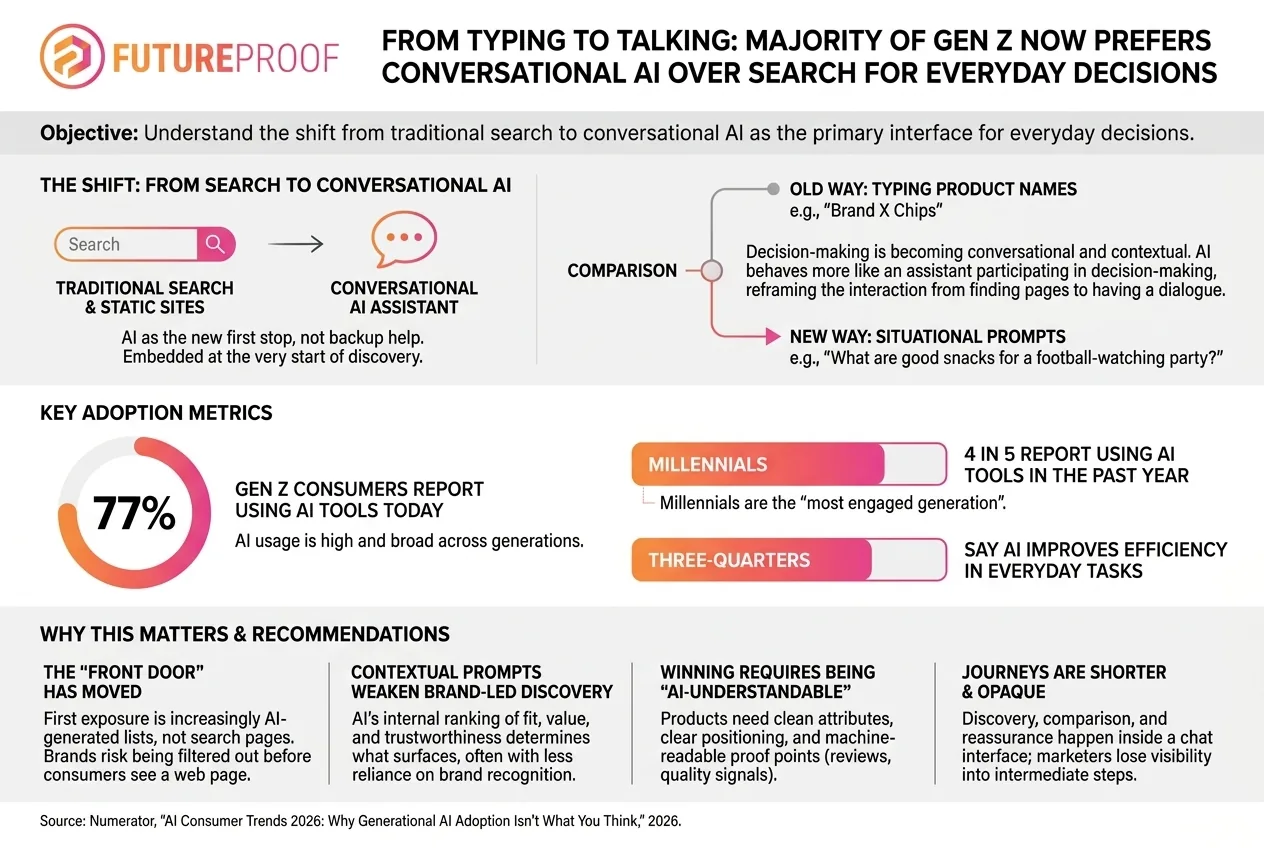
The digital landscape is undergoing a seismic shift, quietly redefining how consumers, especially younger generations, navigate their everyday decisions. For decades, the internet has been synonymous with search – a precise art of crafting keywords to unearth information. Now, a more intuitive, conversational paradigm is taking hold, fundamentally altering the path from need to discovery. This isn't just an incremental update; it's a fundamental reimagining, with conversational AI emerging as the preferred first stop, moving beyond the sterile keyword box into a realm of natural dialogue.
This profound transformation marks the dawn of a new era, where the traditional search engine, with its blue links and ranked results, is giving way to intelligent agents capable of understanding context, personalizing recommendations, and streamlining the decision-making process. No longer do users painstakingly input specific product names or brands; instead, they pose scenario-based questions like, "What should I make for dinner tonight that's healthy and quick?" or "Suggest a sustainably sourced coffee maker under $100." This shift from transactional keyword searches to holistic, contextual conversations is powered by sophisticated artificial intelligence, and the implications for brands are nothing short of revolutionary.
The New Digital Front Door: Why Conversational AI is Winning Over Traditional Search
The allure of conversational AI lies in its ability to mimic human interaction, providing a more intuitive and less fragmented user experience. Traditional search, while powerful, often requires users to act as their own filters, sifting through pages of results to synthesize information. Conversational AI, by contrast, aims to deliver a direct, curated answer, often presenting a single, highly relevant recommendation or a concise summary of options.
Consider the simple act of planning dinner. A traditional search might involve typing "healthy quick dinner recipes," yielding millions of results, forcing the user to click through various links, evaluate ingredients, check cooking times, and assess dietary suitability. A conversational AI, however, can handle a prompt like "What should I make for dinner that's healthy, uses chicken, and can be cooked in under 30 minutes?" It leverages its understanding of natural language, its vast knowledge base, and often, its access to user preferences and dietary restrictions, to suggest a specific recipe or a short list of highly pertinent ideas. This contextual understanding and personalized recommendation engine drastically reduce the cognitive load on the user, making decision-making faster and less arduous.
The "why" behind this shift is multifaceted. For many, it's about efficiency and convenience. In an increasingly fast-paced world, the ability to get a concise, actionable answer without extensive browsing is invaluable. For others, it’s the perceived intelligence and helpfulness of the AI. It feels less like searching a database and more like consulting a knowledgeable assistant. This seamless, almost invisible integration of information retrieval and decision support makes conversational AI the new digital front door for a growing number of consumers. It transforms discovery from an active hunt into a passive, yet highly personalized, guided experience.
Gen Z and Millennials: The Vanguard of the AI Revolution
Leading this charge are Gen Z and Millennials, generations that have grown up alongside, or quickly adapted to, evolving technology. New research from Numerator's AI Consumer Trends 2026 highlights this phenomenon starkly: a striking 77 percent of Gen Z individuals already actively utilize AI tools. Even more impressively, four out of five Millennials have engaged with AI in the past year, solidifying their position as the most engaged generation with these emerging technologies. This isn't surprising, given their digital native or highly digitally fluent backgrounds.
Gen Z, born into a world saturated with smartphones and instant information, possesses an inherent comfort with novel technologies. They expect highly personalized experiences, instant gratification, and tools that adapt to their unique needs. Conversational AI, with its ability to offer tailored suggestions and streamline complex tasks, perfectly aligns with these expectations. For them, AI isn't a futuristic concept; it's a practical, everyday utility that enhances their lives. They are quick to adopt, experiment, and integrate new digital solutions that offer tangible benefits, and conversational AI fits this bill perfectly by providing efficient, context-aware assistance for everything from academic research to social planning and purchasing decisions.
Millennials, while having experienced a more gradual technological evolution, are equally pragmatic in their adoption of AI. As they navigate demanding careers, family responsibilities, and financial planning, they seek tools that offer real time-saving solutions and robust decision support. Conversational AI, whether it’s helping them manage their smart home devices, plan a trip, compare financial products, or find the perfect gift, offers a compelling value proposition. Their engagement levels underscore a generation actively seeking to optimize their lives through technology, leveraging AI to cut through noise and arrive at informed choices more rapidly.
For brands, understanding these demographics is paramount. Gen Z and Millennials collectively represent immense purchasing power and influence. Their early and enthusiastic adoption of conversational AI signals a definitive shift in how future consumers will interact with products, services, and information. Ignoring this trend means risking alienation from the very consumers poised to drive market growth for decades to come.
The Collapsing Customer Journey: When AI Becomes the Point of Influence
Traditionally, the customer journey was a clearly defined, multi-stage process: Awareness, Interest, Consideration, Intent, Evaluation, and finally, Purchase. Each stage involved distinct touchpoints, from initial brand exposure to detailed product comparisons on a brand's website. With the rise of conversational AI, this journey is not just accelerating; it's collapsing, often into a single, highly contextual, and less visible exchange.
The traditional path relies on consumers actively navigating through various sources – search engines, review sites, social media – to gather information and make a decision. The AI-driven path, however, often starts and ends within the conversational interface itself. A user expresses a need, the AI processes it, synthesizes information from various sources (including brand data), and presents a recommendation. The decision, or at least a strong bias towards a particular option, is formed within this AI interaction, often before the user ever clicks through to a brand's dedicated website or e-commerce platform.
This shortening of the journey makes it "less visible" to brands employing traditional analytics. The pre-click touchpoints, where influence is now primarily exerted, occur within the AI model itself, not on publicly trackable web pages. Brands may find their analytics dashboards showing fewer direct website visits from search, not because consumers aren't looking for their products, but because the path to discovery and decision has been rerouted through an AI intermediary. The AI doesn't just present information; it interprets, curates, and effectively endorses options based on its understanding of the user's prompt and its own vast dataset. In this scenario, the AI model itself becomes a critical point of influence, often more so than any individual advertisement or organic search result. The relationship between consumer and brand is increasingly mediated, and even shaped, by the intelligence of the AI.
The Peril of Traditional SEO in an AI-First World
For years, the mantra of digital marketing has been "SEO is king." Brands have meticulously optimized their websites for keywords, building elaborate content strategies around search engine algorithms. However, in an AI-first world, a brand optimized solely for classic SEO risks becoming largely invisible, filtered out before a shopper ever reaches their website. The SEO paradox is real: what made a brand discoverable in the past may now be an impediment to its future visibility.
Traditional SEO relies on keyword matching and backlink profiles to signal authority and relevance to search engine crawlers. While these elements still hold some sway, conversational AIs operate on a deeper level of understanding. They don't just match keywords; they interpret natural language, infer intent, and synthesize information from a multitude of data points. Keyword stuffing, thin content, or even well-optimized but generic descriptions may not be enough to satisfy an AI looking for rich, structured data and clear value propositions. An AI might encounter a brand's website, but if the underlying product data is messy, inconsistent, or lacks clear, machine-readable attributes, the AI may simply pass it over in favor of a competitor whose information is more "AI understandable."
The danger is that brands lose control over their narrative if they are not actively shaping how AI models interpret their offerings. If a brand's product information is ambiguous, or if its unique selling propositions are buried in unstructured text, the AI may misrepresent it, undervalue it, or simply fail to recommend it altogether. This creates a "dark funnel" where consumer decisions are being made within the AI's recommendations, without direct interaction with the brand's own carefully crafted digital presence. The cost of inaction is profound: losing market share to competitors who have adapted, becoming an afterthought in the consumer's decision-making process, and ultimately, facing diminished brand relevance. The urgency for adaptation is not just about staying competitive; it's about ensuring future visibility and survival in a rapidly evolving digital ecosystem.
Mastering "AI Understandability": The New SEO for Conversational AI
Winning in this new landscape requires a radical shift in optimization strategy. Brands must move beyond classic SEO to become truly "AI understandable." This means curating and structuring information in a way that AI models can easily interpret, categorize, and recommend with confidence and accuracy. It's less about optimizing for algorithms that parse keywords, and more about optimizing for intelligence that understands context and value.
Pillar 1: Clean Product Data and Structured Attributes. This is the bedrock of AI understandability. Brands must invest in meticulous data hygiene. Product information should be complete, accurate, and consistent across all platforms. This includes detailed specifications, variants, ingredients, usage instructions, and compatibility. Crucially, this data needs to be structured using schemas like Schema.org or JSON-LD. These semantic markups provide a standardized language for search engines and AI to understand the context and relationships of data points. For example, instead of just saying "Bluetooth speaker," structured data specifies it's a product with attributes like connectivity, battery life, and waterproof rating.
Pillar 2: Clear Value Signals. AI models are designed to help users make informed decisions, and value is a key component of that. Brands need to explicitly articulate their unique selling propositions and value differentiators in a machine-readable format. This goes beyond generic marketing copy. These value signals, when clearly identified and structured, allow AI to recommend products based on user priorities that extend beyond basic features.
Pillar 3: Strong Proof Points. Trust is paramount in AI recommendations. Consumers rely on AI to vet products, and AI models rely on quantifiable proof points. This includes customer reviews, ratings, certifications, awards, expert endorsements, and scientific backing. These trust signals must be easy for AI to discover and verify.
Pillar 4: Contextual Relevance and Use Cases. Beyond product data, brands must consider the diverse scenarios in which their products might be recommended. This involves mapping user intents and lifestyle contexts and clearly associating products with specific use cases. This shift emphasizes user needs over keywords.
Influence Through the Model: How AI Becomes a Brand Advocate (or Gatekeeper)
In this evolving landscape, the AI model itself is not just a tool for information retrieval; it's an increasingly powerful influencer. It shapes consumer perceptions, guides preferences, and can act as either a powerful advocate for a brand or an impenetrable gatekeeper. For brands, building trust with the AI model is becoming as critical as building trust with the consumer.
The AI's recommendations carry significant weight because they are perceived as impartial, intelligent, and tailored. When an AI suggests a product, it's often seen not as an advertisement, but as an informed suggestion from a trusted source. If an AI consistently recommends a brand because its data is clear and compelling, that brand gains a major advantage. Conversely, unclear or incomplete data can make a brand invisible within AI-driven discovery.
Brands must engage proactively with this new reality by ensuring their information is accurate, compelling, structured, and aligned with AI’s interpretive logic. Monitoring how AI presents a brand's products is becoming essential for maintaining a competitive edge.
Practical Steps for Brands to Adapt and Thrive
The shift towards conversational AI is not a distant future; it's happening now. Brands must take concrete, actionable steps to adapt and ensure their continued visibility and relevance.
- Conduct a Comprehensive Data Audit: Scrutinize existing product data for completeness, accuracy, and structure.
- Invest in Robust Data Management: Implement or upgrade Product Information Management systems for centralized, consistent data.
- Rethink Content Strategy Beyond Keywords: Create content that articulates value, answers common questions, and describes real-world use cases.
- Embrace Semantic Markup: Implement Schema.org markup across product pages and key content.
- Prioritize Trust Signals: Integrate reviews, ratings, certifications, and awards into product information and structured data.
- Pilot AI Optimization Initiatives: Test and iterate AI-focused optimization strategies within a specific product category.
- Foster Cross-Functional Collaboration: Align marketing, IT, product, and customer service teams around AI optimization goals.
- Stay Agile and Monitor AI Trends: Continuously track AI model evolution and shifting consumer behavior.
Conclusion: Embracing the Future of Discovery and Decision-Making
The transition from typing to talking, from searching to conversing, is more than a technological upgrade; it's a fundamental reorientation of how consumers interact with the digital world. Gen Z and Millennials are leading the charge, signaling a clear preference for the speed, convenience, and personalization offered by conversational AI. For brands, this represents not just a challenge to traditional SEO, but an unprecedented opportunity to forge deeper, more intuitive connections with their audience.
The path from need to decision is collapsing into faster, more contextual, and often less trackable moments. Influence now flows through the model itself, making "AI understandability" the new standard for digital visibility. By embracing clean data, structured attributes, clear value signals, and strong proof points, brands can ensure they are recommended—not overlooked—in this new era of intelligent discovery. The future belongs to those who adapt, transforming conversations into conversions and becoming true partners in their customers' everyday decisions.