The Rise of Conversational AI and the New Era of Frictionless E Commerce
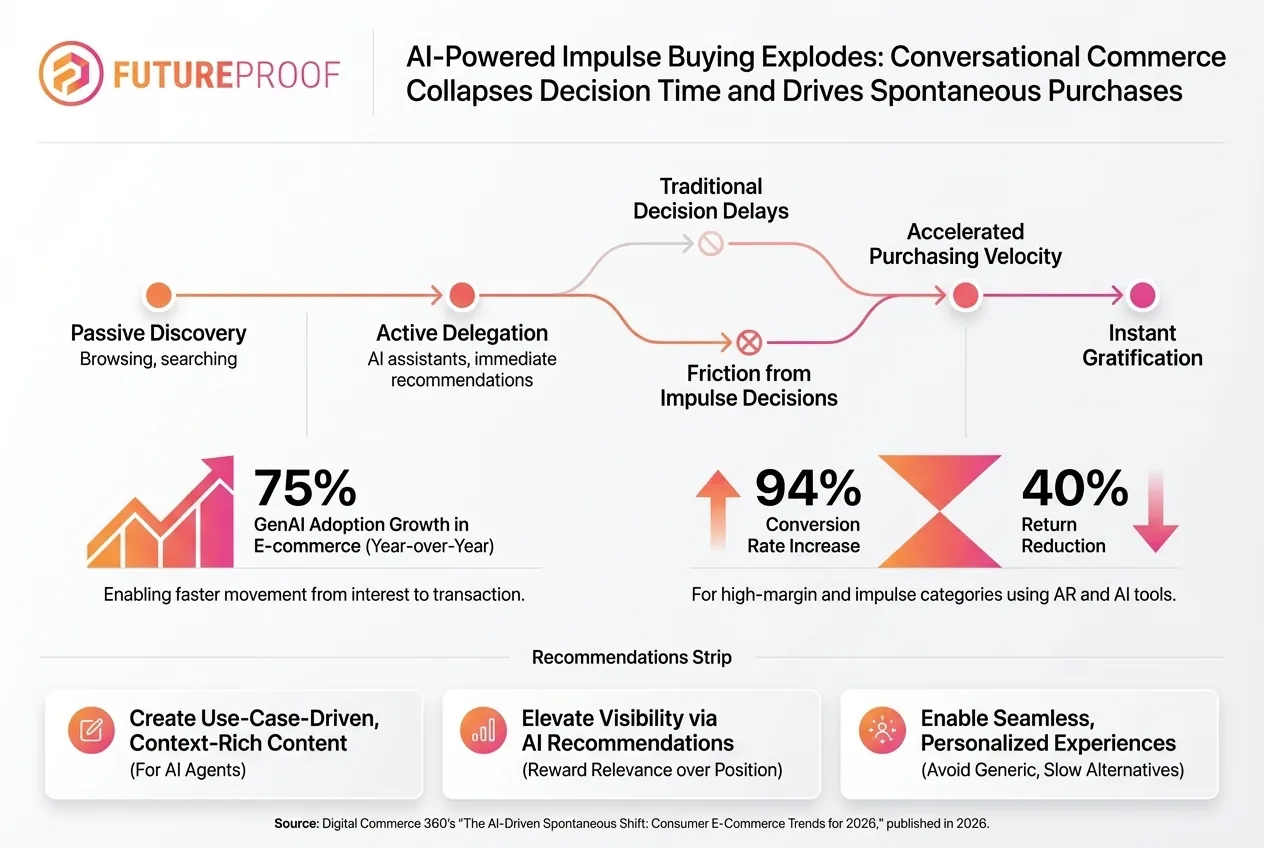
The landscape of e-commerce is undergoing a monumental, irreversible transformation, propelled by the relentless march of artificial intelligence. What was once a predictable journey of product discovery, research, and purchase has been utterly reinvented. We are no longer merely witnessing a shift; we are experiencing a seismic redefinition of consumer behavior, where AI-powered impulse buying is accelerating at an unprecedented pace. Conversational commerce, far from being a nascent trend, has emerged as the principal architect of this change, meticulously removing nearly all friction from the decision process and reshaping the very essence of how shoppers interact with brands.
The modern consumer isn't just browsing; they are delegating. The era of endless scrolling through product categories and comparing multiple open tabs is rapidly receding into the past. Instead, a single, intuitive prompt to an AI agent now orchestrates a seamless flow that encompasses comprehensive research, incisive comparison, and expedited checkout. This revolutionary integration means that the entire buying journey can be completed in moments, driven by the intelligence and efficiency of AI. For brands, this fundamental shift carries profound implications, necessitating an urgent re-evaluation of their digital strategies and customer engagement models.
Traditional product pages, once the unassailable bastions of e-commerce, are undeniably losing their pervasive influence. Their static nature and often generic presentation fail to keep pace with the dynamic, personalized demands of the AI-driven shopper. In their place, sophisticated AI agents have become the arbiters of product discovery, adeptly elevating the most context-rich, use-case-driven content at the precise moment a shopper articulates their need or desire. This means that mere visibility, achieved through legacy SEO tactics, is no longer sufficient. Today, and increasingly in the future, unparalleled relevance beats legacy visibility. Brands must now craft narratives and experiences that resonate deeply with individual user intent, curated and delivered by intelligent systems.
The impact of this AI-powered revolution is not just theoretical; it is demonstrably measurable. The integration of augmented reality (AR) and AI-assisted experiences is generating staggering conversion lifts of up to 94 percent. This dramatic surge isn't just a statistical anomaly; it represents a fundamental enhancement of the shopping experience, allowing consumers to virtually try on clothing, place furniture in their living rooms, or interact with products in ways that transcend the limitations of two-dimensional screens. Concurrently, these advanced technologies are also contributing to a significant reduction in returns, dropping by an impressive 40 percent in impulse-friendly categories. The ability of AI to guide shoppers to the right product, coupled with AR’s capacity to provide a realistic preview, minimizes buyer’s remorse and ensures greater product satisfaction.
A pivotal data point from a 2026 survey of 6,000 global consumers, as reported by Digital Commerce 360 in "The AI Driven Spontaneous Shift: Consumer E Commerce Trends for 2026," underscores the magnitude of this transformation. The survey revealed that e-commerce shoppers are evolving rapidly: they are faster, inherently more spontaneous, and increasingly conversational in their purchasing habits. Crucially, the usage of Generative AI (GenAI) in shopping has surged by an astounding 75 percent year over year, directly fueling a significant increase in impulse purchases. This isn't merely a trend; it's the establishment of a new consumer norm, one where instantaneous gratification and AI-facilitated decision-making are paramount.
The Evolution of the Shopper: From Browser to Delegator
The traditional e-commerce journey involved active exploration. Shoppers would navigate category pages, apply filters, read reviews, and meticulously compare specifications across various products. This process, while empowering in its breadth of choice, was also inherently time-consuming and often led to decision fatigue. Enter AI-powered conversational commerce. The modern shopper no longer feels the need to be the primary investigator. Instead, they articulate their needs, desires, or problems to an AI agent, effectively delegating the entire discovery and evaluation process.
Imagine a user prompting, "Find me a sustainable, ethically sourced coffee subscription that offers dark roast and ships bi-weekly." In moments, the AI agent, equipped with vast product knowledge and understanding of the user's implicit preferences (gleaned from past interactions or explicit settings), can surface precise recommendations, compare pricing, highlight unique features, and even initiate the subscription process. This single-flow interaction transforms what could have been a 30-minute research endeavor into a few seconds of engagement. The friction of navigating multiple websites, filtering options, and comparing complex data points vanishes, replaced by an efficient, highly personalized delegation. This frictionless path directly fuels impulse buying, as the cognitive load is dramatically reduced, and the path to purchase becomes virtually invisible.
The Brand Imperative: Redefining Content in the AI Era
For brands, the implications of this shift are profound and urgent. The once-dominant strategy of optimizing static product pages with generic keywords and feature lists is becoming increasingly obsolete. AI agents are not interested in broad, unfocused content; they seek highly specific, contextually relevant, and use-case-driven information.
- Beyond Product Features to Use Cases: Brands must transition from simply listing product specifications to illustrating how their products solve specific problems or enhance particular lifestyles. An AI agent responding to "I need a durable backpack for my daily commute on a bicycle" will prioritize content that highlights waterproofing, reflective strips, laptop compartments, and ergonomic design for cycling, rather than a generic backpack description. Brands need to generate content that explicitly addresses these nuanced use cases.
- The Power of Narrative and Experience: AI agents excel at synthesizing information to create compelling narratives. Brands that embed rich stories about their product's creation, impact, or user experiences will be favored. This includes high-quality images, immersive videos, and interactive 3D models that an AI can present to a user as part of a holistic recommendation.
- Optimizing for AI Discovery, Not Just Search Engines: SEO must evolve. While traditional keywords still hold some value, the new frontier is optimizing for AI discovery. This involves semantic content structuring, clear and concise data points, comprehensive FAQs, and a focus on answering potential user questions proactively. Brands need to ensure their product information is readily digestible and interpretable by AI algorithms. This means structured data, robust metadata, and a deep understanding of natural language processing (NLP) to anticipate how AI might interpret and present their offerings.
- Relevance as the Ultimate Currency: In a world where AI agents curate and recommend, sheer visibility without relevance is pointless. Brands must invest in understanding their customer segments at a deeper, more granular level than ever before. This includes leveraging AI for predictive analytics, personalized messaging, and dynamic content delivery. The goal is to ensure that when an AI agent selects a brand's product, it is the most relevant, contextually appropriate option for that individual shopper.
The Tangible Benefits: Conversions Up, Returns Down
The statistics are compelling: a 94 percent conversion lift and a 40 percent reduction in returns for impulse-friendly categories are not incremental gains; they represent a transformational impact on profitability and customer satisfaction.
- Conversion Acceleration through Immersive Experiences: Augmented Reality (AR) plays a critical role here. Imagine trying on virtual glasses, seeing how a new sofa fits your living room, or visualizing a makeup product on your face – all from the comfort of your home. This capability eradicates much of the guesswork inherent in online shopping. AI then further enhances this by suggesting complementary products, ensuring stylistic consistency, or even predicting satisfaction based on user preferences. When a shopper can virtually "experience" a product before buying, the confidence to purchase skyrockets, leading to vastly improved conversion rates. This immediate, interactive feedback loop dramatically shortens the path from consideration to purchase, making impulse buying a well-informed, albeit rapid, decision.
- Mitigating Buyer's Remorse and Reducing Returns: The 40 percent reduction in returns is equally significant. A primary driver of returns in e-commerce is the mismatch between consumer expectations and the reality of the product upon arrival. AI and AR directly address this by providing more accurate product representations and more personalized recommendations. For instance, AI can analyze a user's purchase history, body measurements, and style preferences to recommend precise sizing for apparel, significantly reducing fit-related returns. AR allows customers to visualize products in their real-world environment, ensuring they understand the scale, color, and fit before committing to a purchase. This proactive problem-solving, facilitated by AI, leads to higher customer satisfaction and a healthier bottom line for brands.
The AI Driven Spontaneous Shift: A Deeper Dive into Consumer Trends
The Digital Commerce 360 survey insights from 2026 are a clarion call for businesses. The portrait of the evolving e-commerce shopper is one of dynamism and a clear preference for efficiency.
- Faster and More Spontaneous: This trend is directly linked to the removal of friction by AI. When research and comparison are delegated, the decision-making process is compressed. Shoppers, armed with AI-curated information, feel empowered to make quicker, more spontaneous choices. This spontaneity is not reckless; it's AI-informed impulse.
- Increasingly Conversational: The 75 percent year-over-year growth in GenAI usage for shopping highlights a fundamental shift in how consumers want to interact with brands and products. They prefer natural language interactions over static interfaces. They want to "talk" to their shopping experience, asking questions, seeking advice, and receiving personalized recommendations in real-time. This conversational interface is the perfect conduit for impulse purchases, as it mimics the speed and immediacy of in-store personal assistance.
- GenAI and the Surge in Impulse Purchases: Generative AI's capacity to create personalized, persuasive, and contextually rich content on the fly is a game-changer for impulse buying. GenAI can summarize reviews, generate custom product descriptions tailored to a user's stated preferences, or even create unique visual mock-ups, all in response to a single query. This highly tailored and immediate feedback loop is incredibly effective at prompting spontaneous purchases, transforming latent desire into immediate action. The AI effectively acts as a highly skilled salesperson, understanding needs, overcoming objections, and guiding the customer to the point of purchase with unprecedented efficiency.
Strategies for Brands to Master the AI-Powered Impulse Economy
Navigating this new terrain requires a proactive, AI-first approach. Brands that fail to adapt risk being left behind in the wake of this rapid transformation.
- Invest Heavily in Conversational Interfaces: This is no longer optional. Brands must develop or integrate advanced chatbots, voice assistants, and AI shopping agents capable of understanding complex queries, providing accurate information, and guiding users through the purchase funnel. These interfaces should be seamlessly integrated across all touchpoints, from websites and apps to social media and messaging platforms.
- Prioritize Contextual and Use-Case Driven Content: Rework content strategies to focus on solutions, experiences, and specific use cases. Create detailed narratives, comprehensive FAQs, and rich media that explicitly demonstrate how products solve problems or fulfill desires. This content needs to be easily digestible by AI agents to ensure it's surfaced at the opportune moment.
- Embrace Immersive Technologies (AR/VR): For relevant categories, AR and potentially VR experiences are crucial. Investing in virtual try-on tools, 3D product configurators, and virtual showrooms can dramatically enhance customer confidence and drive conversions while simultaneously reducing returns. These technologies provide the "feel" of physical shopping without the physical limitations.
- Optimize for AI Discovery and Semantic Search: Traditional keyword stuffing is dead. Brands must focus on semantic SEO, ensuring their content is contextually rich, well-structured, and provides comprehensive answers to potential user questions. This involves structured data, robust metadata, and a deep understanding of how AI processes and synthesizes information. The goal is to make content "AI-readable."
- Leverage Data for Hyper-Personalization: AI thrives on data. Brands must implement robust data collection and analytics frameworks to understand individual shopper journeys, preferences, and behaviors. This data, anonymized and ethically managed, can then be used by AI to deliver truly hyper-personalized recommendations, pricing, and messaging, further accelerating impulse buying.
- Streamline the Checkout Process: Even with AI guiding the purchase, a cumbersome checkout can derail a spontaneous decision. Brands must ensure their checkout flows are as frictionless as possible, offering multiple payment options, guest checkout, and single-click purchase capabilities. AI can further optimize this by pre-filling information or suggesting the most convenient payment method.
- Build Trust through Ethical AI Practices: As AI becomes more integral to the shopping experience, transparency and data privacy are paramount. Brands must clearly communicate how AI is used, how data is protected, and ensure ethical guidelines are followed. Trust remains a foundational element, even in an AI-driven world.
- Cultivate a Culture of Experimentation: The AI landscape is evolving at lightning speed. Brands must foster a culture of continuous learning and experimentation, testing new AI tools, conversational interfaces, and content strategies to stay ahead of the curve.
The Future is Here: A New Era of Commerce
The acceleration of AI-powered impulse buying through conversational commerce marks not just an evolution, but a revolution in retail. Shoppers are no longer passive browsers; they are active delegators, entrusting AI agents to streamline their purchasing decisions. This shift demands a radical rethink from brands: away from static product pages and towards dynamic, context-rich, use-case driven content delivered through immersive and conversational interfaces.
The measurable impacts – soaring conversion rates and significantly reduced returns – are compelling proof of concept. The insights from surveys highlighting faster, more spontaneous, and increasingly conversational shoppers, driven by a surge in GenAI usage, underscore the permanence of this trend. For brands, the imperative is clear: embrace AI not as a peripheral tool, but as the central nervous system of your e-commerce strategy. Those who adapt swiftly, investing in the technologies and content strategies that resonate with the AI-powered consumer, will not only survive but thrive in this exhilarating new era of frictionless, intelligent, and highly personalized commerce. The future of shopping is already here, and it's conversational, intelligent, and incredibly fast.