
Consumer AI: From Novelty to Necessary in Everyday Life
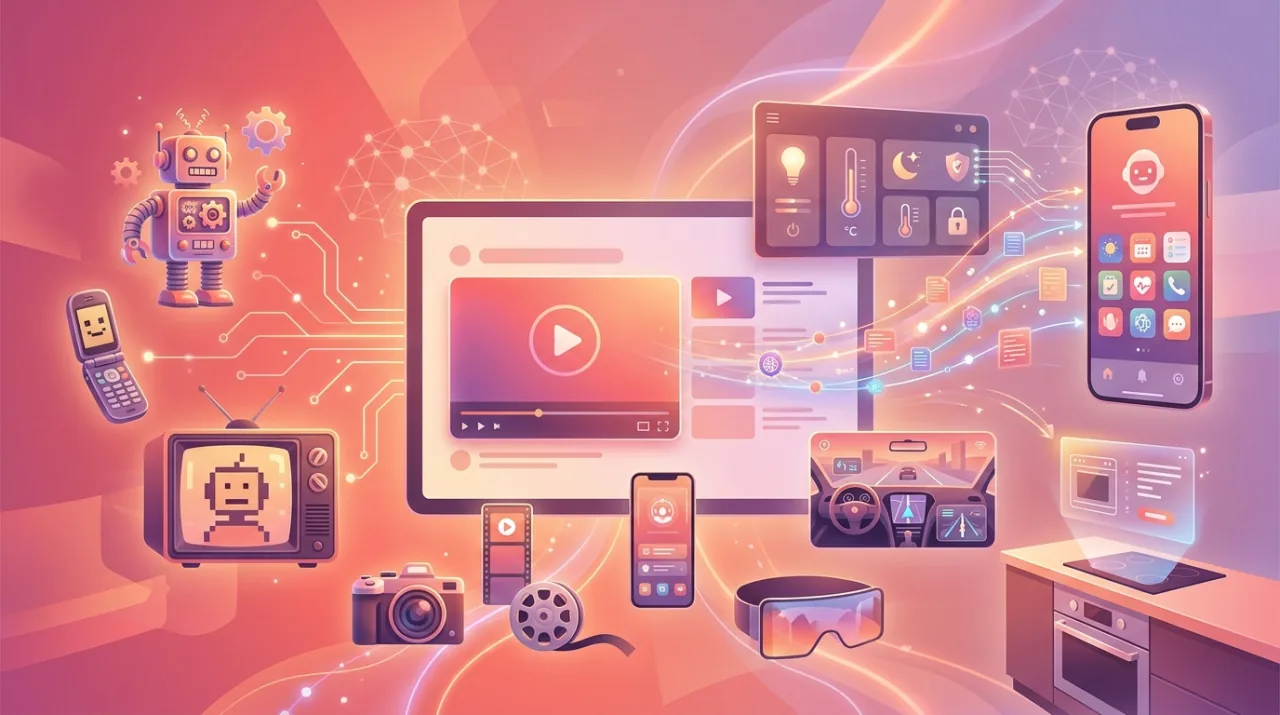
The landscape of artificial intelligence is undergoing a profound transformation, moving beyond the realm of niche applications and early experimentation to firmly embed itself within the fabric of daily consumer life. This seismic shift, characterized by a rapid acceleration in both the frequency and sophistication of AI adoption, marks a critical "consumer AI inflection point." A pivotal US-centric source shedding light on this evolution is the TD Bank 2026 AI Insights Report, aptly titled Artificial Intelligence at the Consumer Inflection Point. Published on May 19, 2026, this report articulates a compelling new narrative: AI is no longer a mere novelty but is rapidly solidifying its status as a mainstream consumer habit.
The implications of this report are far-reaching, particularly for the burgeoning field of AI agents. As consumers grow more comfortable and proficient with AI-assisted experiences, the market readiness for more capable, task-executing systems reaches an unprecedented level. This isn't just about incremental improvements; it signals a fundamental reorientation, where consumer AI transitions from being an isolated feature to becoming an indispensable operating layer across our digital and physical worlds. The TD Bank report serves as a strong signal, guiding innovators and developers toward the next stage of agent adoption by illuminating what consumers truly want and expect from artificial intelligence today.
The Consumer AI Inflection Point: Moving Beyond Early Experimentation
The concept of an "inflection point" denotes a moment of significant change, a turning point where a trend accelerates or shifts direction. In the context of consumer AI, this is precisely what the TD Bank 2026 AI Insights Report identifies. For years, AI was a curiosity, a tool for early adopters and tech enthusiasts to experiment with. Generative AI tools like large language models and image generators sparked widespread interest, leading to initial forays into prompt engineering and AI-driven content creation. However, many of these early interactions, while exciting, often remained at the surface level, characterized by sporadic use and a sense of wonder rather than deep integration.
The report highlights that US consumers are now decisively moving past this exploratory phase. The novelty has worn off, replaced by a growing expectation of utility and seamlessness. This shift is powered by two critical factors: the rising frequency of AI use and, perhaps more significantly, a dramatic increase in consumer proficiency. Individuals are not just trying AI once or twice; they are incorporating it into their daily routines with increasing regularity. More importantly, they are becoming adept at leveraging AI's capabilities, understanding its nuances, and even intuitively grasping how to optimize their interactions to achieve desired outcomes.
This burgeoning proficiency indicates a growing comfort level across a myriad of everyday tasks. Whether it’s drafting emails, summarizing lengthy documents, generating creative ideas, managing smart home devices, or even receiving personalized financial advice, consumers are increasingly turning to AI. This widespread comfort is fundamentally altering expectations. What was once considered a futuristic convenience is now quickly becoming the standard. AI-assisted experiences are no longer a bonus; they are anticipated as a normal, often superior, way to interact with digital services and products. This readiness is a powerful accelerator for further AI innovation and adoption, setting the stage for more sophisticated solutions.
The Evolving Landscape of Consumer AI Use Cases: Beyond Chatbots
One of the most crucial insights from the TD Bank report is that AI's spread across consumer use cases extends far beyond the confines of chatbots. While conversational AI remains a significant and foundational application, it represents only a fraction of the broader integration happening across various facets of consumer life. The report underscores a diversification of AI applications, reflecting a natural evolution as technology matures and user needs become more sophisticated.
In the realm of personalization and recommendations, AI has become indispensable. From suggesting movies and music that align with individual tastes to curating personalized news feeds and optimizing online shopping experiences, AI algorithms are constantly working in the background to tailor digital environments. This goes beyond simple content matching; AI now analyzes subtle behavioral cues, past interactions, and even emotional responses to provide hyper-personalized suggestions that anticipate desires before they are explicitly articulated.
Smart home integration and automation are another burgeoning area. AI-powered smart assistants are no longer just responding to voice commands; they are learning routines, proactively adjusting thermostats, managing lighting schedules, optimizing energy consumption, and even anticipating household needs. This level of ambient intelligence transforms houses into truly smart environments, reducing cognitive load and enhancing convenience for inhabitants.
In the domain of productivity tools, AI is revolutionizing how individuals work and manage their lives. Writing assistants enhance grammar and style, generate content outlines, and even draft complete documents, making communication more efficient. Scheduling AI tools optimize calendars, suggest meeting times, and manage complex itineraries, freeing up valuable time. Data analysis tools provide insights from personal financial records or health metrics, empowering informed decision-making. These tools are becoming integral to personal and professional efficiency, proving AI's tangible value.
Even in healthcare applications, consumer AI is making significant strides. Wearable devices continuously monitor vital signs, track activity levels, and detect anomalies, often powered by AI algorithms that analyze complex data streams. AI-driven apps provide personalized fitness coaching, nutrition advice, and even early detection alerts for potential health issues, all while maintaining privacy and data security. The shift here is from reactive healthcare to proactive wellness management, largely facilitated by intelligent systems.
The TD Bank report implicitly suggests that this proliferation across diverse sectors signifies AI's transition from a specialized tool to a ubiquitous utility. It’s no longer about finding specific AI features; it’s about experiencing AI as an underlying enhancement to nearly every digital and increasingly physical interaction. This broad acceptance across domains is foundational for the next wave of AI innovation, particularly for agents designed to navigate and execute tasks across these varied environments.
What Consumers Demand from AI: Useful, Transparent, and Controllable
The success of AI’s mainstream adoption hinges not just on its availability but on its ability to meet specific consumer expectations. The TD Bank report meticulously identifies three core pillars that define what US consumers want from AI: it must be useful, transparent, and controllable. These tenets are critical for fostering trust, ensuring satisfaction, and driving continued integration of AI into daily life. Businesses developing AI solutions, especially sophisticated AI agents, must prioritize these demands.
Usefulness stands as the paramount requirement. For AI to become a habit, it must genuinely solve problems, save time, reduce effort, or enhance experiences in a tangible way. The era of "AI for AI's sake" is over. Consumers are increasingly discerning; they are not interested in novelty features that provide marginal benefits or complicate existing workflows. Instead, they seek AI that seamlessly integrates into their lives and offers clear, measurable value. This utility manifests in various forms:
- Efficiency: AI that automates mundane tasks, allowing users to focus on higher-value activities. For example, an AI assistant that manages email inbox organization, sorts newsletters, and flags urgent messages.
- Decision Support: AI that processes complex information and provides clear, actionable insights. Think of financial AI that analyzes spending patterns and offers personalized budgeting advice, or shopping AI that compares thousands of products based on specific criteria and user reviews.
- Personalization: AI that truly understands individual preferences and adapts experiences accordingly. This goes beyond basic recommendations to truly predictive assistance, anticipating needs and offering solutions before they are explicitly sought.
- Accessibility: AI that lowers barriers to entry for complex tasks or information, making advanced capabilities available to a broader audience.
- Problem Solving: AI that can identify and resolve issues, from troubleshooting tech problems to suggesting solutions for daily dilemmas.
The drive for usefulness means that AI developers must focus on real-world pain points and design solutions that deliver clear, demonstrable benefits. An AI that merely mimics human interaction without adding significant value will struggle to achieve mainstream adoption.
Transparency is the second critical demand, addressing a growing concern about the "black box" nature of many AI systems. As AI becomes more integrated into high-stakes areas like banking, healthcare, and critical decision-making processes, consumers want to understand how AI arrives at its conclusions or recommendations. This isn't about requiring users to understand complex algorithms, but rather providing clear, understandable explanations for AI actions and outputs. Key aspects of transparency include:
- Explainability: Why did the AI recommend this product? What factors contributed to this financial forecast? How was this piece of information prioritized? Providing a clear rationale builds trust and allows users to assess the reliability of the AI.
- Data Sourcing: Understanding what data the AI is using is crucial, especially concerning personal information. Transparency about data collection, storage, and usage policies helps alleviate privacy concerns.
- Bias Awareness: Acknowledging the potential for algorithmic bias and outlining steps taken to mitigate it. Consumers are becoming more aware of how AI can perpetuate societal biases, and they expect developers to address this proactively.
- Limitations: Clearly communicating what the AI cannot do or areas where its accuracy might be compromised. Setting realistic expectations prevents user frustration and builds a foundation of honesty.
Transparency fosters trust, which is essential for encouraging deeper engagement with AI. Without it, consumers may remain hesitant to delegate significant tasks or rely on AI for critical decisions, perceiving it as an inscrutable entity rather than a helpful partner.
Finally, Controllability empowers the user, ensuring that AI remains a tool under human direction rather than an autonomous overlord. This demand directly addresses anxieties about losing agency or becoming dependent on systems that operate outside of human oversight. Consumers want to feel in command of their AI tools. This encompasses:
- User Agency: The ability to fine-tune AI settings, customize preferences, and define boundaries for AI actions.
- Override Capabilities: The option to accept, modify, or reject AI suggestions and actions. For example, an AI agent might suggest a purchase, but the user must have the ultimate say.
- Feedback Mechanisms: Easy ways for users to provide feedback on AI performance, correct errors, and guide its learning process. This iterative feedback loop is vital for improving AI accuracy and alignment with user intent.
- Data Management: Clear controls over personal data, including the ability to review, delete, or restrict access to information used by AI.
- Permissioning: Granular control over what tasks AI agents are authorized to perform and under what conditions. This is especially critical for multi-step tasks.
The combination of usefulness, transparency, and controllability creates a framework for responsible and successful AI development. As AI becomes an operating layer, satisfying these consumer demands will be paramount for widespread adoption and sustained trust.
AI as a Service Layer: Integrating into Daily Digital Life
The TD Bank report’s framing implies a profound shift: AI is increasingly seen not as a standalone application but as an intrinsic part of the service layer in banking, shopping, and indeed, all aspects of daily digital life. This concept positions AI as the intelligent infrastructure that enhances, optimizes, and often orchestrates our interactions with various services. It’s akin to electricity – ubiquitous, largely invisible, but fundamental to how everything operates.
In banking and financial services, this integration is revolutionary. AI is moving beyond simple fraud detection or basic chatbots to become a sophisticated financial advisor layer. Consumers now expect:
- Personalized Financial Advice: AI that analyzes spending, income, and financial goals to offer bespoke budgeting plans, investment recommendations, and savings strategies.
- Proactive Fraud Alerts and Security: Advanced AI systems that identify suspicious activities in real-time, going beyond simple rule-based systems to detect nuanced patterns of fraudulent behavior.
- Automated Savings and Investment: AI agents that can, with user permission, automatically transfer funds to savings, optimize investment portfolios based on market conditions, or even pay bills on schedule.
- Seamless Customer Support: AI-powered virtual assistants that handle complex inquiries, provide instant account information, and streamline the resolution of customer service issues, often without human intervention for routine tasks.
For shopping and e-commerce, AI as a service layer transforms the entire consumer journey:
- Hyper-Personalized Product Discovery: AI algorithms that not only recommend products based on past purchases but also anticipate future needs, style preferences, and even emotional states to present highly relevant items.
- Intelligent Shopping Assistants: AI agents that can compare options across multiple retailers, analyze reviews, find the best deals, and even negotiate prices, making the purchasing process more efficient and cost-effective.
- Seamless Checkout and Post-Purchase Support: AI that simplifies transactions, manages subscriptions, tracks deliveries, and provides intelligent support for returns or product inquiries, reducing friction points.
- Virtual Try-Ons and Augmented Reality: AI-powered tools that allow consumers to visualize products in their own environment or on themselves, enhancing the online shopping experience.
In daily digital life, AI’s presence as a service layer is becoming pervasive:
- Smart Home Orchestration: AI that intelligently manages connected devices, optimizing energy usage, ensuring security, and creating personalized ambient environments based on user presence and preferences.
- Content Curation and Management: AI that filters information overload, prioritizes important communications, summarizes lengthy articles, and manages digital files and media libraries.
- Personalized Learning and Development: AI tutors that adapt to individual learning styles, provide tailored educational content, and track progress, making lifelong learning more accessible.
- Travel and Logistics: AI agents that plan itineraries, book flights and accommodations, manage transportation, and provide real-time updates and alternatives.
This profound integration signifies that AI is becoming an "invisible hand," enhancing experiences and simplifying tasks without necessarily being foregrounded. It’s about AI enriching the underlying infrastructure of how we interact with the digital world, making services more intelligent, responsive, and tailored to individual needs. This ubiquitous presence sets the stage perfectly for the emergence and widespread adoption of more sophisticated AI agents that can operate across these integrated service layers.
The Dawn of AI Agents: Capitalizing on Consumer Readiness
The TD Bank 2026 AI Insights Report directly signals the readiness of the consumer market for AI agents. As consumers transition from viewing AI as a feature to embracing it as an operating layer, the demand for more capable, autonomous, and task-executing systems reaches a critical threshold. AI agents, in this context, are not just intelligent tools; they are systems designed to understand complex goals, plan multi-step actions, execute tasks across various applications and services, and often learn and adapt over time, all with appropriate human oversight and approval.
Consumer readiness is paramount for agent adoption. The report’s findings — increasing AI proficiency, comfort across everyday tasks, and expectations of AI-assisted experiences as normal — create fertile ground for agents. People are no longer intimidated by AI; they are actively seeking ways to leverage it to enhance their productivity and quality of life. This shift in mindset from mere interaction to delegation is precisely what AI agents require for broad acceptance.
The market is now ripe for agents that can move beyond answering questions to performing sophisticated actions. The report specifically highlights several key capabilities that align with evolving consumer needs:
1. Comparing Options: Beyond simple search engine queries, consumers desire AI agents that can intelligently compare options across various criteria. Imagine an AI agent that doesn't just list prices for a new smartphone but analyzes technical specifications, reads thousands of user reviews, compares camera performance, battery life, and overall value proposition, then presents a concise summary and a personalized recommendation. This moves beyond data aggregation to intelligent discernment, saving significant cognitive effort for the consumer.
2. Automating Routine Workflows: The true power of AI agents lies in their ability to automate multi-step, routine processes that currently consume valuable human time. This could involve an agent that:
- Manages your calendar, scheduling meetings, sending invitations, and reminding participants.
- Handles expense reports by scanning receipts, categorizing transactions, and submitting them for approval.
- Filters and prioritizes emails, drafting responses to common inquiries, and flagging critical communications.
- Manages household chores by ordering groceries when supplies are low, scheduling maintenance, and coordinating deliveries.
This level of automation frees up human users for more creative, strategic, or personally fulfilling activities, leveraging AI as a powerful force multiplier for personal productivity.
3. Making Proactive Suggestions: The shift from reactive AI (responding to prompts) to proactive AI (anticipating needs) is a significant leap. AI agents can analyze patterns, predict future requirements, and offer timely, relevant suggestions. For instance:
- A financial agent might proactively suggest transferring funds to a high-yield savings account when it detects surplus cash flow, or alert you to an upcoming bill that requires attention.
- A travel agent might monitor flight prices for a desired destination and suggest booking when prices drop, or propose alternative travel plans if disruptions are anticipated.
- A health agent might suggest specific exercises or dietary adjustments based on recent activity data and nutritional intake, optimizing wellness routines.
This anticipatory capability transforms AI from a mere tool into an intelligent, helpful companion.
4. Completing Multi-Step Tasks with Human Approval: The "AI as an operating layer" concept truly comes alive here. Consumers are ready for AI agents that can execute complex, multi-stage tasks, provided they retain ultimate control. This represents the pinnacle of human-AI collaboration:
- An agent could plan and book an entire vacation: researching destinations, comparing flights and hotels, creating an itinerary, and booking reservations, all with the user’s final approval at key stages.
- A shopping agent could manage a gift list, research appropriate gifts based on recipient preferences, make purchases, and arrange delivery, requiring only final confirmation from the user.
- A career agent could search for job openings matching skills and experience, tailor resumes and cover letters, and even submit applications, with the user reviewing and approving each step.
This paradigm acknowledges both the power of AI to automate complexity and the human need for oversight and control, aligning perfectly with the demand for useful, transparent, and controllable AI.
In essence, the TD Bank report points to a profound shift from consumer AI as a feature – a standalone application or function – to consumer AI as an operating layer. This means AI agents are not just another app on your phone; they are the intelligent infrastructure enabling a more efficient, personalized, and proactive digital existence. This readiness for agents is the strong signal that innovators in the AI space have been waiting for, indicating that the market is primed for truly transformative, task-executing systems.
Overcoming Challenges and Building Trust for Agent Adoption
While the TD Bank report paints an optimistic picture of consumer readiness for AI agents, it's crucial to acknowledge the inherent challenges and address them proactively to ensure successful, ethical, and widespread adoption. The transition to AI as an operating layer, especially one powered by autonomous agents, brings with it a magnified set of responsibilities for developers and deployers.
One primary hurdle is data privacy and security. As AI agents interact with more aspects of a consumer's digital life, they will necessarily access and process vast amounts of sensitive personal data – financial records, health information, communication logs, purchasing habits, and location data. Ensuring robust security measures and absolute transparency about data usage, storage, and anonymization is paramount. Consumers need guarantees that their data is protected from breaches and used solely for its intended purpose, never for unauthorized profiling or exploitation. Clear, concise privacy policies that go beyond legal jargon are essential for building confidence.
Algorithmic bias remains a significant ethical concern. If AI agents are trained on biased datasets, they can perpetuate and even amplify existing societal inequalities. This could manifest in discriminatory loan approvals, biased job recommendations, or unfair content moderation. Developers must implement rigorous bias detection and mitigation strategies throughout the AI lifecycle, from data collection to model deployment, and provide mechanisms for users to report perceived biases. The "transparent" demand from consumers is directly linked here; understanding how an agent arrived at a decision can help identify and correct biases.
The "black box" problem, though linked to transparency, becomes even more critical with agents performing multi-step tasks. When an agent acts on a user's behalf, the ability to trace its steps, understand its reasoning, and audit its decisions is vital. Without this, users may feel a lack of control and trust. This necessitates explainable AI (XAI) techniques that can articulate an agent's logic in human-understandable terms, even for complex actions.
User onboarding and education will be crucial for complex AI agents. Unlike simple apps, agents often require users to define goals, set parameters, and delegate authority. This can be intimidating. Intuitive interfaces, clear instructional materials, and perhaps even guided setup processes will be necessary to help consumers effectively utilize and trust their agents. The learning curve for leveraging powerful AI agents must be as gentle as possible.
Finally, ensuring reliability and accuracy is non-negotiable. An AI agent that frequently makes errors, misinterprets instructions, or fails to complete tasks will quickly lose consumer trust. This demands rigorous testing, continuous learning and improvement cycles, and robust error handling. For agents that operate with human approval, this also means clear communication when an action requires user intervention due to uncertainty or potential high impact.
Strategies for building and maintaining trust in the era of AI agents include:
- Robust Ethical AI Frameworks: Developing and adhering to clear ethical guidelines for AI design, development, and deployment, prioritizing fairness, accountability, and safety.
- Clear Communication and Consent: Explicitly informing users about what an AI agent can do, what data it uses, and obtaining clear, granular consent for all actions and data access.
- User-Friendly Control Panels: Providing intuitive dashboards where users can monitor agent activity, review past actions, adjust permissions, and provide real-time feedback.
- Gradual Rollout and Iterative Improvement: Deploying agents with limited capabilities initially, gathering user feedback, and progressively adding complexity and autonomy as trust is established and performance is validated.
- Human Oversight and Support: Maintaining channels for human support when agents encounter novel situations, fail, or when users require a human touch for sensitive issues.
By diligently addressing these challenges, developers can capitalize on the consumer readiness highlighted by the TD Bank report, paving the way for AI agents to become truly indispensable, trusted digital companions.
The Future Landscape: AI Agents as Essential Digital Companions
Based on the compelling insights from the TD Bank 2026 AI Insights Report, the future landscape of consumer AI is one where intelligent agents are not just prevalent but essential. The trajectory from novelty to mainstream habit, coupled with rising proficiency and expectations of AI as an operating layer, points to a future where sophisticated AI agents profoundly reshape our daily lives. This isn't just about incremental convenience; it's about a fundamental transformation in how individuals interact with technology, manage their time, and engage with the world around them.
In this future, AI agents will transcend the role of mere tools, evolving into indispensable digital companions. They will seamlessly integrate into every aspect of our existence, anticipating needs, managing complexities, and freeing up human capacity for creativity, social connection, and higher-order thinking. Imagine waking up to an agent that has already optimized your smart home environment, curated your daily news feed based on your interests and available time, scheduled your morning exercise, and provided a brief summary of your urgent tasks. This is the promise of AI as a proactive, personalized operating layer.
The impact on productivity will be immense. Routine, repetitive tasks, whether administrative, financial, or personal, will largely be handled by AI agents, allowing individuals to dedicate their energy to more strategic, creative, or enjoyable pursuits. This could lead to a significant boost in economic output and personal fulfillment. The burden of managing digital clutter, scheduling conflicts, and information overload will diminish, enabling a more focused and intentional approach to daily life.
The quality of life will also see substantial improvements. AI agents can help manage health and wellness, providing personalized insights and support. They can facilitate learning and personal development, offering tailored educational content and mentorship. They can enhance leisure activities, from planning travel to curating entertainment experiences. For those with disabilities, AI agents can provide unprecedented levels of assistance and independence, truly acting as empowering companions.
For businesses and innovators, the TD Bank report serves as a clarion call. The market is ready for agents that embody usefulness, transparency, and controllability. Companies that prioritize these consumer demands in their AI agent development will be best positioned to capture market share and drive the next wave of innovation. This requires a focus on:
- Ethical Design: Building agents with human values at their core, ensuring fairness, privacy, and accountability.
- Interoperability: Designing agents that can seamlessly communicate and operate across diverse platforms, applications, and devices, reinforcing the "operating layer" concept.
- User-Centricity: Continuously gathering feedback and iteratively refining agent capabilities to meet evolving consumer needs and expectations.
- Security and Resilience: Investing heavily in robust security measures and developing agents that can gracefully handle errors, ambiguities, and unexpected situations.
The implications for innovation and competition are equally profound. The rise of AI agents will spur intense competition to develop the most capable, reliable, and user-friendly systems. This will likely lead to rapid advancements in foundational AI models, agent architectures, and human-AI interaction design. New industries and business models centered around agent services, customization, and ethical governance are likely to emerge.
In conclusion, the TD Bank 2026 AI Insights Report, Artificial Intelligence at the Consumer Inflection Point, marks a definitive moment. It underscores that AI's journey from an experimental curiosity to a mainstream consumer habit is not just underway; it's accelerating. US consumers are more proficient, more comfortable, and more expectant of AI-assisted experiences than ever before. This readiness is the most potent signal yet for the widespread adoption of advanced AI agents – systems capable of comparing options, automating workflows, making proactive suggestions, and completing multi-step tasks with human approval. As AI continues its transformation from a mere feature to an ubiquitous operating layer, the stage is set for a future where intelligent agents become essential digital companions, fundamentally reshaping our lives and interactions in ways we are only just beginning to fully comprehend. The era of the truly capable, trusted AI agent is not just on the horizon; it is now firmly within reach.


