The Rise of Autopilot Commerce and the New Era of AI Powered Shopping
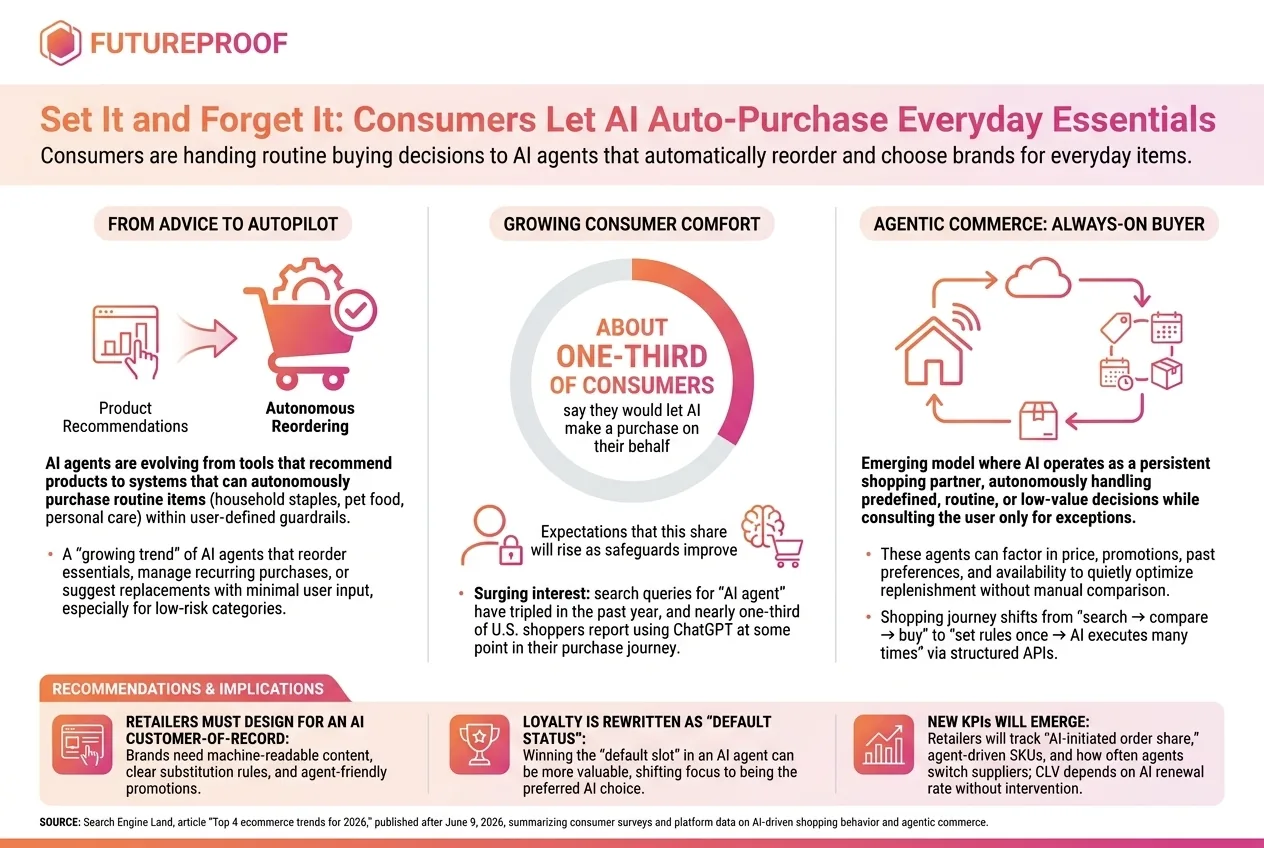
The world of commerce is on the cusp of a silent revolution, one where the act of shopping for everyday essentials shifts from a conscious chore to an invisible, seamless operation. Welcome to the era of "Set It and Forget It," where consumers are increasingly comfortable delegating their routine purchasing decisions to sophisticated AI agents. These aren't just recommendation engines nudging you towards a new product; these are autonomous buyers, quietly working in the background, managing your household staples, restocking your pantry, and ensuring your daily life runs uninterrupted. This profound transformation from human-driven shopping to AI-powered auto-purchase marks a pivotal moment, redefining convenience, loyalty, and the very structure of retail.
For years, artificial intelligence has played a supporting role in our online shopping experiences. We've seen personalized product suggestions, smart chatbots answering queries, and algorithms optimizing delivery routes. However, the paradigm is rapidly shifting. AI is no longer just a helpful assistant; it's graduating to a proactive, decision-making entity. Consumers are beginning to trust these digital agents with real purchasing power, particularly in low-risk categories where brand affinity might be less critical than consistent availability and competitive pricing. Imagine never having to remember to buy toilet paper, coffee, or laundry detergent again – your AI shopping agent simply handles it, predicting your needs, comparing prices, and executing the purchase without your direct intervention. This accelerating trend, often termed autopilot commerce, is setting the stage for a dramatic overhaul of consumer behavior and retailer strategy.
One of the most compelling drivers behind this burgeoning trust is the sheer promise of effortless living. In our fast-paced world, time is a precious commodity. The mental load associated with managing household inventory, tracking consumption, and remembering to reorder before supplies run out is significant. AI-driven shopping agents offer a powerful solution, abstracting away these mundane tasks and freeing up cognitive bandwidth. This shift is not just theoretical; it's already gaining traction. According to Search Engine Land’s Top 4 ecommerce trends for 2026 report, a significant one-third of consumers express readiness to let AI make a purchase on their behalf. This key data point underscores a burgeoning acceptance, indicating that the concept of autonomous buying is moving swiftly from niche innovation to mainstream expectation. This isn't just about early adopters; a substantial portion of the market is signaling its willingness to embrace this hands-free future.
The Evolution of AI Shopping Agents: Beyond Recommendations
To truly grasp the magnitude of this change, it's essential to understand the leap AI has made. Historically, AI in e-commerce excelled at pattern recognition and suggestion. If you bought item A, it might recommend item B. If you browsed certain categories, it would surface relevant ads. While effective, these were passive tools requiring human action to complete a purchase. Modern AI shopping agents, however, are imbued with a higher degree of agency. They can monitor your consumption patterns through connected devices, integrate with smart home ecosystems, analyze historical purchasing data, and even respond to external triggers like supply chain disruptions or price fluctuations.
These intelligent systems are designed to learn. Over time, they develop a sophisticated understanding of your preferences – not just which brand of coffee you prefer, but how quickly you consume it, your budget constraints, and even your ethical considerations regarding sourcing. When the detergent bottle is low, or the smart fridge detects a dwindling milk supply, the AI initiates the reorder process seamlessly. This transition from 'recommendation' to 'action' is powered by advancements in machine learning, natural language processing, and robust data integration capabilities, making AI auto purchase a practical reality for a growing number of consumers.
Why Consumers Are Embracing Autopilot Commerce for Everyday Essentials
The widespread adoption of autopilot commerce is not accidental; it’s a direct response to fundamental consumer desires for convenience, efficiency, and mental relief.
Firstly, unparalleled convenience is the primary allure. In a world where every minute counts, offloading the chore of routine shopping feels like a superpower. The ability to trust that essentials will simply appear when needed, without active thought or action, is profoundly attractive.
Secondly, time-saving is a critical factor. The cumulative hours spent browsing, comparing, adding to cart, and checking out for recurring purchases can be substantial. AI streamlines this to zero effort from the consumer, effectively giving them back invaluable time.
Thirdly, the focus on low-risk categories is key to building initial trust. Consumers are understandably hesitant to let AI choose a new car or a vacation package. However, for items like paper towels, pet food, or batteries, the stakes are low. If the AI makes a slightly suboptimal choice, the impact is minimal, fostering a safe environment for consumers to experiment and build confidence in the system. This gradual build-up of trust for everyday essentials paves the way for potential expansion into higher-value, but still routine, categories.
Finally, the promise of cost optimization is another significant draw. Advanced AI agents can continuously monitor prices across multiple retailers, identify discounts, leverage subscription models, and even predict optimal buying windows to secure the best deals. This ensures consumers are not just saving time but potentially money, enhancing the overall value proposition of AI-driven shopping.
The New Retail Landscape: What Autopilot Commerce Means for Businesses
The rise of autonomous buying represents a monumental shift for retailers and brands alike. The traditional battlegrounds of shelf space, eye-level placement, and flashy in-store promotions are being superseded by new digital arenas. To thrive in this AI-driven shopping environment, businesses must fundamentally re-evaluate their strategies across product data, pricing, and customer loyalty.
The Imperative of Machine-Readable Product Data:
In an ecosystem dominated by AI agents, product discovery no longer relies on human browsing. Instead, AI systems programmatically evaluate products based on specific criteria. This necessitates exquisitely structured, comprehensive, and machine-readable product data. Every detail – from ingredients and nutritional information to sustainability certifications, dimensions, and usage instructions – must be meticulously cataloged and tagged in a way that AI can easily parse and understand. Ambiguous descriptions, missing attributes, or inconsistent formatting will render products invisible to these intelligent buyers. Retailers must invest heavily in data governance, product information management (PIM) systems, and robust API integrations to ensure their offerings are fully legible and comparable for AI agents. This isn't just about displaying information; it's about enabling a bot to make an informed purchasing decision.
Agent-Friendly Pricing Strategies:
Pricing in the age of AI auto purchase also undergoes a transformation. While competitive pricing remains crucial, agent-friendly pricing means more than just being the cheapest. AI agents are programmed with specific parameters, which might include preferred retailers, loyalty programs, bulk discounts, or delivery speed requirements. Brands need to offer pricing structures that cater to these AI algorithms. This could involve dynamic pricing models that respond to real-time demand signals from AI agents, tailored subscription tiers that offer incremental savings, or bundled offers that appeal to an AI agent optimizing for total household spend. Transparency in pricing and clear explanations of value are also essential, as the AI needs to justify its choices based on its programmed objectives. Winning an AI agent's favor might mean optimizing for predictable replenishment over one-off flash sales.
Winning the Default Slot: The New Form of Loyalty:
Perhaps the most profound shift for brands is the redefinition of customer loyalty. In the past, loyalty was built through brand affinity, memorable advertising, positive in-store experiences, and consistent product quality that kept consumers returning. In the age of AI loyalty, the ultimate goal for brands is to become the "default" choice within an AI agent's programming. Once an AI agent is configured to consistently reorder a specific brand of coffee or toothpaste, dislodging that default becomes incredibly difficult.
This "default slot" is the new digital shelf space. It's not about being seen; it's about being chosen by the autonomous system. Brands must, therefore, focus on strategies that secure and maintain this default status. This includes consistent product availability, reliable delivery, competitive and transparent pricing, and potentially, direct partnerships with AI agent platforms or smart home ecosystems. The battle is no longer solely for the human consumer's heart, but for the AI's algorithm. Brands that can demonstrate consistent value, seamless integration, and superior performance against an AI agent's purchasing criteria will emerge victorious. This requires a shift from traditional marketing to what might be called "agent marketing," focusing on the attributes that an AI values.
New Metrics of Success for Brands in the AI Era
As the commercial landscape reshapes itself around autopilot commerce, traditional KPIs will need to evolve. Brands and retailers must adopt new metrics to accurately gauge their performance and adapt their strategies for the AI-driven shopping future.
AI Initiated Order Share:
This metric will become paramount. It measures the percentage of a brand's total sales that are directly generated by AI auto purchase systems, rather than human-initiated transactions. A high AI initiated order share signifies strong integration into consumer AI agents and robust performance against their criteria. Brands will need to invest in analytics capabilities that can distinguish between human and AI-driven purchases, potentially through unique tracking identifiers or order source attribution. Tracking this metric will provide invaluable insights into the effectiveness of their "agent marketing" efforts and their penetration into the autonomous shopping market.
Agent Retention:
Just as brands strive for customer retention, they will increasingly focus on agent retention. This refers to the ability to maintain their product as the preferred choice within an AI agent's purchasing logic over extended periods. If an AI agent consistently chooses Brand X for paper towels month after month, that represents strong agent retention. This metric is tied to consistent product quality, competitive pricing that remains attractive to the AI, and a seamless supply chain that prevents stockouts which might prompt the AI to search for alternatives. Understanding why an AI agent might "churn" (switch to a competitor) will become a critical area of analysis, driving product development and pricing adjustments.
Beyond these, brands will also need to consider:
- Data Completeness and Accuracy Scores: How well their product data is optimized for AI consumption.
- API Performance and Latency: The efficiency with which AI agents can access and process product information.
- AI Agent Feedback Loops: Systems to understand and respond to the specific criteria and performance metrics an AI agent uses.
- Compatibility with Smart Home Ecosystems: How well products integrate with platforms that often power AI purchasing decisions.
These new KPIs demand a more data-centric approach, where understanding the algorithmic preferences of AI agents is as crucial as understanding human psychology.
Challenges and Ethical Considerations in Autonomous Buying
While the promise of autopilot commerce is compelling, its widespread adoption also brings forth important challenges and ethical considerations that must be addressed.
Data Privacy and Security:
The ability of AI agents to monitor consumption patterns and make purchasing decisions relies on access to highly sensitive personal data. Ensuring robust data privacy protocols, transparent data usage policies, and impenetrable security measures will be paramount. Consumers need assurances that their purchasing habits are protected and not exploited. Breaches of trust in this area could severely hinder adoption.
Bias and Fairness:
AI algorithms, by their nature, learn from existing data. If this data contains biases (e.g., favoring certain demographics, brands, or price points), the AI agent could perpetuate or even amplify these biases in its purchasing decisions. Ensuring algorithmic fairness and mitigating unintended discriminatory outcomes will require careful design, rigorous testing, and continuous oversight of AI systems.
Consumer Control and Transparency:
While the "set it and forget it" model is convenient, consumers must retain ultimate control. Clear mechanisms for overriding AI decisions, setting strict budgetary limits, and easily reviewing or modifying agent parameters are essential. Transparency regarding why an AI made a particular purchase (e.g., "I chose Brand Y because it was 10% cheaper and available for next-day delivery") will build trust and empower consumers. The balance between autonomy and accountability needs to be carefully managed.
Vendor Lock-in and Market Concentration:
If a few dominant AI agent platforms emerge, there's a risk of vendor lock-in for consumers and potential market concentration, making it difficult for new brands or retailers to gain visibility. Regulatory frameworks may need to evolve to ensure a competitive and fair marketplace, preventing monopolies in the AI-driven shopping space.
The Future Landscape: Hyper-Personalization and Predictive Purchasing
Looking further ahead, the capabilities of AI shopping agents are only set to expand. We can anticipate an era of even deeper hyper-personalization, where AI agents don't just reorder staples but anticipate needs before they even arise. Imagine an AI that predicts you'll run out of a specific ingredient because of your upcoming meal plans pulled from your calendar, or an agent that knows you're hosting guests and proactively suggests extra supplies. This moves beyond simple replenishment to true predictive purchasing.
Furthermore, AI agents could become integrated into comprehensive lifestyle managers, not just shopping tools. They might coordinate purchases with fitness trackers to optimize nutritional intake, or cross-reference inventory with waste management goals to reduce environmental impact. The symbiotic relationship between consumers and their autonomous purchasing agents will grow more sophisticated, making life more streamlined in ways we are only just beginning to imagine. This will undoubtedly drive further evolution in retailer AI strategy, pushing the boundaries of what's possible in a truly intelligent commerce ecosystem.
Conclusion: Embracing the Autonomous Future of Commerce
The shift towards consumers letting AI auto purchase everyday essentials is not a distant possibility; it is a present reality rapidly gaining momentum. The "Set It and Forget It" paradigm promises unparalleled convenience and efficiency, fundamentally altering how we interact with the retail world. For businesses, this marks a critical juncture. The brands and retailers that proactively adapt to this new era – by optimizing their data for machine readability, embracing agent-friendly pricing, fighting for the crucial "default slot," and adopting new KPIs like AI initiated order share and agent retention – will be the ones that thrive.
Ignoring this trend is not an option. The silent revolution of autopilot commerce is already underway, quietly filling pantries and managing households in the background. Businesses that fail to prepare for the autonomous buyer risk being rendered invisible in a marketplace increasingly orchestrated by algorithms. The future of retail is intelligent, autonomous, and utterly seamless. The time to set your strategy and prepare for the AI consumer is now. The consumers have signaled their readiness; the ball is now in the court of commerce to meet them in this transformative new landscape.