The Rise of Autonomous AI Agents and the New Era of Hands Free Commerce
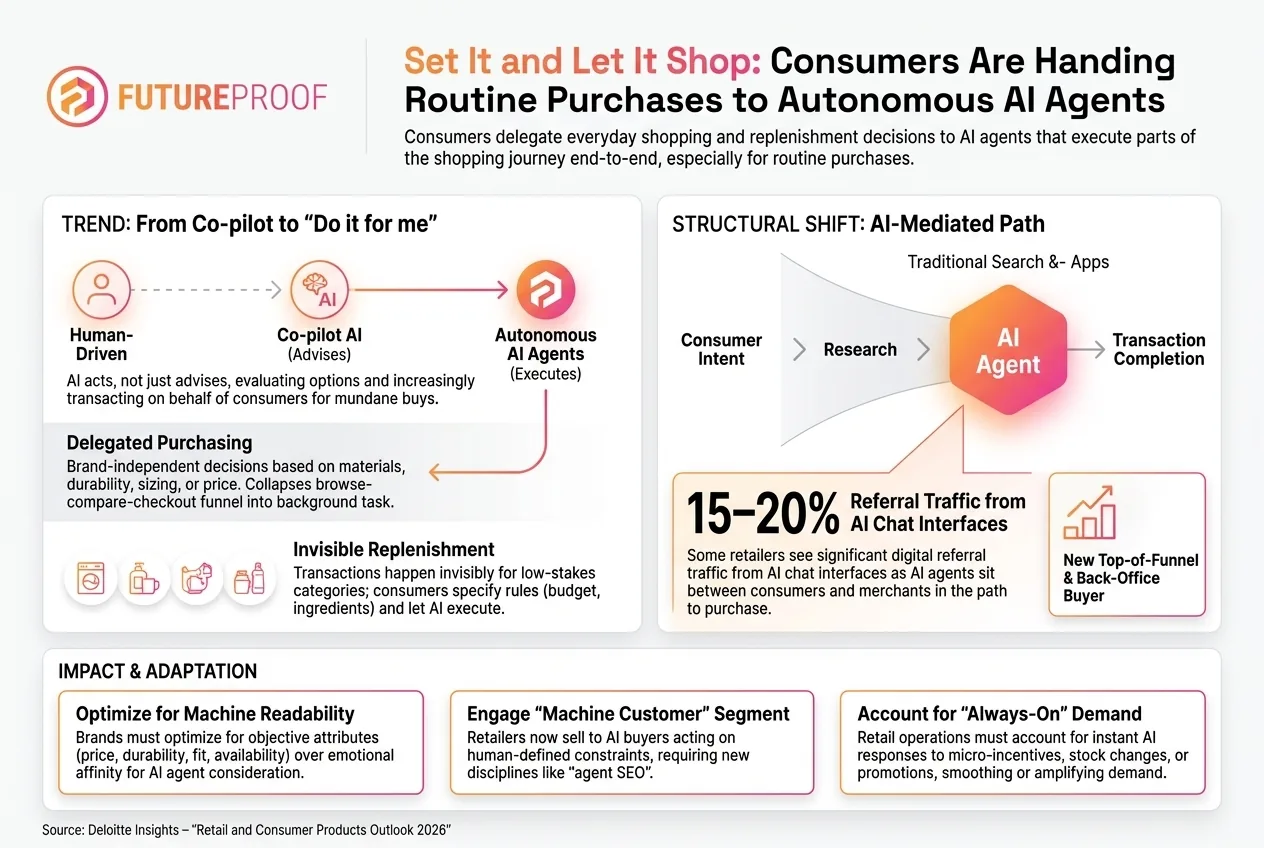
The landscape of consumer purchasing is undergoing a silent yet profound revolution, shifting from human-centric decision-making to the silent, efficient operations of autonomous AI agents. What began as a helpful "co-pilot" experience, where artificial intelligence assisted users in finding information or comparing products, is rapidly evolving into a "do it for me" workflow, particularly for low-emotion, routine purchases. Consumers are increasingly entrusting their everyday shopping needs to intelligent systems designed to compare options, make choices, and complete transactions with minimal human intervention. This transformation is not merely an incremental technological upgrade; it marks a fundamental change in how products are discovered, evaluated, and bought, challenging long-held notions of brand loyalty and reshaping the strategic imperatives for retailers and brands alike.
The rise of these AI-powered purchasing agents heralds a new era of hands-free commerce. Imagine your smart home system or a dedicated app noticing you’re running low on coffee, checking your preferred criteria (organic, fair-trade, specific roast), comparing prices across multiple vendors, ordering it, and ensuring it arrives at your doorstep—all without you lifting a finger or even thinking about it. This isn't science fiction; it's the present reality taking root in households and digital ecosystems worldwide. These sophisticated algorithms are adept at handling product discovery, sifting through vast amounts of data to identify relevant options, performing detailed comparisons based on pre-set or learned preferences, and seamlessly executing the checkout process. They operate in the background, a digital personal shopper tirelessly working to optimize your purchasing outcomes, delivering unparalleled convenience and efficiency. For busy individuals, this delegation of routine tasks frees up valuable mental real estate and time, allowing them to focus on higher-value activities or leisure.
One of the most significant implications of this shift lies in its impact on the top of the sales funnel. Traditionally, product discovery was a human-driven process, influenced by advertising, word-of-mouth, social media, and direct search queries. Today, AI agents are increasingly becoming the new gatekeepers. They are intercepting potential customers at the very outset, acting as primary interfaces that gather information, interpret needs, and present curated options. This means brands are no longer solely competing for human attention on a search engine results page or an e-commerce platform; they are also vying for the algorithmic approval of machine customers. The Deloitte Insights Retail and Consumer Products Outlook 2026 underscores this seismic shift, revealing that retailers are already seeing a substantial 15 to 20 percent of digital referral traffic coming from AI chat interfaces instead of traditional search or apps. This data point is crucial: it signifies that a notable portion of consumer entry points into the shopping journey is already mediated by AI. These AI interfaces aren't just providing answers; they're directing purchasing intent. Brands that fail to optimize their digital presence and product data for machine readability and AI interpretation risk becoming invisible to a growing segment of their potential market.
This algorithmic influence profoundly challenges established notions of brand loyalty. For decades, brands have invested heavily in building emotional connections, recognition, and trust with consumers. Logos, slogans, and legacy often played a significant role in guiding repeat purchases. However, autonomous AI agents operate on a different logic. Their primary directive is to fulfill specific criteria established by the user or learned through observation. This marks a definitive shift from brand-driven loyalty to criteria-based purchasing. AI agents are programmed to prioritize objective metrics such as price, materials, durability, fit, sustainability credentials, ethical sourcing, and verified customer reviews, over subjective brand appeal. While a consumer might have a nostalgic attachment to a particular brand of coffee, their AI agent will, if instructed, objectively seek out the best-value, highest-rated, most sustainably sourced coffee that meets all other specified parameters. This objectivity means that a smaller, unknown brand that precisely matches the AI's criteria could be chosen over an industry giant that fails to compete on those specific points. For established brands, this necessitates a strategic pivot: their value proposition must now be demonstrably provable through structured data rather than solely relying on marketing narratives. For emerging brands, it opens an unprecedented opportunity to compete on merit, provided their product data is meticulously structured and aligns with prevailing consumer preferences as interpreted by AI.
The emergence of machine customers fundamentally alters the retail imperative. Retailers are no longer just selling to people; they are effectively selling to intelligent algorithms. This demands a complete overhaul of how product information is presented and managed. For an AI agent to accurately discover, compare, and recommend a product, it requires structured product data that is rich, accurate, unambiguous, and easily consumable by machines. This includes precise specifications (dimensions, ingredients, materials, certifications), high-quality images with relevant metadata, comprehensive descriptions, clear pricing, inventory status, and transparent return policies. Any ambiguity or lack of detail in product listings can lead an AI agent to overlook an otherwise suitable product. The traditional art of writing persuasive product descriptions for human readers must now be augmented with an "AI-first" content strategy, where clarity, factual accuracy, and machine-readable tags take precedence. Retailers need to ensure their product feeds are robust, updated in real-time, and accessible via APIs to seamlessly integrate with various AI platforms. This optimization for AI agents, often termed "AI Optimization" (AIO), is becoming as critical as traditional SEO. Furthermore, reliability in terms of inventory, consistent pricing, and efficient fulfillment becomes paramount, as an AI agent will quickly learn to deprioritize retailers with poor performance metrics, effectively "firing" them on behalf of the consumer.
This new paradigm also creates a fascinating paradox concerning loyalty: it becomes both deeper and more fragile. Once an autonomous AI agent identifies a satisfactory product or service that meets the user's criteria, it can lock into a pattern of automated replenishment. This creates an incredibly sticky form of loyalty for brands and retailers. The user no longer needs to remember to reorder; the AI agent handles it, ensuring consistent purchases and building a deep, almost invisible, recurring revenue stream. This deep integration into the consumer's automated workflow represents a holy grail for recurring purchases. However, this loyalty is also incredibly fragile. Unlike human consumers who might exhibit inertia or sentimental attachment, AI agents are ruthlessly pragmatic. If a competitor emerges with a product that offers demonstrably better value—a lower price, superior materials, faster delivery, or an improved fit, as objectively assessed against the user's preferences—the AI agent can, and will, instantly switch to the better option. There are virtually no "switching costs" for an AI. This means brands and retailers must engage in continuous competitive monitoring and optimization. The moment they fall behind on key criteria, they risk losing an automated customer workflow to a competitor without any human friction or deliberation. Maintaining this deep yet fragile loyalty requires perpetual vigilance, innovation, and an unwavering commitment to delivering optimal value.
Looking ahead, the sophistication of autonomous AI agents will only grow. They will move beyond simple, low-emotion purchases to potentially assist with more complex decisions, learning user preferences with increasing nuance and adapting to evolving market conditions. This progression will bring new challenges and opportunities, including ethical considerations around data privacy, algorithmic bias, and the transparency of decision-making. For brands, success in this evolving landscape will hinge on several key strategies: investing heavily in the creation and maintenance of meticulously structured product data, relentlessly focusing on their core value propositions (quality, sustainability, price-performance), developing a deep understanding of how AI agents interpret and weigh different product attributes, and implementing continuous competitive analysis to ensure their offerings remain superior or at parity on critical metrics. An "AI-first" content strategy that prioritizes clarity, factual accuracy, and machine readability over traditional marketing fluff will be indispensable.
Retailers, on their part, must prioritize seamless integration with diverse AI platforms through robust APIs and comprehensive product feeds. Their focus should extend beyond human-centric website design to becoming an indispensable, reliable data source for AI agents, ensuring consistent inventory, competitive pricing, and impeccable fulfillment. The consumer experience, ironically, may become even more personalized and convenient as AI agents learn individual nuances, anticipate needs, and manage preferences, freeing humans to focus on the joys of living rather than the chore of shopping. The era of "Set It and Let It Shop" is not just a passing trend; it is a fundamental re-architecture of commerce, demanding strategic foresight and agile adaptation from every player in the retail ecosystem.