How AI Shopping Agents Are Transforming Consumer Behavior and Redefining the Future of Retail
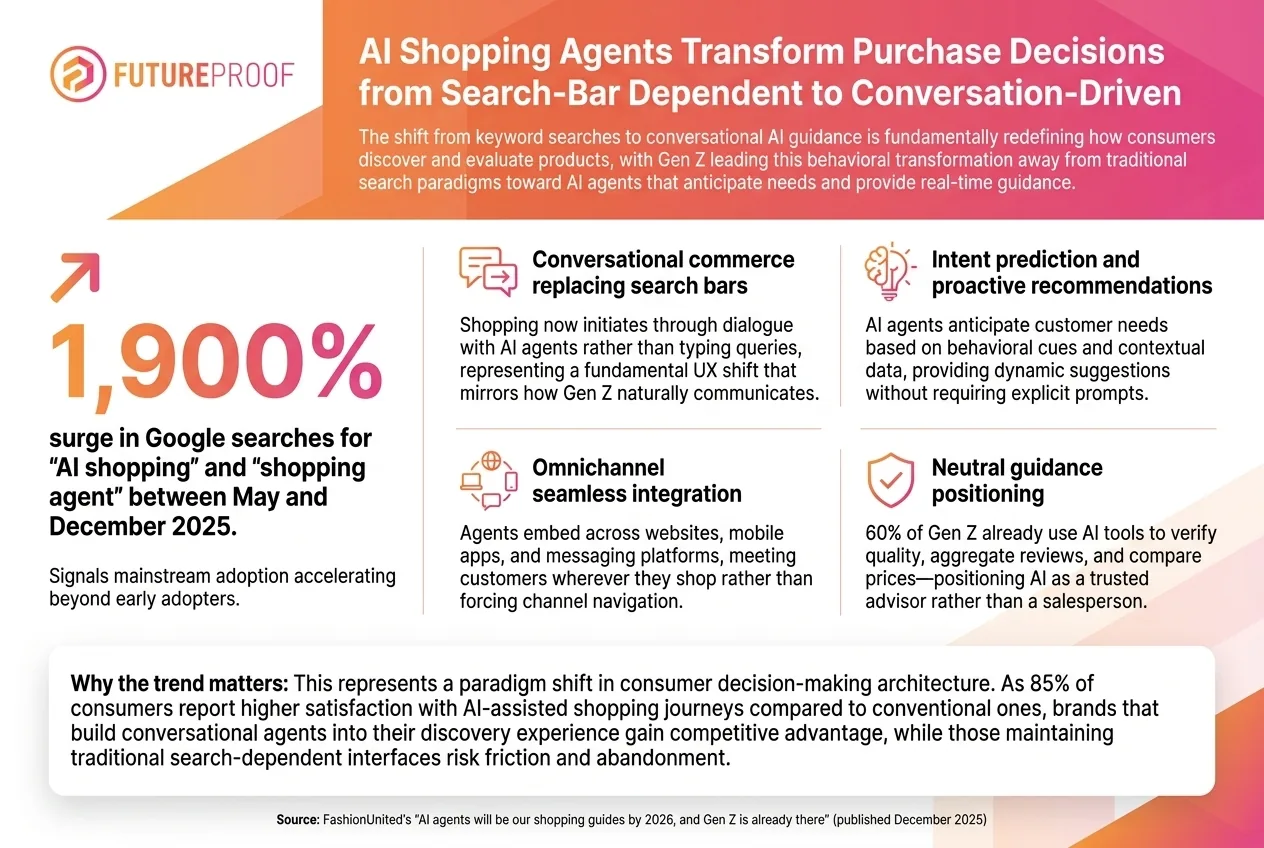
The landscape of consumer purchase decisions is undergoing a profound transformation, spearheaded by the advent of AI shopping agents. This isn't merely an incremental upgrade to e-commerce; it represents a fundamental behavioral shift from the transactional confines of search-bar queries to the rich, intuitive dynamics of natural conversation. At the vanguard of this revolution is Generation Z, a demographic intrinsically wired into the digital pulse, increasingly relying on artificial intelligence to navigate the complexities of product evaluation, quality validation, and price comparison. Their comfort with technology and expectation of personalized, efficient interactions are not just influencing their own shopping habits but are setting new benchmarks for consumer engagement across all demographics.
This seismic shift is more than anecdotal; it is substantiated by compelling market signals. The phrase "AI shopping" and "shopping agent" witnessed an astonishing 1,900 percent surge in search interest between May and December 2025, according to Google Trends data, signaling a rapidly escalating consumer curiosity and adoption. Furthermore, a remarkable 85 percent of consumers report a higher degree of satisfaction when their shopping journeys are assisted by AI. This positive sentiment underscores the effectiveness and appeal of these intelligent systems. Brands that have proactively integrated conversational agents across their various customer touchpoints are already reaping significant rewards, observing stronger engagement levels as shoppers gravitate towards dialogue-driven discovery, precise intent prediction, and intelligently proactive recommendations. This move signifies a paradigm where AI is no longer a peripheral tool but a central, trusted guide in the intricate dance of the buying journey, fundamentally altering the traditional sales funnel.
The era of merely typing keywords into a search bar is steadily receding. While efficient for direct queries, traditional search often falls short when consumers grapple with nuanced requirements, subjective preferences, or the need for comparative analysis across myriad attributes. A query like "best running shoes" might yield a vast, undifferentiated list, leaving the consumer to sift through countless options, review sites, and product pages. Conversely, a conversational AI agent can engage in a dialogue: "What kind of running are you doing?", "Do you prioritize cushioning or responsiveness?", "Any specific brands you prefer?", "Are you prone to pronation?", "What's your budget?". This iterative, question-and-answer approach mirrors human interaction, allowing the AI to progressively refine its understanding of the user's needs, leading to highly relevant and curated suggestions. This isn't just about finding a product; it’s about finding the right product, a distinction that greatly enhances the shopping experience. The conversational interface demystifies complex product specifications, distills overwhelming information into digestible insights, and acts as a tireless personal shopper, always available and infinitely patient. It understands context, remembers preferences from past interactions, and learns over time, making each subsequent interaction even more personalized and efficient. This natural language processing capability liberates consumers from the constraints of rigid search syntax, empowering them to express their desires in their own words, fostering a more organic and intuitive path to purchase.
Gen Z’s role in catalyzing this transition cannot be overstated. As digital natives, they possess an inherent comfort with technology and an expectation for instant gratification, seamless experiences, and authenticity. They have grown up interacting with intelligent assistants like Siri and Alexa, making the leap to conversational shopping agents a natural evolution rather than a drastic change. This generation is characterized by its pragmatism and a healthy skepticism towards traditional advertising and overt sales tactics. They seek genuine value, transparent information, and peer validation. AI shopping agents, by offering objective data, impartial comparisons, and a deep well of product knowledge, resonate strongly with these values. Gen Z uses AI to cut through the marketing noise, to get to the core facts, and to validate their choices before committing to a purchase. They are not content with passive information consumption; they demand active assistance in their decision-making process. Their propensity to trust algorithmic recommendations, provided those recommendations are perceived as unbiased and helpful, positions them as the ideal demographic to drive the widespread adoption of AI-assisted shopping. Their early embrace of these technologies is a strong indicator of future market trends, effectively setting the pace for how all generations will eventually shop. As Gen Z gains greater purchasing power, their preferred methods of engagement will inevitably dictate the direction of retail innovation.
The core functionalities that make AI shopping agents indispensable to consumers revolve around their unparalleled ability to evaluate, validate, and compare. When it comes to evaluating products, AI goes far beyond simply listing features. It can process vast quantities of data, including user reviews, expert analyses, forum discussions, and product specifications, to provide a holistic understanding of a product's strengths and weaknesses. Imagine an AI that, when asked about a new smartphone, can not only list its camera specs but also provide a sentiment analysis of thousands of user reviews regarding camera performance, battery life, and overall user satisfaction, then cross-reference this with independent tech reviews to offer a balanced perspective. It can identify patterns in feedback that might be missed by a human, highlight common complaints or unexpected benefits, and even suggest products based on a user's stated ethical preferences, such as sustainable sourcing or fair trade practices. This deep-dive evaluation empowers consumers to make informed decisions tailored precisely to their values and practical needs.
Validating quality is another critical area where AI excels. In an age of abundant choices and sometimes misleading information, consumers often struggle to ascertain the true quality and authenticity of products. AI agents can act as powerful truth-tellers. They can verify product claims against manufacturers’ specifications, cross-reference brand reputation with industry standards, and even analyze supply chain transparency data to validate ethical sourcing or sustainability claims. For example, an AI could confirm if a "waterproof" rating meets an ISO standard, or if an "organic" label is certified by a recognized authority. It can aggregate and present user-generated content, such as photos and videos from verified buyers, offering real-world insights that go beyond polished marketing imagery. This level of validation builds immense trust, mitigating buyer’s remorse and enhancing overall satisfaction. It moves beyond mere sales pitches to provide verifiable assurance, which is invaluable in today's crowded marketplace.
Finally, the capacity for comparing prices and features is exponentially enhanced by AI. While basic price comparison engines exist, AI shopping agents offer a much more sophisticated approach. They don't just find the lowest price; they consider the total value proposition. This includes comparing not only the product cost across different retailers but also factoring in shipping fees, return policies, warranty details, customer service ratings for specific sellers, and even potential loyalty program benefits. An AI can compare intricate feature sets across multiple similar products, highlighting subtle differences that might be crucial to the consumer but easily overlooked in manual comparison. For instance, when comparing two laptops, an AI could weigh processor speed against battery life, screen resolution against weight, and port availability against price, then recommend the option best aligned with the user’s specific usage patterns and priorities. This multi-faceted comparison capability saves consumers countless hours of research and ensures they are making the most economically sound and personally satisfying choice.
The momentum surrounding AI-assisted shopping is undeniable and rapidly accelerating. The aforementioned 1,900 percent surge in related search queries within a mere seven months is a staggering indicator of burgeoning consumer interest and a growing awareness of these capabilities. This isn't just a fleeting trend; it suggests a fundamental shift in consumer behavior that is taking root deeply and quickly. The high satisfaction rate—85 percent of consumers reporting higher contentment with AI-assisted shopping journeys—further cements the technology's value proposition. This satisfaction stems from a variety of factors: the time saved, the reduction in decision fatigue, the confidence in making informed purchases, and the sheer delight of a personalized, friction-free experience. When shoppers feel understood, guided, and empowered by technology, their overall interaction with a brand and its products becomes significantly more positive. This high satisfaction translates directly into increased loyalty, repeat purchases, and positive word-of-mouth recommendations, creating a virtuous cycle for brands that successfully implement these agents. The data clearly illustrates that consumers are not just open to AI in shopping; they actively prefer it and find it superior to traditional methods.
For brands, this shift presents both a significant challenge and an unparalleled opportunity. The imperative is clear: adapt or risk being left behind. Integrating conversational agents across multiple channels—from websites and mobile apps to social media platforms and even in-store kiosks—is no longer a futuristic concept but a present-day necessity. This omnichannel approach ensures a consistent and seamless experience for the consumer, regardless of how they choose to interact. The benefits for brands are substantial. Conversational AI agents excel at intent prediction. By analyzing natural language input and past interactions, they can accurately anticipate a customer's needs and preferences, often before the customer explicitly states them. This proactive understanding allows for highly targeted and relevant interactions, drastically improving the chances of conversion. Furthermore, agents can deliver proactive recommendations, suggesting complementary products, alerting customers to sales on items they've shown interest in, or providing timely updates on new arrivals that match their profile. This moves beyond reactive customer service to a dynamic, personalized engagement strategy that fosters stronger relationships. Brands that embrace this dialogue-driven discovery will not only see stronger engagement but also gain invaluable insights into consumer behavior, allowing them to refine their product offerings, marketing strategies, and overall customer experience. The data collected through these conversational interfaces provides a richer, more nuanced understanding of individual customer journeys than traditional analytics ever could.
Crucially, this shift marks a fundamental redefinition of AI's role in commerce. It is rapidly becoming a trusted guide in the buying journey, distinct from being merely a sales tool. The difference is profound. A traditional sales tool, whether a salesperson or an advertisement, inherently aims to persuade a customer to buy a specific product, often prioritizing the brand’s interest. An AI shopping agent, when designed correctly, operates with a different primary objective: to serve the consumer’s best interest. It acts as an impartial, knowledgeable expert, presenting options, highlighting pros and cons, and offering objective data without bias towards a particular brand or product. It can truthfully say, "Based on your criteria, Product A is a better fit than our own Product B," or "While we carry Product C, Product D from a competitor might better suit your very specific needs for [reason]." This perceived objectivity is what builds genuine trust. Consumers are increasingly wary of overt sales pitches and are seeking authentic, unbiased information to make their decisions. AI, devoid of commission incentives or marketing pressures, is uniquely positioned to fulfill this role. When AI is viewed as a helpful, knowledgeable companion rather than a persuasive sales mechanism, it fosters a deeper sense of reliability and transparency. This trust translates into greater customer loyalty and a more positive brand perception overall. The brands that master this delicate balance—leveraging AI for superior customer experience without making it feel like a hard sell—will be the ones that truly connect with modern consumers and secure enduring relationships.
Looking ahead, the transformation heralded by AI shopping agents is only just beginning. The trajectory suggests an increasingly sophisticated integration of AI into every facet of the consumer journey, creating a retail landscape that is profoundly more personalized, efficient, and intuitively responsive to individual needs. The brands that understand this fundamental shift, and perhaps more importantly, grasp the core driver of Gen Z’s preference for AI guidance, are those poised for triumph. Their success will not merely stem from adopting new technology, but from embracing a philosophy that places the informed and empowered consumer at the very heart of the commerce experience. The future of shopping isn't just about what you buy; it’s about how you buy it, and AI is rapidly becoming the indispensable co-pilot in that journey. The competitive edge will belong to those who innovate beyond the traditional, fostering a new era of conversational commerce where dialogue leads to discovery, trust fuels loyalty, and AI truly serves as the ultimate shopping guide.