The AI Driven Collapse of the Traditional Retail Funnel
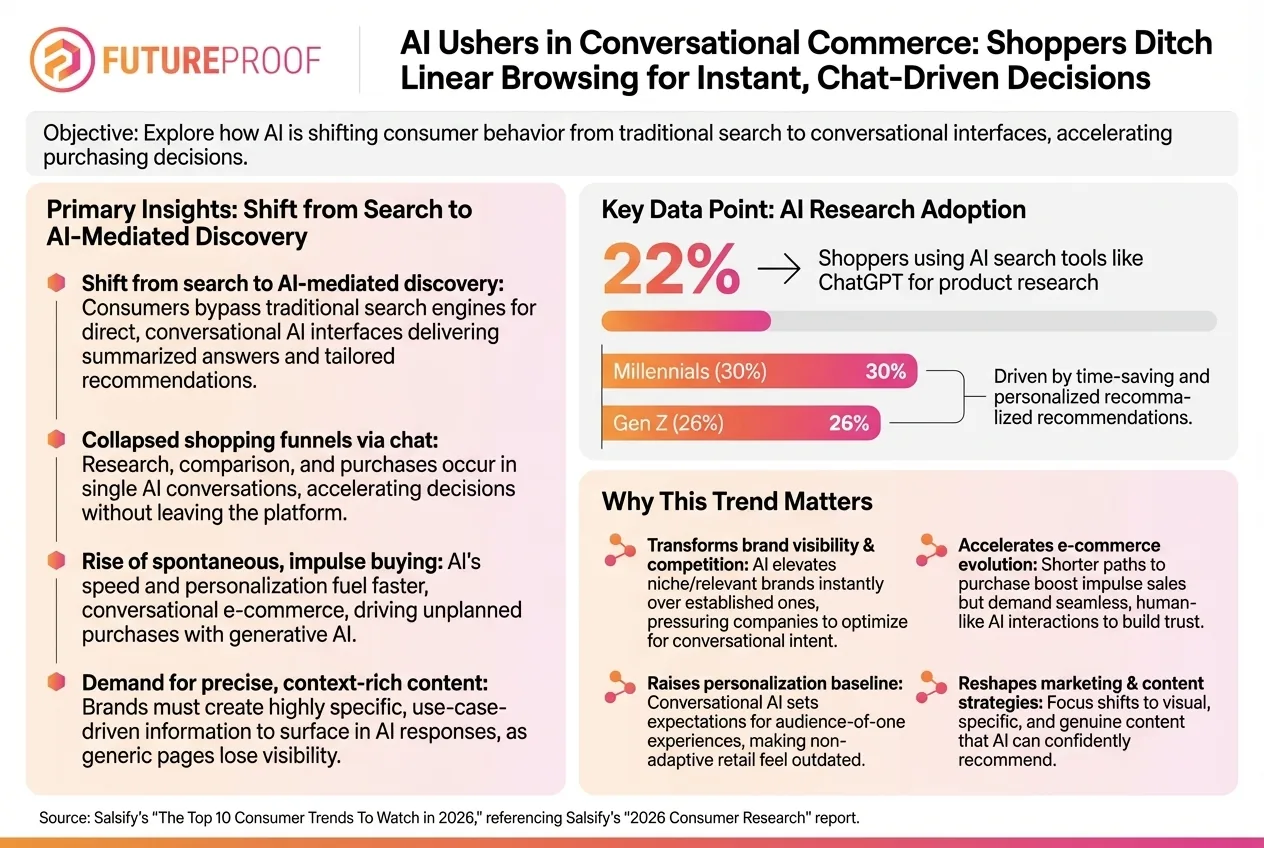
The landscape of retail is undergoing a profound transformation, driven by the relentless advancement of artificial intelligence. What was once a predictable, often protracted journey from discovery to purchase has been irrevocably altered, moving from a linear, multi-stage process to an instantaneous, chat-driven decision-making cycle. Consumers are no longer content with navigating numerous webpages, comparing product specifications across different tabs, or sifting through endless reviews. Instead, they are increasingly turning to AI to act as their personal shopping assistant, capable of understanding complex queries, anticipating needs, and delivering highly curated recommendations in real time. This seismic shift fundamentally reshapes how shoppers discover and ultimately buy, challenging brands to rethink their entire content strategy.
The traditional marketing and sales funnel, a staple of e-commerce strategy for decades, is now collapsing under the weight of AI's efficiency. Historically, a consumer’s journey might involve an awareness phase (seeing an ad), an interest phase (clicking through to a product page), a consideration phase (comparing features and prices), an intent phase (adding to cart), and finally, the purchase. Each step was distinct, offering multiple opportunities for friction or abandonment. AI-powered conversational platforms, however, compress these stages into a single, fluid interaction. Imagine a shopper asking an AI, "I need a durable, lightweight stroller for city living that can accommodate a newborn and has good storage, preferably under $500." In mere seconds, the AI can research, compare, evaluate, and present not just a list, but a tailored recommendation, complete with rationale, links to purchase, and even answers to follow-up questions about accessories or warranty. This instant gratification accelerates the time to buy dramatically, rewarding brands that are prepared to meet this new demand for immediate, context-rich information.
The critical implication of this shift is the paramount importance of precise, context-rich content. Generic product descriptions and boilerplate marketing copy are rapidly losing their efficacy. AI models thrive on structured, detailed, and semantically rich data. For an AI to confidently surface a product during a conversational discovery, it needs to understand every nuance: not just what a product is, but what it does, who it's for, how it compares to alternatives, its specific features and benefits, its use cases, and even its limitations. This level of detail empowers AI to act as an informed advisor, providing answers that are not only accurate but also highly relevant to the individual shopper’s unique circumstances and expressed preferences. Brands that invest in comprehensive product information management (PIM) systems and robust content strategies—encompassing everything from granular specifications to engaging narratives and comprehensive FAQs—will be the ones whose products rise to the top of AI-mediated recommendations.
AI isn't just a search tool; it's becoming the primary filter, elevating the most relevant products in real time. This capability raises the bar for personalization to unprecedented levels. Gone are the days of basic segmentation; AI can deliver one-to-one personalization at scale, dynamically adjusting recommendations based on previous interactions, stated preferences, implied needs, and even emotional cues gleaned from conversational data. This immediate relevance transforms the competitive landscape. Visibility is no longer solely about securing the top spot on a traditional search engine results page (SERP) through keyword density. It's about earning the AI's trust by providing the most accurate, comprehensive, and helpful information possible, thus making your product the AI’s preferred recommendation for a specific, nuanced query. Brands are now competing for the AI’s endorsement, which translates directly into direct sales opportunities.
As consumers increasingly adopt AI-mediated shopping, the divergence between effective and ineffective content strategies becomes starker. Generic content, characterized by vague claims and lack of distinguishing detail, is losing traction at an alarming rate. It simply doesn't provide the AI with enough substance to generate a confident, precise recommendation. Conversely, specific, helpful, and authentic product information is winning. This means going beyond basic features to explain benefits in context, offering comparison points to competitors (even if implicit), providing detailed usage scenarios, and integrating authentic customer reviews and testimonials that AI can analyze for sentiment and common themes. Authenticity fosters trust, and AI is increasingly adept at discerning genuine value from superficial marketing fluff. Brands must become storytellers and educators, not just advertisers, providing content that genuinely helps consumers make informed decisions, even when that decision is mediated by an algorithm.
The adoption of AI for product research is not a distant future trend; it's a present reality. According to the Salsify 2026 Consumer Research, a significant 22 percent of shoppers now use AI search tools like ChatGPT for product research. This figure highlights a critical shift in consumer behavior that brands cannot afford to ignore. What's even more compelling is the demographic breakdown of this early adoption: Millennials lead the charge at 30 percent, closely followed by Gen Z at 26 percent. These younger, digitally native generations are inherently comfortable with conversational AI and are quick to integrate new technologies into their daily lives, including their shopping habits. Their reliance on AI for product discovery signals a permanent change in how purchasing decisions will be made across the market. Brands targeting these crucial demographics must recognize that their primary interface for product presentation may no longer be a website or a social media feed, but a generative AI conversation. Failing to optimize content for these AI interactions means effectively becoming invisible to a rapidly growing segment of the market.
To thrive in this new AI-driven retail environment, brands must embark on a multi-faceted content transformation. The foundation begins with robust Product Information Management (PIM) systems. A PIM isn't just a repository; it's the single source of truth for all product data, ensuring consistency and accuracy across every channel. This data needs to be incredibly granular, encompassing not only standard attributes like SKU, price, and dimensions, but also rich media (high-resolution images, 360-degree views, videos), detailed specifications, usage instructions, maintenance guides, compatibility information, material breakdowns, certifications, and even the origin story of the product. The more structured and comprehensive this data, the better an AI can interpret and utilize it.
Beyond basic data, semantic SEO and contextual content creation become paramount. Traditional keyword research still holds value, but it must evolve to understand intent and context behind conversational queries. Brands need to anticipate the questions consumers might ask an AI – not just direct product searches, but lifestyle queries ("What's the best noise-canceling headphone for a frequent flyer?"), problem-solving ("How can I store fresh produce longer?"), or aspirational questions ("Recommend sustainable activewear that performs well in high-intensity workouts."). Content should be developed specifically to address these conversational pathways. This means creating extensive FAQs, detailed comparison guides, rich "how-to" articles, user-generated content sections, and even dedicated sections for product stories that provide context and emotional connection. Each piece of content should be optimized not just for human readability but for AI's ability to extract and synthesize information.
Furthermore, personalization at scale needs to be an inherent capability, not an add-on. AI allows brands to move beyond broad customer segments to deliver hyper-relevant experiences for individual shoppers. This requires leveraging data insights from AI interactions to dynamically present product variations, complementary items, or personalized promotions that genuinely resonate. The goal is to make every AI-mediated interaction feel like a bespoke shopping consultation. This level of personalization naturally fosters loyalty and reduces decision fatigue, accelerating the path to purchase.
Brands also need to consider voice and chat optimization. As more consumers interact with AI through voice assistants or chat interfaces, the language used in product descriptions and supporting content should reflect natural conversational patterns. This includes using plain language, avoiding overly technical jargon where possible, and structuring information in easily digestible chunks. Thinking about how a product might be described verbally by an AI is a crucial step in preparing content for this new frontier.
Finally, authenticity and transparency are non-negotiable. AI models are becoming increasingly sophisticated at identifying misleading claims or biased information. Brands that provide genuine, unbiased, and transparent information about their products, including both strengths and weaknesses (within reason), will build greater trust with both consumers and the AI systems guiding them. Encouraging and showcasing authentic customer reviews, Q&As, and community feedback can further enhance this transparency, providing valuable, real-world data that AI can leverage to build confidence in its recommendations.
The future of shopping is undoubtedly intertwined with AI. This shift is not merely an incremental technological upgrade; it represents a fundamental redefinition of the entire retail ecosystem. Brands that adapt quickly, investing in comprehensive, precise, and context-rich content, will secure a competitive edge by becoming the preferred choice for AI-mediated discovery. Those that cling to outdated, generic content strategies risk obsolescence, becoming invisible to the next generation of shoppers who are already embracing AI as their trusted guide in the vast digital marketplace. The imperative is clear: optimize for AI, or be left behind in the silent, chat-driven revolution.