How AI Is Rewriting Local Business Visibility and Why Reviews and Fresh Content Now Decide Your Success
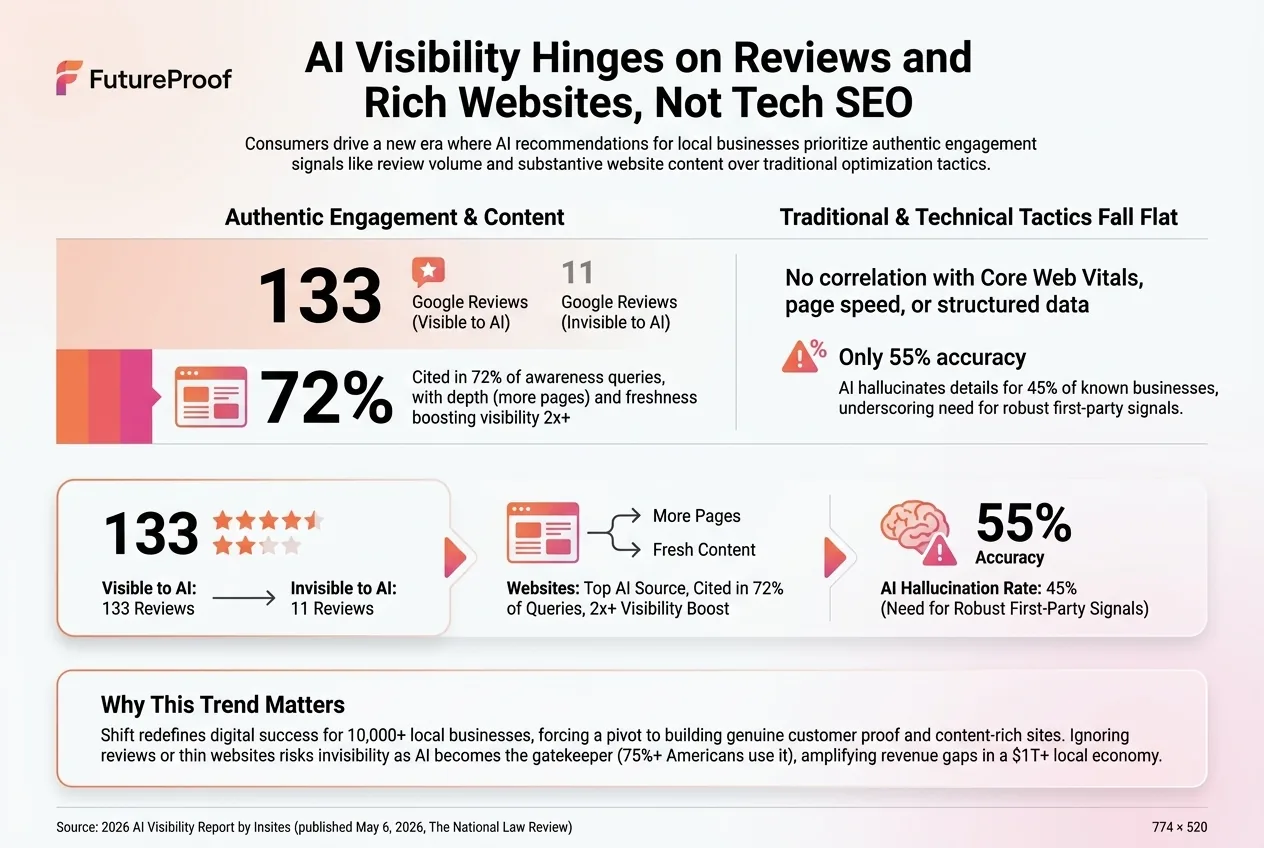
The landscape of local business discovery has undergone a profound and irreversible transformation, heralding an era where visibility is no longer a game of technical checklists but a testament to authentic signals. Artificial intelligence, with its burgeoning capabilities and widespread adoption, is not merely augmenting traditional search but entirely reshaping how consumers connect with local establishments. The data is unequivocally clear: succeeding in this new environment demands a strategic recalibration, moving away from outdated SEO tactics towards cultivating genuine trust through robust review volume and deeply informative, current website content. For the more than 10,000 local businesses vying for a share of a trillion-dollar local economy, understanding and adapting to this paradigm shift is not optional – it is absolutely essential for survival and growth.
At the heart of this revolution lies the overwhelming influence of AI recommendations. New research, notably the 2026 AI Visibility Report by Insites, published May 6, 2026, in The National Law Review, paints a vivid picture of this new reality. The report's findings are stark and provide a definitive roadmap for businesses navigating this evolving digital frontier. Businesses that were successfully found by prominent AI platforms like ChatGPT and Perplexity averaged an astonishing 133 Google reviews. In stark contrast, those businesses that remained invisible to AI – effectively non-existent in this new discovery ecosystem – mustered an average of only 11 Google reviews. This dramatic disparity is not a coincidence; it is a clear indicator that review volume has become a cornerstone of AI trust and, by extension, local business visibility.
Why do reviews hold such immense sway with AI? Artificial intelligence models are designed to provide the most relevant, reliable, and trustworthy information to users. Reviews, particularly those aggregated on platforms like Google, serve as powerful social proof and a vast dataset of real-world consumer experiences. They offer AI insights into a business's service quality, customer satisfaction levels, and overall reputation. A high volume of positive reviews signals to AI that a business is consistently meeting customer expectations, is popular, and is therefore a credible recommendation. When AI is asked to suggest a "great coffee shop near me" or "best plumber in town," it doesn't just look for keywords; it synthesizes countless data points, with customer sentiment – expressed through reviews – being a critical determinant of its recommendations. For businesses aiming to secure a coveted spot in AI-driven discovery, prioritizing the systematic generation and management of Google reviews is no longer a suggestion; it's a non-negotiable imperative. This means actively soliciting feedback from satisfied customers, making the review process as seamless as possible, and, crucially, engaging with all reviews, both positive and negative, to demonstrate a commitment to customer service and continuous improvement.
Beyond the undeniable power of reviews, the Insites report also illuminates the resurgence of websites as foundational elements in AI-driven discovery. The data reveals that websites were cited in a remarkable 72 percent of awareness queries. This statistic underscores a profound shift in how AI leverages information. While local business profiles and directory listings still play a role, it is the website that AI increasingly turns to for deep, authoritative, and nuanced understanding of a business. This isn't just about having an online brochure; it's about cultivating a dynamic, content-rich digital hub that AI can trust and draw comprehensive information from.
The key to unlocking this website-driven visibility lies in "deeper and fresher content," a factor the report highlights as more than doubling visibility when present. What does this truly mean for local businesses? "Deeper content" refers to comprehensive, authoritative, and detailed information that thoroughly addresses user queries and demonstrates expertise. This includes long-form blog posts exploring industry trends, detailed service pages outlining processes and benefits, in-depth FAQs that anticipate customer questions, local guides showcasing the business's community involvement and local expertise, case studies illustrating successful client outcomes, and robust "About Us" sections that tell the business's unique story and introduce its team. This type of content allows AI to understand the full scope of a business's offerings, its unique value proposition, and its underlying trustworthiness and authority (often referred to as E-E-A-T: Experience, Expertise, Authoritativeness, Trustworthiness).
"Fresher content," on the other hand, speaks to the dynamic nature of a website. It means regular updates, new blog posts that reflect current industry insights or seasonal promotions, news about the business or local community, event listings, and timely responses to emerging customer needs. AI favors content that is current and relevant, as it signifies an active, engaged, and reliable business. Stale, outdated websites offer little value to AI seeking to provide the most up-to-date and accurate information to its users. By consistently publishing new, high-quality material, businesses provide AI with a constant stream of fresh data to process, ensuring their digital presence remains vibrant and highly discoverable. Investing in a robust content strategy that focuses on both depth and freshness transforms a website from a static placeholder into an invaluable, trusted resource for AI.
Perhaps one of the most significant and liberating findings for local businesses is the revelation that traditional SEO tactics now show "no measurable impact" on AI visibility. This is a seismic shift that demands a complete re-evaluation of marketing budgets and strategies. For years, "SEO" conjured images of technical checklists, keyword stuffing, complex backlink schemes, and algorithm manipulation. These tactics, once essential for climbing search rankings, are now largely irrelevant in an AI-driven world. AI models are too sophisticated to be fooled by superficial optimization. They prioritize user intent, natural language understanding, and genuine value. The focus has moved from trying to trick a machine into thinking your content is relevant, to genuinely creating relevant, valuable content that machines (and humans) can easily understand and trust. This doesn't mean technical website health is unimportant – a fast, mobile-friendly, crawlable site is still foundational – but the content itself, and the authentic signals it conveys, has become the paramount concern.
Adding another layer of complexity and urgency to this shift is the issue of AI hallucinations. The Insites report highlights that AI still "hallucinates details for 45 percent of known businesses." This means that nearly half the time, AI platforms may invent or inaccurately state information about existing businesses, from operating hours to service offerings or even physical locations. This startling error rate makes strong first-party signals absolutely essential. If AI cannot reliably extract accurate information from official, authoritative sources, it will attempt to synthesize data from various, potentially unreliable, sources, leading to these critical inaccuracies.
The solution to combatting AI hallucinations lies squarely with the business itself. Your website, your Google Business Profile, and other owned digital assets must serve as the unequivocal single source of truth about your operations. This requires meticulous attention to data consistency across all platforms, ensuring that your address, phone number, hours, services, and other crucial details are identical everywhere they appear online. Implementing structured data (schema markup) on your website explicitly tells AI what specific pieces of information represent, greatly reducing the chance of misinterpretation. By proactively controlling your narrative and providing AI with clear, consistent, and validated first-party data, businesses can significantly mitigate the risk of being misrepresented and ensure that AI recommendations are accurate and beneficial.
For the vast ecosystem of more than 10,000 local businesses that collectively power a trillion-dollar local economy, this shift is not merely an interesting development; it demands a strategic reset. The competitive landscape has fundamentally changed, and those who fail to adapt risk being relegated to digital obscurity. The message is clear: visibility now depends on building review volume and cultivating content-rich websites that AI can implicitly trust. This isn't about chasing fleeting trends or superficial hacks; it's about investing in the core elements that truly define a successful, customer-centric business.
The path forward requires a two-pronged approach. Firstly, a relentless focus on fostering customer satisfaction and actively soliciting Google reviews. Businesses must embed review generation into their operational workflows, making it a natural part of the customer journey. Secondly, a significant investment in content marketing and website development is necessary. This means moving beyond basic informational pages to create a dynamic, deep, and regularly updated digital resource that not only serves human customers but also provides AI with the rich, authoritative data it craves. This investment should be seen not as an expense, but as a crucial infrastructure upgrade for the AI era.
Ultimately, the new rules of local business discovery are rooted in authenticity, transparency, and value. AI, in its pursuit of delivering the best answers to user queries, has become the ultimate arbiter of trust. Businesses that embrace this shift, prioritizing genuine customer feedback and robust, informative online presences, will not only survive but thrive in this exciting new chapter of the digital economy. The time for a strategic reset is now, focusing on the signals that truly matter: the voices of your customers and the integrity of your own digital narrative.