The Rise of the AI Pre Checkout and the New Era of Confident Buying
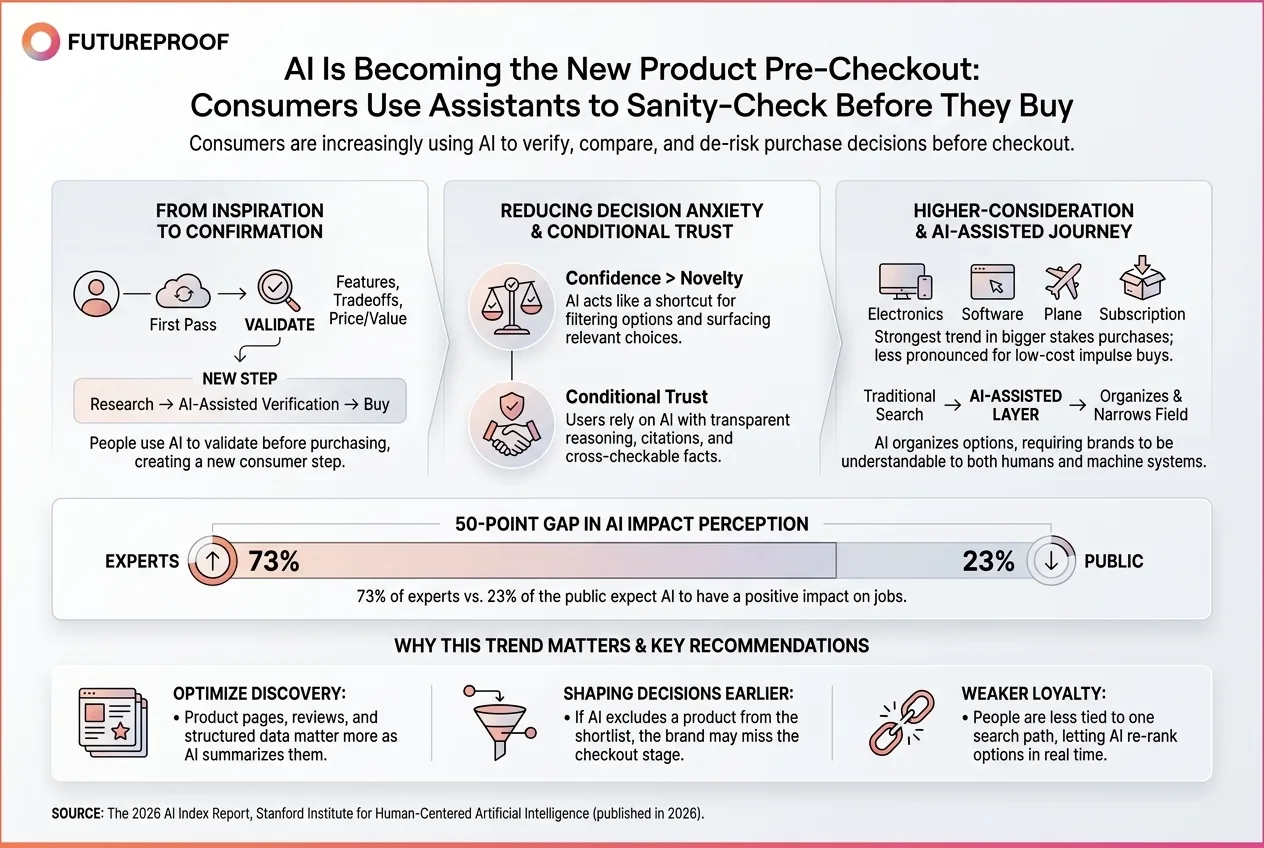
The consumer landscape is undergoing a profound transformation, subtly yet significantly reshaping the very fabric of the purchasing journey. We are witnessing the emergence of a new, indispensable step between initial research and final purchase: the AI sanity check. This isn't merely a technological fad; it's a fundamental shift driven by an innate human desire for confidence and clarity in an increasingly complex marketplace. Consumers are now instinctively turning to artificial intelligence to validate their decisions, moving beyond traditional search engines to a more sophisticated layer of pre-checkout verification. This AI pre-checkout phase is becoming the ultimate arbiter of product suitability, offering an unprecedented level of assurance before the 'buy' button is clicked.
At its core, the rise of AI in the pre-checkout phase is about empowering consumers with unparalleled confidence. The digital age, while offering boundless choices, has simultaneously introduced decision paralysis. Faced with an overwhelming array of products, features, and price points, consumers often grapple with a pervasive sense of doubt: "Am I making the right choice? Is this truly the best value? Will this product meet my specific needs?" This is where AI steps in, not as a replacement for human intuition, but as a powerful augment to it. Consumers leverage AI to filter noise, cut through marketing jargon, and distill complex information into actionable insights. They are using AI-powered tools, chatbots, and personalized recommendation engines to sanity-check decisions, reducing the pervasive decision anxiety that often accompanies significant purchases. This crucial step solidifies AI's role as a trusted advisor, a digital confidant in the often-treacherous journey of online shopping.
The application of AI in this pre-purchase validation process is multifaceted and highly practical. Consumers are using AI to meticulously validate product features, cross-referencing specifications, comparing performance metrics, and ensuring advertised functionalities align with real-world expectations. Imagine a buyer considering a new laptop: they might input their specific usage patterns and requirements into an AI, asking it to compare processor speeds, RAM, battery life, and display quality across multiple models, flagging any discrepancies or hidden limitations. Beyond features, AI excels at helping consumers weigh tradeoffs. Should they prioritize a lower price point over premium build quality? Is a slightly higher subscription fee justified by a broader range of content? AI can model these scenarios, presenting an impartial analysis of the pros and cons, often drawing on vast datasets of user reviews, expert opinions, and historical pricing trends. Crucially, AI is also employed to confirm price and value, scrutinizing whether a product's cost is truly reflective of its utility, durability, and market standing. This involves real-time price comparisons, historical price tracking, and an assessment of overall value proposition, ensuring consumers are not overpaying and are indeed getting a fair deal. This comprehensive pre-purchase AI analysis transforms a potentially stressful decision into a well-informed and confident one.
However, the trust consumers place in AI is not unconditional; it is deeply rooted in transparency and verifiable reasoning. Users are increasingly sophisticated, understanding that AI is only as good as the data it's trained on and the logic it employs. Therefore, reliance on AI platforms is predicated on their ability to openly present facts, provide clear reasoning for recommendations, and, critically, offer transparent citations. When AI can cross-check facts against reputable sources, present its logic in an understandable format, and link directly to its data origins, consumer trust skyrockets. This raises the bar significantly for AI developers and brands alike; opaque algorithms and unsubstantiated claims will quickly erode user confidence. The future of AI-assisted buying hinges on a commitment to explainable AI (XAI), where the 'why' behind a suggestion is as important as the suggestion itself. Without this foundation of transparency, AI merely becomes another black box, losing its potency as a trusted pre-checkout sanity checker.
The impact of this shift is most pronounced in higher-consideration categories, where the stakes are elevated and the potential for buyer's remorse is greater. Industries like electronics, software, travel, and subscription services are at the forefront of this AI-assisted evolution. When purchasing a new smartphone, a complex software suite, booking a crucial business trip, or committing to a long-term streaming service, the cost, complexity, and long-term implications demand a more thorough vetting process. In electronics, AI helps compare intricate technical specifications and forecast product longevity. In software, it assesses compatibility, ease of use, and integration potential with existing systems. For travel, AI can optimize itineraries, compare myriad accommodation options, and predict best times to book flights based on historical data. Subscription services benefit from AI's ability to analyze usage patterns and recommend the most cost-effective plans, or even suggest alternatives. In these domains, the perceived risk of a poor decision is higher, making the AI pre-checkout validation invaluable for reducing uncertainty and fostering genuine purchase confidence.
This profound change marks a significant evolution in the consumer journey, transitioning from a search-assisted model to an inherently AI-assisted one. In the past, consumers initiated their journey with a search query, navigating through countless links, articles, and reviews, piecing together information manually. While search engines remain vital for initial discovery, AI now functions as the intelligent layer above search, synthesizing that information, offering comparisons, and providing proactive recommendations. It's no longer about finding information; it's about having information processed, analyzed, and tailored to individual needs by an intelligent system. The AI becomes the personal shopping assistant, capable of understanding nuanced requirements and even anticipating unspoken desires. This shift fundamentally alters how products are discovered and evaluated, pushing brands to consider not just their visibility in search results, but their comprehensibility and appeal to sophisticated AI algorithms.
For brands, this evolving landscape presents both a challenge and an immense opportunity. The mandate is clear: products, services, and their accompanying information must now be legible not only to human consumers but also to AI systems. As AI increasingly shapes which products make the shortlist long before a consumer even considers clicking 'add to cart,' brand messaging needs to be structured in a way that AI can easily parse, understand, and accurately represent. This goes beyond traditional SEO; it involves optimizing product descriptions, feature lists, pricing models, and customer reviews for AI comprehension. Brands must ensure their data is clean, consistent, and well-structured, allowing AI to confidently extract and interpret key attributes, benefits, and value propositions. This "AI legibility" means clear, concise, and verifiable information that AI can ingest and use to inform its recommendations, effectively becoming a brand's silent advocate in the pre-checkout validation process.
The chasm in perception regarding AI's role underscores the active negotiation consumers are undertaking. According to the 2026 AI Index Report from Stanford HAI, a striking 73 percent of experts anticipate AI to positively impact how people perform their jobs, yet only 23 percent of the public shares this optimistic view. This significant 50-point gap vividly illustrates the lingering skepticism and the active cognitive process consumers are engaging in as they grapple with AI's growing influence over their daily decisions, including purchasing. This isn't merely a passive acceptance; it's a dynamic negotiation where trust is earned, not given. Consumers are evaluating AI’s capabilities, testing its accuracy, and weighing its benefits against perceived risks. This gap highlights the critical need for continued education, transparent AI development, and a focus on demonstrable value to bridge the understanding between expert foresight and public apprehension. Brands that acknowledge and actively address this gap, rather than dismiss it, will be better positioned to integrate AI effectively into their consumer engagement strategies.
To thrive in this AI-assisted era, brands must implement robust strategies centered on data integrity and algorithmic transparency. Firstly, invest in structured data. Product information, specifications, pricing, and availability need to be organized in machine-readable formats (e.g., schema markup) that AI can easily process and understand. Secondly, prioritize clear, concise, and accurate content. AI systems, like humans, benefit from unambiguous language. Avoid jargon where possible and ensure that all claims are backed by verifiable facts, ready for AI's scrutiny. Thirdly, cultivate an active and authentic review ecosystem. AI frequently relies on aggregated customer feedback to gauge product sentiment and performance. Encourage honest reviews and respond constructively, as this data will be crucial for AI's evaluation. Fourthly, explore AI partnerships. Collaborate with reputable AI platforms or integrate AI tools into your own pre-checkout process to offer consumers the very validation they seek. Finally, embrace explainable AI (XAI) principles. If your brand utilizes AI for recommendations, strive for transparency in how those recommendations are generated. Demonstrating the logic behind an AI's suggestion will build indispensable trust with consumers.
The future of product discovery and purchase is undeniably AI-driven. The journey from "I want to buy X" to "X is mine" is no longer a linear path but one interspersed with intelligent AI touchpoints that guide, validate, and reassure. The AI pre-checkout is not a temporary phase but a foundational shift, embedding itself as a critical layer of consumer due diligence. Brands that recognize this profound transformation and proactively adapt their strategies will not only survive but thrive. By optimizing for AI legibility, fostering conditional trust through transparency, and acknowledging the consumer's active negotiation of AI's role, businesses can leverage this powerful technology to enhance the buying experience, reduce consumer anxiety, and ultimately, drive more confident and loyal customers. The conversation has moved beyond mere AI adoption; it's about integrating AI seamlessly and ethically into the core of consumer decision-making, setting a new standard for intelligent commerce in the digital age.