
How AI Powered Consumers Are Transforming the Future of Retail
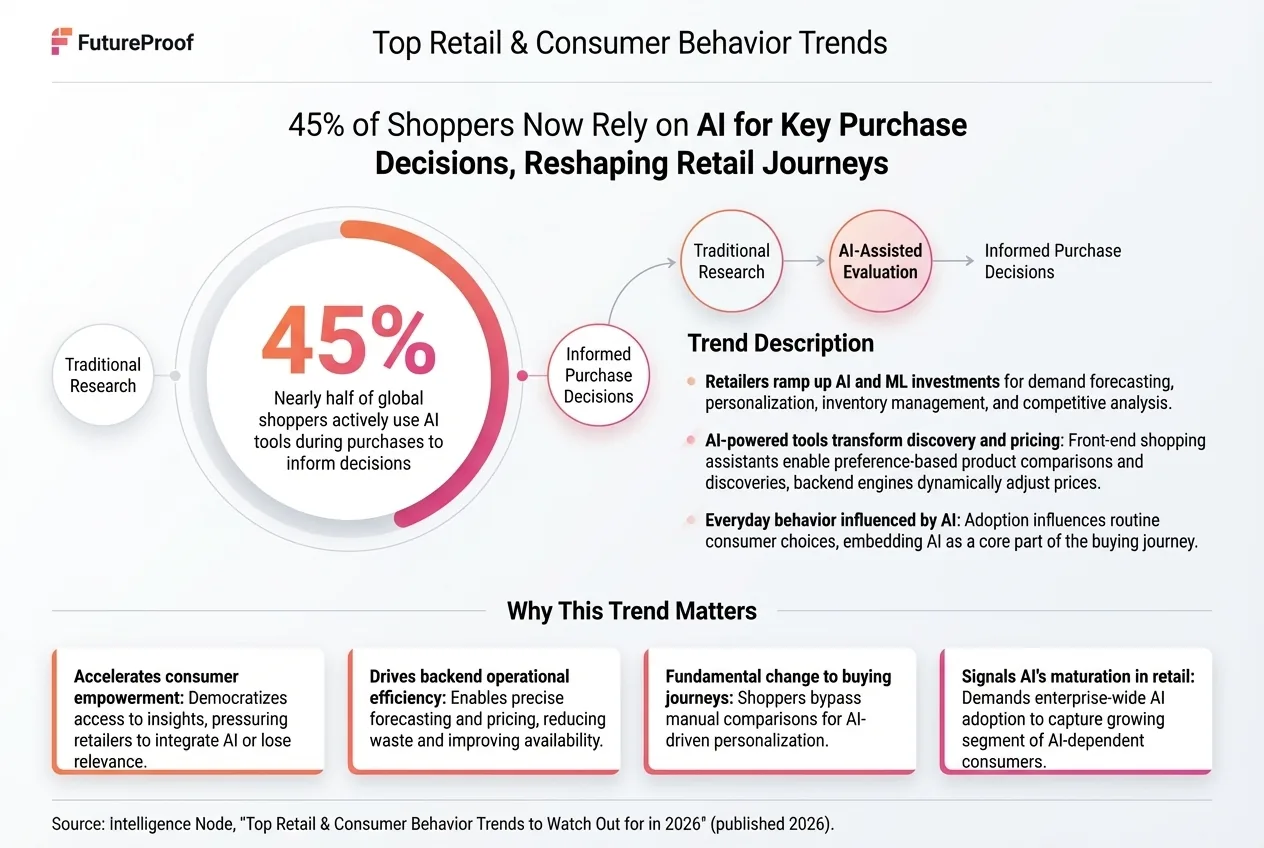
The retail landscape is undergoing a profound and irreversible transformation, driven primarily by the escalating adoption of artificial intelligence by consumers. A groundbreaking global study by Intelligence Node reveals a staggering statistic: 45 percent of consumers now actively rely on AI at various stages of their buying journeys. This isn't merely a trend; it's a fundamental shift in consumer behavior that is reshaping expectations, redefining engagement, and compelling retailers worldwide to recalibrate their strategies at an unprecedented pace. The era of passive shopping is giving way to an AI-augmented experience where intelligent algorithms guide, inform, and ultimately influence purchase decisions from initial discovery to the final transaction.
This significant embrace of AI by nearly half of all shoppers signals a powerful evolution in how individuals interact with products, brands, and retail environments. Consumers are no longer content with sifting through endless product pages or relying solely on static descriptions. Instead, they are leveraging AI for a multitude of sophisticated functions that empower them with unparalleled clarity and efficiency. AI-powered tools are now indispensable for detailed product comparisons, providing objective insights into features, benefits, and drawbacks across competing items. Shoppers are turning to these intelligent systems for highly personalized recommendations, moving beyond basic demographic data to sophisticated behavioral analysis that suggests items truly aligned with individual preferences, past purchases, and even real-time contextual cues. Furthermore, the quest for pricing clarity has found its champion in AI, with consumers utilizing algorithms to track price fluctuations, compare offers across different retailers, and identify optimal buying windows, ensuring they secure the best possible value for their money. This dynamic interaction with AI elevates the consumer from a passive recipient of information to an active participant, armed with data-driven insights that empower more confident and informed purchase decisions.
The ripple effect of this consumer-led AI adoption is profound, necessitating a rapid and strategic response from the retail sector. Retailers, acutely aware of this paradigm shift, are accelerating their investments in cutting-edge AI technologies, particularly in generative and agentic AI. This strategic pivot is not merely about keeping pace; it's about pioneering the future of retail, enhancing operational efficiencies, and cultivating deeper, more meaningful customer relationships. Generative AI, with its capacity to create novel content, is being deployed to craft hyper-personalized marketing messages, dynamically generate product descriptions, and even design bespoke digital shopping experiences that resonate uniquely with each customer segment. Agentic AI, on the other hand, is empowering autonomous systems to perform complex tasks, from intelligent chatbots that resolve customer queries instantly to sophisticated algorithms that manage intricate supply chain logistics with minimal human intervention. These investments are multifaceted, targeting critical areas such as forecasting, personalization, and dynamic pricing – the very pillars upon which the future of competitive retail will be built.
One of the most immediate and impactful applications of AI in retail is in the realm of forecasting. The volatile nature of consumer demand, coupled with global supply chain complexities, has historically made accurate forecasting a formidable challenge. However, generative and agentic AI are revolutionizing this domain. Machine learning models, fed with vast datasets encompassing historical sales, seasonal trends, macroeconomic indicators, social media sentiment, and even real-time weather patterns, can now predict demand with unprecedented accuracy. This enhanced predictive capability allows retailers to optimize inventory levels, minimizing costly overstocking and preventing frustrating stock-outs. Beyond just demand, AI-driven forecasting extends to predicting consumer trends, identifying emerging product categories, and even anticipating potential supply chain disruptions before they occur. The result is a leaner, more resilient supply chain, reduced waste, and the assurance that desired products are available precisely when and where consumers expect them, directly addressing the newfound efficiency consumers experience through their own AI usage.
Hand-in-hand with enhanced forecasting is the transformative power of AI in personalization. The 45 percent of shoppers using AI for guidance have experienced a level of tailored interaction previously unimaginable, raising the bar for what they expect from retailers. To meet these elevated expectations, retailers are deploying AI to craft truly individualized shopping journeys. This goes far beyond simple "customers who bought this also bought..." recommendations. AI-powered personalization now involves analyzing every touchpoint, from browsing history and search queries to purchase patterns and social media interactions, to construct a comprehensive profile of each shopper. Generative AI can then leverage this data to create bespoke product recommendations, curate personalized landing pages, develop unique promotional offers, and even tailor the visual merchandising of online stores to align with individual aesthetic preferences. The goal is to make every customer feel understood and valued, providing them with a seamless, intuitive experience that anticipates their needs and delights them with relevant suggestions, fostering loyalty and driving repeat purchases in an increasingly competitive market.
Perhaps one of the most visible and economically impactful applications of AI for retailers is dynamic pricing. In an environment where consumers are using AI to find the best deals, retailers must respond with agility. Dynamic pricing, powered by sophisticated AI algorithms, allows retailers to adjust product prices in real-time based on a myriad of factors. These factors include current demand, competitor pricing, inventory levels, time of day, customer segmentation, recent browsing behavior, and even external events. For instance, an AI system might subtly lower the price of an umbrella during an unexpected rain shower or increase the price of a high-demand electronic gadget when stock is low and competitors are also experiencing shortages. This data-driven approach maximizes revenue by optimizing profit margins on every sale, minimizes losses on slow-moving inventory, and allows retailers to remain highly competitive in an AI-informed consumer landscape. The complexity of managing millions of price points across thousands of products in real-time would be impossible without agentic AI, which continuously monitors market conditions and executes price adjustments autonomously, maintaining a delicate balance between profitability and customer satisfaction.
The convergence of consumer AI adoption and retailer AI investment is culminating in a faster, more data-driven shopping experience that fundamentally raises the bar for tailored journeys. The days of generic, one-size-fits-all retail are rapidly fading. Shoppers, accustomed to the efficiency and personalization provided by their own AI tools, now expect the same level of intelligence and responsiveness from the brands they interact with. This translates into seamless omnichannel experiences where interactions initiated on a mobile app can be continued in-store, where a chatbot can provide immediate support, and where product recommendations feel genuinely insightful rather than randomly generated. The entire customer journey is becoming an intelligent, interconnected ecosystem, with AI acting as the nervous system, learning, adapting, and optimizing every interaction. This transformation isn't confined to online spaces; AI is increasingly influencing brick-and-mortar retail through smart shelves, personalized in-store recommendations via apps, and AI-powered analytics that optimize store layouts and staff allocation. The physical and digital realms are blurring, creating a fluid retail environment where AI orchestrates a truly personalized and efficient experience.
However, as AI continues to embed itself deeply into the retail fabric, critical considerations surrounding data privacy, algorithmic bias, and transparency come to the fore. Retailers leveraging vast amounts of consumer data for personalization and dynamic pricing have a paramount responsibility to ensure the ethical and secure handling of this sensitive information. Trust is the currency of the digital age, and any lapse in data security or perceived misuse of personal information can severely erode customer loyalty. Similarly, the potential for algorithmic bias, where AI systems inadvertently perpetuate or amplify existing societal inequalities through skewed data or flawed programming, requires vigilant oversight. Ensuring fairness and equity in AI-driven recommendations and pricing strategies is not just an ethical imperative but a business necessity. Transparency in how AI is used, and providing consumers with a clear understanding of data collection and algorithmic decision-making, will be crucial in building and maintaining consumer trust in this increasingly AI-dominated retail landscape. The intelligent retail journey must be not only efficient and personalized but also ethical and transparent.
Looking ahead, the insights from Intelligence Node regarding consumer behavior trends for 2026 underscore the urgency and inevitability of this shift. The 45 percent figure is not a peak; it is a significant milestone on an upward trajectory. As AI technologies become more sophisticated, more accessible, and more seamlessly integrated into everyday devices, consumer reliance on AI for buying decisions is only set to grow. This trajectory presents both immense opportunities and significant challenges for retailers of all sizes. Small and medium-sized businesses, while perhaps lacking the extensive resources of large enterprises, can still leverage off-the-shelf AI solutions and cloud-based platforms to compete effectively, focusing on niche personalization and agile responses. The key for all retailers will be a proactive approach to AI adoption, not just as a technological upgrade, but as a fundamental shift in business philosophy centered around data-driven insights and customer-centric experiences.
The future of retail is irrevocably intertwined with artificial intelligence. The 45 percent of shoppers already using AI for purchase decisions are not just early adopters; they are the harbingers of a new era of commerce. Retailers who embrace generative and agentic AI, investing in intelligent forecasting, hyper-personalization, and dynamic pricing, will be the ones that thrive. They will be the businesses that not only meet but exceed the elevated expectations of an AI-savvy consumer base, crafting seamless, intelligent, and deeply satisfying shopping journeys. Those who hesitate risk being left behind in a rapidly accelerating, data-driven retail ecosystem where the intelligent algorithm has become the ultimate arbiter of discovery, comparison, and choice. The time for adaptation is now, for the AI-powered consumer has already arrived, reshaping the very essence of how we buy and sell.


