How AI Driven Job Anxiety Is Reshaping Consumer Behavior and Redefining Brand Value
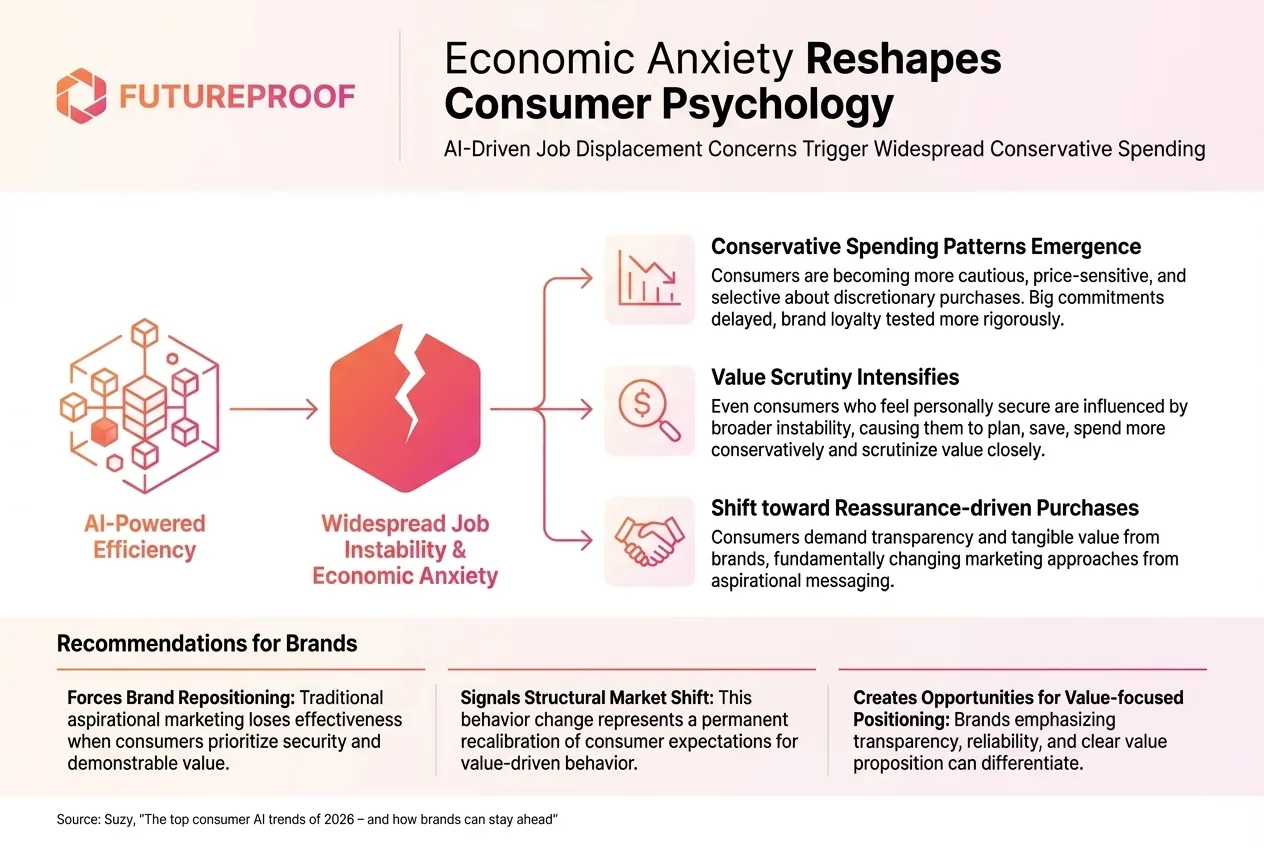
The landscape of consumer behavior is undergoing a profound transformation, driven not merely by cyclical economic downturns but by a deep-seated structural shift rooted in the pervasive specter of AI-driven job displacement. What was once a niche concern, relegated to sci-fi narratives or expert panels, has now firmly entered the mainstream consciousness, becoming a tangible and widespread expectation for many. This seismic shift is reshaping purchasing decisions, investment strategies, and even the fundamental relationship between brands and their audiences. Consumers, whether directly impacted or simply observing the wider economic ripples, are exhibiting a palpable sense of unease, leading to a tightening of spending, an intensified scrutiny of value, and a widespread delay in making significant commitments.
The insidious nature of this anxiety lies in its universality. It’s not just those facing immediate job insecurity who are altering their habits. Even individuals who currently feel personally secure in their employment are adopting more cautious financial postures. This phenomenon points to a collective psychological recalibration where the potential for job instability is no longer an abstract concept but a looming possibility for anyone. The constant news cycles detailing AI's advancements, its increasing capabilities in automating tasks previously thought immune, and the resultant corporate restructuring contribute to a generalized sense of precariousness. This environment fosters a "precautionary principle" in personal finance, where saving becomes prioritized over spending, and discretionary purchases are meticulously weighed against future uncertainties. The perceived risk of financial instability, regardless of one's current economic standing, is leading to a proactive conservatism that impacts nearly every market segment.
New research from Suzy eloquently encapsulates this evolving dynamic, spotlighting how AI-enabled efficiency is making job instability feel both widespread and unavoidable. This perception, as Suzy’s "The top consumer AI trends of 2026" report highlights, is the primary driver behind more conservative spending habits and a significantly heightened sensitivity to price and value. The narrative is no longer about human workers being augmented by AI but about them potentially being replaced, creating a deep-seated anxiety about future income streams and long-term financial security. This isn't just about consumers seeking cheaper alternatives; it's about a fundamental re-evaluation of what constitutes true "value." Consumers are demanding more for their money, scrutinizing not just the initial price tag but the longevity, utility, and overall return on investment of every purchase. They are seeking products and services that promise durability, adaptability, and genuine problem-solving capabilities, rather than fleeting trends or superficial luxuries.
For brands, this moment marks an undeniable structural shift away from the aspirational marketing paradigms that have dominated for decades. The glossy images of unattainable lifestyles, the promise of social elevation through consumption, and the allure of exclusive experiences are rapidly losing traction. Consumers, grappling with a future marked by economic uncertainty, are less interested in what a product says about them and far more concerned with what it does for them. The emphasis has shifted from aspiration to utility, from status to stability. Brands that continue to lead with aspirational narratives, divorced from tangible benefits and genuine value, risk appearing tone-deaf and out of touch with the prevailing consumer mindset. The emotional resonance of marketing must evolve from inspiring dreams to providing reassurance and practical solutions.
In this transformed landscape, consumers are increasingly prioritizing transparency, reliability, and clear proof of value above all else. These are not merely desirable attributes but foundational expectations that must be met for brands to earn and sustain trust. Transparency means being upfront about sourcing, production processes, pricing structures, and ethical practices. It involves an openness that dispels doubt and builds confidence, acknowledging that consumers are savvier and more skeptical than ever before. Reliability speaks to consistency in quality, performance, and customer service. It means delivering on promises, ensuring products and services function as expected, and providing robust support when issues arise. In a world characterized by unpredictability, a reliable brand offers a much-needed anchor of stability.
The most critical element, however, is the undeniable demonstration of clear proof of value. It's no longer sufficient to merely claim a product is "worth it"; brands must unequivocally prove it. This involves articulating quantifiable benefits wherever possible – how a product saves money, time, or effort; how it enhances well-being; how its durability extends its lifespan beyond competitors; or how its multifaceted utility justifies its cost. This proof can manifest through detailed product specifications, independent third-party endorsements, verified customer testimonials that highlight long-term benefits, and transparent comparisons that underscore a superior value proposition. For instance, a technology brand might focus on the long-term ROI of its products in terms of efficiency gains or reduced operational costs, rather than just raw processing power. An apparel brand might emphasize the durability and timelessness of its designs, positioning them as investments rather than disposable fashion items. Every marketing message, every product feature, and every brand interaction must be meticulously crafted to underscore this unassailable value.
Brands that strategically lead with reassurance and tangible benefits are best positioned to win the precious commodity of consumer trust in this new economic paradigm. Reassurance marketing is about more than just alleviating concerns; it's about actively building confidence and reducing perceived risk for the consumer. This can take many forms: offering robust warranties and generous return policies that signal confidence in product quality, providing clear and proactive communication about supply chains and potential disruptions, or developing customer service experiences that prioritize empathy and efficient problem-solving. It means positioning the brand as a reliable partner in navigating uncertainty, rather than just a vendor. For example, financial institutions might emphasize security features and personalized planning tools that help consumers weather economic storms. Automotive brands might highlight industry-leading warranties and low total cost of ownership, addressing fears about major expenditures.
Furthermore, brands need to pivot their messaging from selling a dream to selling a solution, from inspiring aspiration to inspiring confidence. This necessitates a deep understanding of the everyday anxieties consumers face and demonstrating how products and services directly address those concerns. It’s about being empathetic to the fact that discretionary income is tighter and every purchase decision carries more weight. Education plays a crucial role here, with brands explaining not just what their product is, but why it matters now, in this specific economic climate. This might involve creating content that helps consumers make informed decisions, offering workshops or guides that showcase the practical applications and long-term advantages of their offerings, or even partnering with experts to validate the utility and benefits of their products.
The shift is particularly profound for sectors traditionally reliant on luxury and aspirational appeal. High-end brands, for instance, must now articulate a compelling narrative that justifies premium pricing through unparalleled quality, exceptional longevity, and a proven track record of enduring value, rather than simply relying on exclusivity or brand prestige. The experience of luxury might transition from overt display to a more private, intrinsic sense of enduring quality and timelessness. Similarly, subscription services, which demand ongoing financial commitment, must continuously demonstrate their indispensable value through consistent updates, evolving features, and tangible benefits that outweigh the perceived cost in an anxious consumer's budget. Their proposition needs to be less about convenience and more about essential utility and tangible return.
The overarching implications of this AI-driven anxiety are far-reaching, signaling a fundamental recalibration of consumer expectations that is likely to persist for the foreseeable future. This isn't a temporary blip; it's a structural realignment where prudence, pragmatism, and verifiable value become the new cornerstones of purchasing decisions. Brands that recognize this shift and adapt proactively stand to gain significant market share and build deep, resilient reservoirs of customer loyalty. Those that cling to outdated marketing paradigms, ignoring the widespread economic anxiety and the demand for genuine value, risk becoming increasingly irrelevant in a world that values stability and substance above superficiality.
The opportunity for brands lies not in shying away from these uncomfortable truths, but in embracing them. By positioning themselves as beacons of reliability, transparency, and undeniable value, they can forge stronger, more meaningful connections with consumers navigating an uncertain future. This requires a renewed focus on product quality, ethical practices, exceptional customer experiences, and marketing that speaks directly to the need for reassurance and tangible benefits. In essence, the future belongs to brands that can authentically demonstrate how they contribute to a consumer's financial and emotional security, proving that their offerings are not just desirable, but truly indispensable in an age where the only constant is change, driven by the relentless march of AI.