How AI Driven Job Anxiety Is Rewriting Consumer Behavior and Forcing Brands To Prove Real Value
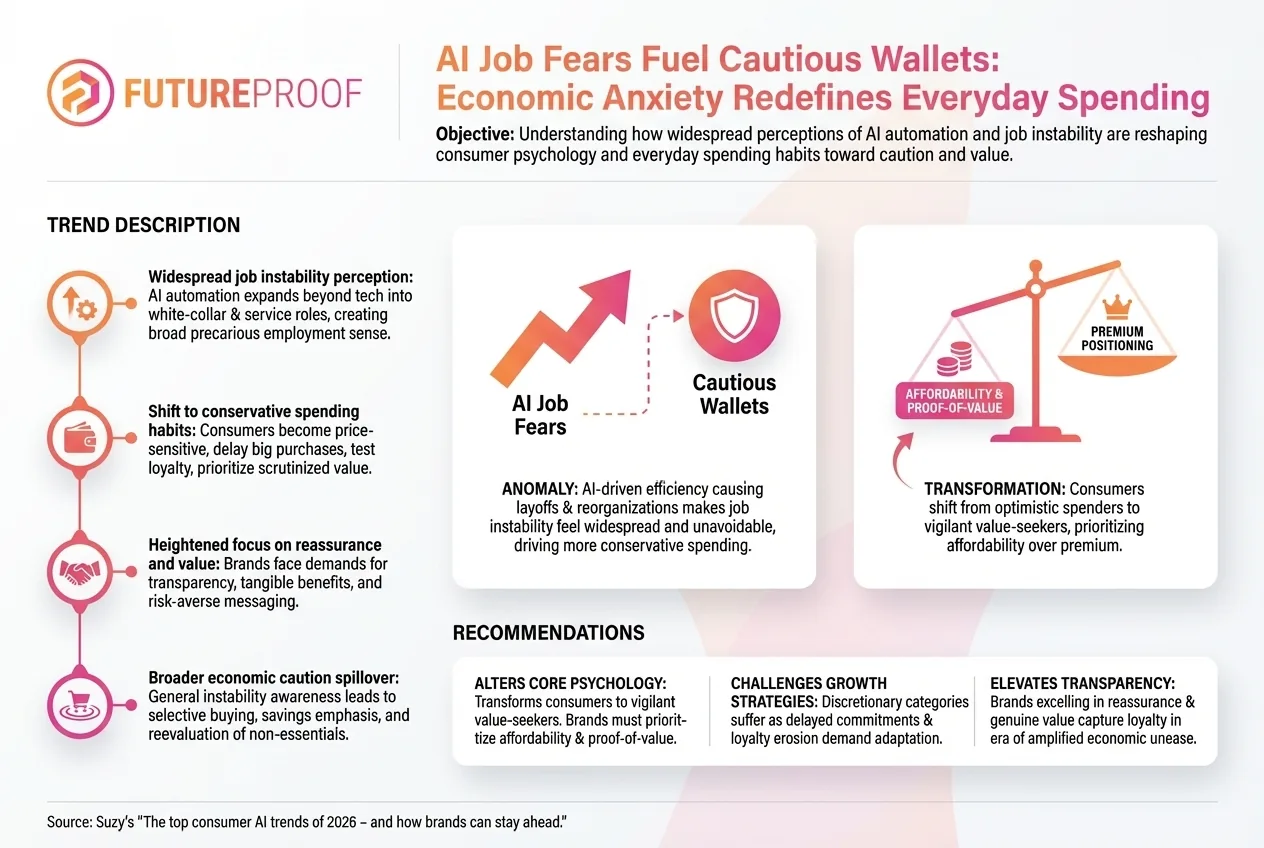
The pervasive march of artificial intelligence is no longer confined to the realms of science fiction or the factory floor. Its algorithms now delve deep into the fabric of white-collar professions and intricate service roles, automating tasks once thought uniquely human. This rapid acceleration of AI integration is casting a long shadow of uncertainty over global workforces, cultivating a palpable sense of economic anxiety among consumers worldwide. This anxiety, far from being a distant worry, is actively and dramatically reshaping everyday purchasing behaviors, transforming how individuals evaluate, prioritize, and spend their hard-earned money.
The shift is profound. Consumers are becoming intensely price sensitive, scrutinizing every dollar spent with a newfound vigilance. Major purchases, once considered rites of passage or necessary upgrades, are now being delayed indefinitely as households prioritize financial security over immediate gratification. More than ever, consumers are demanding crystal-clear value from the brands they choose to engage with, seeking not just products or services, but tangible benefits and undeniable reassurance in uncertain times.
A recent report by Suzy, "The top consumer AI trends of 2026 – and how brands can stay ahead," underscores this paradigm shift with stark clarity. The report highlights how AI-driven efficiency, while a boon for corporate bottom lines, is simultaneously triggering widespread layoffs and significant organizational restructuring across an array of industries. This pervasive sense of job instability is not an isolated phenomenon; it's a collective dread that permeates communities and sectors, pushing consumers toward an era of conservative spending where prudence reigns supreme. For brands navigating this newly cautious landscape, the message is unambiguous: transparency and irrefutable proof of value are no longer optional extras but fundamental prerequisites. Those forward-thinking organizations that can authentically deliver reassurance and demonstrably tangible benefits will be uniquely positioned to earn and, more importantly, retain customer loyalty in an economy increasingly defined by apprehension and careful consideration.
The Deepening Shadow of AI Job Fears: A New Economic Reality
The rapid ascent of artificial intelligence into the workplace is unlike previous industrial revolutions. While past technological advancements often replaced manual labor, AI's prowess extends to cognitive tasks, data analysis, content creation, and even strategic decision-making. This means that roles traditionally considered secure—those held by marketing professionals, software developers, journalists, financial analysts, and customer service specialists—are now undergoing significant reevaluation. Automation is no longer just about efficiency; it's about augmentation, and often, replacement.
This technological evolution is creating a profound psychological impact. The very potential for job displacement, even if not immediately realized, generates widespread anxiety. Employees witness colleagues being laid off due to "AI-driven efficiencies" or hear of companies undergoing "AI-powered reorganizations," and the fear becomes palpable. It's a creeping dread that erodes confidence in one's long-term career prospects and, consequently, one's financial stability. The Suzy report's findings serve as a stark validation of this concern: AI is indeed a catalyst for significant workforce changes, and the feeling of instability is anything but isolated. It's a collective experience, pushing individuals to reconsider their entire financial outlook.
Beyond the headlines, this translates into personal fears that dictate everyday choices. A consumer might hold a stable job today, but the omnipresent news of AI advancements in their sector makes them question tomorrow. Will their skills remain relevant? Will their role exist in two, five, or ten years? This uncertainty chips away at their sense of financial security, making them less willing to take risks and more inclined to hoard resources. The perceived threat, whether immediate or distant, is powerful enough to alter spending habits, turning formerly confident shoppers into cautious planners. This isn't just about recession fears; it's about a fundamental restructuring of the economic landscape, where a significant portion of the workforce feels increasingly vulnerable to algorithmic disruption.
How Economic Anxiety is Reshaping Consumer Spending
The widespread apprehension regarding AI's impact on employment has ignited a profound shift in consumer spending patterns. This isn't merely a temporary dip in confidence; it's a fundamental recalibration of priorities and values. As job instability looms, consumers adopt a more conservative posture, transforming their approach to everything from daily necessities to significant life investments.
Firstly, the new price sensitivity is stark and pervasive. Consumers are scrutinizing prices more rigorously than ever before. What was once an impulsive purchase now warrants careful consideration, comparison shopping, and a detailed assessment of necessity. This impacts every facet of consumption:
- Everyday Purchases: The choice between generic and brand-name groceries becomes a conscious decision to save a few dollars. Loyalty programs and discount codes are actively sought out and leveraged. Consumers are more likely to postpone non-essential errands to avoid impulse buys, or to stick strictly to a shopping list.
- Subscriptions and Services: The proliferation of subscription services, from streaming platforms to meal kits, is now under review. Consumers are more likely to audit their recurring expenses, canceling those deemed non-essential or seeking out more affordable alternatives. The "nice-to-have" now often translates to "I can live without it."
- Utilities and Essentials: Even basic necessities like energy consumption are managed with greater diligence. Thermostats are adjusted, lights are turned off, and water usage is monitored more closely, all in an effort to minimize monthly outgoings and preserve cash reserves.
The underlying rationale is simple: every dollar saved is a dollar retained for an uncertain future. The focus has decisively shifted from "what I want" to "what I truly need."
Secondly, there's a significant trend of delaying major purchases. Large financial commitments, which often signify stability and confidence in future earnings, are being postponed or reconsidered.
- Homes: The decision to buy a home, a significant investment, is fraught with more hesitation. Potential homebuyers are wary of taking on large mortgages if their job security feels precarious. Renovations and upgrades to existing homes are also put on hold.
- Cars: New car purchases, often depreciating assets, are being delayed. Consumers are opting to maintain older vehicles for longer, exploring used car markets, or prioritizing public transport and ride-sharing to avoid the financial burden of a new vehicle loan, insurance, and maintenance.
- Appliances and Electronics: While essential, upgrades to appliances or the latest tech gadgets are no longer automatic. Consumers wait for sales, consider refurbished options, or delay replacement until absolutely necessary, extending the lifespan of their current items.
- Vacations and Education: Lavish international travel is replaced by more local, budget-friendly options. Investments in higher education or specialized training, unless directly linked to enhancing job security in an AI-driven economy, might be delayed due to the significant financial outlay and uncertain ROI.
This deferral of major purchases is a direct consequence of the desire to hoard savings. In a climate of potential layoffs or reduced income, a robust emergency fund becomes paramount, overriding the desire for immediate comfort or status symbols.
Finally, the most critical shift for brands is the demand for clearer value. "Value" no longer solely equates to a low price; it encompasses a broader, more sophisticated set of expectations. Consumers are less tolerant of vague marketing promises or products that fail to deliver tangible, measurable benefits.
- Tangible Benefits: Consumers want to know precisely how a product or service will save them money, save them time, improve their quality of life, or provide a sense of security. Abstract benefits like "enhanced lifestyle" hold less sway than concrete advantages such as "reduces energy bill by 15%" or "lasts twice as long as competitors."
- Durability and Longevity: In an era of cautious spending, consumers are prioritizing products built to last. The disposable culture is giving way to an appreciation for quality craftsmanship and design that ensures a longer product lifespan, thereby reducing the need for frequent replacements. This extends to services too, where robust customer support and reliable performance signify enduring value.
- Return on Investment (ROI): For any significant purchase, consumers are increasingly calculating the ROI. Will this appliance genuinely reduce costs over time? Will this software truly boost productivity to justify its subscription? Will this educational course lead to a better job or higher earnings? The investment must prove its worth.
- Problem-Solving Focus: Brands that address specific pain points stemming from economic anxiety—like products that help manage budgets, secure digital assets, or provide affordable solutions for home maintenance—are gaining traction.
The risk-averse purchase dominates. Every dollar spent is now viewed as an investment, and consumers expect a clear, justifiable return on that investment. Brands that fail to articulate this value proposition with precision and authenticity will find themselves struggling to capture the attention and loyalty of a newly cautious and discerning consumer base. This shift in priorities dictates that brands must not only understand but proactively address the underlying anxieties driving these conservative spending behaviors.
The Imperative for Brands: Rebuilding Trust in a Cautious Economy
In this landscape of heightened economic anxiety, where consumers are increasingly wary and demanding, brands face a monumental task: to re-establish trust and demonstrate undeniable worth. The old playbooks of aggressive marketing and aspirational branding are losing their efficacy. What's needed now is a fundamental recalibration towards authenticity, utility, and empathy.
Transparency as the New Currency:
Transparency is no longer a buzzword; it's a non-negotiable expectation. Consumers are inherently suspicious, and any hint of obfuscation will drive them away. For brands, transparency means:
- Clear and Honest Pricing: No hidden fees, no complex tiered structures designed to confuse. Upfront, easy-to-understand pricing models build immediate trust. Brands that can demonstrate price stability or a clear value-to-cost ratio will stand out.
- Ethical Sourcing and Labor Practices: Consumers care about where their products come from and how they are made. This extends to a brand's internal AI strategy. Are they using AI to augment human workers or replace them en masse? Brands that can articulate a responsible AI implementation strategy, perhaps even emphasizing how AI frees up human creativity, will resonate positively.
- Openness about AI Integration: If AI is used in customer service, product development, or internal operations, brands should be transparent about its role. Explain how it enhances service, personalizes experiences, or improves product quality, rather than letting speculation fester.
- Data Privacy and Use: With increasing concerns about AI and data, brands must be explicitly clear about how consumer data is collected, stored, and utilized. Strong, transparent privacy policies, easily accessible and understandable, are crucial.
Transparency combats cynicism. It builds an authentic connection based on honesty, allowing consumers to feel they are making informed decisions with a brand that respects them.
Proof of Value: Beyond Marketing Hype:
In an era where every dollar counts, vague promises and aspirational messaging fall flat. Consumers need tangible, measurable proof of value. Brands must shift from "tell" to "show":
- Concrete, Quantifiable Benefits: Instead of saying "improves productivity," demonstrate "saves 5 hours of work per week" or "reduces operating costs by 10%." For consumer goods, emphasize durability ("built to last 10 years"), efficiency ("reduces energy consumption by 20%"), or direct savings ("subscription costs less than individual purchases over time").
- Data-Driven Evidence: Leverage case studies, scientific backing, independent reviews, and user statistics to prove product efficacy. Show, don't just tell, that your solution delivers on its promises.
- Authentic Testimonials and Reviews: Real-world experiences from satisfied customers carry immense weight. Highlight how your product or service has genuinely solved problems or improved lives, particularly in ways that address economic concerns (e.g., "This tool helped me manage my budget better").
- Clear ROI Articulation: Help consumers understand the return on their investment, whether it's financial, time-saving, or related to well-being. This might involve calculators on websites, comparative analyses, or clear cost-benefit breakdowns.
- Emphasizing Longevity and Sustainability: Products designed for durability reduce replacement costs over time, appealing directly to the cautious consumer. Highlighting eco-friendly practices can also be positioned as long-term value, as it often correlates with efficiency and lower future costs.
The focus must be on practical utility. Brands that can unequivocally demonstrate how their offerings save money, time, or reduce stress will gain significant traction over those relying on fleeting trends or abstract emotional appeals.
Delivering Reassurance:
Beyond logic and facts, consumers crave emotional reassurance. Economic anxiety is deeply personal, and brands that can connect on this level will forge lasting loyalty.
- Exceptional Customer Service: When consumers are worried, a positive, empathetic customer service experience can make all the difference. Responsive, helpful, and understanding support makes consumers feel valued and secure in their purchase. It demonstrates that the brand cares beyond the transaction.
- Reliability and Consistency: In unpredictable times, consumers gravitate towards dependable brands. Consistent quality, reliable delivery, and trustworthy performance build a foundation of reassurance.
- Community Building: Fostering a sense of belonging and support around a brand can be incredibly powerful. Online forums, user groups, and community events allow consumers to share experiences, gain advice, and feel less isolated in their concerns.
- Ethical AI Use: Brands that demonstrate a commitment to ethical AI development – ensuring fairness, accountability, and human oversight – can reassure consumers that they are not just chasing efficiency but upholding societal values. Communicating this commitment can differentiate a brand as a responsible innovator.
- Empathetic Messaging: Brands must acknowledge consumer fears without exploiting them. Marketing should reflect an understanding of the current economic climate, offering solutions and support rather than simply pushing products. Messages of resilience, empowerment, and practical help will resonate.
Strategic Adaptations for Different Sectors:
- Retail: Focus on loyalty programs that offer clear, immediate savings; emphasize quality private labels as value alternatives; offer flexible payment options (e.g., "buy now, pay later" for essential items, with transparent terms).
- Automotive/Real Estate: Highlight long-term value, durability, and cost-efficiency (e.g., fuel economy, low maintenance for cars; energy efficiency for homes). Offer extended warranties, flexible financing, and transparent trade-in values.
- Technology/SaaS: For businesses, quantify ROI in terms of saved labor costs or increased revenue. For consumers, simplify offerings, emphasize security features, and provide tiered pricing to suit varying budgets. Offer free trials with clear upgrade paths.
- Services (e.g., consulting, personal finance): Focus on guaranteed outcomes or measurable improvements. Provide clear, upfront pricing with no surprises. Position services as investments that enhance future security or efficiency.
Brands that can align their strategies with these imperatives will not only weather the storm of AI-driven economic anxiety but will emerge stronger, having cultivated a deep and enduring loyalty rooted in trust, transparency, and tangible value.
Navigating the Future: Strategies for Sustainable Brand Loyalty
The seismic shifts caused by AI-driven job fears are not a transient phase but indicative of a new economic paradigm. Brands that wish to not only survive but thrive in this cautious environment must adopt forward-thinking strategies centered on empathy, adaptability, and ethical leadership. Building sustainable brand loyalty in this era requires more than just good products; it demands a fundamental commitment to understanding and serving the evolving needs of an anxious consumer base.
One crucial strategy is Innovation with Empathy. This means developing products and services that directly address the pain points arising from economic anxiety. Think about tools that enhance personal financial management, educational platforms that reskill individuals for AI-proof jobs, or solutions that make everyday life more efficient and affordable. Innovation should be geared towards empowering consumers, not just selling to them. This might involve creating more durable goods to reduce replacement costs, or designing services that offer clear, measurable returns on investment in terms of time or money saved.
Flexible Offerings are also becoming paramount. The traditional one-size-fits-all model is less appealing to price-sensitive consumers. Brands should explore:
- Tiered Pricing Models: Allowing consumers to choose service levels that match their budget and needs.
- Subscription Flexibility: Options for pausing or downgrading subscriptions during difficult times.
- Rental or Leasing Options: For high-value items, reducing the upfront financial burden.
- Bundling Services: Offering value packages that genuinely save consumers money compared to individual purchases.
Such flexibility signals a brand's understanding and willingness to adapt to the customer's financial realities, fostering goodwill and reducing churn.
Fostering Community and Connection is another powerful avenue for loyalty. In an uncertain world, people seek belonging and support. Brands can facilitate this by:
- Creating online forums or social groups where users can share tips, troubleshoot issues, and feel connected to a larger purpose.
- Hosting workshops or webinars that provide valuable information or skills, positioning the brand as a helpful resource rather than just a seller.
- Actively listening to customer feedback, both positive and negative, and demonstrating that this input genuinely shapes product development and service improvements. This collaborative approach builds a strong sense of ownership and loyalty.
Finally, Ethical Leadership regarding AI's impact is no longer optional. Brands have a moral and commercial imperative to demonstrate responsible innovation. This means:
- Developing and deploying AI technologies in ways that prioritize human well-being, fairness, and transparency.
- Investing in reskilling programs for their own workforce and potentially offering similar resources to their customer base.
- Advocating for policies that balance AI progress with worker protection and societal welfare.
- Being transparent about how AI is used within their operations, ensuring it augments human capabilities rather than simply replacing them without consideration.
By taking a proactive and principled stance on AI, brands can position themselves as trusted leaders, demonstrating a long-term vision that extends beyond short-term profits. This commitment to ethical practice reassures consumers that they are supporting an organization aligned with values that benefit society as a whole, not just corporate bottom lines.
Conclusion
The dawn of widespread AI-driven automation has ushered in an unprecedented era of economic anxiety, profoundly reshaping how consumers interact with the marketplace. The once-predictable rhythms of consumer spending are now marked by heightened price sensitivity, a pervasive tendency to delay major purchases, and an unwavering demand for unequivocal value from brands. As the Suzy report highlights, the efficiency gains of AI are triggering job instability, pushing consumers toward a more conservative and cautious financial outlook.
For brands, this moment presents both a formidable challenge and a unique opportunity. The path forward is clear: success hinges on a steadfast commitment to transparency, a rigorous dedication to demonstrating undeniable proof of value, and a genuine effort to provide reassurance to a worried populace. Those brands that can openly communicate their practices, especially concerning AI; that can articulate and deliver tangible, measurable benefits; and that can connect with consumers on an empathetic, human level will be the ones to forge unbreakable bonds of loyalty.
In this landscape defined by caution and uncertainty, the brands that adapt with integrity, innovate with empathy, and lead with a clear sense of purpose will not merely survive; they will thrive. By embracing this new reality and prioritizing the evolving needs of their customers, they will earn not just market share, but enduring trust – the most valuable currency in an era where reassurance is paramount. The time for brands to act, to transform their strategies and realign their values with a newly discerning consumer, is unequivocally now.