AI Driven Job Anxiety Is Reshaping Consumer Spending and Redefining Value
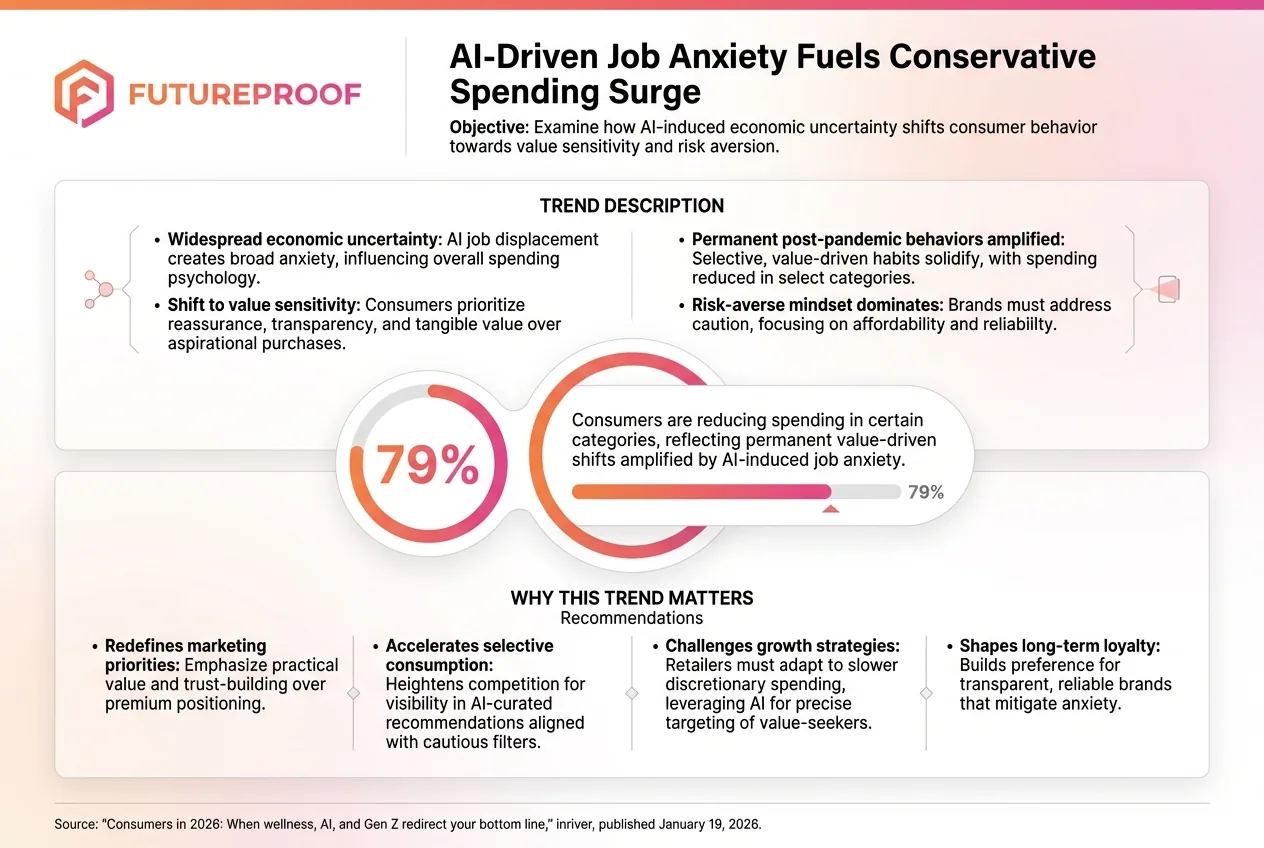
The economic landscape is undergoing a profound transformation, driven by an unlikely yet powerful force: AI-driven job anxiety. This pervasive undercurrent of concern about future employment and economic stability is not just a societal talking point; it's actively reshaping consumer spending patterns, fundamentally altering how individuals evaluate value and trust in every purchase. What we are witnessing is a strengthening conservative spending surge, where caution dictates choices and the definition of "essential" has gained unprecedented weight. This isn't merely a temporary blip; it's an acceleration of long-term post-pandemic behaviors, demanding immediate and strategic adaptation from brands and retailers alike.
At its core, the rise of AI-driven job anxiety stems from a combination of rapid technological advancement and lingering economic uncertainties. As artificial intelligence continues to demonstrate its capability to automate complex tasks, from data analysis to creative processes, a significant portion of the workforce grapples with the potential for job displacement or the need for constant reskilling. This apprehension transcends specific industries, creating a generalized sense of insecurity that directly impacts consumer psychology. When individuals perceive their future income streams as less stable, they naturally become more risk-averse. Discretionary spending tightens, savings rates are prioritized, and every purchase is subjected to a far more rigorous internal interrogation: Is this truly necessary? Does it offer lasting value? Can I afford to invest in this right now?
This psychological shift translates directly into a conservative spending surge. Consumers are no longer indulging in impulse buys or aspirational purchases with the same abandon. Instead, their spending habits are becoming highly selective and purposeful. According to insights from inriver, 79% of consumers are actively reducing spending in select categories. This isn't a blanket boycott but a nuanced strategic retreat. Shoppers are cutting back in areas deemed non-essential, temporary, or easily replaceable, while simultaneously demonstrating a willingness to pay premiums, but only for products that genuinely feel essential, transparent, and undeniably reliable. The focus has sharpened on utility, durability, and a demonstrable return on investment, whether that investment is monetary, temporal, or emotional.
The re-evaluation of value is perhaps the most significant consequence of this trend. Practical value now overwhelmingly outperforms aspiration. The glossy image, the celebrity endorsement, or the promise of an elevated lifestyle holds less sway than concrete benefits and tangible quality. Consumers are seeking products that solve real problems, enhance daily life in a meaningful way, or contribute to long-term well-being and stability. This shift is evident across various sectors. For instance, while fast fashion might see a downturn, investments in timeless, durable apparel made with ethical practices might increase. Similarly, while casual dining might suffer, high-quality ingredients for home cooking or premium health supplements that genuinely support wellness could thrive. The perception of value is no longer just about price; it’s about the holistic benefit derived, the longevity of the product, and its contribution to a more secure and stable personal ecosystem.
Hand-in-hand with this redefined value is a burgeoning demand for trust and clarity. In an uncertain world, consumers crave certainty wherever they can find it, and brands become arbiters of that certainty. Generic claims and bold, unsubstantiated positioning are being met with skepticism. Instead, consumers are actively seeking transparency in sourcing, manufacturing processes, ingredient lists, and even pricing structures. They want to understand where a product comes from, how it's made, and what impact it has, not just on their wallet but on the world. Reliability, too, has become paramount. A product that fails to deliver on its promise, a service that disappoints, or a brand that proves difficult to engage with, risks not just a lost sale but a permanent erosion of trust that is incredibly difficult to rebuild. This is why brands that offer robust guarantees, clear communication, and consistent quality are gaining an undeniable edge. Building trust in this environment requires more than just good marketing; it demands fundamental integrity baked into every aspect of the brand and product lifecycle.
This cautious consumer behavior isn't just observed in brick-and-mortar stores or traditional e-commerce platforms; it's being powerfully amplified and shaped by AI-powered recommendation environments. These intelligent systems, which curate product discovery and purchasing journeys across virtually all digital touchpoints, are designed to learn from and respond to shifting consumer preferences. As consumers increasingly prioritize wellness, sustainability, and verifiable cost-effectiveness, the AI algorithms adapt, rewarding products that prominently feature these attributes. This creates a powerful feedback loop: consumer caution trains the AI, and the AI, in turn, reinforces and accelerates the conservative spending surge by highlighting products that align with these evolving values.
Consider how AI systems function. They process vast amounts of data, not just on past purchases but on user interactions, search queries, reviews, and even sentiment analysis across social media. When consumers demonstrate a preference for items with clear sustainability certifications, locally sourced ingredients, or products touting tangible health benefits, the AI learns to prioritize these attributes. Products with well-documented features related to wellness (e.g., organic, allergen-free, mental health support), sustainability (e.g., carbon neutral, recycled materials, ethical labor), and transparent cost-effectiveness (e.g., long-term savings, durability, multi-purpose functionality) are more likely to appear at the top of search results, in personalized recommendations, and across targeted advertisements. Conversely, products lacking this clear, verifiable value proposition risk being deprioritized and effectively hidden from the increasingly selective buyer.
For brands and retailers, the implications are immediate and far-reaching. Growth strategies must adapt with urgency, recognizing that the cautious buyer is now the dominant force. The era of selling dreams through vague aspirational marketing is giving way to a demand for tangible benefits and measurable impact. This requires a fundamental recalibration of product development, messaging, and overall brand narrative.
Firstly, realigning product offerings and messaging to emphasize practical value is non-negotiable. This means moving beyond superficial features to highlight how a product genuinely improves a consumer’s life, solves a problem, or offers long-term benefits. For a beauty brand, this might mean focusing on efficacy and ethical sourcing over unattainable perfection. For a tech company, it might mean emphasizing durability and multi-functionality over incremental aesthetic upgrades. Every product story must articulate its inherent utility and contribution to a consumer’s stability and well-being.
Secondly, cultivating unshakeable trust and radical transparency is no longer a differentiator but a baseline expectation. Brands must open their supply chains, clearly communicate their ethical commitments, and be forthright about pricing. This includes clear ingredient lists, verifiable certifications, and honest disclosures about any potential trade-offs. Customer service must be proactive, responsive, and genuinely problem-solving. Every interaction, from pre-purchase research to post-sale support, must reinforce the brand’s commitment to reliability and customer well-being. This level of trust-building is what allows brands to command a premium even in a conservative spending environment.
Thirdly, optimizing for AI-powered discovery environments is critical for market visibility. This requires a robust and meticulous approach to product information management (PIM) and product experience management (PXM). Brands must ensure their product data is rich, accurate, and consistently updated across all channels, meticulously detailing attributes related to wellness, sustainability, and cost-effectiveness. This means going beyond basic descriptions to include comprehensive metadata, high-quality imagery, and compelling narratives that speak to these new consumer priorities. Leveraging advanced PXM platforms can help ensure that these rich product stories are dynamically delivered to the right consumer at the right time, across every digital touchpoint, increasing the likelihood of being "rewarded" by AI algorithms and appearing in relevant recommendations. Brands that fail to provide this granular, AI-digestible information risk being overlooked.
The widening gap between "AI-agile leaders and everyone else" is becoming increasingly apparent. AI-agile leaders are those brands and retailers that proactively invest in understanding how AI algorithms interpret and amplify consumer preferences. They use data analytics to identify emerging value drivers, integrate AI into their marketing and product development processes, and prioritize high-quality, comprehensive product content designed for AI consumption. These leaders are quick to adapt their strategies, personalize experiences at scale, and deliver consistent value that resonates with the cautious buyer. They understand that AI is not just a tool for automation but a mediator of consumer choice, and they design their entire operation to thrive within this new paradigm.
Conversely, brands that cling to outdated marketing strategies, fail to invest in robust product data, or ignore the signals from AI-driven consumer behavior will find themselves increasingly marginalized. Their products will struggle for visibility in AI-curated feeds, their messages will fall flat with value-driven consumers, and their market share will erode. The cost of inaction is no longer just stagnation but irrelevance in a rapidly evolving digital marketplace.
Looking ahead, the future of retail is being shaped by conscious consumption and AI dexterity. Consumer spending will remain discerning and selective, with a lasting emphasis on verifiable value, transparency, and reliability. Brands that authentically embody these principles and effectively communicate them through rich, AI-optimized product experiences will not only survive but thrive. The continuous evolution of AI will further refine how consumers discover, evaluate, and purchase products, making data integrity, product experience excellence, and a deep understanding of AI's role in the consumer journey paramount. This new era demands not just innovation in products but innovation in how those products are presented, perceived, and trusted in an increasingly anxious, yet discerning, marketplace. The brands that embrace this reality and strategically adapt their operations, from product creation to digital distribution, will be the ones that capture the loyalty and spending power of the new conservative consumer.