How Gen Z Wellness Priorities and AI Are Reshaping the Future of Digital Commerce
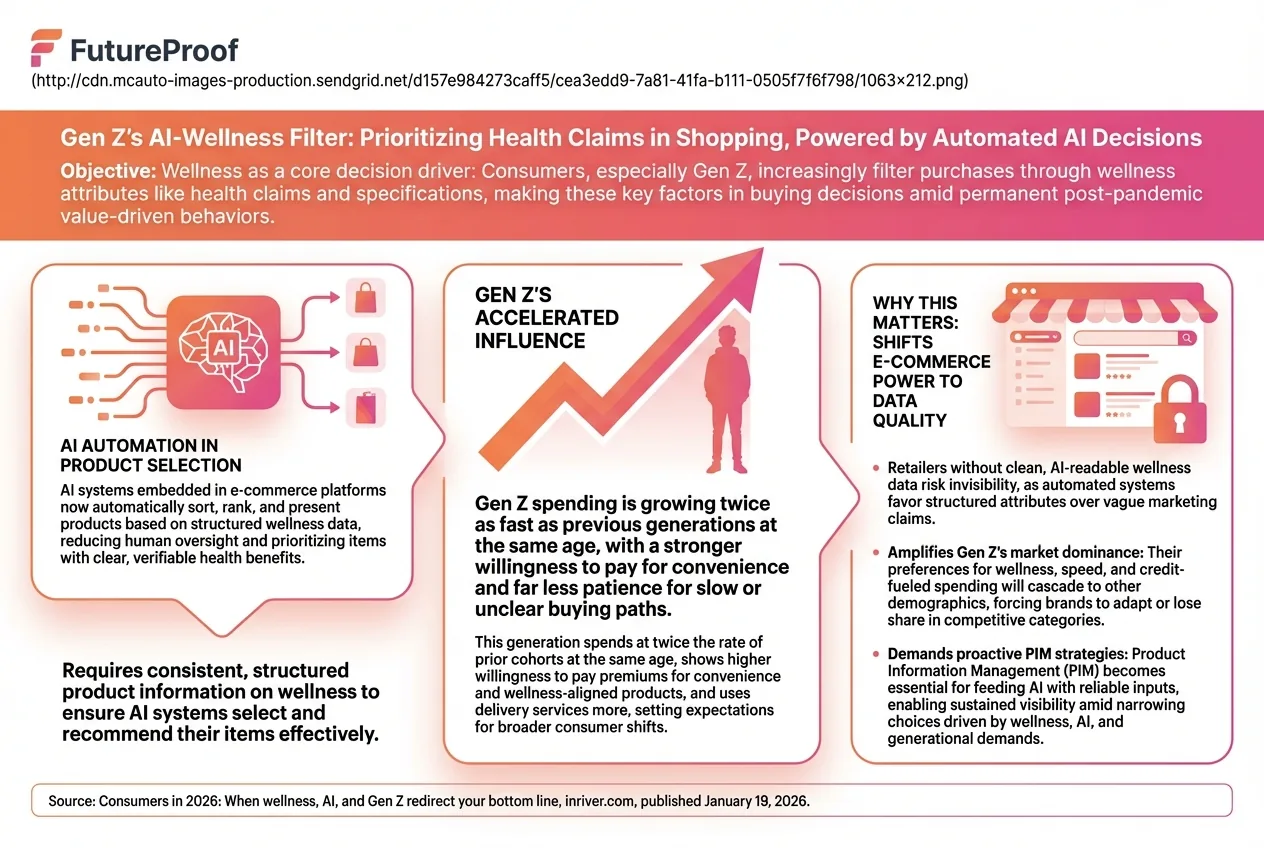
The digital commerce landscape is undergoing a profound transformation, driven by an unstoppable confluence of generational shifts, evolving consumer values, and artificial intelligence. At the heart of this revolution lies Gen Z, a demographic cohort that is not merely influencing but actively reshaping how products are discovered, evaluated, and purchased online. Their unique perspective, centered heavily on wellness, sustainability, and authenticity, combined with AI’s rapidly advancing capabilities, is creating a new paradigm for retail, where data consistency and clear health attributes are no longer optional but essential for survival and growth.
Gen Z: The Wellness-First Generation Redefining Digital Commerce
Gen Z, often characterized as digital natives, possesses an innate understanding and expectation of the online world. Yet, their impact on digital commerce extends far beyond mere tech savviness. New data reveals this generation is spending at twice the rate of earlier cohorts at the same age, demonstrating a formidable economic influence that retailers simply cannot ignore. What's even more striking is how they spend: wellness has become a primary, non-negotiable filter for nearly every purchase decision. This isn't a fleeting trend; it’s a deeply ingrained value system that informs their choices, from the food they eat to the fashion they wear, and the brands they choose to support.
For Gen Z, wellness is a holistic concept encompassing physical, mental, emotional, and even planetary health. They are acutely aware of ingredient lists, sourcing practices, and environmental impact. This discerning approach translates directly into their purchasing habits. They consistently pay premiums for products that articulate clear, verifiable health claims. It's not enough for a product to be "good"; it must actively contribute to their well-being in some measurable way. Whether it’s ethically sourced coffee, gluten-free snacks, stress-reducing essential oils, or sustainably manufactured clothing, Gen Z is willing to invest more in products that align with their personal values and promise tangible benefits to their health and the planet's.
Beyond the product itself, Gen Z’s digital nativity has cultivated an elevated expectation for the path to purchase. They demand fast, seamless, and intuitive online experiences. Any friction – slow loading times, confusing navigation, inadequate product information, or cumbersome checkout processes – is a significant deterrent. Their patience is limited, and their alternatives are limitless. Brands that fail to provide an effortless user journey risk losing not just a single sale, but the long-term loyalty of a generation that values efficiency as much as efficacy. This combination of wellness-first values, willingness to pay premiums for aligned products, and an expectation for frictionless digital interactions sets a formidable new standard for retailers.
The AI Revolution: Automating Wellness-Driven Product Selection
In parallel with Gen Z’s rising influence, Artificial Intelligence is fundamentally transforming the mechanics of digital commerce. The days when broad marketing language and generic SEO keywords were sufficient to gain visibility are rapidly fading. AI is now automating product selection across e-commerce platforms, shifting the paradigm from keyword-matching to data-driven ranking. This monumental change means that AI is no longer simply processing text descriptions; it's actively analyzing and ranking items based on structured, granular data, particularly wellness attributes.
For AI to effectively understand and recommend products in a wellness-driven market, it requires data that is clean, consistent, and machine-readable. Imagine an AI agent tasked with finding a "vegan, gluten-free snack bar with sustainably sourced ingredients and no added sugar." If a brand's product data simply states "delicious snack bar," or has inconsistent labels like "veg-friendly" in one place and "plant-based" in another without clear structured tags, that product will likely be overlooked. AI algorithms are designed to parse specific data points, not interpret vague marketing copy. They need standardized categories, clear attribute values (e.g., "allergen: gluten-free," "dietary_type: vegan," "sustainability_certification: Fair Trade"), and consistent formatting across all product listings.
This shift has profound implications for brand visibility. Platforms are increasingly defaulting to automated, wellness-driven recommendations, where AI acts as the ultimate gatekeeper. If a brand fails to provide these clean, consistent, AI-readable health attributes, their products risk losing visibility entirely. They might possess an outstanding product with genuine wellness benefits, but if the underlying data doesn't communicate those benefits in a structured format that AI can understand, it will effectively disappear from automated searches, personalized recommendations, and curated wellness lists. In an environment where AI determines what appears first – or what disappears entirely – having a robust strategy for structured wellness data is paramount to maintaining competitive relevance. The product information ecosystem is no longer about human-readable descriptions alone; it’s about machine-readable facts that inform algorithmic decision-making at scale.
The New Relevance Threshold: Adapting to Evolving Consumer & Technological Landscapes
The convergence of wellness priorities, AI decision-making, and Gen Z's elevated expectations has created a new relevance threshold for every retailer. This isn't just about optimizing for a specific niche; it’s about fundamentally rethinking how products are presented and perceived in the digital realm. The modern consumer is more discerning than ever, and their spending habits reflect a significant recalibration of value. Data indicates that 79 percent of consumers are actively reducing spend in some categories while simultaneously paying more for products that "matter most." In the current climate, "mattering most" is increasingly synonymous with products that align with personal wellness, ethical values, and environmental responsibility.
This phenomenon creates a dual challenge for retailers: efficiently manage costs in categories where consumers are pulling back, while simultaneously investing in and highlighting products that resonate with these deeper values. Brands can no longer afford to be vague about their wellness claims or their commitment to sustainability. Gen Z, empowered by AI-driven discovery tools, will actively seek out products that meet their specific criteria and bypass those that don’t. The ability to articulate these values through structured data becomes a critical differentiator.
The combination of wellness priorities, AI decision-making, and Gen Z’s elevated expectations is not merely a set of disconnected trends; it forms a powerful triad that is actively redirecting bottom lines. Wellness informs Gen Z’s buying criteria, AI sifts through vast catalogs to match those criteria, and Gen Z expects this process to be seamless and highly personalized. Retailers must acknowledge that their competitive edge now hinges on their ability to integrate these elements into their core digital strategy. Ignoring any one of these pillars risks obsolescence in a rapidly evolving market. The relevance threshold has been significantly raised, demanding a proactive and data-centric approach to product information.
PIM and Structured Data: The Foundation for Future-Proofing Digital Commerce
In this new ecosystem, where AI determines visibility and wellness dictates demand, proper Product Information Management (PIM) strategies and meticulously structured data are not just beneficial – they are becoming absolutely essential to stay competitive. A robust PIM system serves as the central nervous system for all product information, ensuring that every detail, from basic dimensions to intricate wellness attributes, is accurate, consistent, and up-to-date across all sales channels.
PIM’s importance has never been more critical. It moves beyond simple product descriptions to manage a complex web of attributes necessary for AI comprehension and Gen Z engagement. This includes detailed nutritional information, comprehensive ingredient lists, allergen warnings, sustainability certifications (e.g., Fair Trade, organic, carbon-neutral), ethical sourcing details, manufacturing processes, and specific health benefits (e.g., "gut-friendly," "energy-boosting," "stress-reducing"). Without a centralized PIM, maintaining this level of data integrity across disparate systems (e-commerce platforms, social media, internal databases) becomes an insurmountable challenge, leading to inconsistencies that confuse both consumers and AI algorithms.
Building AI-readable wellness attributes requires a strategic approach to data modeling and taxonomy. Brands must adopt standardized language and categorization for all health and wellness claims. For instance, instead of merely stating "natural," a PIM system allows for structured attributes like "natural_certification: USDA Organic" or "free_from: artificial preservatives, GMOs." This granular, standardized data is what AI can reliably process to make informed recommendations. Investing in developing a robust taxonomy for wellness attributes and ensuring every product adheres to it is a proactive step towards securing future visibility. This may involve collaborating closely with suppliers to obtain standardized data at the source and training internal teams on stringent data entry protocols.
The competitive advantage gleaned from data excellence through PIM is multifaceted. Firstly, it ensures optimal visibility. Products with clean, structured wellness data are more likely to appear in AI-driven searches and recommendations, directly increasing traffic and potential sales. Secondly, it drastically enhances the customer experience. Accurate, detailed information builds trust with Gen Z, who values transparency above all else. When an AI can precisely match a consumer's wellness criteria with a brand's product, it creates a highly personalized and satisfying shopping journey. This leads to higher conversion rates, reduced returns due to misinformation, and stronger brand loyalty. Furthermore, PIM facilitates faster time-to-market for new products, allowing brands to quickly adapt to emerging wellness trends and consumer demands with accurate information ready for immediate dissemination.
For brands looking to future-proof their digital commerce strategy, implementing a modern PIM system is no longer a luxury. It's the foundational investment that enables them to speak the language of AI and resonate with the values of Gen Z. It’s about creating a single source of truth for all product data, meticulously structured for both human understanding and algorithmic processing. This strategy ensures that wellness attributes are consistently communicated, allowing brands to truly connect with the wellness-conscious consumer while leveraging AI for maximum digital visibility and competitive advantage. The future of retail is a data game, and PIM is the playbook for winning.
Conclusion: Embracing the Wellness-AI Synergy for Sustainable Growth
The digital commerce landscape is experiencing an unprecedented convergence of forces that demand immediate and strategic adaptation from every brand and retailer. Gen Z's unwavering focus on wellness, their willingness to pay a premium for products that align with their values, and their expectation for seamless digital experiences are not fleeting trends but foundational shifts. Simultaneously, Artificial Intelligence has moved beyond a futuristic concept to become an active, automated arbiter of product discovery, ranking items based on the meticulous analysis of structured wellness data rather than broad marketing claims.
This powerful synergy of Gen Z values and AI capabilities has redefined the very threshold of relevance in digital commerce. Brands that fail to acknowledge and respond to this new reality risk losing visibility, market share, and ultimately, consumer trust. The imperative is clear: to thrive in this evolving environment, businesses must adopt a proactive, data-centric strategy.
Proper PIM strategies and the meticulous structuring of product data, particularly wellness attributes, are no longer just best practices; they are the essential pillars for competitive advantage. By investing in robust systems that ensure data consistency, accuracy, and AI-readability, brands can unlock unprecedented visibility, facilitate highly personalized customer experiences, and build lasting loyalty with the next generation of consumers. The digital shelf is rapidly becoming a data-driven battleground, where wellness is the primary filter and AI is the gatekeeper. Embracing this wellness-AI synergy is not merely about adapting to change; it's about pioneering sustainable growth and relevance in the future of retail.