
How AI Driven Economic Anxiety Is Rewriting Consumer Behavior and Reshaping Brand Strategy
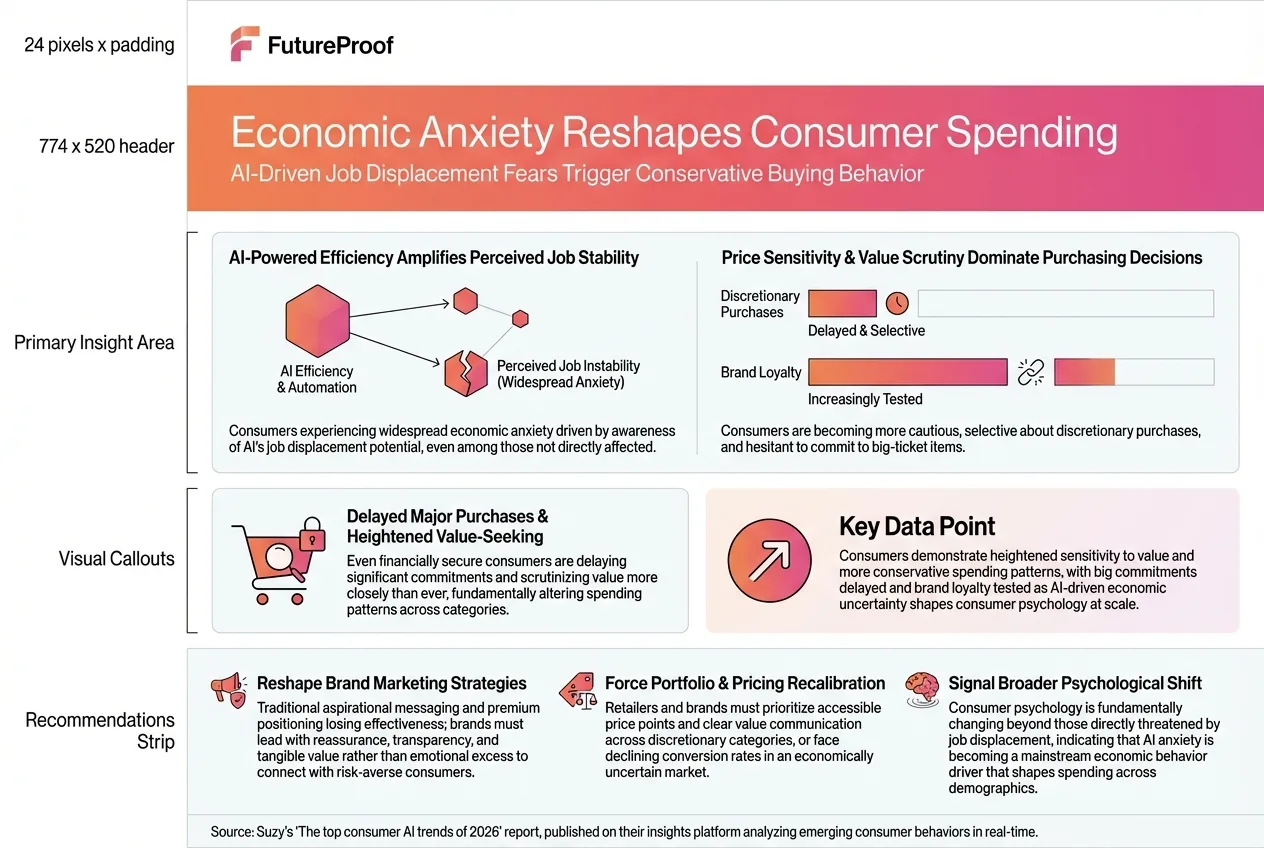
The economic landscape is undergoing a profound, yet often subtle, transformation, driven by an undercurrent of anxiety that is steadily reshaping consumer behavior. What began as whispers in tech forums and academic papers about the future of work has now permeated the collective consciousness, leading to a palpable shift in how individuals perceive financial security and make purchasing decisions. This isn't merely a fleeting market fluctuation; it represents a deep-seated psychological recalibration prompted by the burgeoning awareness of AI-driven job displacement. Even those whose livelihoods are not immediately threatened by automation are exhibiting increased caution, heightened price sensitivity, and a marked reluctance to commit to significant expenditures.
The ripple effects of this growing unease are already being felt acutely across industries. Brands that once thrived on aspirational messaging are discovering its diminishing appeal. The allure of luxury, status, or future promises is losing traction against a backdrop of uncertainty, as shoppers increasingly demand reassurance, transparency, and demonstrably clear value for every dollar spent. Big-ticket items, from homes to vehicles to premium electronics, are frequently being delayed or reconsidered. Discretionary spending, once a relatively fluid category, is now under tighter scrutiny, with every non-essential purchase subjected to a more rigorous cost-benefit analysis. Consequently, long-standing brand loyalty, often built on emotional connection and perceived prestige, is being tested as consumers prioritize practicality and economic prudence above all else. This evolution points to a broader psychological shift in how individuals perceive risk and navigate financial decisions in an increasingly AI-centric world. Companies that proactively recalibrate their pricing strategies, refine their value communication, and strategically adapt their product portfolios are the ones best positioned to not only weather this shift but to thrive as this new consumer mindset accelerates. The insights from Suzy’s "The Top Consumer AI Trends of 2026 Report" underscore this urgency, revealing significantly more conservative spending patterns and a heightened value sensitivity permeating consumer decision-making at scale, driven primarily by AI-related economic uncertainty.
The specter of AI-driven job displacement, while not universally manifested as immediate job loss, has become a pervasive psychological force. It’s no longer a distant futuristic concept but a tangible concern influencing the collective consciousness. This anxiety is multifaceted, encompassing not just the direct threat of one’s own job being automated, but also the broader implications for economic stability, the competitiveness of future generations, and the very structure of society. This pervasive sense of precarity, even if subconscious, subtly rewires consumer thinking. Individuals find themselves asking: "What if?" more often. What if my industry is next? What if my skills become obsolete? What if a recession, exacerbated by technological unemployment, hits? This constant, low-level hum of uncertainty encourages a defensive posture towards personal finances. Consumers, regardless of their current economic standing, begin to internalize a need to build a larger financial buffer, to save more, and to spend less impulsively. This "contagion effect" of anxiety means that even financially secure households are adopting more conservative habits, driven not by immediate necessity but by a proactive preparation for potential future instability. The Suzy report highlights this precisely, demonstrating a widespread trend toward more conservative spending across demographics, directly linked to this underlying AI-related economic uncertainty. This isn't just about fear; it’s about a rational re-evaluation of risk in a rapidly changing world. The perceived safety net of traditional career paths and stable industries is fraying, leading to a fundamental re-prioritization of security over indulgence.
For decades, marketing departments have leveraged aspiration as a powerful driver of consumer behavior. Narratives around luxury, status, self-improvement, and future success have fueled countless purchases, from fashion to education to travel. However, in an era defined by economic anxiety and the looming shadow of AI job displacement, this traditional aspirational messaging is rapidly losing its luster. Consumers are no longer as receptive to visions of a brighter, more affluent future when their present feels increasingly precarious. The emotional resonance of "keeping up with the Joneses" or "treating yourself" is significantly diminished when the underlying fear is one of economic insecurity. Instead, a new set of demands has emerged: reassurance, transparency, and a clear articulation of tangible value. Shoppers want to know precisely what problem a product solves, how it will save them money or time in the long run, and how durable or adaptable it is. Generic promises of happiness or abstract concepts of "elevated living" fall flat. Brands selling high-end fashion, exotic experiential travel packages, or cutting-edge gadgets without a clear, defensible value proposition beyond novelty are finding themselves struggling. The conversation has shifted from "what can this brand make me feel?" to "what can this brand do for me, concretely, in a world that feels increasingly uncertain?" Marketing claims are now subjected to intense scrutiny, with consumers performing their own research to verify true value, longevity, and necessity before parting with their hard-earned money. Trust is no longer a given; it must be meticulously earned through authentic communication and a demonstrable commitment to consumer well-being.
The impact of this behavioral shift is most visible in the realm of major purchases and discretionary spending. Big-ticket items, which often represent significant financial commitments, are now subject to extensive delays or outright postponement. The decision to buy a new car, invest in a home renovation, or upgrade to the latest smart appliance is no longer solely driven by desire or immediate need; it is filtered through an additional layer of economic prudence. Consumers are adopting a "wait and see" mentality, preferring to defer large expenditures until there is greater clarity regarding their financial future and the broader economic outlook. This caution extends beyond personal finance to even major corporate purchases, reflecting a similar institutional anxiety about long-term investment in an unpredictable market.
Parallel to this, discretionary spending—encompassing everything from dining out and entertainment to non-essential gadgets and impulse buys—is under an unprecedented level of scrutiny. That spontaneous weekend getaway, the extra designer handbag, or the latest tech accessory is no longer an easy decision. Every non-essential purchase is now weighed against potential future needs, often justified only if it offers a clear, long-term benefit, demonstrable savings, or significant utility that transcends mere momentary gratification. This marks a significant departure from an era where easy credit and a culture of immediate gratification often fueled impulse buying. Now, the shift is towards planned, justified purchases, where every item must earn its place in the budget. This heightened conscientiousness inevitably puts pressure on brand loyalty. Where consumers once might have stuck with a familiar brand due to habit or perceived quality, they are now more willing than ever to explore alternatives, switch providers, or opt for generic brands if a clear value proposition, better price point, or more compelling long-term benefit presents itself. The emotional bonds to brands are weakening as rational, economic considerations take precedence.
This isn't merely a temporary reaction to a fleeting economic downturn; it signifies a much deeper, more fundamental psychological shift in how consumers perceive risk and make decisions in the burgeoning AI era. At its core, this change can be understood through the lens of Maslow's hierarchy of needs. For many, the base levels of safety and security, which encompass financial stability and future predictability, are once again becoming paramount. Where previous generations might have felt a reasonable degree of certainty about their career progression and retirement prospects, the advent of AI has introduced a new layer of systemic risk. The traditional markers of job security are eroding, and the very concept of a stable career path is being redefined by automation and technological disruption. This uncertainty forces individuals to recalibrate their internal "acceptable risk" thresholds for spending. What was once considered a reasonable indulgence or a standard investment in quality of life is now re-evaluated through the lens of potential future scarcity. Consumers are asking themselves: "Is this purchase genuinely necessary, or could that money be better allocated to building a stronger financial buffer against an unknown future?"
This psychological transformation is characterized by a few key elements. Firstly, there's a heightened sense of future anxiety. The rapid pace of AI development creates a feeling of being on the precipice of significant, unpredictable change. Secondly, there's a profound need for control. In a world where external forces like AI seem increasingly dominant, consumers seek to regain a sense of agency through meticulous financial planning and cautious spending. Thirdly, there's a redefinition of value. Value is no longer just about price or brand prestige; it's deeply intertwined with durability, repairability, versatility, and the potential for long-term utility or cost savings. Brands that fail to acknowledge this profound psychological shift will struggle to connect with an increasingly discerning and risk-averse consumer base. Understanding this deep-seated change is the first step toward building resilient business strategies for the AI era.
To navigate this accelerating shift successfully, companies must proactively recalibrate their core strategies across pricing, value communication, and product portfolios. Ignoring these fundamental changes risks irrelevance in a market increasingly dominated by cautious, value-seeking consumers.
Pricing Strategies: The era of premium pricing based solely on brand perception is waning. Brands need to re-evaluate their pricing models to align with heightened price sensitivity and the new definition of value. This might involve:
- Value-Based Pricing: Clearly linking price to the tangible benefits a product or service provides, focusing on cost savings, efficiency, or longevity.
- Tiered Offerings: Providing a range of options that cater to different budgets, ensuring there's an accessible entry point while still offering premium features for those willing to pay. This allows consumers to choose the level of investment that aligns with their current comfort level.
- Subscription Models Focused on Saving: Positioning subscriptions not just as convenience, but as a mechanism for predictable savings or guaranteed long-term value, such as maintenance packages, bulk discounts over time, or access to essential services.
- Transparency in Cost: Breaking down costs to demonstrate fairness and value, particularly for complex products or services, helps build trust and justify the price point.
Value Communication: Traditional aspirational narratives are ineffective. The new imperative is to communicate value with unparalleled clarity, honesty, and empathy.
- Articulate Tangible Benefits: Instead of vague promises, brands must explicitly state how their product solves a problem, saves time, reduces future costs, or contributes to long-term well-being. Focus on concrete outcomes, not abstract ideals.
- Highlight Cost-Per-Use and Longevity: Emphasize the long-term economic sense of a purchase. A more expensive, durable item can be positioned as a wiser investment over cheaper, disposable alternatives by focusing on its extended lifespan and reduced replacement frequency.
- Problem-Solving Focus: Position products as solutions to the specific anxieties consumers face. For example, a home security system isn't just about safety; it's about peace of mind in an uncertain world. An educational course isn't just about learning; it's about future-proofing one's career against AI displacement.
- Authenticity and Reassurance: Messaging should be empathetic, acknowledging consumer concerns without being alarmist. Brands can build trust by offering solutions that genuinely support consumers in navigating these uncertain times.
Product Portfolios: A critical review of offerings is essential to align with evolving consumer priorities.
- Focus on Essentials and Multi-Purpose Items: Products that serve multiple functions or are considered fundamental necessities will gain traction. Consumers are looking for versatility and utility to maximize every purchase.
- Prioritize Durability and Repairability: The "buy once, buy well" mentality is returning. Products designed for longevity and easy repair reduce waste and the perceived future cost of ownership, appealing strongly to value-conscious buyers.
- Embrace Sustainability as Long-Term Value: Sustainability is no longer just an ethical choice; it's an economic one. Products that offer energy savings, reduced environmental impact (and thus potential future regulatory costs), or are part of a circular economy model resonate as smart, long-term investments.
- Innovation Towards Practicality: New product development should prioritize innovations that offer genuine, practical improvements to daily life, enhance efficiency, or provide clear economic advantages, rather than simply novelty or incremental upgrades.
Transparency and Trust: Beyond pricing and products, the very ethos of a brand needs to reflect this shift. Open communication about business practices, ethical AI use within the company, and robust data privacy measures will be crucial in building the deep trust that today's anxious consumer demands. Brands that demonstrate an understanding of, and a proactive approach to, the challenges of the AI era will earn loyalty. Customer engagement strategies should also evolve, focusing on building communities, fostering genuine empathy, and truly understanding the pain points and aspirations of consumers in this new landscape.
This psychological transformation in consumer behavior is not a temporary blip; it reflects a foundational shift that will only accelerate as AI continues its integration into our economy and society. The insights from reports like Suzy's are not just warnings but strategic blueprints for the future. Brands that proactively engage with this new reality, recalibrating their pricing, refining their value communication, and strategically adapting their product portfolios now, will be far better positioned for resilience and growth. The opportunity lies in moving beyond outdated aspirational narratives to become true partners in economic stability, offering reassurance, transparent value, and practical solutions to consumers navigating an increasingly complex and uncertain world. The future belongs to those who adapt with empathy, foresight, and a profound understanding of the evolving human psyche in the AI era.


