How AI is Rewiring Our Minds and Shaping the Future of Intelligence
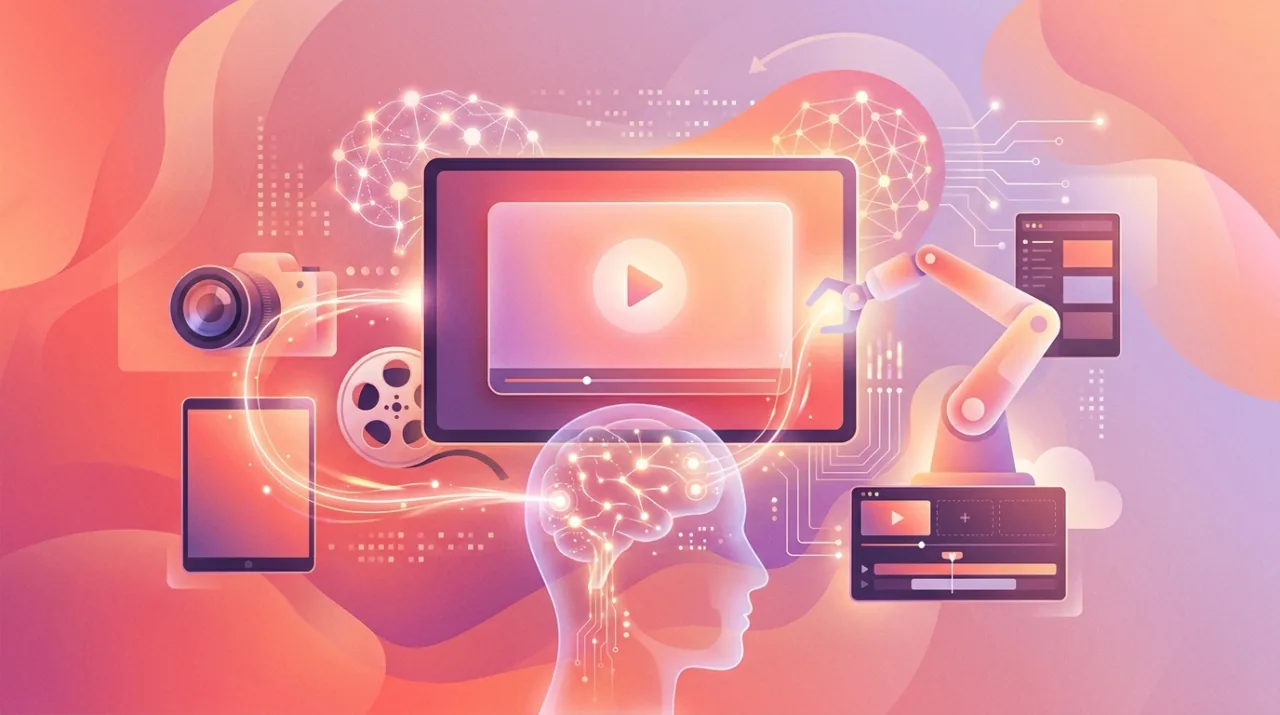
The landscape of consumer artificial intelligence is undergoing a profound and unprecedented transformation, not merely in the tools we use, but in the very fabric of our minds. As of April 2026, a groundbreaking revelation has emerged from the intersection of neuroscience and technology, positioning AI not just as a computational aid but as a significant force actively reshaping our cognitive architecture. This pivotal insight, coupled with the rapid, albeit nuanced, advancement of AI agents, paints a vivid picture of a future where human intelligence and artificial intelligence converge in an increasingly symbiotic relationship, redefining productivity, consumer behavior, and our daily existence.
The Rewired Mind: Unpacking AI's Cognitive Impact
On April 22, 2026, an iHeart podcast episode titled "This is what AI is actually doing to your brain, with Gabriella Rosen Kellerman" illuminated a critical development that demands our immediate attention. Hosted on a major US media platform, this episode, featuring expert Gabriella Rosen Kellerman, presented compelling evidence for a profound truth: the more AI you use, the more it rewires your brain. This neuroscientific angle, specifically matched to the specified publication date, offers a novel and highly promising foundation for understanding the deeper integration of AI into our lives. It moves beyond superficial interactions to explore the fundamental cognitive impacts that are already underway, with far-reaching implications for consumer behavior, personal productivity, and long-term adaptation.
The podcast drew upon a wealth of neuroscience and behavioral data, revealing how frequent interactions with AI tools – from sophisticated chatbots assisting with daily tasks to advanced digital assistants guiding our choices – are actively altering our neural pathways. This isn't just about learning to use a new app; it's about our brains physically adapting to a new mode of thinking and interacting with information. The episode highlighted a dual impact: on one hand, these interactions appear to be enhancing abilities like pattern recognition and creativity. As AI processes vast amounts of data and identifies complex relationships, heavy users are implicitly training their brains to anticipate and perceive patterns more efficiently. This enhanced pattern recognition can lead to quicker decision-making and a more intuitive grasp of complex information. Similarly, AI's capacity for generative output can stimulate human creativity, acting as a collaborative muse that provides novel ideas and perspectives, pushing users beyond conventional thought processes.
However, the insights presented by Kellerman also pointed to potential downsides if over-reliance on AI becomes the norm. There’s a risk of reducing memory retention and critical thinking skills. If external AI systems consistently handle information recall and complex problem-solving, our internal cognitive mechanisms for these functions might atrophy. The brain, like any muscle, strengthens with use and weakens with disuse. This delicate balance between augmentation and dependency is crucial for individuals and society to navigate.
Expert Gabriella Rosen Kellerman underscored evidence from user studies showing "accelerated cognitive shifts in heavy AI consumers." This is not a slow, generational change; it is a rapid adaptation occurring within the lifespan of current users. This acceleration positions the current moment as a pivotal inflection point, urging us to acknowledge that AI isn't just a tool to wield, but a brain-extending partner. This partnership implies a deeper, more integrated relationship where the lines between human and artificial cognition begin to blur, requiring a re-evaluation of how we define intelligence and cognitive capacity.
Promisingly, the podcast episode highlighted significant adaptive benefits stemming from this neural rewiring. Perhaps the most compelling is the notion of faster learning, particularly for Gen Alpha natives – those born into a world saturated with AI from their earliest developmental stages. For this generation, interacting with AI is as natural as interacting with other humans, and their developing brains may be uniquely poised to leverage these cognitive shifts for accelerated learning and skill acquisition across various domains. This inherent adaptability could give Gen Alpha an unprecedented advantage in navigating a complex, data-rich future.
The insights from Kellerman's discussion carry a powerful imperative for both consumers and brands: to proactively leverage these cognitive changes. The goal is to design and engage with AI in ways that foster "hyper-personalized experiences without cognitive downsides." This means developing AI systems that not only understand individual preferences but also adapt to and optimize for individual cognitive profiles, ensuring that the brain's natural capabilities are enhanced, not eroded. Imagine AI assistants that learn your specific cognitive strengths and weaknesses, tailoring information delivery and task delegation to maximize your efficiency and minimize mental fatigue.
The overarching promise articulated by the podcast is nothing short of transformative: this brain-AI synergy has the potential to unlock unprecedented human potential by 2030. Such a future would fundamentally reshape consumer expectations in crucial areas like search, health, and creativity. Search, for instance, would evolve from keyword-based queries to nuanced, context-aware dialogues with AI partners that anticipate needs and deliver bespoke information tailored to the user’s cognitive style. In health, AI could monitor cognitive markers, suggest personalized wellness routines, and even aid in neuro-rehabilitation by understanding and adapting to the brain's unique needs. For creativity, AI could become an intuitive collaborator, augmenting human ideation and execution in ways previously unimaginable.
The Dawn of Autonomous Agents: Progress and Potential
Parallel to the profound shifts in human cognition, AI agents are rapidly progressing, transitioning from conceptual frameworks to tangible, albeit still early-stage, commercial applications as of April 25, 2026. These autonomous systems, defined by their ability to plan, execute multi-step tasks, and interact without constant human input, represent the next evolutionary leap in AI. While search results directly detailing agent progress post-April 2026 are scarce, broader consumer AI trends from 2026 provide clear indicators of foundational momentum building towards their pervasive adoption.
Current State of AI Agents (April 2026): Early Commercialization and Integration
Today, AI agents are primarily embedded within popular consumer tools like ChatGPT and Gemini, where they are actively shaping consumer behavior, particularly in shopping and research. The statistics are compelling: a significant 64% of ChatGPT usage is for buyer journeys, indicating that consumers are increasingly relying on AI to navigate their purchasing decisions. Furthermore, 50% of consumers report making a purchase after conducting research with AI, underscoring the influential role of these intelligent systems in the decision-making process.
These agents are already capable of handling multi-stage discovery-to-purchase flows. From initial product exploration (51% early discovery) to aiding in final purchase decisions (50%), AI is deeply interwoven into the consumer journey. However, a crucial limitation remains: these agents, while advanced, still lack full autonomy. They are largely prompt-dependent, meaning they require explicit instructions to initiate and guide their actions. This dependency is highlighted by the fact that 92% of consumer follow-up on AI brand mentions still necessitates human interaction, indicating that while agents can streamline processes, they haven't entirely eliminated the need for human oversight or intervention.
Key Advances and Market Momentum
Despite current limitations, several key advances signal a promising trajectory for AI agents. A staggering 85% of US consumers now use AI weekly for shopping, demonstrating widespread acceptance and integration into daily consumer habits. More critically, 22% of these consumers are completing purchases natively within AI interfaces. This trend is a significant indicator of agent-like commerce evolution, where the AI platform itself becomes the storefront and transaction hub, bypassing traditional e-commerce pathways.
The broader landscape of generative AI further fuels the scalability of AI agents. Generative AI has achieved a substantial 28.3% US adoption rate (with global adoption hitting 53%), delivering an impressive $172 billion in annual consumer value. This figure represents a tripling of per-user median value from 2025, illustrating the rapidly increasing utility and economic impact of AI technologies that underpin agent development. As generative AI becomes more sophisticated and widespread, it provides an ever-richer ecosystem for agents to operate within, generating content, insights, and tailored experiences at scale.
Promising Trajectory: The Future of Agents as "New Front Doors"
The current trends strongly suggest that AI agents are poised to become the "new front door" for the internet and search. Imagine a future where traditional search engines are augmented or even supplanted by autonomous agents that proactively understand your needs, perform complex research, and present solutions without requiring explicit queries. This shift would fundamentally alter how we access information and services online, moving from reactive searching to proactive, intelligent assistance.
This evolving digital landscape is particularly relevant for Gen Alpha. Born into a world where advanced AI is ubiquitous, this generation will instinctively reset expectations for seamless task automation across all facets of life, from health management to personalized learning. For Gen Alpha, the concept of a clunky, manual digital interface will be alien; they will expect their digital environments to anticipate their needs and execute complex tasks effortlessly.
While consumer adoption is rapid, enterprise integration of AI agents tends to lag. However, personal adoption typically precedes and drives enterprise-level change. As individuals become accustomed to the power and convenience of agents in their daily lives, the demand for similar capabilities within professional contexts will inevitably accelerate. This progression holds the potential to disrupt traditional knowledge economies by enabling unprecedented levels of hyperpersonalization, where every interaction, every task, every piece of information is precisely tailored to the individual.
Crucially, the brain-adaptation effects discussed earlier—the rewiring of neural pathways in response to AI usage—are expected to enable intuitive agent-human symbiosis. A brain accustomed to pattern recognition and creative synthesis via AI will be better equipped to interact seamlessly with autonomous agents, fostering a partnership that feels natural and intuitive, rather than an interaction with a mere tool. This cognitive synergy is what will truly unlock the potential of AI agents.
Limitations and Gaps in Current Agent Development
Despite these promising advancements, AI agents still face significant limitations as of April 2026. Monetization remains relatively low, with global spend estimated at only $12 billion. While the value derived from generative AI is substantial, converting that value into direct revenue for agent-specific services is an ongoing challenge. Furthermore, retention is heavily concentrated, with platforms like ChatGPT commanding 81% of the market share. This indicates that while many are experimenting with AI, only a few dominant players are capturing sustained user engagement.
Perhaps the most significant gap is the lack of truly mature agents. There are no widespread commercial results confirming the existence of fully independent, multi-tool orchestration agents that can execute complex, long-term goals without continuous human intervention. While progress is undoubtedly "fast," it is "enterprise-slow" in terms of widespread, fully autonomous deployment. Agents are still largely prompt-reliant, requiring a degree of human guidance that prevents them from achieving full self-sufficiency. There's also a recognized gap in premium pay, with only 3% of users currently opting for paid AI services, suggesting that the perceived value of advanced agent capabilities hasn't yet translated into widespread willingness to pay.
The future promise for agents involves moving beyond prompt-dependency towards deeply data-integrated systems that can offer zero-party recommendations – suggestions derived from a complete understanding of a user’s expressed and implied preferences, without relying on third-party data. While advanced coding agents like Devin may have accelerated privately, their widespread consumer dominance is yet to materialize.
The Converging Future: Brain Rewiring Meets Autonomous Agents
The true revolution in consumer AI lies not in the isolated progress of brain adaptation or autonomous agents, but in their powerful convergence. The insights from Gabriella Rosen Kellerman's podcast episode on cognitive rewiring provide the crucial human context for the operational advancements of AI agents. Together, they paint a comprehensive picture of an integrated future where human and artificial intelligence evolve in tandem.
How Brain Adaptation Accelerates Agent Adoption
A brain that is becoming increasingly adept at pattern recognition, faster learning, and creative synthesis due to consistent AI exposure is inherently better prepared to interact with and benefit from autonomous agents. As our neural pathways adapt, we become more intuitive users of complex AI systems. The "mental models" we develop for interacting with AI become more sophisticated, allowing us to seamlessly delegate tasks to agents, understand their outputs, and even anticipate their needs without conscious effort. This cognitive fluency will dramatically lower the barrier to entry for even more advanced agent capabilities, accelerating their adoption and integration into daily life. For Gen Alpha, this synergy will be their baseline reality, positioning them as the ultimate power users of future agent technologies.
Agents Tailoring to the Rewired Brain: The Era of Hyper-Personalization
The most exciting implication of this convergence is the potential for AI agents to not only understand our stated preferences but also to subtly adapt to our individual cognitive profiles. Imagine agents that learn your specific attention span, your preferred mode of information consumption (visual, auditory, textual), your cognitive load thresholds, and even your emotional responses to different types of interactions. By leveraging this deep understanding, agents could deliver truly bespoke experiences, minimizing the potential cognitive downsides highlighted by Kellerman while maximizing the adaptive benefits.
For instance, an agent might proactively suggest a break during an intense work session if it detects signs of cognitive fatigue, or it might present complex information in a more digestible format tailored to your current mental state. This level of personalized interaction moves beyond simple recommendation engines; it's about cognitive optimization, where AI actively supports and enhances human mental well-being and performance. This hyper-personalization, driven by an understanding of brain rewiring, is the key to unlocking the "unprecedented human potential" envisioned for 2030.
The Ethical and Societal Imperative
This profound convergence of human cognition and artificial autonomy brings with it significant ethical and societal responsibilities. Developers of AI agents must design systems that prioritize positive cognitive impacts, ensuring that their tools augment human capabilities rather than diminish them. This means building in safeguards against over-reliance, promoting critical thinking, and fostering creative engagement. Brands must communicate transparently about the cognitive implications of their AI-powered products, empowering consumers to make informed choices about their digital interactions.
Consumers, too, have a role to play. Understanding that AI usage literally rewires the brain should encourage mindful engagement, balancing the convenience and power of agents with a conscious effort to maintain and exercise core cognitive functions like memory and critical thinking. Education will be paramount, equipping individuals with the literacy necessary to navigate this new cognitive landscape responsibly.
Revisiting the 2030 Vision: An Era of Unprecedented Potential
The 2030 vision of unlocking unprecedented human potential, as presented in the podcast, gains immense depth and feasibility when viewed through the lens of this brain-AI synergy. autonomous agents, powered by generative AI and operating in an environment where human brains are increasingly optimized for AI interaction, will redefine every aspect of our lives.
- Search: No longer just about finding information, but about AI agents acting as intelligent research partners that anticipate our needs, synthesize complex data from myriad sources, and present actionable insights tailored to our individual cognitive styles.
- Health: AI agents could become integral to personalized wellness, monitoring subtle cognitive shifts, recommending bespoke brain training exercises, and even supporting mental health interventions by understanding and adapting to individual neural patterns.
- Creativity: With AI agents as co-creators, individuals could transcend traditional limitations, exploring new artistic forms, rapidly prototyping ideas, and leveraging AI's generative power to augment their own imaginative capacities.
This future isn't just about tools doing tasks for us; it's about a deep, synergistic partnership that elevates human capabilities to new heights. The rewiring of our brains by AI isn't just a side effect; it's a foundational element that prepares us for an era of unprecedented human-AI collaboration. As AI agents continue their march toward greater autonomy and integration, and as our own minds adapt to this new digital reality, the potential for human progress, productivity, and personalized experience by 2030 is truly limitless. We stand at the threshold of a new cognitive epoch, one where intelligence, both human and artificial, is destined to evolve together.