How AI Decision Partners Will Transform Confident Commerce and End the Indecision Crisis
The landscape of digital commerce is undergoing a profound transformation, subtly yet fundamentally reshaping the very essence of the customer journey. For years, the prevailing wisdom in e-commerce optimization centered around the relentless pursuit of frictionless experiences. Retailers poured resources into streamlining checkout flows, optimizing page load times, and simplifying navigation, all in an effort to eliminate every conceivable barrier between a potential customer and a completed purchase. The enemy was perceived to be operational friction – a slow website, a convoluted payment process, an obscure return policy. However, new, compelling data is revealing a far more insidious and pervasive challenge: indecision.
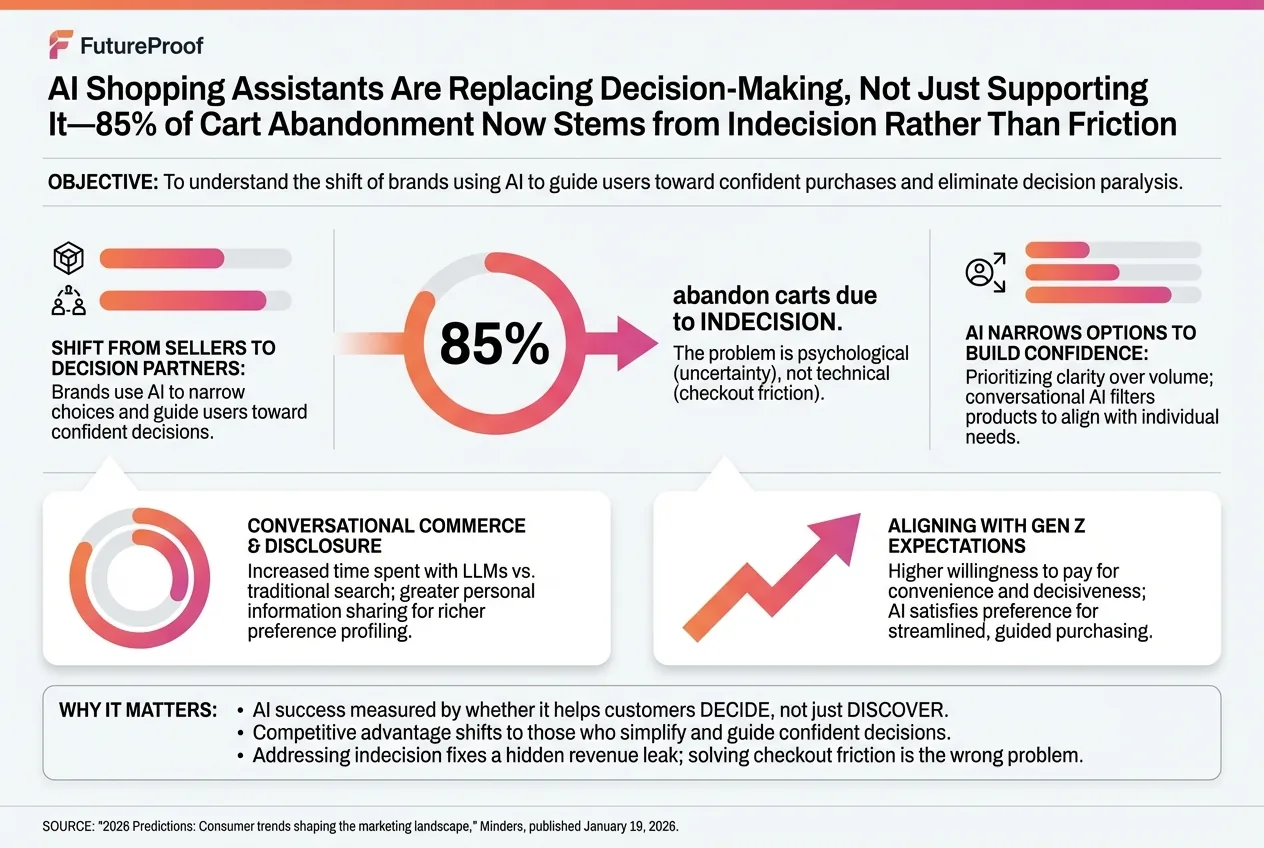
According to the insightful "2026 Predictions: Consumer trends shaping the marketing landscape" report from Minders, released on January 19, 2026, an astonishing 85% of cart abandonment now stems directly from indecision, not from technical hurdles or logistical frustrations. This critical data point fundamentally shifts the battleground for e-commerce success. The challenge is no longer primarily about payment flow or page speed; it is about cultivating confidence. In this new paradigm, AI shopping assistants are no longer just recommendation engines; they are evolving into true decision partners, guiding consumers through complexity with clarity and conviction.
The Indecision Epidemic: Unpacking the 85% Abandonment Crisis
The Minders statistic serves as a stark wake-up call for every digital retailer. Eighty-five percent of potential sales evaporating due to a lack of conviction represents an enormous untapped opportunity and a significant drain on marketing investments. Why are consumers increasingly plagued by indecision? The reasons are multifaceted and deeply rooted in the very success of e-commerce itself. The proliferation of choices, while ostensibly a benefit, often leads to analysis paralysis. Consumers are overwhelmed by an ocean of options, making it difficult to differentiate between products, weigh pros and cons, and ultimately commit to a single purchase.
Consider the modern online shopping experience: a simple search for "running shoes" can yield thousands of results, each with varying features, brands, prices, and reviews. Deciding among them requires significant cognitive effort, comparing specifications, reading countless opinions, and grappling with the fear of making the "wrong" choice. This cognitive load, combined with the sheer volume of information and the pressure to find the "perfect" item, becomes a formidable psychological barrier. Traditional e-commerce tools, designed to present more options and clearer paths to checkout, inadvertently exacerbate this problem by failing to address the underlying psychological burden of choice overload. The shift from "I can't pay" to "I don't know what to buy" demands a radical re-evaluation of retail strategy.
Beyond Recommendations: AI's Evolution to True Decision Partnership
For years, AI's role in e-commerce was predominantly confined to recommendation engines. These systems, powered by collaborative filtering and content-based algorithms, excelled at suggesting "you might also like" items based on past purchases, browsing history, or the behavior of similar users. While valuable for discovery and increasing average order value, these tools largely operate on a surface level, presenting more options rather than helping the customer navigate the inherent complexity of those options. They are excellent at surfacing relevant products but fall short when the consumer needs guidance to differentiate, prioritize, and ultimately, decide.
The evolution to a "decision partner" signifies a far deeper, more empathetic engagement with the shopper. It's about AI moving beyond simple pattern matching to truly understanding context, intent, and the unspoken anxieties that fuel indecision. This transformation is enabled by the advancements in conversational AI, natural language processing (NLP), and sophisticated machine learning models that can process nuanced human input and generate intelligent, context-aware responses. This new generation of AI doesn't just show you what you've seen before; it helps you articulate what you need, even when you're struggling to do so yourself.
The Power of Context: What Conversational AI Unlocks
The key differentiator for AI as a decision partner lies in its ability to gather rich, granular context that traditional search queries or static product filters could never surface. When consumers interact with conversational AI – whether through text chat, voice assistants, or sophisticated interactive interfaces – they naturally open up, sharing details about their lifestyle, budget constraints, specific needs, usage scenarios, and even emotional drivers behind a purchase.
Imagine a shopper looking for a new smartphone. A traditional search might involve filtering by brand, price, or camera megapixels. But a conversational AI can delve deeper: "Are you an avid photographer, or do you mostly use your phone for social media?" "How important is battery life to you, considering your daily commute?" "Do you prefer a larger screen for media consumption or a more compact design for one-handed use?" "What's your typical budget, and are there any features you absolutely cannot live without?" This back-and-forth dialogue allows the AI to construct a remarkably detailed profile of the shopper's true requirements and latent preferences. This isn't just about explicit preferences; it's about uncovering the implicit drivers that truly influence a confident purchase. This contextual understanding becomes the bedrock upon which genuine decision support is built.
AI as a Navigator: Narrowing Choices and Clarifying Tradeoffs
With this enriched context, AI can then act as an intelligent navigator, transforming overwhelming choice into manageable options. The core function of a decision partner AI is to cut through the noise, presenting a curated selection of products that align precisely with the shopper's articulated and inferred needs. But it doesn't stop there. Crucially, it clarifies the inevitable tradeoffs inherent in almost every significant purchase.
For example, if a shopper is torn between two laptops, the AI can succinctly outline: "Model A offers superior graphics performance for gaming but has a shorter battery life. Model B excels in portability and extended battery duration, making it ideal for travel, but its processing power is slightly lower for intensive tasks." This level of nuanced comparison, presented clearly and concisely, directly addresses the indecision stemming from uncertainty. It helps the consumer understand the implications of each choice, weigh the pros and cons relative to their specific priorities, and confidently arrive at a decision that best suits their individual circumstances. By articulating these tradeoffs, AI empowers shoppers to make informed decisions, transforming "what if I pick the wrong one?" into "I understand the implications of each choice, and this one best fits my needs."
Guiding Shoppers to Confidence: The Psychology of Decision-Making
The ultimate goal of AI as a decision partner is to foster shopper confidence. Indecision is a psychological state characterized by doubt, anxiety, and a fear of regret. By providing clarity, context, and guided navigation, AI directly alleviates these emotional burdens. When a shopper feels understood and well-informed, their cognitive load decreases, and their sense of agency increases. They move from a state of passive browsing to active, informed decision-making.
This isn't merely about expediting a transaction; it's about creating a positive emotional experience. A purchase made with confidence is a purchase more likely to lead to satisfaction, reduced returns, and repeat business. The AI acts as a trusted advisor, a knowledgeable assistant who has the shopper's best interests at heart, rather than merely pushing products. This psychological shift is paramount. Consumers are increasingly seeking guidance and reassurance in their purchasing journey, and brands that provide this through intelligent AI will cultivate stronger, more loyal relationships.
Tangible Gains for Retailers: Higher Conversion, Reduced Abandonment
The implications of this shift for retailers are profound and directly quantifiable. The most immediate benefit is a substantial increase in conversion rates. By tackling the root cause of 85% of cart abandonment, retailers can unlock a significant portion of previously lost sales. When indecision is removed, the path to purchase becomes clear and compelling.
Beyond conversion, there are numerous other tangible gains:
- Reduced Returns: Confident purchases lead to fewer post-purchase regrets and returns, saving retailers significant operational costs.
- Improved Customer Satisfaction: Shoppers who feel supported and guided through their decision-making process are more satisfied with their purchases and their overall brand experience.
- Enhanced Brand Loyalty: Brands that simplify complex decisions become trusted partners, fostering loyalty and encouraging repeat business.
- Richer Customer Data: The conversational interactions with AI generate invaluable, deep customer insights that can inform product development, marketing strategies, and personalized future engagements.
- Increased Average Order Value (AOV): By clarifying value and ensuring customers find the right products, AI can sometimes upsell or cross-sell more effectively by highlighting complementary items that genuinely enhance the primary purchase.
In essence, investing in AI as a decision partner is not merely an operational upgrade; it's a strategic imperative that directly impacts the bottom line and strengthens customer relationships.
The New Competitive Edge: Simplifying for Confident Outcomes
In a market saturated with options, where every major retailer offers vast selections and competitive pricing, the differentiator is no longer merely selection. The competitive edge now firmly belongs to brands that simplify. It's not about having the most products; it's about enabling the most confident decisions. Brands that can transform the overwhelming into the manageable, the complex into the clear, are the ones that will win the hearts and wallets of modern consumers.
This requires a fundamental shift in mindset. Instead of pushing more products, successful retailers will focus on curating, clarifying, and guiding. Their AI tools will become an extension of their brand's commitment to customer success, helping shoppers navigate an increasingly intricate digital landscape. This simplification builds trust – a currency more valuable than ever in the digital age. Consumers are willing to pay a premium for clarity and confidence, and brands that deliver this experience through intelligent AI will stand head and shoulders above the competition.
Implementing Decision Partner AI: A Strategic Roadmap
For retailers looking to embrace this new paradigm, implementing AI as a decision partner requires a strategic, phased approach:
- Data Foundation: Robust data infrastructure is paramount. This includes comprehensive product data, customer interaction histories, and the ability to capture and process conversational data effectively.
- Conversational AI Platform: Investing in or developing a powerful conversational AI platform capable of understanding natural language, managing dialogue states, and integrating with product catalogs and CRM systems.
- Contextual Learning: Training AI models not just on product attributes but on customer queries, pain points, comparative questions, and the nuances of human decision-making. This involves leveraging machine learning to continuously improve the AI's ability to understand intent and provide relevant guidance.
- Integration & Personalization: Seamlessly integrating the AI assistant across the customer journey – from product discovery to post-purchase support. Personalization is key; the AI must remember past interactions and preferences to provide truly tailored guidance.
- Ethical Considerations: Ensuring transparency in AI interactions, safeguarding customer data, and actively monitoring for and mitigating biases in recommendations or guidance. Building trust also means being ethical.
- Continuous Optimization: AI models are not static. Regular monitoring, feedback loops, and iterative improvements based on user interactions and conversion data are crucial for sustained success.
The journey to becoming a true decision partner is ongoing, requiring commitment to technology, data, and a deep understanding of customer psychology.
The Future of Confident Commerce
The shift from recommendation tools to decision partners is not a fleeting trend but a foundational change in how e-commerce will operate. As consumers grow more accustomed to interacting with conversational AI in their daily lives, their expectations for guided and confident shopping experiences will only intensify. We can anticipate AI shopping assistants becoming even more sophisticated, capable of:
- Proactive Assistance: Anticipating needs and offering solutions before the customer even asks.
- Multi-modal Interactions: Seamlessly transitioning between text, voice, and even augmented reality to visualize products and clarify decisions.
- Hyper-personalization at Scale: Delivering a truly unique shopping experience for every individual, understanding their evolving preferences and life stages.
- Reinforcing Post-Purchase Confidence: Extending decision support beyond the sale, helping customers maximize the value of their purchases and reducing cognitive dissonance.
The competitive landscape of digital retail is no longer about offering the most choices or the fastest checkout. It's about empowering customers to make confident, informed decisions.
Conclusion: Embracing the Era of Confident Commerce
The startling statistic from Minders – 85% of cart abandonment due to indecision – is a clarion call for every e-commerce business. The era of focusing solely on checkout friction is yielding to a new imperative: building shopper confidence. AI shopping assistants, evolving from mere recommendation engines into sophisticated decision partners, are the indispensable tools for navigating this new reality.
Brands that leverage conversational AI to understand deeper context, narrow choices, clarify tradeoffs, and ultimately guide customers towards confident outcomes will be the ones that thrive. They will not only reduce abandonment and boost conversions but also cultivate stronger customer loyalty and build a reputation for genuine helpfulness. The competitive edge now belongs to simplification, not merely selection. By focusing on fostering confident decisions, retailers can transform uncertainty into opportunity, turning potential abandonment into enduring customer relationships. The future of e-commerce is not just fast and frictionless; it is confident and clear.