AI as Infrastructure: The 2026 Shift in American Consumer Life
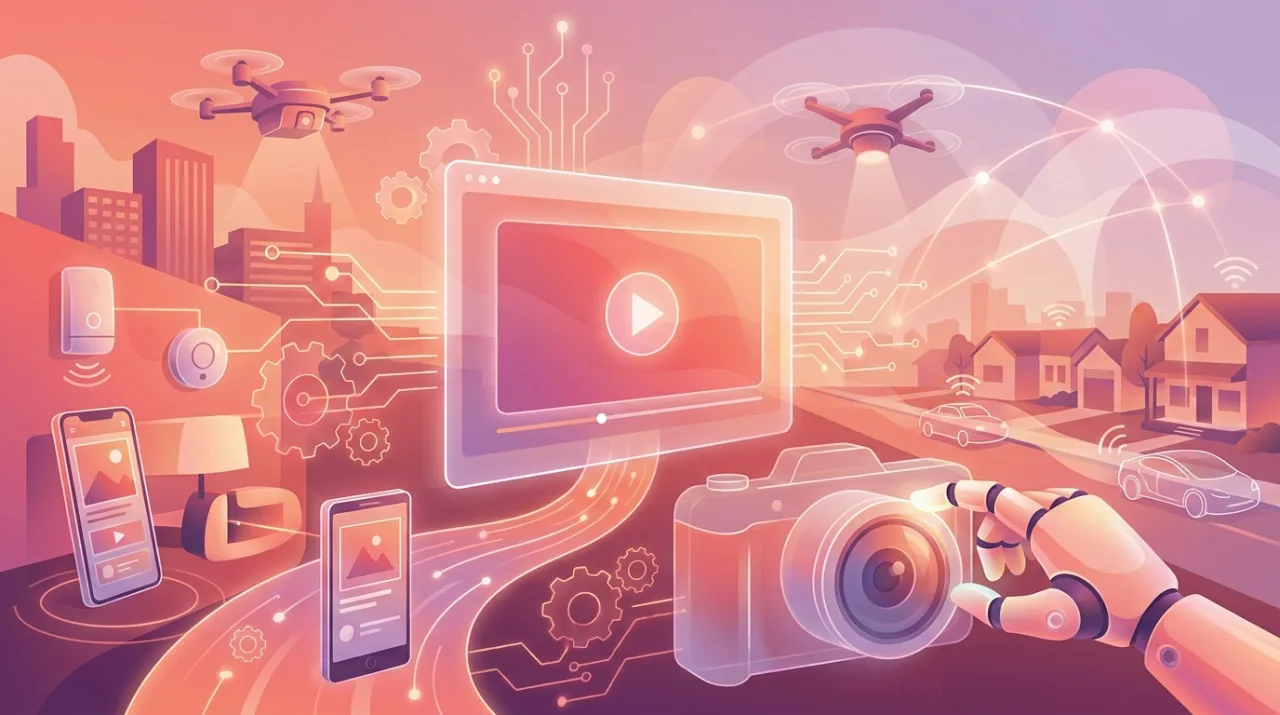
The digital landscape of American consumer life underwent a significant, yet quietly profound, transformation leading up to mid-2026. This evolution, often discussed in fragmented product announcements or speculative industry reports, was definitively mapped out by a singular, crucial piece of research: Goodwater Capital’s 2026 U.S. Consumer Survey on AI’s growing role in everyday life. Released on June 8, 2026, and covered notably by outlets such as the Las Vegas Sun, this survey didn't just report on current trends; it acted as a macroeconomic validation, framing how deeply Artificial Intelligence is penetrating mainstream American consumer behavior and, critically, what this implies for the next wave of sophisticated, consumer-grade AI agents. It underscored a shift where AI moved from a fascinating novelty to an undeniable infrastructure of daily existence, laying a robust foundation for an agent-driven future that is distinctly US-centric and grounded in real-world adoption.
1. Summary of the story: Goodwater Capital 2026 U.S. Consumer Survey on AI in everyday life
According to coverage in the Las Vegas Sun, Goodwater Capital, a venture capital firm known for its deep dives into the consumer internet and mobile sectors, released its 2026 U.S. Consumer Survey on June 8, 2026. This landmark report meticulously tracks how AI is moving from being an optional digital amenity to becoming an indispensable infrastructure in daily American life.[5] The survey's findings are not merely incremental; they reveal a categorical shift in how U.S. consumers interact with technology, providing invaluable insights for builders, investors, and policymakers alike.
AI is now a default part of US consumer routines
Perhaps the most striking revelation from the Goodwater Capital survey is that AI is no longer confined to the early adopters or the tech-savvy elite; it has firmly embedded itself into the fabric of how mainstream U.S. consumers live, work, and play. The survey vividly illustrates that AI technologies are integral to a wide array of routine activities:
- Shopping: From personalized product recommendations that anticipate needs to AI-powered chatbots that offer instant customer service and even negotiate prices, AI has streamlined and enhanced the entire purchasing journey. Consumers now expect their shopping apps to learn their preferences, present relevant deals, and simplify transactions, making AI a silent partner in retail.
- Search and Discovery: Beyond traditional keyword searches, AI-driven semantic search understands intent, provides contextually relevant results, and offers predictive assistance. Whether looking for a restaurant, troubleshooting a home appliance, or researching a topic, AI enhances the efficiency and accuracy of information retrieval, often presenting answers rather than just links.
- Entertainment: Content recommendations from streaming services, AI-curated playlists, and even the burgeoning field of AI-assisted content creation are shaping how Americans consume media. AI helps users navigate vast libraries, discover new interests, and personalize their entertainment experiences to an unprecedented degree.
- Finance and Task Management: Budgeting apps leveraging AI to track spending, identify savings opportunities, and alert users to potential fraud have become commonplace. Similarly, AI assists in scheduling appointments, managing smart home devices, and optimizing daily routines, transforming mundane chores into automated processes.
The coverage emphasizes AI’s “growing role in everyday life,” signaling that consumer AI has definitively crossed from an optional add-on to a baseline expectation in numerous categories.[5] This isn't just about using AI; it's about an unspoken assumption that intelligent systems will simplify, personalize, and enhance digital interactions. For businesses, this means AI integration is no longer a competitive advantage but a fundamental requirement for staying relevant.
Cross-channel, multi-device usage
Another critical insight from the Goodwater Capital survey is the distributed nature of AI usage. Rather than being isolated within a single app or device, AI use is now spread across phones, PCs, and a burgeoning array of connected devices.[5] This multi-platform engagement is pivotal because it indicates that consumers are experiencing AI not as a distinct tool, but as a pervasive layer—an ambient intelligence that surfaces across their digital ecosystem.
- Smartphones remain central, with AI powering everything from advanced camera features and predictive text to personal assistants and augmented reality experiences.
- Personal Computers leverage AI for productivity tools, content creation, and more sophisticated data analysis, often integrating with cloud-based AI services.
- Connected Devices are where the ambient nature of AI truly shines:
- Smart Speakers and Voice Assistants (e.g., for home automation, information retrieval, media playback).
- Wearables (e.g., health tracking, personalized fitness coaching, proactive alerts).
- Smart Home Appliances (e.g., intelligent thermostats, refrigerators that manage inventory, robotic vacuums).
- In-Car Infotainment Systems (e.g., navigation, voice control, predictive maintenance).
This cross-channel saturation means consumers perceive AI as a unified intelligence woven into the fabric of their digital lives. It surfaces seamlessly in search results, informs product recommendations, streamlines personal finance tools, and enhances countless other services. This holistic integration fosters an environment where AI is less a feature and more an underlying operating system for daily living, paving the way for AI agents that can orchestrate actions across these disparate touchpoints. The challenge and opportunity for developers lie in creating unified AI experiences that leverage this pervasiveness without becoming fragmented or overwhelming.
Growing comfort with AI-mediated decisions
The Goodwater Capital survey also highlights a significant shift in consumer psychology: an expanding subset of U.S. consumers are now increasingly willing to let AI assist with, and even mediate, crucial decisions. This includes purchase decisions, media choices, and budgeting or financial planning tasks.[5] This represents a profound evolution from earlier anxieties surrounding AI autonomy.
While the survey confirms that high-stakes autonomy (e.g., full, unmonitored financial control) remains limited and carefully guarded by most, there's a clear trend towards accepting AI as a co-pilot for economic and lifestyle decisions. This acceptance is a critical prerequisite for the successful deployment of consumer AI agents capable of handling more extensive "life admin" workloads.
Factors contributing to this growing comfort include:
- Demonstrated Value: Consumers have experienced firsthand how AI recommendations can save time, offer better deals, or introduce them to preferred content.
- Transparency and Control: Early AI systems were often black boxes. Modern AI, particularly in consumer-facing applications, increasingly offers explanations for its suggestions and allows users to override or refine decisions, building trust.
- Bounded Autonomy: The key often lies in allowing AI to operate within predefined parameters or with explicit user permission. For example, an AI might be trusted to find the best flight within a budget range, or to automatically pay bills up to a certain limit, rather than having carte blanche.
- Reduced Cognitive Load: In an increasingly complex world, consumers appreciate AI's ability to sift through vast amounts of information, analyze data, and present optimized choices, thereby reducing mental effort and decision fatigue.
This growing willingness to delegate decision-making to AI, particularly in areas affecting personal finance and consumption, signifies a maturing relationship between humans and intelligent systems. It’s no longer just about receiving information, but about trusting AI to act as an informed advisor and even, within limits, as an executor. This psychological shift is fundamental for the widespread adoption of proactive AI agents.
Demographic broadening, not just Gen Z/techies
A particularly encouraging finding for the future of consumer AI is the widening demographic appeal. Adoption is measurably broadening beyond the youngest and most tech-savvy cohorts, showing significant uptake among older and more middle-income demographics.[5] This indicates that consumer AI is not a niche phenomenon but is on a clear trajectory to become mass-market infrastructure.
- Older Demographics: AI-powered voice assistants have found significant utility among seniors for simple tasks, connecting with family, accessing information, and managing smart home environments, often overcoming digital literacy barriers through intuitive voice interfaces. Personalized health monitoring devices leveraging AI are also gaining traction.
- Middle-Income Demographics: AI tools that optimize household budgets, find deals on everyday purchases, or manage family schedules are proving invaluable. The emphasis here is on practical utility and tangible benefits that improve daily life and financial well-being.
- Geographic Spread: The survey likely indicates that AI adoption is no longer concentrated solely in major tech hubs but is spreading across suburban and rural areas, reflecting the universal appeal of convenience and efficiency.
This broadening demographic base has profound implications for the business case of generalized consumer AI agents. A larger, more diverse addressable market makes the investment in developing robust, versatile agents significantly more appealing than if usage remained concentrated in a single, narrow demographic. It necessitates that AI systems be designed for accessibility, intuitiveness, and a wide range of use cases, moving beyond specialized applications to truly general-purpose utility. This widespread acceptance transforms AI from an optional amenity into a critical component for businesses aiming for broad market penetration and sustained growth.
Why this story is especially promising for consumer AI
The Goodwater Capital 2026 U.S. Consumer Survey stands out from other industry reports because it provides macro evidence—large-scale, demographically diverse data—that U.S. consumers are genuinely ready for AI to be deeply integrated into their everyday decision-making and digital experiences.[5] Unlike product-specific announcements that highlight a single innovation, this survey offers a panoramic view of an evolving market, confirming a fundamental shift in consumer readiness.
For builders, innovators, and investors focused on the next generation of consumer AI and intelligent agents, this survey offers several compelling implications:
- A Large Addressable Market Now Exists for Proactive AI: The data confirms that there is a substantial and growing demand for AI that can act on behalf of users across critical domains like commerce, content consumption, and personal productivity. This means ventures focused on developing AI agents that can, for instance, autonomously manage subscriptions, find and book optimal travel plans, curate personalized news feeds, or streamline digital workflows, now have a validated market. The trust and comfort with AI-mediated decisions are fertile ground for agents that move beyond passive assistance to proactive action.
- Shift from "AI as Feature" to "AI as Primary Interface": The survey suggests enough trust and familiarity has been established for companies to transition from simply embedding AI as a supplementary feature within existing products to making AI the primary interface for common tasks. Imagine conversing with a sophisticated AI agent to manage your entire day, from scheduling and communications to shopping and entertainment, rather than toggling between dozens of apps. This represents a paradigm shift in user interaction and product design.
- Regulation and Industry Investment Anchored in Measured Behavior: Crucially, the survey provides tangible, actual, measured consumer behavior rather than speculative hype. This data-driven foundation is invaluable for guiding regulatory frameworks, ensuring policies are responsive to real-world adoption patterns and concerns. For industry investment, it offers a solid evidentiary basis for allocating capital to AI initiatives, reducing risk and focusing on solutions that align with demonstrated consumer needs and comfort levels. This evidence-based approach can accelerate the responsible development and deployment of advanced consumer AI.
In essence, the Goodwater Capital 2026 U.S. Consumer Survey isn't just a snapshot of the present; it's a powerful signal for the future. It validates the immense potential of consumer AI agents by proving that the ground is already fertile, and the American consumer is ready for the next evolution of intelligent assistance.
2. Progress of AI agents from today (context and trajectory)
To fully appreciate the significance of Goodwater Capital's 2026 U.S. Consumer Survey, it's essential to understand the broader context and trajectory of AI agents—systems designed to autonomously pursue user goals using tools, applications, and APIs. These agents are the next frontier, promising to transform how we interact with the digital world, moving beyond simple task automation to proactive, intelligent assistance. The progression leading up to mid-2026 has been marked by several key developments:
Enterprise and work agents are maturing first
The enterprise sector has often been the proving ground for advanced technologies, and AI agents are no exception. Microsoft’s Build 2026 announcements, for instance, described a novel “Work IQ” layer. This intelligence layer is designed to capture and understand how work happens across the sprawling ecosystem of Microsoft 365 and other integrated business systems. Critically, Work IQ is explicitly engineered as an intelligence layer for agents operating within workplace contexts.[8]
This means that in the enterprise, AI agents are rapidly moving beyond basic chatbot functionality. They are now orchestrating complex tasks across:
- Calendars: Intelligent scheduling, meeting summaries, proactive agenda setting.
- Documents: AI-powered content creation, summarization, research, and version control.
- Email: Smart inbox management, drafting responses, prioritizing communications.
- Line-of-Business Systems: Automating data entry in CRM, processing orders in ERP, managing projects in specialized software.
Enterprise agents are focused on improving productivity, automating repetitive processes, and enhancing decision-making for professionals. Their development has necessitated robust security, advanced integration capabilities, and a deep understanding of organizational workflows. The lessons learned and technologies perfected in this demanding environment—such as reliable tool use, secure data handling, and complex workflow orchestration—are directly transferable and foundational for the development of sophisticated consumer AI agents. The enterprise pushes the boundaries of agent capability, establishing best practices that will eventually trickle down to personal use cases.
Model capabilities now support complex agent behavior
The underlying power enabling the rise of AI agents comes from the dramatic advancements in foundational AI models. The Stanford 2026 AI Index, a comprehensive annual report on the state of AI, delivered a striking finding: frontier models released in 2025 already meet or exceed human baselines on PhD-level science questions, multimodal reasoning, and competition mathematics.[3] These aren't mere incremental improvements; they represent a leap in cognitive capabilities crucial for truly autonomous agents.
These advanced model capabilities are fundamental for enabling complex agent behavior because they allow for:
- Long, Multi-Step Reasoning: Agents can now break down a broad, abstract goal (e.g., "Plan a family vacation to Europe") into a series of logical, interconnected sub-tasks (e.g., research destinations, find flights, book accommodations, create itinerary, manage budget). The models can maintain context and coherence across these multiple steps, a capability essential for meaningful autonomy.
- Robust Handling of Noisy, Real-World Inputs: Unlike controlled laboratory environments, real-world data is often incomplete, ambiguous, or presented across various modalities (text, images, audio, video). Modern models can process these "noisy" inputs with greater accuracy, understanding nuances in human language, interpreting visual cues, and synthesizing information from diverse sources, making agents more adaptable and reliable.
- More Reliable Tool Use and Decision-Making: For an agent to be truly effective, it must be able to interact with external tools and APIs—booking sites, email clients, financial apps, smart home systems. Advanced models are better at understanding when to use which tool, how to formulate appropriate queries or commands for those tools, and how to interpret their outputs to make informed decisions. Their enhanced reasoning allows them to anticipate outcomes and recover from errors more gracefully.
These capabilities mean that AI agents can now tackle problems that require deep understanding, cross-domain knowledge, and adaptive execution, moving far beyond simple reactive responses. This intellectual firepower is the engine driving the potential for truly intelligent and helpful consumer agents.
Economic value to U.S. consumers is large and rising
Even before the widespread deployment of fully autonomous consumer AI agents, the economic value delivered by existing generative AI tools to U.S. consumers is substantial and growing rapidly. The same Stanford AI Index estimates this annual value at a staggering $172 billion by early 2026.[3] This figure is not speculative; it reflects the tangible benefits consumers are already deriving from AI-powered applications.
Furthermore, the report notes that the median value per user roughly tripled versus 2025.[3] This acceleration in value indicates several key trends:
- Increased Utility: Consumers are finding more ways to integrate AI into their lives to save time, money, or gain advantages.
- Improved User Experience: AI tools are becoming more intuitive, accessible, and seamlessly integrated into existing platforms, making them easier to use and more beneficial.
- Expanded Use Cases: Generative AI's versatility allows it to assist with a broader range of tasks, from drafting emails and generating creative content to optimizing travel plans and managing personal finances.
This substantial measurable surplus delivered to individuals—through enhanced productivity, better decision-making, personalized experiences, and time savings—is a powerful indicator of market readiness. It demonstrates that consumers are not just curious about AI; they are actively deriving significant, quantifiable benefits. This economic validation builds a strong case for investing in and adopting more advanced, autonomous AI agents, as the potential for even greater value creation is evident. If existing AI provides this much utility, the prospect of agents handling more complex, proactive tasks promises exponential benefits.
Marketing and commerce are shifting toward agent-centric experiences
The business world, particularly in marketing and commerce, is acutely aware of AI's transformative power. Recent 2026 marketing statistics reveal that 56% of marketers now run AI in production, and an impressive 70% name generative AI the most important consumer trend for the year.[2] This intense focus on generative AI is not just about efficiency; it's about fundamentally reshaping how businesses interact with consumers, moving towards more agent-centric experiences.
This acceleration is manifest in several key areas:
- Chat-based Shopping and Discovery: Consumers are increasingly interacting with conversational AI interfaces that effectively act as their shopping agents. These systems can understand complex queries, offer personalized product curation, provide virtual try-on experiences, and guide users through the purchase funnel, often blurring the lines between customer service and sales. This conversational interface is a direct precursor to fully autonomous shopping agents.
- Hyper-Personalized Campaigns: AI systems are enabling a level of personalization previously unimaginable. They tailor content, offers, and timing at an individual level, based on real-time behavior, past purchases, and expressed preferences. This involves dynamic pricing, proactive offers for replenishment, and highly relevant recommendations. This individualization is a crucial step towards agents that can negotiate and transact on the consumer’s behalf, understanding their unique needs and advocating for them in the marketplace. Imagine an agent that automatically monitors prices, applies coupons, and makes purchases when optimal conditions are met, all while adhering to the user's preferences.
These trends signify a major shift in the marketing and commerce landscape, where the focus is moving from broadcasting messages to engaging in highly personalized, interactive, and increasingly automated dialogues with consumers. This prepares both businesses and consumers for a future where AI agents play a central role in every commercial interaction.
Consumer expectations are aligning with agentic behavior
Synthesizing the findings of Goodwater Capital's survey with broader industry data paints a clear picture: consumer expectations are evolving rapidly to align with the capabilities and promise of AI agents. The days of simply expecting a static website or a basic search engine are fading.
- Elevated Expectations for AI-Enhanced Experiences: U.S. consumers increasingly expect AI-enhanced search, intelligent recommendations, and proactive financial guidance not as luxury features, but as table stakes.[5][3] They anticipate systems that understand their context, predict their needs, and offer personalized, timely assistance. This expectation pushes developers to integrate more sophisticated AI into every touchpoint.
- Growing Tolerance for Bounded Autonomy: Critically, there is a growing tolerance for AI systems that act within bounded autonomy—that is, systems authorized to perform specific actions within predefined constraints, rather than simply answering questions.[5] Examples include:
- Pre-authorized purchase limits: An agent might be allowed to buy airline tickets or groceries up to a certain price point without explicit approval for each transaction.
- Recurring bill optimization: An AI agent managing subscriptions, finding better deals on utilities, or negotiating lower rates for services.
- Automatic re-ordering: Smart home systems or retail services automatically re-ordering staples when supplies run low.
- Smart home automation: An agent adjusting lighting, temperature, or security settings based on learned patterns and user presence.
- Calendar management: Proactively rescheduling meetings based on conflicts or priorities, with an option for user override.
This acceptance of AI operating with limited, supervised autonomy is a monumental step. It builds trust, accustoms users to AI taking proactive steps, and paves the way for a future where consumers comfortably delegate a broader range of tasks to their personal AI agents. The challenge is to design these systems with transparent controls and clear accountability, empowering users rather than disempowering them.
From here, the likely near-term evolution of consumer AI agents is clear:
- More Cross-App Consumer Agents: We will see the emergence of sophisticated consumer agents capable of orchestrating tasks across a user's entire digital footprint. These agents will be designed to access and intelligently utilize data from your email, calendar, shopping accounts, financial dashboards, fitness trackers, and smart home devices (with explicit permissions, of course). They will not just propose actions but, within established constraints, execute actions—from buying tickets, booking appointments, and rescheduling events to canceling subscriptions and even negotiating on your behalf. Imagine a single agent that manages your travel plans end-to-end, optimizes your health regimen, or serves as a personal chief of staff for your family's daily logistics.
- Stronger Memory and Preference Modeling: The next generation of agents will feature significantly enhanced capabilities for long-term memory and sophisticated preference modeling. This means agents will remember past interactions, learn from your explicit and implicit feedback, and develop a deep understanding of your unique personality, values, and evolving needs over a lifetime. This persistent, life-long personalization will allow agents to become truly proactive, anticipating your requirements and offering highly customized assistance, rather than simply reacting to immediate prompts.
- Tighter Integration Between Enterprise and Consumer Agents: As the same individuals operate in both professional and personal spheres, the demand for continuity between their tools will grow. The lines between enterprise agents (managing work contexts) and consumer agents (managing personal life) will blur. Users will expect their work agent to seamlessly communicate with their personal agent—for instance, coordinating a work trip with personal appointments, or managing professional contacts while respecting personal boundaries. This convergence promises a truly unified digital experience, where AI intelligently bridges the often-disparate demands of work and home life, creating a more integrated and less fragmented existence.[8][3]
In this dynamic and rapidly evolving landscape, Goodwater Capital’s June 8, 2026, U.S. survey stands as a monumental landmark. It emphatically demonstrates that mainstream American consumers are not merely observing the rise of AI; they are actively living with AI as a daily companion. This widespread adoption and increasing comfort with AI-mediated decisions provide an unparalleled demand-side foundation, unequivocally signaling that the market is primed and ready for the next generation of truly consumer-grade AI agents—systems that promise to redefine convenience, productivity, and personalization for every American. The future of consumer AI is not just coming; it is already being built on a bedrock of real-world use.