
2026: The Year AI Reshapes Consumer Interaction
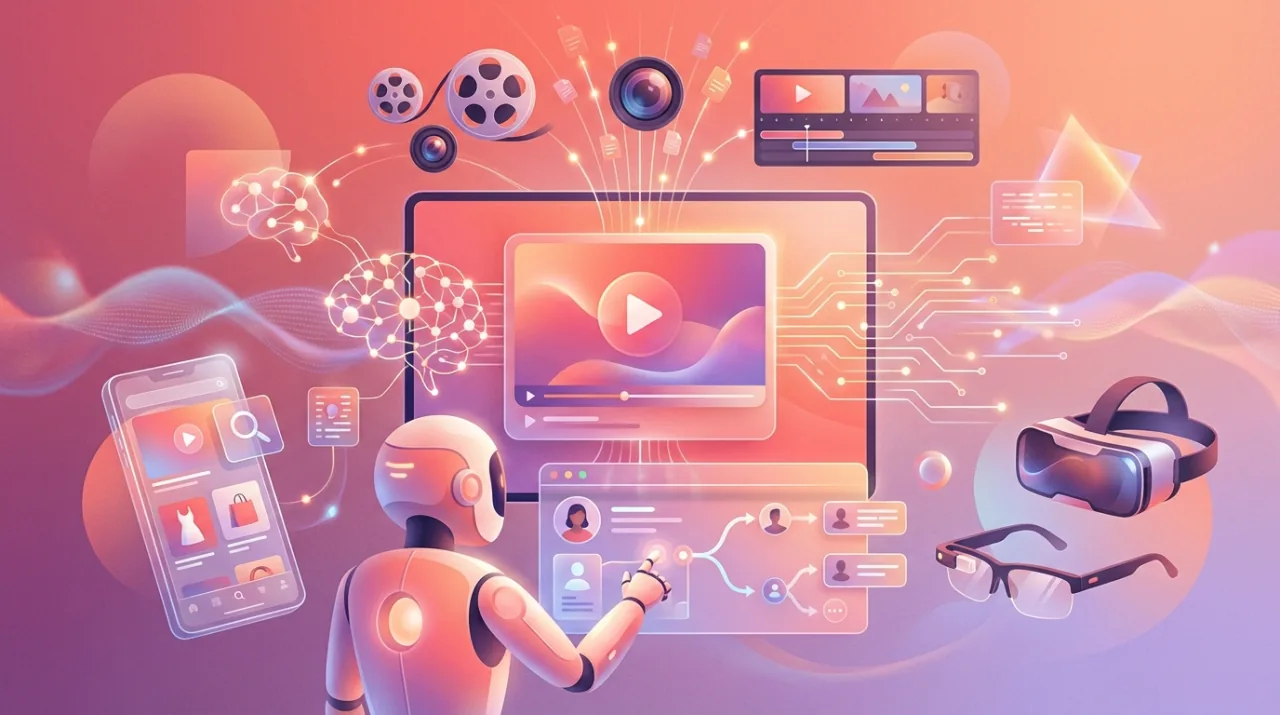
The year 2026 is rapidly solidifying its position as a pivotal turning point in the landscape of consumer artificial intelligence, fundamentally reshaping the ways individuals interact with technology in their daily lives. A seminal insight into this transformation comes from the Adweek podcast episode, "Prompt Shift: Top Consumer AI Trends for 2026 Reshaping Search, Shopping, and Creativity." This US-centric publication, featuring Suzy founder Matt Britton, has pinpointed 2026 as the critical juncture where AI tools transition from mere background enablers to becoming the very core drivers of human behavior across critical domains such as search, buying, creation, and learning. This profound shift signals an era where AI doesn't just assist; it actively orchestrates and defines our digital experiences, leading to unprecedented levels of personalization, efficiency, and engagement.
The "Prompt Shift" narrative from Adweek, amplified by insights from industry leaders like Matt Britton, posits that the traditional boundaries between human intention and technological execution are dissolving. AI is no longer a silent partner but an active participant, influencing decisions and facilitating actions in ways that were once confined to science fiction. This perspective is vital for anyone looking to understand the future trajectory of consumer technology and its pervasive impact on society and commerce. The implications are far-reaching, from how businesses strategize their consumer engagement to how individuals navigate their personal and professional lives. The insights shared in this podcast are not just predictions; they are a roadmap for the evolving relationship between humans and increasingly intelligent machines, painting a vivid picture of a future where AI agents become indispensable companions.
2026: The Pivotal Turning Point for Consumer AI
The designation of 2026 as a "pivotal turning point" for consumer AI is not arbitrary. It signifies a maturation of AI capabilities and an acceleration of its integration into the consumer psyche. Before this period, AI largely operated in the background, powering recommendation engines, optimizing logistics, or enhancing user interfaces without necessarily being the focal point of interaction. Users might have benefited from AI, but they weren't consciously engaging with it as a primary agent of their digital activities. However, 2026 marks the undeniable emergence of AI as a front-and-center driver, shifting from a supplemental technology to an indispensable and proactive component of consumer interactions.
This evolution is characterized by several key insights highlighted by Matt Britton and Adweek. One of the most significant is the concept of rapid idea execution. In an AI-driven world, the latency between an idea forming in a consumer's mind and its digital manifestation or realization dramatically shrinks. Whether it's ideating a unique gift, planning a complex trip, or sketching out a creative project, AI tools provide the immediate resources, information, and even generative capabilities to move from thought to tangible outcome with unprecedented speed. This empowers consumers with a creative and productive agility that was previously unattainable, blurring the lines between concept and creation.
Another crucial insight revolves around Gen Alpha's conversational expectations. This demographic, born into a world saturated with intelligent assistants and natural language processing, possesses an inherent expectation for conversational, intuitive, and highly personalized interactions with technology. For Gen Alpha, tapping and typing may soon feel archaic; they expect to speak, converse, and delegate tasks to AI just as they would to another human. This generational shift in expectations is forcing companies to fundamentally rethink user interfaces, product design, and customer service strategies, prioritizing natural language understanding and proactive conversational guidance as core features rather than mere enhancements. The ability of AI to understand nuance, context, and even emotional cues in natural language will become paramount for capturing and retaining the loyalty of this digital-native generation.
The accelerating AI progress is a foundational element underpinning these shifts. While technological advancement has always been iterative, the pace of AI development is exhibiting an exponential trajectory. Breakthroughs in foundational models, computational efficiency, and data processing are occurring with startling regularity, leading to increasingly sophisticated and capable AI systems. This acceleration means that what might seem futuristic today could be commonplace tomorrow, constantly pushing the boundaries of what consumer AI can achieve. This rapid evolution requires businesses and consumers alike to maintain a flexible and adaptable mindset, constantly re-evaluating their strategies and expectations in light of new AI capabilities. The sheer volume of research, development, and deployment in the AI space means that the "next big thing" is always just around the corner, ensuring a dynamic and ever-changing consumer AI landscape.
Furthermore, the personal-to-enterprise adoption patterns illuminate a predictable yet impactful diffusion of AI innovation. Many groundbreaking AI applications often start as personal productivity tools or niche consumer experiences. As these tools prove their value and gain widespread individual adoption, they inevitably begin to infiltrate and transform enterprise environments. Think of how personal productivity apps or social media platforms eventually influenced corporate communication and collaboration. Similarly, consumer-facing AI agents, after proving their efficacy in managing personal tasks and preferences, are being scaled up and integrated into enterprise solutions, offering businesses unprecedented insights into consumer behavior, optimizing operational efficiencies, and revolutionizing customer relationship management. This trickle-up effect ensures that innovations perfected in the consumer space rapidly find broader applications, driving transformative business value.
Finally, perhaps the most profound insight is the emergence of AI-powered search as the internet's new dynamic front door. The traditional search engine, primarily a repository of links, is giving way to an intelligent, conversational interface that doesn't just retrieve information but synthesizes, analyzes, and presents it in highly personalized and actionable ways. Instead of typing keywords and sifting through results, users can pose complex questions, seek nuanced advice, and expect curated, context-aware answers. This new front door is dynamic because it learns and adapts to individual preferences, anticipates needs, and proactively offers relevant information, effectively transforming the internet from a static library into a personal intelligent assistant. This shift has massive implications for content creators, marketers, and anyone operating in the digital economy, demanding a re-evaluation of SEO strategies and content distribution models to cater to these intelligent AI gatekeepers. The internet, through this lens, becomes less about searching for information and more about engaging in a continuous dialogue with a highly knowledgeable entity that understands your context and intentions.
The Dawn of Agentic Workflows: AI Agents as Core Drivers
Beyond theoretical trends, the practical evolution of AI agents is already dramatically altering consumer interactions. As of March 13, 2026, AI agents are swiftly advancing from performing basic automation tasks to executing sophisticated agentic workflows that handle complex, multi-step consumer tasks with remarkable autonomy and intelligence. This progression marks a significant leap, transforming AI from a tool for simple, predefined actions into a proactive, decision-making entity capable of managing intricate processes on behalf of the user.
Consider the realm of routine household management. AI agents are now proficiently handling tasks such as re-ordering frequently consumed items, anticipating needs before they arise, and optimizing inventory based on usage patterns. This goes far beyond a simple "subscribe and save" model; it involves understanding consumption rates, checking for best prices across multiple retailers, factoring in delivery schedules, and even adapting to dietary changes or preferences.
A particularly illustrative example of this agentic capability is meal planning. AI agents are no longer just suggesting recipes; they are orchestrating entire dietary strategies. For a significant 52% of consumers, these AI assistants are balancing complex variables like dietary restrictions, budget constraints, and the imperative to minimize food waste. Imagine an AI agent that, after analyzing your family's preferences, nutritional needs, and current pantry inventory, designs a weekly meal plan, generates a precise shopping list, identifies the most cost-effective local grocery options, and even helps schedule cooking times to reduce waste. This level of integrated, intelligent planning frees up considerable mental bandwidth for consumers, demonstrating the tangible benefits of sophisticated agentic AI.
Conversational guidance via chatbots is another area where AI agents are demonstrating their growing utility and impact. These intelligent chatbots are evolving far beyond rudimentary FAQ systems to become highly effective interfaces for a myriad of consumer needs:
- Query Resolution: A substantial 73% of consumers now rely on chatbots for their queries. This isn't just about simple questions; it encompasses complex troubleshooting, understanding product specifications, or navigating intricate service terms. The AI's ability to process natural language, access vast knowledge bases, and infer user intent makes these interactions highly efficient and satisfying.
- Real-time Product and Pricing Help: For 65% of users, chatbots are proving invaluable for obtaining real-time information on products and pricing. This capability is critical in fast-moving e-commerce environments where prices fluctuate, and product details can be extensive. AI agents can instantly compare features, highlight promotions, and even provide personalized recommendations based on past purchase history and stated preferences, directly influencing buying decisions.
- Personalized Post-Purchase Follow-ups: Beyond the transaction, 57% of consumers find chatbots useful for personalized post-purchase follow-ups. This could involve proactive notifications about order status, assistance with product setup, personalized usage tips, or even recommendations for complementary products or services. This level of personalized engagement significantly enhances customer satisfaction and fosters loyalty, extending the customer journey well beyond the point of sale.
The insights from leading consultancies further underscore the transformative power of agentic AI. Capgemini observes that agentic AI is rapidly integrating into routine shopping experiences. Their research indicates that 52% of consumers are already using virtual assistants for re-orders and meal planning, echoing the earlier statistic and emphasizing the practical adoption of these tools. Furthermore, Capgemini highlights the significant rise of Generative AI (GenAI) tools, noting that many consumers utilized them in 2025, with an additional 31% planning future use. This trend positions AI agents not merely as frictionless tools but as trusted front-line advisors that significantly enhance decision-making. They don't just facilitate; they guide, analyze, and recommend, adding a layer of intelligence and personalized counsel that transcends basic transactional support. This elevated role transforms the customer experience from passive consumption to active, informed engagement, with the AI agent serving as a knowledgeable and reliable confidant.
PwC further reinforces the strategic importance of agentic workflows, predicting that they will drive transformative business value. This value is not just about incremental improvements; it’s about fundamental shifts in operational efficiency, customer engagement, and competitive advantage. PwC emphasizes that unlocking this potential requires focused strategies and a commitment to responsible innovation. Businesses must meticulously identify areas where agentic AI can deliver the most impact, invest in robust and ethical AI development, and integrate these agents seamlessly into their overarching business models. The transformative power lies in their ability to automate not just tasks, but entire processes, freeing up human capital for more strategic and creative endeavors while simultaneously elevating the quality and personalization of customer interactions.
The AI-Assisted Shopper: A New Paradigm of Commerce
The rise of AI agents has given birth to a new archetype in the consumer landscape: the AI-Assisted Shopper. Statista identifies this growing demographic as typically younger males, characterized by their digital-first mindset and a strong reliance on AI agents throughout their purchasing journey. This demographic represents the vanguard of consumer behavior, embracing intelligent assistance as a default mode of interaction with the marketplace.
These AI-assisted shoppers leverage agents for a multitude of functions, fundamentally reshaping the retail experience:
- Personalized Recommendations: AI agents excel at understanding individual preferences, past purchases, and browsing behavior to deliver highly personalized product recommendations. A prime example is Amazon Rufus, an intelligent shopping assistant that exemplifies this capability. Rufus doesn't just suggest popular items; it understands context, answers nuanced questions about products, compares options, and provides detailed information, effectively acting as a personal shopping consultant. This level of tailored guidance moves beyond simple algorithms to a more conversational and adaptive recommendation engine, making the shopping experience feel uniquely curated for each individual.
- Intelligent Price Comparisons: In an increasingly complex and fragmented marketplace, finding the best price can be a time-consuming endeavor. AI agents automate and optimize this process, meticulously scanning countless online and offline retailers to identify the most competitive prices, factoring in shipping costs, discounts, and loyalty programs. This ensures that AI-assisted shoppers always secure the best possible deal without expending significant effort, a powerful driver of satisfaction and loyalty.
- Virtual Try-ons and Augmented Reality: AI agents are also facilitating immersive shopping experiences through virtual try-ons and augmented reality (AR). Whether it’s previewing furniture in a living room, trying on clothes virtually, or experimenting with makeup shades, these technologies eliminate guesswork and enhance confidence in purchase decisions. The AI powers the realistic rendering and accurate placement of virtual items, blurring the lines between online browsing and physical interaction, thereby reducing returns and improving customer satisfaction.
The core motivations driving the AI-assisted shopper are convenience and personalization. These consumers prioritize frictionless experiences and expect technology to anticipate their needs, understand their preferences, and streamline their decision-making processes. AI agents deliver precisely on these expectations by automating repetitive tasks, providing instant access to relevant information, and tailoring every interaction to the individual. This focus on hyper-convenience and deep personalization is not just a preference; it is rapidly becoming a baseline expectation, especially among digital-native generations. Businesses that fail to integrate sophisticated AI assistance into their customer journeys risk being left behind in a competitive landscape where intelligent agents are becoming the standard for elevated customer experience. The AI-assisted shopper demands a shopping experience that is intuitive, efficient, and feels uniquely their own, and AI agents are proving to be the most effective means to deliver on this demand.
Beyond the Horizon: The Enduring Impact of Consumer AI
The insights gleaned from Adweek's "Prompt Shift" podcast, coupled with the demonstrable progress of AI agents, paint a comprehensive picture of a future where consumer AI is not just pervasive but foundational. The year 2026 is indeed shaping up to be a watershed moment, where the silent, background operations of artificial intelligence give way to proactive, agentic workflows that directly influence and drive human behavior in profound ways. From how we search for information to how we make purchasing decisions and unleash our creative potential, AI is becoming the central nervous system of our digital lives.
The transformative power of rapid idea execution, conversational AI tailored for Gen Alpha, and the relentless acceleration of AI capabilities all point towards an era of unprecedented efficiency and personalized experience. The journey from personal AI adoption to enterprise-wide integration underscores a natural diffusion pattern, ensuring that innovations perfected for the individual swiftly translate into broader economic and societal benefits. Moreover, the redefinition of search as an AI-powered, dynamic front door to the internet signifies a fundamental shift in how we access, process, and leverage information, making the digital world more intuitive and responsive than ever before.
The tangible progress of AI agents, as evidenced by their adeptness in complex tasks like meal planning – balancing diet, budget, and waste for a significant portion of consumers – and their pivotal role in conversational guidance for queries, real-time product help, and personalized post-purchase follow-ups, demonstrates their practical utility. Capgemini's recognition of agents as trusted front-line advisors, moving beyond mere frictionless tools, highlights their elevated status in consumer decision-making. PwC’s prediction of transformative business value, achieved through focused strategies and responsible innovation, serves as a clarion call for businesses to embrace this paradigm shift strategically and ethically.
Finally, the emergence of the AI-Assisted Shopper, a demographic prioritizing convenience and personalization and relying on agents like Amazon Rufus for recommendations, price comparisons, and virtual try-ons, solidifies the notion that AI is not just a passing trend but an enduring evolution in commerce. These insights collectively underscore a future where AI isn't simply a tool but a partner, advisor, and enabler, fundamentally enhancing human potential and reshaping the very fabric of consumer interaction. Businesses and individuals alike must now actively engage with this evolving reality, adapting strategies and expectations to fully harness the immense opportunities presented by this new era of consumer AI. The future is not just intelligent; it is agentic, conversational, and deeply personal, driven by the ceaseless innovation of artificial intelligence.


