How Gen Z and Artificial Intelligence Are Rewriting the Future of Retail
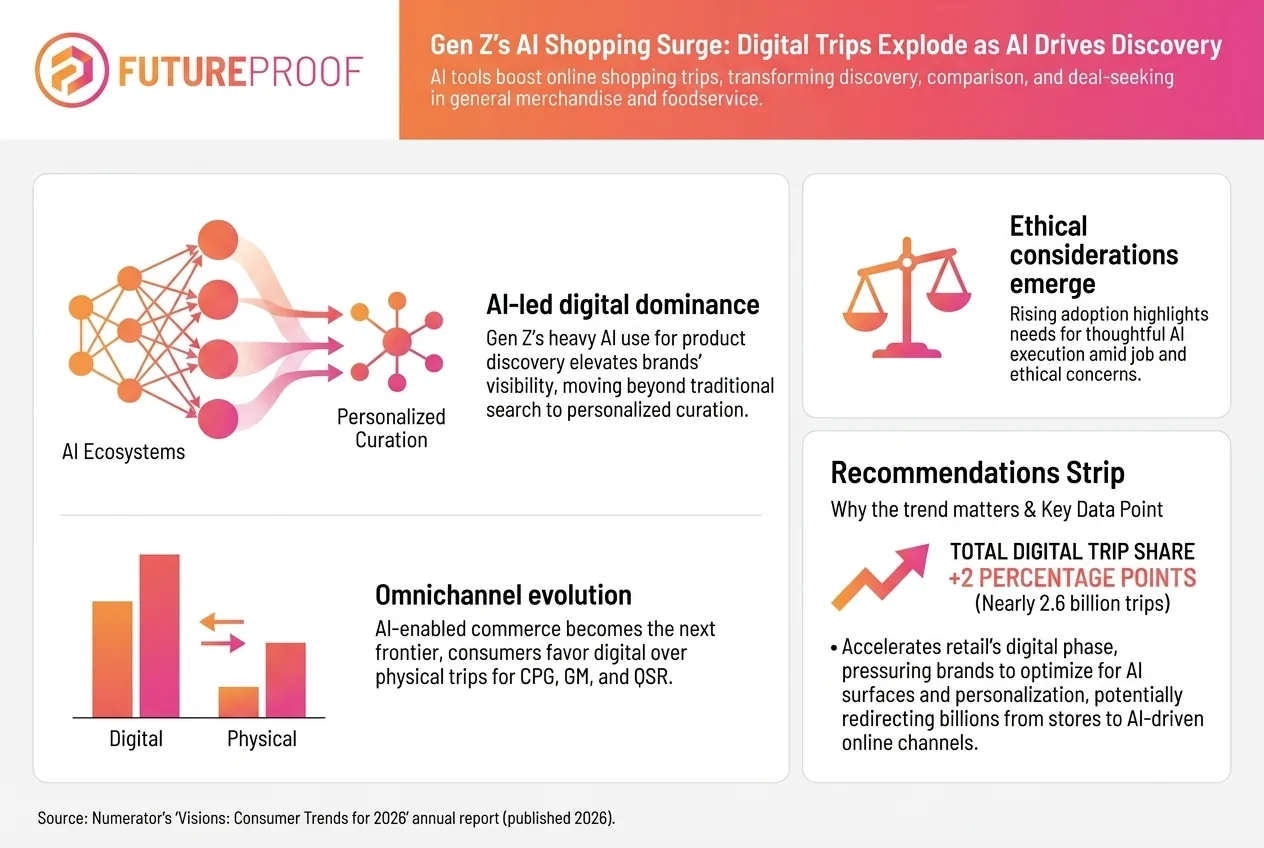
The landscape of consumer shopping is undergoing a profound and irreversible transformation, spearheaded by the digital-native sensibilities of Gen Z and amplified by the relentless innovation of artificial intelligence. This powerful confluence is fundamentally reshaping how products are discovered, compared, and ultimately purchased across the vast ecosystems of general merchandise, consumer packaged goods (CPG), and foodservice. It's a shift that moves beyond incremental change, signaling a complete recalibration of retail dynamics where traditional search paradigms are giving way to sophisticated, AI-driven curation, dictating brand visibility and consumer choice with unprecedented precision.
Gen Z, often lauded as the first truly digital generation, isn't just adapting to technological advancements; they are actively driving their adoption and setting new benchmarks for expected digital experiences. Raised with smartphones in hand and social media as a primary mode of interaction, their innate comfort with technology translates directly into their shopping habits. They demand instant gratification, hyper-personalization, and seamless, intuitive digital interfaces. For Gen Z consumers, the idea of a generic search result page feels archaic. Instead, they expect platforms to anticipate their needs, understand their evolving preferences, and present them with highly relevant options before they even explicitly articulate a query. This preference for proactive, intelligent assistance makes them the perfect demographic to accelerate the integration of AI into the shopping journey. Their engagement with AI-assisted shopping is not merely a novelty; it’s an intrinsic part of their digital lifestyle, positioning them at the forefront of this retail revolution.
At the heart of this transformation lies artificial intelligence, rapidly evolving from a backend analytical tool to a front-facing concierge for product discovery and comparison. AI is no longer a futuristic concept but an embedded reality that powers personalized recommendations, intelligent virtual assistants, and dynamic pricing algorithms. In general merchandise, AI assists shoppers by suggesting clothing sizes based on purchase history and body scans, allowing virtual try-ons of apparel and accessories, or enabling augmented reality (AR) to visualize how furniture would look in their homes. For CPG, AI-driven platforms can analyze dietary preferences, health goals, and past purchases to recommend specific brands, recipes, or even an entire week's meal plan, streamlining grocery shopping significantly. In foodservice, AI helps diners discover new restaurants, suggests menu items tailored to their tastes and dietary restrictions, optimizes delivery routes for efficiency, and even powers voice-activated ordering systems, making the entire experience faster and more personalized. These AI-powered tools sift through astronomical amounts of data—from individual browsing history and purchase patterns to global trends and real-time inventory—to surface products and services that align precisely with a consumer's unique context and intent. The sophistication of these systems means that product discovery is no longer a passive act of searching but an active, intelligent process of curation.
This brings us to a critical divergence from previous retail models: the diminishing influence of traditional, keyword-based search and the ascendance of AI-driven curation. Historically, brand visibility was heavily reliant on search engine optimization (SEO), where strategic keywords, backlinks, and content quality determined a brand's ranking on search engine results pages. While SEO remains important, its dominance is being challenged by AI algorithms that operate on a far more nuanced understanding of consumer behavior. AI-driven platforms don't just match keywords; they infer intent, predict desires, and understand context. They analyze unspoken cues, emotional responses, and complex relationships between products and user lifestyles. This means that a brand’s visibility is increasingly shaped not by its keyword density but by how effectively its products and data are structured for AI interpretability, how well it integrates into various AI-powered discovery platforms, and its ability to consistently deliver personalized value. Brands are now seeing their offerings surfaced not because a consumer typed in a specific phrase, but because an AI determined, through sophisticated predictive analytics, that a particular product was precisely what the consumer needed or would soon need. This shift requires brands to optimize not just for search engines, but for AI systems themselves, a new paradigm that could be termed AI Optimization (AIO).
The immediate consequence of this AI evolution, particularly when coupled with Gen Z's digital proclivities, is a significant acceleration in the preference for digital over physical shopping trips. The convenience, endless choice, price transparency, and highly personalized experiences offered by AI-enabled online channels are compelling consumers to bypass traditional brick-and-mortar stores for an increasing share of their shopping needs. This isn't merely a minor fluctuation; it represents a substantial recalibration of where consumer spending and engagement occur. A key data point underscores this profound migration: online store traffic share across CPG, general merchandise, and quick-service restaurants (QSR) increased by 2 percentage points, equating to an astonishing nearly 2.6 billion trips. This massive volume of activity migrating online, largely led by Gen Z’s embrace of AI-assisted shopping, highlights the scale of the digital transformation currently underway.
This migration isn't just about moving transactions online; it's about redefining omnichannel retail itself. The "new omnichannel" isn't merely about integrating online and offline touchpoints; it's about AI acting as the intelligent glue that seamlessly connects these experiences. Consumers might discover a product through an AI-powered social media feed, compare prices using an AI assistant, virtually try it on using augmented reality, and then either purchase it for home delivery or opt for in-store pickup, with AI optimizing every step of the journey. AI ensures that the transition between digital discovery and physical fulfillment is frictionless, offering personalized promotions whether a customer is browsing online or standing in a physical store, enhancing the overall customer journey. This sophisticated blend means that the lines between digital and physical shopping are not just blurring but actively being dissolved by AI, creating a unified, adaptive shopping experience driven by individual preferences and real-time data.
While the transformative power of AI in retail promises unprecedented efficiency and personalization, its rapid adoption simultaneously raises critical questions around responsible development and its broader societal implications, particularly concerning the workforce. The ethical development of AI is paramount. Issues such as algorithmic bias, data privacy, transparency in decision-making, and the potential for manipulation must be addressed proactively. Brands and developers carry a significant responsibility to ensure AI systems are fair, secure, and operate with integrity, building consumer trust rather than eroding it. Data privacy, especially with the deep level of personal insight AI systems garner, must be safeguarded with robust security measures and clear consent mechanisms. The black box nature of some advanced AI algorithms also presents challenges, making it difficult to understand why certain recommendations are made or how certain outcomes are reached, necessitating greater transparency and explainability in AI models.
Furthermore, the impact of AI on the retail workforce is a nuanced but pressing concern. As AI automates tasks ranging from inventory management and customer service chatbots to personalized marketing and supply chain optimization, there are legitimate anxieties about job displacement. Traditional roles, particularly those involving repetitive or data-intensive tasks, may evolve or diminish. However, it's equally important to recognize the potential for job creation. AI implementation demands new skill sets and creates entirely new roles in AI development, data science, algorithm auditing, AI ethics, customer experience design for AI-mediated interactions, and maintenance of AI systems. The shift necessitates a focus on reskilling and upskilling the existing workforce, fostering a culture of continuous learning, and emphasizing uniquely human skills such as creativity, critical thinking, empathy, and complex problem-solving—abilities that complement, rather than compete with, AI. The future workforce in retail will likely involve a collaborative synergy between human expertise and AI capabilities, where technology empowers humans to perform higher-value tasks and enhance the overall customer experience.
The implications for brands are clear and immediate: adapting to this AI-driven future is not optional, but imperative for survival and growth. The retail industry is in an accelerated phase of digital transformation, and brands that fail to optimize for AI-driven experiences risk being left behind. This means strategically investing in AI capabilities, fostering a data-first culture, and fundamentally rethinking their approach to product visibility and customer engagement. Brands must ensure their product information is meticulously structured and enriched with data that AI can readily interpret and utilize for curation. They need to explore partnerships with AI technology providers, recruit talent with AI and data science expertise, and develop internal strategies for AI implementation across marketing, sales, and operations.
Beyond simply optimizing for AI systems, brands must focus on cultivating trust and delivering exceptional customer experiences within this new paradigm. This involves being transparent about AI usage, ensuring data privacy, and personalizing interactions without crossing into intrusive territory. The goal is to leverage AI to deepen relationships with consumers, offering unparalleled convenience and relevance that reinforces brand loyalty. The shift from traditional SEO to a broader AI Optimization (AIO) strategy will be critical, encompassing not just keywords but also product data feeds, visual and voice search optimization, contextual relevance, and ethical AI integration. Billions in retail trips are now flowing through online and AI-enabled channels, and this volume is only set to increase. For brands, the time to strategically embrace AI and rethink their approach to product discovery, personalization, and customer engagement is now, ensuring they remain visible, relevant, and resilient in a retail landscape irrevocably shaped by Gen Z and artificial intelligence.