
How Generative AI Is Transforming Holiday Shopping and Redefining Consumer Power
The holiday shopping season, long a predictable rhythm of deals, deadlines, and consumer frenzy, is undergoing a revolutionary transformation. At the heart of this paradigm shift lies Generative AI (GenAI), an innovation rapidly reshaping how consumers approach their year-end purchases. Far from a niche tool, GenAI is emerging as a mainstream shopping companion, fundamentally altering the discovery process, purchase timing, and even the demographic landscape of savvy shoppers. For retailers, this isn't just another trend; it's a critical inflection point demanding immediate strategic adaptation to remain competitive and relevant in an increasingly AI-powered marketplace.
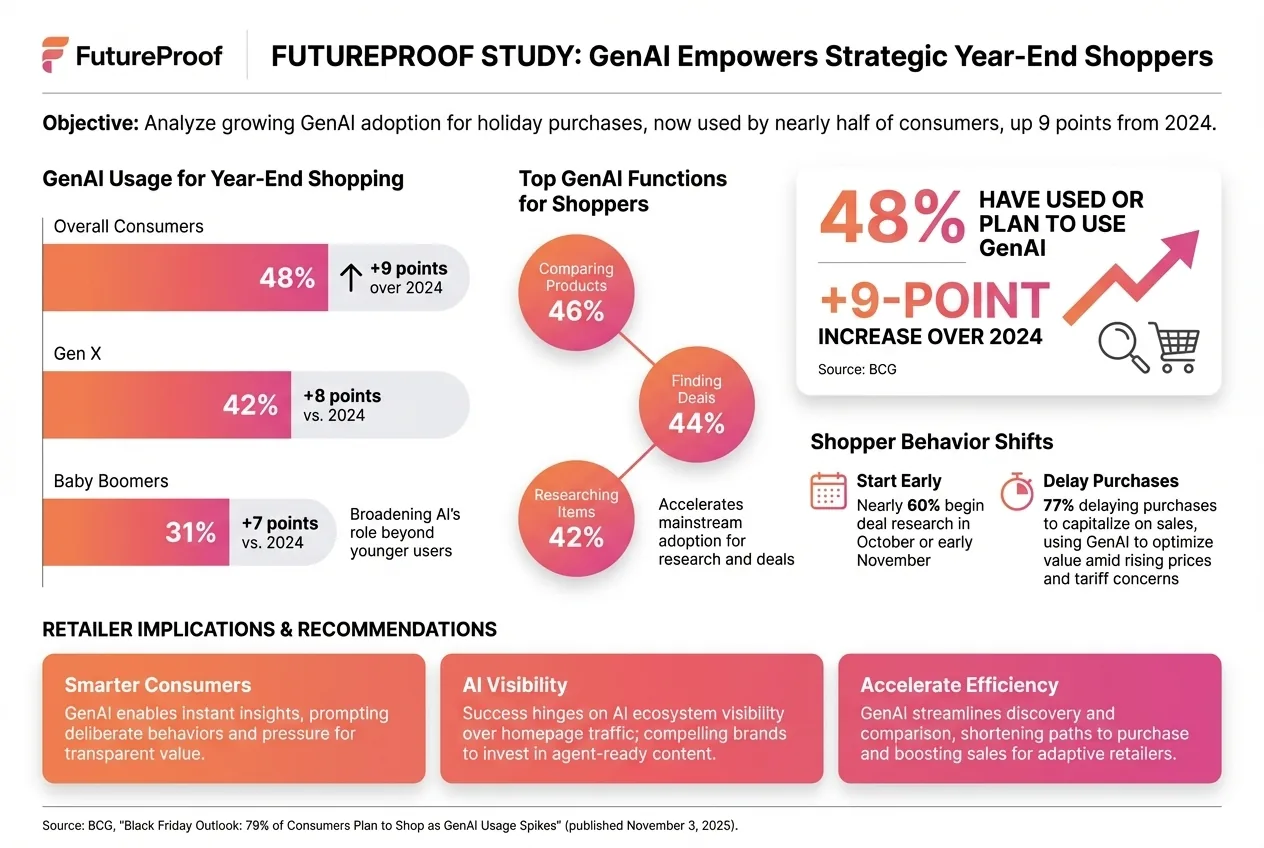
New data paints a vivid picture of this accelerating shift, underscoring the urgency for brands to understand and respond. A striking 48 percent of shoppers have already used or plan to use GenAI for their upcoming holiday purchases. This figure represents a significant nine-point jump from just the previous year, signaling not merely growth, but an exponential surge in adoption. According to insights from BCG, consumers are embracing GenAI across a spectrum of crucial shopping activities, including meticulous product comparisons, efficient deal discovery, and in-depth research. Perhaps most surprisingly, and certainly most impactful for marketeers, this adoption is growing fastest among Gen X and Baby Boomers, challenging preconceived notions about technological receptiveness across age demographics. The implications are profound: a new, highly informed, and strategically agile consumer base is emerging, powered by AI, and retailers must evolve their strategies to meet them where they are.
The AI-Powered Shopper: A Deep Dive into GenAI's Influence
The substantial 48 percent adoption rate of GenAI for year-end shopping is more than just a statistic; it signifies a fundamental shift in consumer behavior. This nine-point increase from 2024 isn't incremental; it’s indicative of GenAI moving beyond early adopters and into the mainstream consciousness of the average shopper. This rapid integration is driven by GenAI’s undeniable utility in three core areas: product comparisons, deal discovery, and comprehensive research.
Imagine a shopper looking for a new smart TV. Instead of sifting through dozens of individual retailer websites, reading disparate reviews, and manually cross-referencing specifications, they can now simply ask a GenAI tool. "What are the best 65-inch 4K OLED TVs under $1500 with good gaming features, and where can I find the best deal?" The GenAI assistant processes this complex query, synthesizes information from countless sources, compares specifications side-by-side, aggregates user reviews, and even identifies current promotions across multiple retailers. This level of instant, personalized, and comprehensive information was previously unattainable, requiring hours of manual effort. GenAI doesn't just provide data; it offers intelligent synthesis and actionable insights, dramatically reducing friction in the decision-making process.
This newfound efficiency and insight empower shoppers to make highly informed decisions, shifting power dynamics in the retail landscape. Consumers are no longer passively receiving marketing messages; they are actively dictating their discovery journey, leveraging AI to cut through noise and extract precise value. This paradigm shift necessitates retailers re-evaluating every touchpoint, from product data integrity to the efficacy of traditional marketing channels. The conversation is no longer about if consumers will use AI, but how deeply it will integrate into their shopping habits, and how retailers can align with this transformative force.
The Strategic Consumer: Savvy Shopping in the AI Era
Beyond the rising tide of GenAI adoption, shoppers are also demonstrating an increasingly strategic and patient approach to their holiday purchases. This isn't a generation that rushes into impulse buys; it's one that meticulously plans and waits for optimal value. Data reinforces this trend: nearly 60 percent of consumers begin their deal research by early November, and a staggering 77 percent are willing to delay purchases to secure the absolute best price. This proactive and patient behavior is not coincidental; it is synergistically empowered by the capabilities of Generative AI.
GenAI acts as an intelligent shopping assistant, transforming the landscape of deal hunting. Instead of simply browsing sales flyers or relying on limited website filters, consumers can now leverage AI to monitor prices across an exhaustive range of retailers, predict potential price drops, and even set up personalized alerts for specific products or categories. This eliminates the guesswork and manual labor traditionally associated with securing the best deals, fostering a culture of informed waiting rather than immediate gratification. The 77 percent willing to delay purchases aren't just being frugal; they are being strategic, understanding that GenAI provides them with the tools to play the long game and win.
This strategic approach fundamentally alters the dynamics of peak shopping events like Black Friday and Cyber Monday. While these periods still draw significant traffic, GenAI allows consumers to start earlier, compare more thoroughly, and maintain a broader perspective of value throughout the entire season. Retailers can no longer rely solely on doorbuster deals or limited-time offers to drive impulse purchases. Instead, they must cultivate an ongoing dialogue about value, transparency, and product superiority that resonates with the AI-empowered, patient consumer. The emphasis shifts from urgency-driven marketing to sustained value propositions that stand up to rigorous AI-driven scrutiny. Consumers are leveraging AI to ensure they are getting true value, not just a perceived discount, pushing retailers to be more transparent and competitive in their pricing and offerings.
The Unexpected Vanguard: Gen X and Baby Boomers Leading AI Adoption
One of the most compelling and strategically significant findings from the BCG data is the revelation that GenAI adoption for shopping is growing fastest among Gen X and Baby Boomers. This challenges traditional assumptions that new technologies are primarily embraced by younger demographics. Understanding the drivers behind this surprising trend is crucial for retailers looking to effectively engage this powerful consumer segment.
Several factors likely contribute to Gen X and Baby Boomers' rapid embrace of GenAI. Firstly, GenAI tools, particularly those integrated into search engines or user-friendly apps, often feature natural language interfaces. This makes them inherently more accessible than previous generations of complex software, allowing users to interact with them in a conversational manner rather than requiring specific technical skills. For demographics that may not have grown up with advanced computing, this intuitive interaction lowers the barrier to entry significantly.
Secondly, these demographics often value efficiency and seek ways to simplify complex tasks. Juggling work, family responsibilities, or managing retirement budgets means time is a precious commodity. GenAI's ability to quickly synthesize information, compare products, and identify the best deals offers a substantial time-saving benefit, allowing them to make informed decisions without investing hours of research. The promise of "smarter, not harder" shopping resonates deeply.
Thirdly, Gen X and Baby Boomers often represent significant purchasing power and are highly value-conscious. They have accumulated experience navigating various economic cycles and understand the importance of securing the best price without compromising quality. GenAI serves as a powerful ally in this pursuit, equipping them with unprecedented tools to maximize their purchasing power and ensure they are getting genuine value for their money. Their trust in technology, once perhaps more cautious, has evolved as digital tools have become integral to banking, communication, and now, shopping.
For retailers, this demographic insight is invaluable. Marketing strategies that traditionally targeted younger audiences for tech-driven innovations now need to be recalibrated. Messaging for Gen X and Baby Boomers should highlight GenAI's practical benefits: convenience, time-saving, smart budgeting, and ease of use. This segment is not just adopting GenAI; they are leveraging it strategically to enhance their established shopping habits, demanding that retailers offer clear, trustworthy value that can be easily validated by AI.
Implications for Retailers: Navigating the AI-Driven Discovery Landscape
The rise of GenAI and the emergence of the strategic, AI-empowered consumer present both formidable challenges and unparalleled opportunities for retailers. The directive is clear: strengthen presence in AI-driven discovery and ensure clear, trustworthy value. This necessitates a fundamental re-evaluation of current digital strategies, marketing approaches, and even core business operations.
Strengthening Presence in AI-Driven Discovery:
- Optimizing for Conversational Search and AI Assistants: Traditional SEO focused on keywords. GenAI shifts this to natural language queries, intent-based understanding, and semantic relevance. Retailers must optimize their product descriptions, website content, and FAQs to answer complex, conversational questions that AI assistants will process. This includes rich, structured data (Schema markup) that makes product information easily digestible by AI.
- Product Information Architecture for AI: The quality and structure of product data are paramount. GenAI relies on accurate, comprehensive, and well-organized information to make comparisons and recommendations. Retailers need to invest in robust Product Information Management (PIM) systems, ensuring every product has detailed specifications, high-quality images, clear benefits, and accurate pricing that AI can trust and synthesize. Vague or incomplete data will simply be overlooked by AI.
- Voice Search Optimization: As more consumers interact with AI through voice assistants (Siri, Alexa, Google Assistant), optimizing for voice queries becomes critical. This often means focusing on longer-tail keywords, natural phrasing, and providing direct answers that AI can readily pull and verbalize.
- Partnerships with AI Platforms: Explore opportunities to integrate product catalogs and offers directly with leading GenAI shopping assistants or platforms. Being a preferred or verified source for these AI tools can provide a significant competitive advantage in the discovery phase.
- Internal AI Tools for Customer Engagement: Deploying GenAI-powered chatbots on retailer websites can mirror the external AI discovery experience, providing instant answers to customer questions, offering personalized recommendations, and guiding shoppers through the purchase journey. This not only enhances customer service but also gathers valuable data on AI-driven query patterns.
Ensuring Clear, Trustworthy Value:
- Transparency in Pricing and Promotions: GenAI excels at price comparison. Any opaque pricing, hidden fees, or misleading promotional tactics will be instantly flagged by AI and erode consumer trust. Retailers must adopt transparent pricing strategies and clearly articulate the value proposition of their deals.
- Authentic Product Information and Reviews: AI tools can analyze vast amounts of customer reviews and product data. Retailers must ensure their product information is accurate and that customer reviews are genuine and easily accessible. Authenticity fosters trust, which AI can then surface and validate.
- Clear Return Policies and Customer Service: A significant part of "trustworthy value" extends beyond the initial purchase to the post-purchase experience. Clear, customer-friendly return policies and responsive customer service build confidence, which AI can also factor into its recommendations by analyzing customer sentiment.
- Personalized Value Propositions: GenAI allows for hyper-personalization. Retailers should leverage their own data, combined with AI insights, to offer deals and product recommendations that genuinely resonate with individual shoppers, going beyond generic discounts to truly valuable, tailored offers.
- Brand Authority and Reputation: In an AI-mediated discovery process, a strong brand reputation, ethical practices, and a commitment to quality can differentiate a retailer. AI can discern these qualitative factors through sentiment analysis of news, reviews, and social media, making brand building even more critical.
The integration of GenAI fundamentally shifts the power dynamic towards the informed consumer. Retailers who embrace this shift by prioritizing transparent data, frictionless AI-driven discovery, and undeniable value will not only survive but thrive in this new era of retail. Those who cling to outdated strategies risk becoming invisible in an increasingly intelligent marketplace.
Actionable Strategies for Retailers to Thrive in the GenAI Era
To effectively navigate the seismic shifts brought about by GenAI in year-end shopping, retailers must move beyond recognition to concrete action. The following strategies are essential for building a resilient, AI-ready retail presence:
- Embrace "AI-First" SEO and Content Strategy:
- Semantic SEO: Move beyond exact-match keywords to understanding the intent behind conversational queries. Optimize content for long-tail, natural language questions that GenAI tools are designed to answer.
- Structured Data (Schema Markup): Implement comprehensive Schema markup for product information, reviews, pricing, availability, and offers. This makes your data easily digestible and interpretable by AI, ensuring your products are accurately represented in AI-generated comparisons and recommendations.
- Rich, Informative Content: Create content that goes beyond basic product descriptions. Develop buying guides, comparison charts, expert reviews, and FAQs that provide comprehensive answers to potential consumer questions, positioning your brand as an authoritative source of information that AI can trust.
- Elevate Product Data Quality and Integrity:
- Invest in PIM Systems: Implement or upgrade Product Information Management (PIM) systems to centralize and enrich product data. Ensure consistency, accuracy, and completeness across all channels.
- Detailed Specifications: Provide meticulous details for every product attribute. GenAI thrives on granular data for comparisons (e.g., exact dimensions, material composition, warranty details, energy efficiency ratings).
- High-Quality Visuals: AI can analyze images and videos. Ensure your product visuals are high-resolution, accurately represent the product, and are accompanied by descriptive alt text.
- Leverage AI for Hyper-Personalization at Scale:
- AI-Powered Recommendation Engines: Implement sophisticated AI to analyze customer browsing history, purchase patterns, and explicit preferences to offer highly personalized product recommendations and deals.
- Dynamic Pricing: While transparency is key, AI can help optimize pricing strategies in real-time based on demand, competitor prices (as seen by AI tools), and inventory levels, ensuring competitive but profitable offers.
- Personalized Marketing Campaigns: Utilize AI to segment customers more effectively and tailor marketing messages, email campaigns, and ad content to individual needs and interests, ensuring higher relevance and engagement.
- Cultivate Brand Trust and Authority in the Digital Realm:
- Proactive Reputation Management: Monitor online reviews, social media sentiment, and news mentions. Respond promptly and genuinely to feedback. AI can analyze sentiment, so a strong, positive online reputation is crucial.
- Transparency and Ethics: Communicate clear policies on sustainability, ethical sourcing, data privacy, and customer service. These values can be surfaced by GenAI tools when consumers inquire about a brand's integrity.
- Expertise and Education: Position your brand as a trusted expert in your product categories. Educational content, tutorials, and guides not only help customers but also provide valuable, authoritative content that AI can reference.
- Seamless Omnichannel Integration with AI:
- Consistent Customer Experience: Ensure a consistent brand experience across your website, mobile app, physical stores, and any AI assistant interactions. Information, pricing, and promotions should be synchronized.
- "Click and Collect" Optimization: For retailers with physical stores, optimize for local search and "buy online, pick up in store" (BOPIS) options, which GenAI can efficiently recommend based on user location and urgency.
- In-Store AI Assistance: Consider deploying AI-powered kiosks or staff-facing AI tools in physical stores to provide real-time product information, inventory checks, and personalized recommendations, bridging the gap between digital and physical shopping.
- Experiment, Learn, and Adapt Continuously:
- Pilot Programs: Launch small-scale pilot programs for new AI tools, such as AI-powered virtual try-ons, enhanced chatbots for complex queries, or augmented reality (AR) shopping experiences.
- A/B Testing: Continuously test different AI integrations and content strategies to understand what resonates best with your target demographics, especially Gen X and Baby Boomers.
- Stay Informed: The GenAI landscape is evolving rapidly. Stay abreast of new AI capabilities, consumer adoption trends, and competitor strategies. Agility and a commitment to continuous learning will be key differentiators.
By strategically adopting these measures, retailers can not only mitigate the risks posed by an AI-driven shopping ecosystem but also unlock unprecedented opportunities for growth, deeper customer engagement, and a strengthened market position in the years to come.
The Future of Year-End Shopping: Beyond 2025
The data from 2025 is not just a snapshot; it's a clear trajectory. GenAI is not a fleeting trend in year-end shopping; it is rapidly becoming foundational, integrating itself irrevocably into the consumer journey. As GenAI tools become more sophisticated, personalized, and ubiquitous, consumer expectations will continue to evolve, demanding even greater transparency, value, and seamless discovery experiences. The ability of AI to analyze qualitative factors like brand ethics, customer service history, and product durability will likely expand, further empowering shoppers to make holistic, values-aligned purchasing decisions. For retailers, the future of year-end shopping, and indeed all shopping, hinges on proactive adaptation. Those who embrace Generative AI as a strategic partner, rather than a threat, will be the ones that capture the loyalty and spend of the increasingly intelligent and empowered consumer. The time to build an AI-ready retail enterprise is now, shaping not just the next holiday season, but the entire future of commerce.
Conclusion
The holiday shopping landscape is undeniably being redrawn by the revolutionary influence of Generative AI. With nearly half of all consumers now leveraging AI for their year-end purchases – a monumental nine-point increase from 2024 – the message for retailers is unequivocal: adapt or risk obsolescence. The strategic, AI-empowered shopper, particularly within the surging Gen X and Baby Boomer demographics, demands not just competitive pricing but also clear, trustworthy value and frictionless, AI-driven discovery. The imperative for retailers is to move beyond traditional digital strategies, embracing AI-first SEO, impeccable data quality, and hyper-personalized experiences that resonate with a profoundly informed consumer base. This shift represents not merely a challenge but a profound opportunity for those brands agile and innovative enough to meet the future of commerce head-on, transforming their presence in the AI-driven marketplace to foster enduring trust and loyalty.


