Gen Alpha and the Rise of the AI Native Consumer Revolution
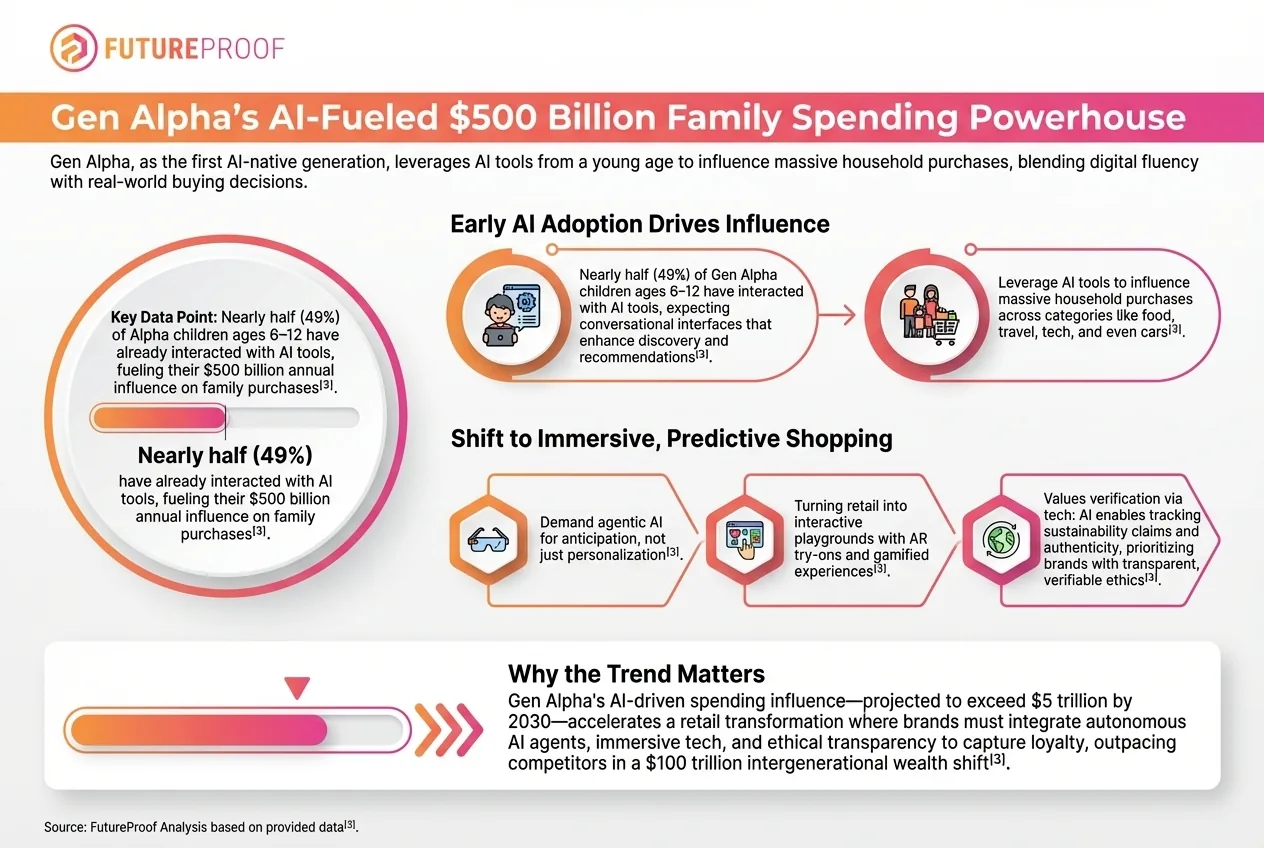
The emergence of Generation Alpha heralds a transformative era in consumer behavior, fundamentally reshaping the landscape of family purchasing. This demographic, born roughly between 2010 and 2024, is not merely digitally native; they are undeniably AI-native, entering a world where artificial intelligence is an omnipresent, often invisible, facilitator of daily life. This intrinsic comfort with AI tools positions Gen Alpha as a powerful, autonomous force, currently influencing over $500 billion in annual household spending. Their unique perspective and expectations are setting new benchmarks for product discovery, brand value verification, and the entire spectrum of digital and physical retail experiences. The staggering statistic that forty-nine percent of children ages six to twelve are already actively using AI tools underscores the depth of their integration with this technology, signaling a profound shift in how brands must engage to secure long-term loyalty and capture a market influence projected to exceed $5 trillion by 2030.
The AI-Native Consumer: A New Paradigm
To understand Gen Alpha's influence, one must first grasp the implications of being "AI-native." Unlike their millennial and Gen Z predecessors who adopted digital technologies as they matured, Gen Alpha is growing up with AI woven into the very fabric of their existence. From voice assistants like Alexa and Google Assistant that answer questions and play music, to personalized algorithms that curate content on streaming platforms and social media, and even educational apps powered by adaptive learning AI, these children are accustomed to interacting with intelligent systems daily. This isn't a novelty; it's the norm. This early and pervasive exposure means they possess an intuitive understanding of AI's capabilities and, crucially, an inherent expectation for its functionality in every interaction. The forty-nine percent figure isn't just a data point; it represents nearly half of Gen Alpha children actively navigating and benefiting from AI, demonstrating a practical fluency that older generations often struggle to acquire. This fluency translates directly into their consumer behavior, driving a demand for seamless, intelligent, and personalized experiences that only AI can deliver. They don't just use technology; they expect it to anticipate their needs, learn their preferences, and simplify their lives.
Shaping Today's $500 Billion Market: Informed Persuasion
Gen Alpha's influence on family purchasing isn't a distant future projection; it's a present reality, impacting over $500 billion in annual household spending. This influence is far more sophisticated than the traditional "pester power" of previous generations. Instead, it's an informed persuasion, where Gen Alpha, armed with AI-driven insights, often guides their parents' purchasing decisions. Consider the choice of a new family smart device, a streaming service subscription, or even a vacation destination. Gen Alpha often takes the lead in research, effortlessly navigating AI-powered review sites, engaging with immersive virtual tours, or consulting intelligent assistants for comparisons and recommendations. They are adept at sifting through vast amounts of information, relying on AI to surface the most relevant and appealing options. Parents, often time-poor and less adept at leveraging AI for deep dives, increasingly defer to their children's digitally informed opinions. This dynamic is evident in categories like entertainment, educational technology, gaming consoles, and even smart home gadgets, where Gen Alpha's familiarity with AI interfaces and their intrinsic trust in algorithmic suggestions make them influential decision-makers. Brands that fail to engage with this AI-savvy generation directly are missing a critical opportunity to influence the entire household buying unit.
Redefining Product Discovery: From Search to Seamless Suggestion
The traditional funnel of product discovery is rapidly being rewritten by Gen Alpha's AI-native habits. For this generation, discovery isn't about typing keywords into a search engine and sifting through static results; it's an interactive, often immersive, and highly personalized journey. They expect AI to anticipate their needs, offer predictive recommendations, and present products in engaging, interactive formats. Imagine a child wanting a new toy: instead of a simple Google search, they might engage with an AI-powered interactive story that subtly introduces relevant products, or explore virtual showrooms where toys come to life in augmented reality. Voice search and visual search, powered by sophisticated AI, are natural interfaces for them. They rely on algorithms to curate personalized feeds on platforms, making product suggestions feel less like advertisements and more like tailored advice from a trusted assistant. This shift demands that brands move beyond passive advertising to active, AI-driven engagement, creating discovery pathways that are intuitive, playful, and genuinely helpful. The goal is to make product discovery a seamless extension of their digital lives, where AI guides them effortlessly to items that resonate with their evolving preferences.
Verifying Brand Values in an AI Era: Transparency as Trust
Gen Alpha is not only technologically astute but also increasingly socially conscious. They are growing up in an age where information, both factual and reputational, is instantly accessible, often aggregated and analyzed by AI. This means their expectations for brand transparency and authenticity are exceptionally high. For Gen Alpha, verifying brand values isn't just about reading a company's mission statement; it's about leveraging AI tools to scrutinize supply chains, assess sustainability claims, and uncover a brand's true ethical footprint. They might cross-reference information from AI-powered review aggregators, use natural language processing (NLP) tools to analyze public sentiment, or explore interactive dashboards detailing a company's environmental impact. Brands that simply pay lip service to values like sustainability, diversity, or ethical sourcing will quickly be exposed by this generation's AI-empowered investigative skills. Trust, for Gen Alpha, is built on verifiable actions and transparent data, not just clever marketing. To win their loyalty, brands must proactively embed trustworthy AI in their operations, not only to meet consumer demand but also to genuinely demonstrate adherence to their stated values, making their impact trackable and verifiable by AI tools this generation will undoubtedly wield.
Navigating Digital and Physical Retail: The Seamless "Phygital" Experience
Gen Alpha's AI-native perspective is dissolving the traditional boundaries between digital and physical retail. For them, shopping is a continuous, integrated experience, where AI acts as the connective tissue. In the digital realm, they expect hyper-personalized e-commerce journeys: AI-driven predictive carts that anticipate purchases, personalized promotions based on real-time behavior, and intelligent virtual assistants that provide instant support. The online experience must be intuitive, engaging, and reflective of their individual preferences. In physical stores, Gen Alpha anticipates a "phygital" environment where AI enhances every step. This means interactive displays that adapt to their presence, AR mirrors that allow for immersive try-ons of clothing or accessories, smart shelves that offer product information or personalized recommendations, and frictionless checkout systems powered by computer vision. The physical store becomes an extension of their digital world, offering tactile experiences enriched by intelligent technology. Brands must invest in AI that creates a unified customer profile, ensuring a consistent and personalized experience whether Gen Alpha is browsing online, interacting with a chatbot, or exploring products in a brick-and-mortar location. This seamless integration, driven by sophisticated AI, is not a luxury but an expectation.
The Power of Immersive Try-Ons and Predictive Recommendations
Two key areas where Gen Alpha's AI-native expectations are particularly impactful are immersive try-ons and predictive recommendations. Immersive try-ons, powered by augmented reality (AR) and virtual reality (VR), allow Gen Alpha to experience products in a rich, interactive way before committing to a purchase. Imagine trying on clothes virtually using an AR app, seeing how a piece of furniture looks in your living room through a tablet, or experimenting with makeup shades in a virtual mirror. This isn't just a novel gimmick; it's a practical application of AI that reduces buyer's remorse, minimizes returns, and builds confidence in purchasing decisions. For Gen Alpha, this ability to virtually "test drive" products is a fundamental expectation, moving beyond static images or videos.
Coupled with this is the demand for truly predictive recommendations. Moving beyond simple collaborative filtering ("customers who bought this also bought that"), Gen Alpha expects AI to understand their nuanced preferences, anticipate future needs, and suggest products with remarkable accuracy. This involves AI analyzing not just past purchase history but also browsing patterns, engagement with content, stated preferences, and potentially even emotional cues. A predictive recommendation for Gen Alpha should feel like a trusted friend suggesting something perfectly tailored, almost reading their mind. This level of hyper-personalization, driven by advanced machine learning, cultivates a sense of being understood and valued, which is crucial for fostering loyalty in an increasingly noisy marketplace.
The Rise of Autonomous AI Agents and Interactive Retail
Looking ahead, Gen Alpha's comfort with AI is accelerating a shift towards autonomous AI agents and a truly interactive retail environment. Autonomous AI agents represent the next frontier. These are intelligent systems capable of performing tasks and making decisions on behalf of the consumer, often without direct human intervention. For Gen Alpha, this could mean an AI managing their subscriptions, automatically reordering household staples when low, or even autonomously researching and recommending big-ticket family purchases like cars or vacations based on predefined parameters and real-time market data. Brands will eventually need to consider how to market to and interact with these AI agents, as much as to the human consumers themselves, ensuring their products are discoverable and appealing to these intelligent digital gatekeepers.
Parallel to this is the evolution of interactive retail, where shopping transcends a mere transaction to become an immersive, engaging experience. This isn't just about AR filters; it's about gamified shopping journeys, personalized brand storytelling driven by AI, co-creation platforms where Gen Alpha can design products with AI assistance, and retail spaces that dynamically adapt to individual preferences. Imagine a store where the lighting, music, and product displays change based on the customer walking in, guided by AI-powered personalization. This interactive, experiential approach is what Gen Alpha will demand, transforming retail into a dynamic playground rather than a static marketplace.
Gearing Up for the $5 Trillion Influence by 2030
The trajectory of Gen Alpha's spending influence is astounding, projected to reach over $5 trillion by 2030. This isn't just a substantial increase; it represents a generational shift in economic power, driven by a consumer base with fundamentally different expectations. Brands that fail to acknowledge and adapt to this AI-native demographic risk becoming irrelevant. The next few years are critical for strategic re-evaluation and significant investment. This means not just superficial integration of AI but a deep, systemic embedding of intelligent technologies across all facets of business – from product development and supply chain optimization to marketing, sales, and customer service. Companies must re-imagine their entire customer journey through the lens of Gen Alpha's AI-powered expectations. This includes investing in AI infrastructure, upskilling existing talent, and actively recruiting individuals who understand and can build for an AI-first world. Proactive engagement with Gen Alpha now, understanding their developing preferences and habits, is not merely good business; it's essential for long-term survival and growth. The brands that lead the charge in AI innovation and ethical deployment will be the ones that dominate the consumer landscape of tomorrow.
Winning Long-Term Loyalty: Trustworthy AI and Immersive Discovery
Ultimately, securing the long-term loyalty of Gen Alpha hinges on two critical pillars: trustworthy AI and immersive discovery. Trustworthy AI is paramount. As Gen Alpha becomes increasingly sophisticated in their use of AI, their discernment regarding its ethical implications, data privacy, and algorithmic transparency will sharpen. Brands must commit to developing and deploying AI responsibly, ensuring fairness, accountability, and explainability. This means being transparent about how data is collected and used, mitigating algorithmic bias, and safeguarding personal information. A "black box" approach to AI will breed suspicion and erode trust. Ethical AI practices, far from being a mere compliance checkbox, will become a competitive differentiator, resonating deeply with a generation that values authenticity and social responsibility.
Simultaneously, immersive discovery must move beyond novelty to become a cornerstone of the brand experience. It's about creating deeply engaging, personalized, and intuitive pathways for Gen Alpha to explore products and services. This involves continuous innovation in AR, VR, interactive content, and AI-powered personalization engines that make discovery a joy, not a chore. When AI seamlessly facilitates a personalized journey, presenting relevant options in an engaging and interactive format, it builds an emotional connection. This connection, forged through superior experiences and reinforced by transparent, ethical AI, is the bedrock of long-term loyalty. Brands must recognize that for Gen Alpha, AI isn't just a tool; it's an extension of their worldview, and how brands integrate it will define their relationship with this powerful, emerging consumer force.
In conclusion, Gen Alpha's rise as an AI-native generation is more than just a demographic shift; it's a fundamental reordering of consumer expectations and market dynamics. With their influence already shaping half a trillion dollars in annual spending and poised to grow tenfold by 2030, brands have an urgent imperative to adapt. By embracing trustworthy AI, fostering immersive discovery experiences, and understanding this generation's inherent comfort with intelligent systems, businesses can forge meaningful connections that transcend mere transactions. The future of retail belongs to those who recognize Gen Alpha not just as customers, but as the architects of a new, AI-powered consumer paradigm.