Chat Based Shopping Is Redefining the Future of Retail
The landscape of retail is undergoing a profound and irreversible transformation, heralding an era where the traditional keyword search is being rapidly supplanted by the fluid, intuitive interaction of natural conversation. This seismic shift marks the rise of chat-based shopping, an innovative paradigm that is quickly asserting itself as the new, dominant retail interface. Consumers are no longer content with navigating disparate web pages and sifting through endless product listings; instead, they are increasingly seeking and finding comprehensive solutions within a single, continuous, AI-powered conversational thread. This evolution is not merely a convenience; it represents a fundamental re-imagining of the entire buying journey, from initial discovery and research to comparison, customization, and ultimately, purchase, all seamlessly orchestrated by intelligent agents.
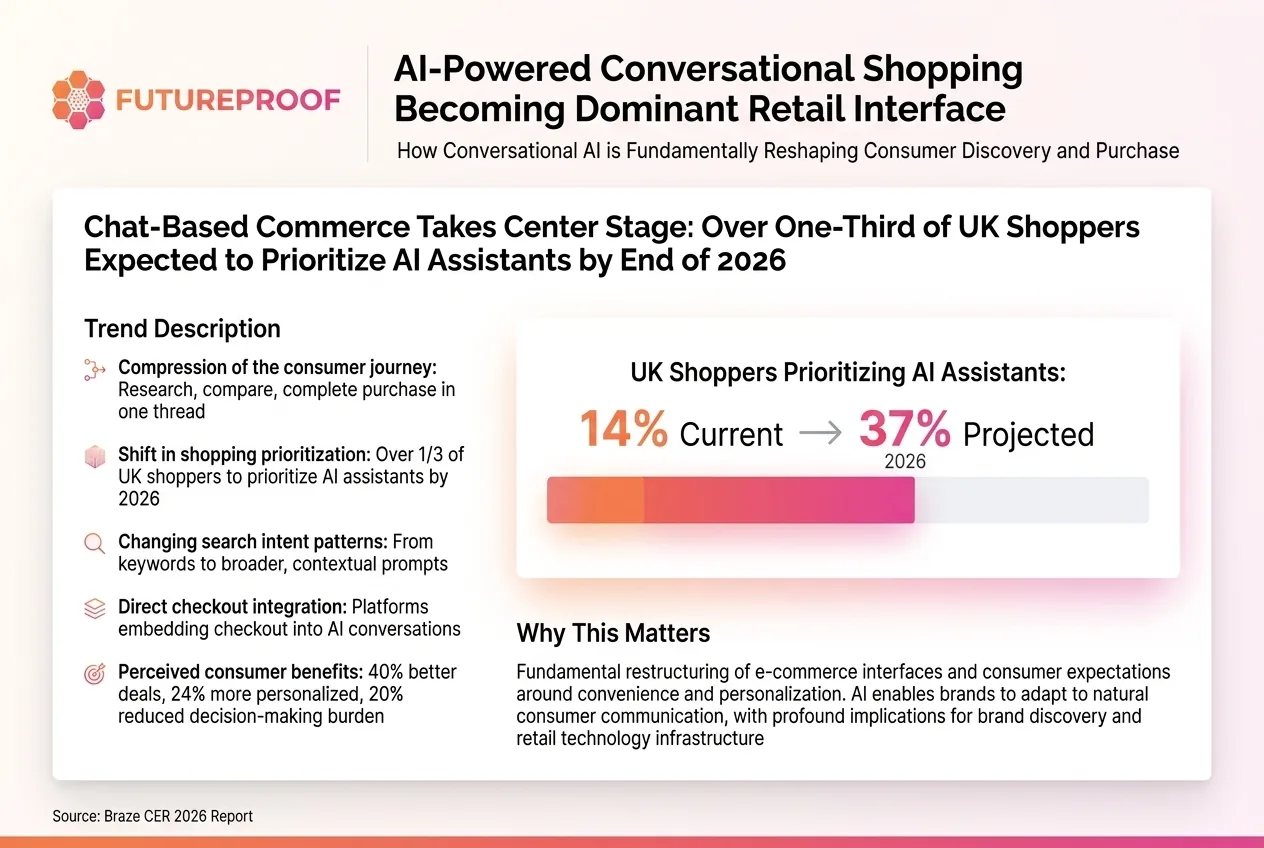
The acceleration of this transformation is not a speculative future but a current reality, vividly underscored by recent industry analyses. A new CX Network analysis, drawing critical insights from Braze’s CER 2026 Report, provides compelling evidence of this rapid adoption. The report reveals that a significant 14 percent of consumers in the UK are already actively engaging with AI agents to interact with brands and finalize their purchases. This figure is not static; it is a burgeoning indicator of a broader trend, with projections indicating a dramatic surge to 37 percent by the close of 2026. Such a trajectory signifies not just growth, but a profound cultural shift in how consumers expect to engage with and transact alongside brands. These numbers are a clarion call for retailers to recognize that conversational commerce is not a distant possibility, but an immediate imperative, reshaping customer expectations and competitive landscapes at an unprecedented pace. The shift from a fragmented, click-based journey to an integrated, conversational one is fundamentally altering the customer experience, making it more personal, efficient, and deeply engaging.
Early adopters of this AI-powered shopping paradigm are not merely experimenting; they are reporting tangible, significant value that underpins the rapid growth seen in the market data. This value proposition is multifaceted, addressing core consumer desires and pain points within the traditional retail model. A substantial 40 percent of these pioneering consumers openly state that they find better deals when using AI agents. This isn't surprising; AI's ability to swiftly compare prices across a multitude of sellers, apply relevant discounts, and even negotiate on behalf of the consumer provides an undeniable advantage that human effort alone often cannot match. It democratizes access to optimal value, ensuring consumers are empowered to make financially sound decisions with minimal effort. This pursuit of value, often a primary driver in purchasing decisions, is significantly enhanced by the analytical prowess of AI, which can navigate complex pricing structures and promotional offers with unmatched efficiency.
Beyond financial savings, the experience itself is undergoing a radical upgrade. A notable 24 percent of early adopters highlight the delivery of more personalized experiences as a key benefit. Traditional e-commerce platforms, while attempting personalization through recommendation engines, often fall short of genuine one-to-one interaction. AI agents, however, excel at understanding nuances of preference, past purchase history, stated desires, and even implied needs gleaned from conversational context. This deep level of understanding allows AI to tailor product suggestions, provide bespoke advice, and craft a shopping journey that feels uniquely curated for each individual. The resulting experience transcends mere recommendations, creating a sense of being truly understood and catered to, fostering stronger brand loyalty and satisfaction. This personalization extends beyond product suggestions to the very tone and style of interaction, adapting to the user's conversational patterns for a more natural and comfortable engagement.
Furthermore, the labyrinthine nature of modern consumer choices often leads to what is known as decision fatigue – the mental exhaustion that arises from being overwhelmed by too many options or too much information. A significant 20 percent of early adopters report feeling less decision fatigue when leveraging AI for their shopping needs. AI agents act as intelligent filters, guides, and advisors, streamlining the decision-making process by presenting relevant options, summarizing key features, contrasting alternatives, and proactively addressing potential concerns. By simplifying complex choices and providing clear, concise information tailored to the user's specific parameters, AI empowers consumers to make confident decisions more quickly and with greater peace of mind. This reduction in cognitive load transforms what can often be a stressful or time-consuming process into an efficient and enjoyable one, directly contributing to a superior customer experience. The ability of AI to synthesize vast amounts of product data, reviews, and specifications into easily digestible insights is a game-changer for reducing buyer's remorse and increasing purchasing confidence.
The technological infrastructure enabling this profound shift is rapidly maturing and integrating, further compressing the path from discovery to purchase. Platforms are now seamlessly embedding direct checkout functionalities within AI assistants, eliminating the need to redirect users to external websites or cumbersome payment gateways. This frictionless transaction capability is exemplified by strategic partnerships, such as those forged by Shopify, which are enabling seamless conversational transactions directly within AI-powered chat interfaces. What this means in practice is that a consumer can discover a product through a natural language query, discuss its features, receive personalized recommendations, compare it with alternatives, and then complete the purchase—all within the same unbroken conversational flow. This compression of the entire buying journey is happening faster than many retailers anticipated, erasing traditional touchpoints and creating an incredibly direct and efficient sales channel. The implications for conversion rates and customer satisfaction are enormous, as every point of friction traditionally associated with online shopping is systematically being dismantled by these integrated solutions. The convenience factor of not having to leave an ongoing conversation to complete a purchase cannot be overstated, as it removes common abandonment points.
The implications for retailers navigating this evolving landscape are nothing short of significant, demanding a fundamental rethinking of existing strategies for digital presence and customer engagement. To merely survive, let alone thrive, in these AI-led environments, brands face a crucial imperative: they will need content that is meticulously structured for machine understanding and inherently ready for dialogue-driven shopping. The era of keyword stuffing and generic product descriptions is rapidly waning; the future belongs to content that is semantically rich, contextually aware, and designed to be parsed and interpreted by sophisticated AI algorithms. This means moving beyond simple keyword relevance to a deeper focus on entity recognition, attribute identification, and the precise articulation of product capabilities and benefits in a way that AI can not only understand but also effectively communicate in a conversational context.
Consider the shift in discoverability: traditional SEO focused on ranking for specific keywords in search engine results pages. In a chat-based shopping environment, discoverability hinges on an AI agent's ability to understand a consumer's natural language query and match it with relevant, structured product information. This necessitates a strategic overhaul of content creation, emphasizing clarity, conciseness, and structured data markup. Product descriptions must be granular, detailing every feature, benefit, and specification in an unambiguous format that AI can process. FAQs become incredibly powerful tools, as they directly train AI models on common customer inquiries and provide ready-made answers. Rich media, such as detailed images and videos, also need to be accompanied by robust metadata, ensuring that AI can accurately describe visual information to a user. The aim is to create a comprehensive digital twin of every product and service, understandable not just by humans, but by intelligent machines.
The ability of content to support dialogue-driven shopping extends beyond mere information provision; it involves preparing for active conversation. This means anticipating potential follow-up questions, comparative queries, and personalized recommendations that an AI agent might need to generate. Brands must ensure their content provides sufficient depth and breadth to support dynamic, multi-turn conversations. For instance, if a customer asks for a "durable, waterproof jacket for hiking in cold weather," the AI needs to quickly access content that highlights material composition, waterproofing ratings, insulation levels, and user reviews related to durability in harsh conditions. This requires a shift from static, display-oriented content to dynamic, conversational-ready content that can be pieced together by AI to form coherent, relevant responses. The goal is to equip the AI with all the necessary linguistic building blocks to simulate an expert sales assistant, capable of engaging in a nuanced and helpful dialogue.
This profound change also necessitates a re-evaluation of data management. Retailers must ensure their product catalogs are clean, consistent, and meticulously tagged with relevant attributes. Inconsistent product data, missing specifications, or ambiguous descriptions will hinder an AI agent's ability to effectively serve customers, leading to frustrating experiences and lost sales. A unified product information management (PIM) system, capable of feeding structured, AI-ready data to conversational interfaces, will become an indispensable asset. Moreover, customer interaction data gleaned from these conversational interfaces will become an incredibly rich source of insight, far surpassing the data collected from traditional clickstream analysis. This new data will allow brands to refine their product offerings, personalize marketing messages with unprecedented accuracy, and continually optimize the AI-driven customer experience. The virtuous cycle of data collection, analysis, and refinement will be central to maintaining competitive relevance in the conversational commerce era.
Furthermore, the very concept of "brand voice" will extend into the AI domain. How does a brand ensure its conversational AI agents embody its personality, values, and tone? This requires careful design of the AI's interaction model, scripting its responses, and training it on brand-approved language. Maintaining a consistent brand experience across human and AI touchpoints will be crucial for building trust and reinforcing brand identity in this new interface. The conversational style of the AI can either enhance or detract from the brand's image, making the design of these interactions a critical component of brand strategy. From whimsical and playful to serious and authoritative, the AI's conversational persona must align perfectly with the brand's overall identity.
The competitive landscape will drastically favor those who adapt early and effectively. Brands that successfully structure their content for machine understanding and embrace dialogue-driven shopping will gain a significant advantage in discoverability and customer engagement. Those that cling to outdated keyword-centric strategies risk becoming invisible in the burgeoning conversational marketplace. This isn't just about being found; it's about being chosen. An AI agent, fluent in a brand's offerings and adept at personalized recommendations, can foster a level of trust and convenience that traditional advertising and product listings simply cannot replicate. The stakes are incredibly high, as the "new retail interface" is not just another channel, but a fundamental paradigm shift that will redefine the very nature of digital commerce. The speed at which consumers are embracing AI-powered shopping underscores the urgency for retailers to not just observe these trends, but to actively participate in shaping this new future of retail. Those who are proactive will not only secure their place in the market but will also redefine what it means to deliver an exceptional customer experience. This is an invitation to innovate, to rethink, and to reimagine the core of retail for a conversational future.