The Rise of AI Driven Shopping Discovery and the New Imperative for Brands
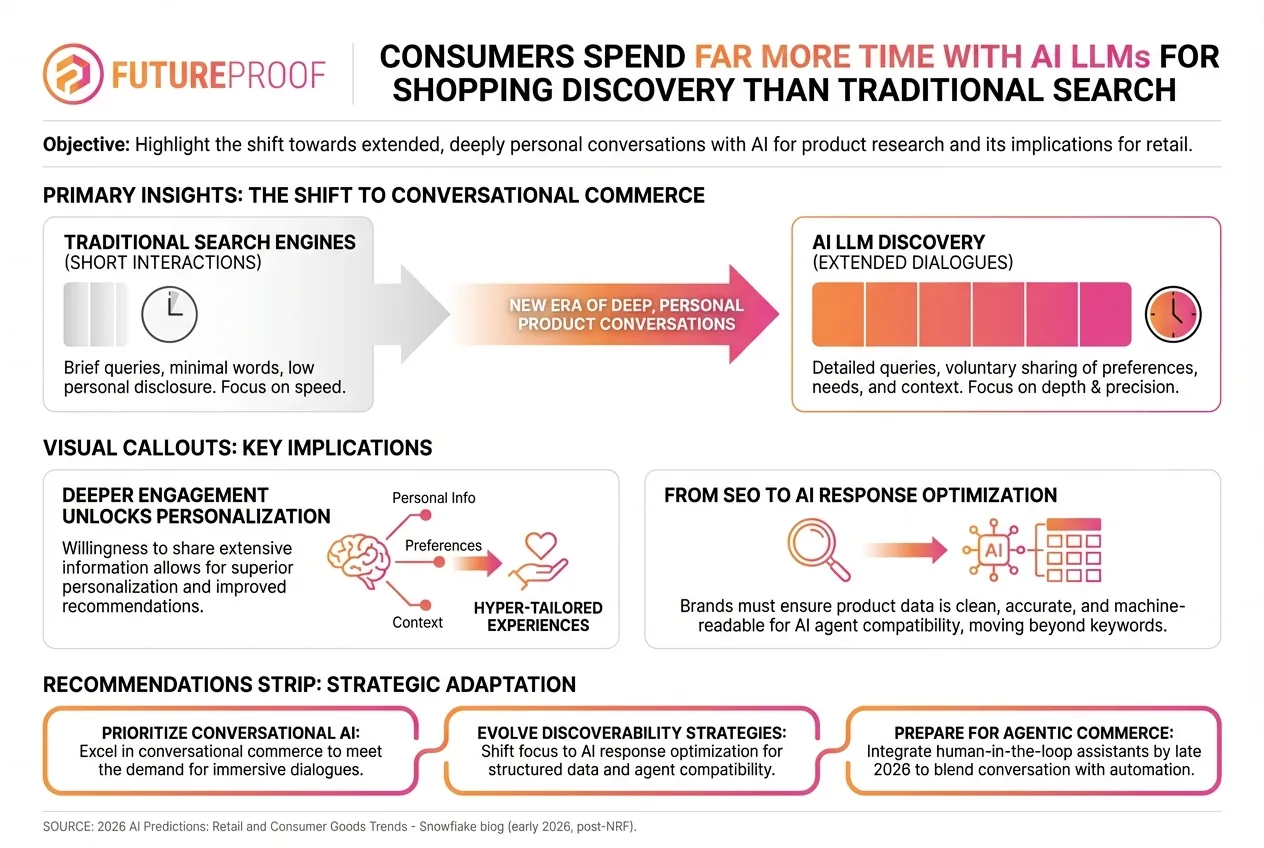
The retail landscape is undergoing a profound metamorphosis, one driven not by fleeting trends, but by a foundational shift in how consumers discover and engage with products. We are witnessing a monumental migration of shopping discovery from the familiar confines of traditional search engines to the dynamic, interactive realms of AI Large Language Models (LLMs). This isn't just an incremental improvement; it's a paradigm shift, signaling an era where short, fragmented keyword searches are being supplanted by longer, more personal, and deeply insightful conversations with artificial intelligence. For brands, this transformation is not merely an opportunity, but an imperative to fundamentally rethink their digital strategy, moving beyond the traditional tenets of SEO towards the sophisticated art of optimizing clean, structured product data for AI-driven responses.
The most compelling evidence of this shift lies in consumer behavior itself. Data highlights that consumers are spending significantly longer sessions with LLMs for product search, engaging in richer dialogues that extend far beyond the typical "blue links" experience. Moreover, they are sharing far more personal information within these AI interactions than they ever would in traditional search engines. This crucial insight, derived from the 2026 AI Predictions Retail and Consumer Goods Trends by Snowflake, underscores a burgeoning trust and willingness to engage deeply with AI tools when it comes to making purchasing decisions. This willingness to share personal context—be it lifestyle preferences, specific use cases, or even emotional needs—is gold for brands capable of harnessing these richer signals to deliver recommendations that are not just relevant, but truly resonant.
Traditional search engines, while incredibly powerful for their time, have always been inherently transactional. A user types "best waterproof hiking boots" and expects a list of product pages, reviews, and perhaps a few comparison articles. The interaction is brief, often anonymous, and focused on extracting specific information quickly. The user's intent is inferred from a few keywords, and the subsequent journey is largely self-directed, requiring them to sift through numerous results to piece together a decision. This model, for all its utility, often leaves a gap in understanding the deeper "why" behind a search. It's effective for known-item search or very specific, unambiguous queries, but it struggles with the nuanced, exploratory nature of true shopping discovery.
Enter the AI LLM. The interaction here is fundamentally different. Instead of fragmented keywords, the consumer can initiate a conversation: "I'm planning a hiking trip to Patagonia next spring, and I need durable, waterproof boots that are also comfortable for long treks. I tend to get cold feet, and I prioritize ethical manufacturing. What do you recommend?" This single query is rich with context, intent, and personal preferences that would take dozens of traditional keyword searches to even begin to approximate. The LLM doesn't just return a list; it engages. It might ask follow-up questions: "Are you looking for ankle support or a higher cut? Do you prefer a specific brand or material?" This back-and-forth simulates the experience of consulting with a knowledgeable sales associate or a trusted friend, guiding the consumer through a more holistic and iterative discovery process. This dynamic dialogue unlocks a level of contextual understanding that static keyword analysis simply cannot achieve, leading to significantly more precise and satisfying recommendations.
This transition from quick lookups to deep discovery journeys represents a profound evolution in how product research unfolds. With LLMs, consumers are no longer just searching for products; they are exploring possibilities, iterating on ideas, and refining their preferences in real-time. Imagine a user planning a home renovation project. Instead of searching "modern kitchen cabinets" then "sustainable countertops" then "smart kitchen appliances," they can tell an LLM: "I'm renovating my kitchen, aiming for a minimalist, Scandinavian aesthetic, but I also need it to be highly functional for a family of five. I'm keen on eco-friendly materials and smart home integration. Can you help me visualize some options and suggest specific products?" The LLM can then provide mood boards, suggest integrated product suites, explain the pros and cons of various materials in their context, and even help them budget. This isn't a transactional search; it's a consultative, immersive experience that guides the user from an initial idea to a well-defined purchasing plan. This iterative exploration fosters a deeper connection with the products and brands suggested, increasing the likelihood of a confident and considered purchase.
The implications for personalization are nothing short of revolutionary. As consumers engage in these longer, more personal conversations, they voluntarily disclose a wealth of "richer signals" that traditional search could only dream of inferring. Beyond basic demographics, LLMs capture explicit preferences (e.g., "I prefer cruelty-free products," "my budget is under $500"), implicit desires derived from conversational flow (e.g., hinting at a desire for convenience over absolute performance), lifestyle cues (e.g., discussing weekend camping trips), and even emotional drivers behind a purchase (e.g., "I want this gift to truly surprise my partner"). The Snowflake data point highlighting the increased sharing of personal information with LLMs for product search is critical here. This isn't an invasion of privacy; it's a voluntary exchange of context in pursuit of a superior, more tailored shopping experience.
This treasure trove of data enables hyper-personalization at an unprecedented scale. Brands can move beyond broad segmentation (e.g., "millennial women interested in fitness") to individual-level recommendations that consider unique circumstances, evolving needs, and deeply personal values. If an LLM knows a user has expressed interest in vegan, gluten-free, sustainable food options, and regularly shops for products for their small dog, it can curate a highly specific selection of groceries, pet supplies, and even local services that align perfectly with their intricate profile. This level of precision not only enhances the customer experience by reducing decision fatigue and irrelevant options but also builds profound brand loyalty. When a brand consistently delivers recommendations that feel genuinely understood and anticipated, it fosters a sense of trust and connection that transcends mere transactional relationships.
This monumental shift towards AI-driven shopping discovery fundamentally alters the landscape for brand visibility and competitive advantage. The era of traditional SEO, with its focus on keywords, backlinks, and page rank algorithms, is rapidly ceding ground to a new imperative: optimizing for AI. LLMs do not "crawl" the web in the same way Google's traditional algorithms do; they synthesize, infer, and generate responses based on a vast corpus of knowledge, including information found across the internet, but importantly, also directly from structured data. This means that merely ranking high for a keyword might no longer be sufficient if your product information isn't digestible and trustworthy for an AI.
The new battleground is clean, structured product data. Brands must transition from thinking about their website as a collection of pages optimized for human eyes and search engine bots, to viewing their product catalog as a highly organized, semantically rich database designed for AI consumption. What does this entail? It means meticulously defining every attribute of a product: its material composition, dimensions, weight, color variations, compatibility with other products, certifications (organic, fair trade, cruelty-free), use cases, maintenance instructions, warranty information, and even the emotional benefit it provides. This data needs to be consistent, accurate, complete, and presented in a machine-readable format – often leveraging schema markup (like Schema.org) to explicitly tag and define product entities and their relationships.
For an LLM to recommend "the best ethically sourced, hypoallergenic face cream for sensitive skin, suitable for humid climates," it needs a product database where "ethically sourced," "hypoallergenic," "sensitive skin," and "humid climate suitability" are clearly defined and associated with specific products. Without this granular, structured data, even the most advanced LLM will struggle to make precise and confident recommendations. The brand that has invested in robust Product Information Management (PIM) systems, ensuring data cleanliness, consistency, and comprehensiveness across all touchpoints, will be the one whose products are seamlessly integrated into AI-driven discovery journeys. This isn't just about presence; it's about being "AI-native," fluent in the language of data that these advanced models understand. It's about ensuring that when a consumer asks an AI for a recommendation, their product is not just found, but perfectly understood and articulated by the AI, highlighting its unique selling propositions in context.
To thrive in this evolving environment, brands must embark on several practical, strategic shifts. First, investing in robust Product Information Management (PIM) systems is no longer optional but critical. These systems serve as the single source of truth for all product data, ensuring consistency and accuracy across all channels, from e-commerce sites to social media to AI LLMs. Second, product descriptions must evolve beyond marketing copy to include detailed, factual, and semantically rich attributes. Think less about keyword density and more about data richness and contextual relevance. Every feature, benefit, and use case should be explicitly articulated and structured. Third, a deep understanding and rigorous implementation of schema markup, particularly for product, offer, review, and availability data, becomes paramount. This provides explicit signals to AI models about the nature and context of your product information.
Furthermore, brands should actively encourage and curate authentic user-generated content (UGC), including detailed reviews, Q&A sections, and even customer photos or videos. LLMs often synthesize insights from UGC to provide more human-centric recommendations and address common queries. The raw, honest feedback from real users is invaluable for AI models seeking to understand product performance and user satisfaction. Internally, this shift necessitates a cross-functional collaboration between marketing, data science, product development, and IT. Marketing teams need to understand data structures, while data scientists need to appreciate the nuances of brand voice and consumer intent. Lastly, brands should explore opportunities to partner with or integrate into leading LLM platforms, where possible, to gain insights into consumer interactions and refine their data strategies based on real-world AI queries. The urgency of this adaptation cannot be overstated; brands that fail to transform their data strategy risk becoming invisible in the burgeoning AI-driven discovery ecosystem, losing valuable market share to competitors who embrace this new paradigm.
In conclusion, the seismic shift from traditional search to AI LLMs for shopping discovery is not merely a technological advancement; it is a fundamental redefinition of the consumer-brand relationship. It ushers in an era where discovery is conversational, personalization is hyper-precise, and purchasing decisions are informed by a deeper, more empathetic understanding of consumer needs. The Snowflake data point, revealing longer sessions and greater personal information shared with LLMs, serves as a clear beacon, illuminating the path forward. For brands, this transformation demands a strategic pivot away from outdated SEO tactics towards an unwavering commitment to optimizing clean, comprehensive, and structured product data. Those who embrace this challenge, investing in their data infrastructure and adopting an AI-native mindset, will not only survive but thrive, unlocking unprecedented opportunities for customer engagement, loyalty, and growth in the exciting new frontier of AI-powered commerce. The future of shopping discovery is here, and it speaks the language of data and conversation.