AI Shopping Agents Are Transforming Retail Into an Ask and Receive Marketplace
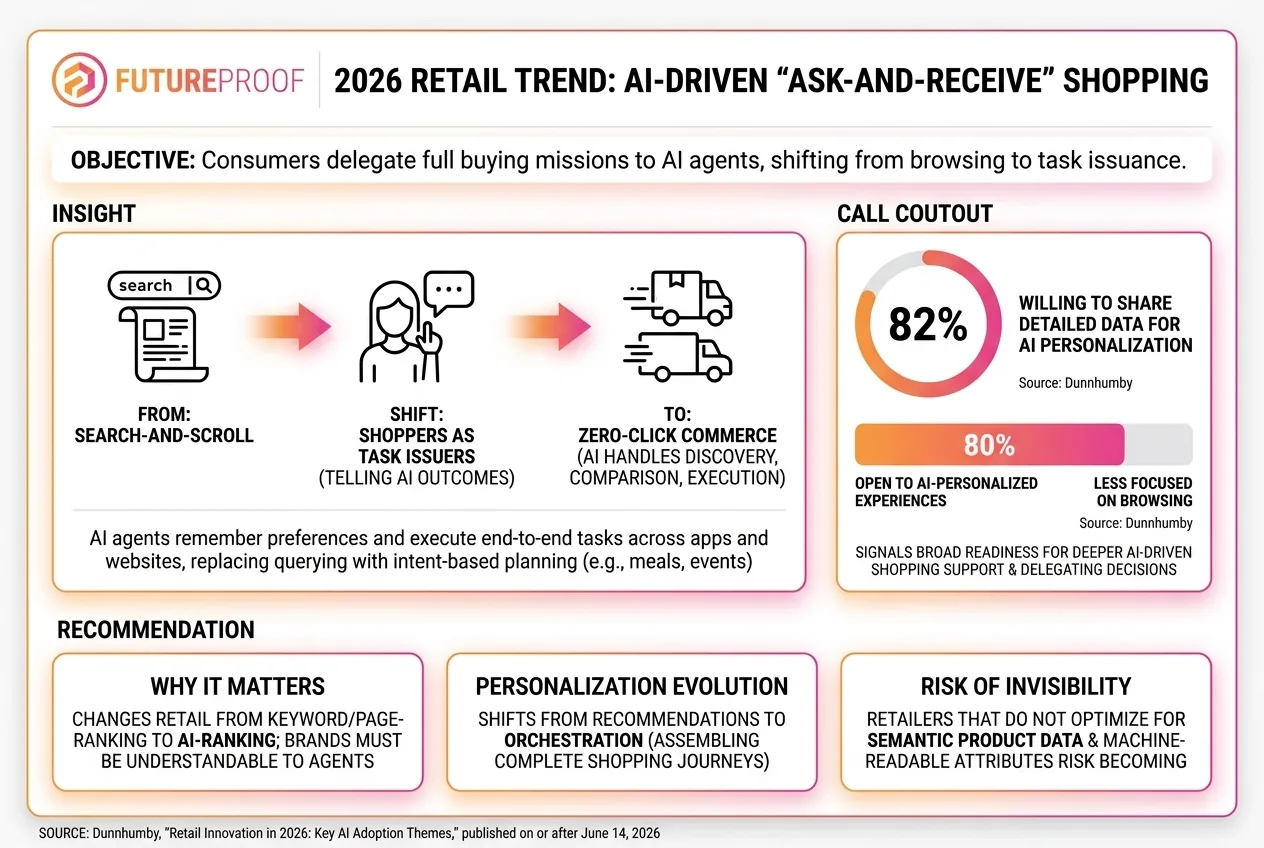
The retail landscape is undergoing an unprecedented seismic shift, driven not merely by digital acceleration, but by the burgeoning intelligence of artificial intelligence. For decades, the online shopping journey has been largely a game of search and scroll – consumers typing keywords into search bars, navigating endless product listings, comparing options manually, and finally making a purchase. This familiar paradigm, however, is rapidly becoming a relic of the past as AI ushers in an era of "ask and receive." Shoppers are increasingly comfortable delegating entire buying missions to sophisticated AI agents, entrusting them with the discovery, comparison, and even execution of purchases, transforming a laborious process into a seamless, often invisible, transaction.
This profound transformation isn't speculative; it's a present reality gaining undeniable momentum. Dunnhumby's insightful report, "Retail innovation in 2026: Key AI Adoption Themes," reveals compelling statistics: nearly 80 percent of consumers are not just open to, but actively embrace, AI-personalized experiences. Even more remarkably, 82 percent express a willingness to share detailed personal data to unlock these deeper, more tailored shopping journeys. This widespread acceptance signals a consumer base eager for intelligent assistance, ready to outsource the cognitive load of shopping to capable AI partners. It is a clear mandate for retailers and brands: adapt or risk obsolescence.
The implications of this shift are monumental, fundamentally altering the competitive dynamics of e-commerce. Retail is no longer a keyword game, where success hinged on optimizing for search engine algorithms and vying for top organic rankings. Instead, it has evolved into an AI ranking game, where brand visibility and product discoverability are dictated by an entirely new set of rules. As AI agents assume greater end-to-end shopping tasks, the traditional pathways to consumer attention are being rerouted, emphasizing a critical new imperative for brands: product data must be structured, semantic, and machine-readable. Failure to meet this fundamental requirement means risking utter invisibility within the emerging realm of zero-click commerce journeys.
The Rise of the AI Shopping Agent: Your New Concierge
Imagine a world where you don't browse for hours, but simply state your need. "Find me an eco-friendly, durable hiking boot suitable for wide feet, under $180, available for delivery next week." This isn't a futuristic fantasy; it's the operational premise of today's evolving AI shopping agent. These intelligent assistants are far more than just sophisticated chatbots; they are digital concierges capable of understanding nuanced intent, sifting through millions of product attributes, comparing features across multiple retailers, reading reviews, assessing availability, and ultimately presenting the ideal solution – or even completing the purchase – all with minimal human intervention.
These AI agents excel at tasks that once consumed significant shopper time and effort. They perform rapid discovery, identifying products that align with highly specific criteria, filtering out irrelevant options with precision. Their comparison capabilities extend beyond price, delving into performance metrics, material composition, sustainability credentials, brand reputation, and user-generated feedback. Finally, they can execute the transaction, leveraging stored payment details and delivery preferences to finalize a purchase seamlessly. For the time-poor, decision-fatigued consumer, this delegation of the buying mission represents an irresistible value proposition, transforming shopping from a chore into an effortless fulfillment of desire.
The personalized nature of these AI interactions is key to their appeal. By learning from past purchases, preferences, browsing history, and even stated values (e.g., preference for sustainable brands), AI agents can tailor recommendations with an accuracy and relevance that human-driven search simply cannot match. This hyper-personalization fosters a deeper sense of trust and loyalty, as consumers increasingly view their AI agent as a reliable and insightful shopping partner. For brands, this means that merely having a product available isn't enough; the product must be recommended by the AI, and that recommendation is contingent on how well the product's data speaks to the AI.
Consumer Readiness: The Data Speaks Volumes
The rapid adoption curve of AI-driven commerce is strongly supported by consumer sentiment. The Dunnhumby report paints a vivid picture of a populace not merely tolerating, but actively welcoming, AI into their shopping lives. The statistic that nearly 80 percent of consumers are open to AI-personalized experiences underscores a fundamental shift in expectations. Shoppers no longer want generic recommendations; they crave bespoke solutions that anticipate their needs and align with their unique lifestyles. AI's ability to process vast quantities of data to deliver this level of personalization is its superpower, and consumers are responding enthusiastically.
Even more striking is the finding that 82 percent of consumers are willing to share detailed data to enable these personalized experiences. In an era often characterized by privacy concerns, this willingness signals a clear value exchange: consumers are prepared to trade data for convenience, relevance, and superior outcomes. They understand that the richer the data provided – from purchase history and demographic information to explicit preferences and behavioral patterns – the more effective and intuitive their AI shopping agent will become. This trust in AI to handle sensitive information responsibly, coupled with the perceived benefits of hyper-personalization, creates a fertile ground for AI-driven retail to flourish.
This strong consumer readiness has profound implications for retailers. Those who cling to traditional search-and-scroll models risk being left behind, losing market share to agile competitors who embrace AI-first strategies. The window of opportunity to pivot and invest in AI-driven capabilities is narrowing. Ignoring these consumer preferences is tantamount to ignoring the future of commerce itself. The data clearly indicates that consumers are ready to move beyond rudimentary digital interactions, demanding a smarter, more integrated, and deeply personalized shopping journey powered by artificial intelligence.
From Keyword Game to AI Ranking Game: The New Rules of Visibility
For decades, the battle for online visibility was fought on the hallowed grounds of search engine results pages (SERPs). Brands meticulously crafted content, optimized keywords, built backlinks, and chased algorithm updates to achieve those coveted top spots. Success was measured in click-through rates and organic traffic. The rise of AI shopping agents, however, fundamentally rewrites these rules, ushering in an "AI ranking game" that prioritizes a different kind of discoverability.
In the world of AI agents, traditional keyword stuffing and SEO tactics lose much of their efficacy. AI agents don't merely scan for keywords; they interpret context, understand intent, and synthesize information from a multitude of sources. When a consumer asks an AI agent for a product, the agent doesn't present a list of search results to be browsed; it presents a recommendation, or even executes a purchase, directly. This is the essence of "zero-click commerce journeys" – interactions where the consumer's mission is fulfilled without ever clicking through to a brand's website or product page in a traditional sense.
The danger for brands in this new paradigm is profound: invisibility. If an AI agent cannot understand your product, its features, its benefits, and its relevance to a specific user query, then your product effectively ceases to exist within that AI-driven journey. It won't be ranked, it won't be recommended, and it won't be purchased. This means that merely having a well-optimized website is no longer sufficient. Brands must now optimize for AI intelligibility, ensuring their product data is structured, semantic, and machine-readable in a way that AI agents can effortlessly process and incorporate into their recommendation algorithms.
The AI ranking game is less about keyword density and more about data richness, accuracy, and interpretability. Factors influencing an AI's "ranking" will include the completeness of product attributes, the clarity of semantic relationships between features, the freshness of inventory data, the authenticity of reviews, and the overall coherence of a brand's digital presence. Brands that excel in this new game will be those whose digital assets are designed not just for human consumption, but for seamless machine comprehension, ensuring their products are consistently considered and recommended by intelligent agents.
The Imperative of Structured, Semantic, Machine-Readable Product Data
At the heart of success in the AI-driven retail era lies a critical foundation: impeccably managed product data. It's no longer enough to have attractive product descriptions and high-quality images; the underlying data must be precisely structured, imbued with semantic meaning, and easily digestible by machines. This triumvirate of data characteristics forms the bedrock of AI intelligibility, making the difference between being a top recommendation and being overlooked entirely.
Structured Data:
This refers to product information organized in a highly standardized, predictable format that AI algorithms can easily parse and understand. Think of it as labeling every piece of information with explicit tags. Instead of a paragraph describing a shoe's features, structured data separates attributes like product_name: "Nike Air Zoom Pegasus 39", brand: "Nike", price: "$130.00", color: "Black/White", size_range: "US 6-15", material: "Engineered Mesh", features: ["Responsive cushioning", "Durable outsole", "Breathable upper"], sustainability_rating: "Eco-Friendly". This is often achieved using schema markup (like Schema.org vocabulary in JSON-LD format), which provides a universal language for describing entities on the web. Without structured data, AI agents would struggle to consistently extract key product attributes, leading to incomplete or inaccurate recommendations. It provides the unambiguous facts that an AI needs to operate efficiently.
Semantic Data:
While structured data provides the labels, semantic data imbues that information with meaning and context, establishing relationships between different attributes and concepts. It's about understanding why a particular feature is relevant or how it relates to a user's need. For instance, an AI agent needs to understand that "responsive cushioning" (a structured feature) directly relates to "comfort for long runs" or "impact absorption" (semantic understanding). It's not just listing "DWR coating"; it's understanding that DWR means "water-resistant," which is important for "outdoor activities" in "wet conditions." Semantic data allows AI to connect the dots, moving beyond superficial keyword matching to grasp the deeper intent behind a consumer's query. This might involve enriching product attributes with synonyms, ontologies, and relationships that explain their function and benefit. For example, knowing that "vegan leather" is a type of "sustainable material" or that "ergonomic design" contributes to "user comfort." This rich, interconnected data allows AI to perform sophisticated comparisons and offer highly relevant suggestions, even for complex or abstract user requests.
Machine-Readable Data:
This refers to the format and accessibility of product information, ensuring it can be automatically accessed and processed by AI agents without human intervention. This often involves providing data through APIs (Application Programming Interfaces) or in standardized, machine-friendly formats like XML or JSON. Data needs to be consistently updated, accurate, and available in a way that AI systems can query it programmatically. If a brand's inventory or pricing data isn't machine-readable and real-time, an AI agent might recommend an out-of-stock item or an incorrect price, leading to a frustrating customer experience and diminishing trust in the AI. Furthermore, machine-readable data enables AI agents to integrate information from diverse sources, creating a holistic view of a product that goes beyond what's presented on a single brand's website. This includes aggregating reviews, comparing specifications from competing products, and cross-referencing industry standards.
The challenge for brands is significant. Many legacy systems and traditional e-commerce platforms were not built with this level of data granularity and interoperability in mind. Investing in robust Product Information Management (PIM) systems, mastering schema markup, and adopting strict data governance practices are no longer optional; they are foundational requirements. A brand selling a running shoe, for example, needs to ensure its product data explicitly states: terrain_suitability: "road running", arch_support: "moderate", cushioning_level: "high", drop_mm: "10", weight_oz: "9.5", and that these attributes are semantically linked to benefits like "reduces joint impact" or "ideal for long distances." When a consumer asks for "a comfortable running shoe for knee pain," an AI agent armed with this rich, semantic, structured data can instantly identify the best matches.
Becoming Intelligible to AI: The New Retail Frontier
The adage "the next wave of retail will not be about who has the best shelf but who is most intelligible to AI" perfectly encapsulates the transformative nature of this shift. Physical shelf space once dictated visibility and sales; then, digital "shelf space" on prominent e-commerce sites and search results took precedence. Now, the battleground is cognitive – it's about how effectively your products can be understood by artificial intelligence.
Intelligibility to AI goes beyond mere data points. It encompasses a holistic approach to how a brand presents itself in the digital realm, ensuring that every piece of content, every product attribute, and every digital interaction contributes to a coherent, comprehensive, and machine-understandable narrative. This means:
- Rich, Descriptive Content: Product descriptions must be thorough, not just keyword-optimized. They need to explain benefits, use cases, and unique selling propositions in clear, unambiguous language that both humans and AI can process.
- Contextual Relevance: Brands need to think about the broader context in which their products are used. If you sell outdoor gear, does your data connect to activities like "hiking," "camping," or "trail running"? Does it link to weather conditions or environmental factors?
- Multi-Modal Data: AI agents are becoming increasingly adept at processing not just text, but also images, video, and audio. Brands should ensure their visual assets are well-tagged with descriptive metadata, and video content includes transcripts and detailed summaries to enhance AI comprehension.
- Trust Signals: AI agents will increasingly factor in trust and reputation. This means consistent, positive customer reviews, clear return policies, transparent sourcing information, and certifications (e.g., organic, fair trade) must be readily available and machine-readable.
- Dynamic Data Updates: Intelligibility also implies real-time accuracy. Inventory levels, pricing, promotions, and delivery estimates must be continuously updated and accessible to AI agents to prevent misinformation and ensure a smooth customer experience.
For brands, this isn't simply a technical exercise; it's a strategic imperative. It requires a fundamental rethinking of content creation, data management, and digital strategy. Brands that proactively adapt, investing in the infrastructure and processes to achieve AI intelligibility, will gain a significant competitive advantage. Those that lag will find their products increasingly marginalized, hidden within the vast ocean of digital information, unable to be found or recommended by the very systems guiding consumer choices.
Strategies for Brands and Retailers to Thrive in the AI Era
Navigating this new retail frontier requires a proactive and strategic approach. Brands and retailers must embark on a journey of data transformation to ensure their continued relevance and success.
- Conduct a Comprehensive Product Data Audit: The first step is to understand the current state of your product information. Identify gaps in structured data, inconsistencies, and areas where semantic richness is lacking. Assess how easily your existing data can be accessed by external systems.
- Invest in Robust PIM and Data Governance: A modern Product Information Management (PIM) system is no longer a luxury but a necessity. It centralizes, enriches, and syndicates product data across all channels. Implement strong data governance policies to ensure data accuracy, consistency, and completeness from the source.
- Embrace Schema Markup (JSON-LD) Religiously: Make schema markup a standard practice for every product page, category page, and piece of content. This provides AI agents with explicit, machine-readable information about your offerings, dramatically improving discoverability.
- Focus on Rich, Descriptive, Semantic Content: Move beyond basic product specifications. Craft descriptions that explain benefits, use cases, and the emotional connection your product offers. Integrate synonyms, contextual terms, and relationship data to enhance semantic understanding.
- Understand Customer Intent Beyond Keywords: Leverage analytics and customer feedback to grasp the underlying intent behind shopper queries. What problems are they trying to solve? What aspirations are they pursuing? This insight will guide your data enrichment efforts.
- Pilot AI-Driven Experiences: Experiment with integrating AI agents into your own customer service or recommendation engines. This hands-on experience will provide invaluable insights into how AI interprets data and interacts with users.
- Collaborate with AI Platforms: Actively seek partnerships or integration opportunities with leading AI shopping agent platforms. Understand their data requirements and work to align your product information accordingly.
- Prioritize Real-Time Data Sync: Ensure that critical data points like inventory levels, pricing, and promotions are updated in real-time and accessible to AI agents. Outdated information can severely damage trust and lead to lost sales.
- Build a Culture of Data Literacy: Educate your marketing, e-commerce, and product teams on the importance of structured and semantic data. Foster a culture where data quality is seen as a shared responsibility and a competitive differentiator.
Conclusion
The shift from search and scroll to ask and receive is not merely an incremental change in retail; it represents a fundamental redefinition of the shopping journey. AI shopping agents are rapidly becoming the primary gatekeepers of consumer attention, transforming the competitive landscape from a keyword-driven battle to an AI-ranking game. The brands and retailers that will thrive in this new era are those that recognize the urgent imperative to make their products intelligible to artificial intelligence.
This demands a profound commitment to structuring, enriching, and standardizing product data, ensuring it is not only accurate but also deeply semantic and machine-readable. The future of retail is not just digital; it is intelligently digital, where visibility is earned not by the prominence of a physical shelf or a top search result, but by the clarity and depth with which a product's story can be understood by an AI. Those who embrace this transformation with foresight and agility will unlock unprecedented opportunities for personalization, efficiency, and sustained growth, leading the charge into the truly intelligent age of commerce.