
The New Battle for Retail Winning Selection in the Age of AI Shoppers
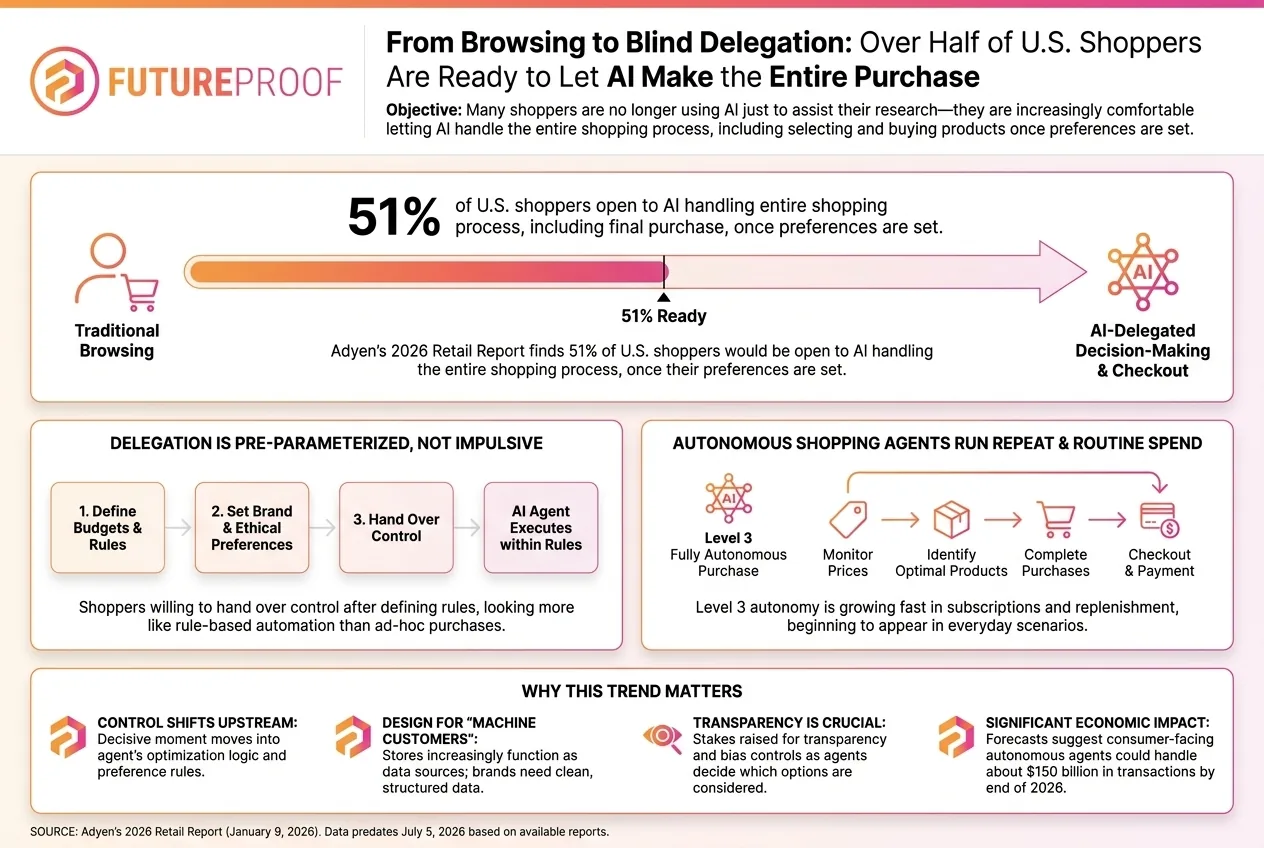
The retail landscape is on the cusp of a revolutionary transformation, driven not just by advanced technology, but by a profound shift in consumer behavior. A groundbreaking finding from Adyen’s January 2026 Retail Report reveals an accelerating trend that demands immediate attention from every brand and retailer: consumers are no longer content with AI merely assisting their shopping journey; they are ready to delegate the entire purchasing process. This isn't a futuristic fantasy; it's a rapidly approaching reality, with 51 percent of U.S. shoppers expressing openness to AI handling complete shopping, including final transactions, once their preferences are established. This seismic shift fundamentally redefines competition, demanding a proactive pivot from traditional marketing tactics to an entirely new paradigm centered around appealing to intelligent autonomous agents.
The implications of this burgeoning trend are vast and multifaceted. For decades, the retail industry has meticulously crafted strategies around captivating human attention, influencing decisions at various touchpoints, and ultimately driving the 'last click' to conversion. However, in a world where an AI system makes the final choice on behalf of a consumer, the very concept of last-click persuasion becomes significantly diminished, if not entirely obsolete. The battleground for consumer dollars is moving upstream, away from the checkout page and into the foundational layers of product discovery and selection by an AI agent. This new reality mandates that brands rethink their digital presence, moving beyond human-centric messaging to engineer their offerings for confident selection by sophisticated machine customers. The brands that understand and adapt to this shift will not only survive but thrive in the next generation of retail.
At its core, this evolution signifies a transition from human-driven impulse and emotional appeal to machine-driven logic and efficiency. While human shopping often involves browsing, comparing, and succumbing to persuasive marketing, AI-delegated purchasing prioritizes pre-defined parameters, past preferences, and quantifiable value signals. This isn't to say that human emotion is entirely removed from the equation – the AI is, after all, acting on behalf of a human with specific tastes and needs. However, the method of influencing that purchase decision changes dramatically. Instead of a carefully crafted banner ad or a perfectly timed promotional email, brands must now focus on making their products the most logical, beneficial, and seamlessly discoverable choice for an AI system. This means that the importance of being inherently selectable by an AI agent eclipses many traditional forms of persuasion.
The path to achieving AI selectability hinges on two critical pillars: immaculate structured product data and clear, machine-readable signals of value. Structured product data is the fundamental language through which AI systems understand what a product is, what it does, and how it compares to others. This goes far beyond basic product descriptions. It encompasses standardized attributes like SKU, GTIN, manufacturer, materials, dimensions, weight, color variations, technical specifications, warranty information, sustainability certifications, country of origin, and comprehensive inventory status, all presented in a consistent, easily parsable format. Think of it as providing the AI with a meticulous blueprint of your entire product catalog, free from ambiguity or interpretation. Without this clean, consistent, and comprehensive data, AI agents cannot confidently evaluate or recommend your products, leading to them being overlooked regardless of their actual quality or value. Investing in robust Product Information Management (PIM) and Master Data Management (MDM) systems is no longer an optional luxury but a strategic imperative to remain competitive.
Beyond mere factual data, brands must also learn to convey value in a language that AI systems can understand. What constitutes "value" for an AI? It could be anything from superior durability metrics, energy efficiency ratings, positive sentiment analysis from verified customer reviews, ethical sourcing certifications, clear return policies, or a demonstrable track record of excellent customer service. These are the "machine-readable signals" that tell an AI why your product stands out. For instance, an AI tasked with finding a "sustainable and durable" pair of shoes won't be swayed by evocative marketing copy alone. It will look for specific certifications (e.g., Fair Trade, recycled materials), quantified durability tests, and objective measures of longevity. Brands need to audit every aspect of their product and operational value chain, translating subjective human appeals into objective, verifiable data points that an AI can confidently process and act upon. This requires a shift in mindset, moving from storytelling to data-backed assertions of worth.
As autonomous agents assume more significant decision-making roles, the bedrock principles of trust and transparency become paramount. Consumers are entrusting their money and preferences to an algorithm; therefore, they need to feel confident that the AI is acting in their best interest, free from undue influence or hidden biases. For retailers, this means not just demonstrating algorithmic fairness and accuracy, but also offering clear explanations for AI recommendations when prompted. Transparency in how AI leverages data, how it learns preferences, and what criteria it uses for selection will build consumer confidence. Furthermore, establishing clear mechanisms for human oversight, intervention, or the ability to override an AI's choice will be crucial in fostering widespread adoption. A lack of trust can quickly undermine the entire premise of AI-delegated purchasing, regardless of its efficiency or convenience. Brands must proactively communicate their commitment to ethical AI practices and data privacy, making these principles a core part of their brand identity.
The future of retail, therefore, is not about choosing between human or machine customers, but about building for both simultaneously. This requires a holistic strategy where brand identity, product offerings, and customer experience are seamlessly integrated across all touchpoints, whether the interaction is directly with a human or mediated by an AI. A brand’s values, its commitment to quality, its ethical stance, and its unique selling propositions must be consistently communicated and verifiable, regardless of the customer type. This means ensuring that while your website captivates human browsers with rich imagery and engaging copy, your backend data feeds are equally compelling for AI agents through their precision and comprehensiveness. The blurring lines between human and machine interaction mean that AI will increasingly reflect human preferences, learning and adapting to individual tastes. Therefore, crafting a brand that resonates deeply with human values will implicitly influence AI's choices on their behalf. The goal is to create an ecosystem where the AI acts as a perfect extension of the human consumer, making choices that align perfectly with their desires, even without direct human input at the point of purchase.
Preparing for this future demands immediate and strategic action from retailers. Firstly, conduct a comprehensive audit of your existing product data infrastructure. Is it clean, standardized, and easily accessible? If not, invest in robust PIM and MDM solutions to centralize and enrich your product information. Secondly, identify and quantify your unique value propositions. How can you translate subjective benefits into machine-readable signals? This might involve collaborating with third-party certifiers or developing internal scoring systems. Thirdly, rethink your marketing and SEO strategies. Beyond keywords for human search, consider how your content and product listings can be optimized for AI discovery and evaluation. This involves not just technical SEO, but semantic clarity and the unambiguous presentation of facts. Fourthly, prioritize ethical AI development and data governance within your organization. Build trust by design, not as an afterthought. Finally, foster a culture of AI literacy throughout your business. Understand that this isn't just an IT challenge; it's a fundamental business transformation that requires collaboration across departments, from marketing to product development to customer service. The question for retailers is no longer whether AI will drive conversions, but whether they are actively building for human customers and machine customers at the same time, ensuring their brand remains not just seen, but selected.
The Adyen 2026 Retail Report serves as a potent wake-up call, signaling that the era of full AI-delegated purchasing is upon us. This isn't a distant speculation but a concrete consumer willingness that is shaping the immediate future of retail. Brands that recognize this shift will proactively invest in clean, structured product data and articulate machine-readable signals of value, thereby positioning themselves for selection by autonomous agents. They will champion trust and transparency, understanding that these are the cornerstones of consumer confidence in AI-driven commerce. By building for both human and machine customers simultaneously, retailers can ensure their continued relevance and success in a rapidly evolving marketplace. The window for adaptation is now, and the brands that embrace this dual customer paradigm will be the ones that win the next generation of retail.


