AI Assistants Are Becoming the New Product Discovery Engine and Most Brands Are Not Ready
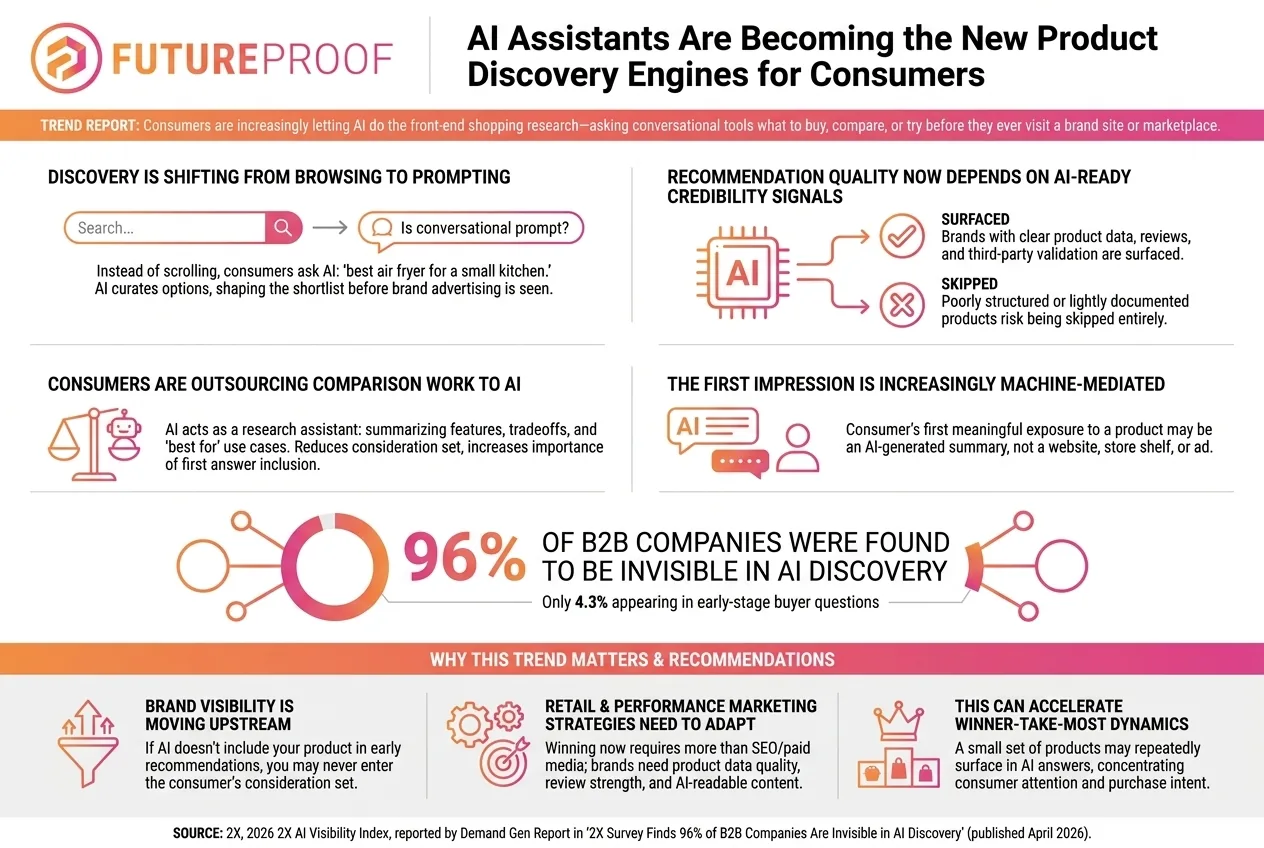
The landscape of consumer product discovery is undergoing a profound and irreversible transformation, reshaping the very foundations of how brands connect with their audience. For decades, the digital frontier of commerce was defined by search engines and sprawling e-commerce platforms, where consumers actively browsed categories, compared features, and meticulously sifted through options. Today, a new paradigm is rapidly emerging, driven by the pervasive integration of AI assistants into our daily lives. These intelligent tools are not merely evolving; they are quickly becoming the new product discovery engines, fundamentally altering the consumer journey from a process of active browsing to one of intuitive prompting.
This monumental shift signifies a pivotal moment for brands globally. Shoppers are increasingly bypassing the traditional navigation of websites and digital storefronts, opting instead to engage with AI tools, asking for personalized recommendations, comparative analyses, and curated shortlists. Imagine a scenario where a consumer no longer searches "best noise-canceling headphones" and sifts through pages of results, but instead prompts an AI assistant: "Find me the best noise-canceling headphones for long-haul flights under $300 that are comfortable for small ears and have excellent battery life." The AI, equipped with vast datasets and sophisticated algorithms, processes this complex query, evaluates countless products, and delivers a concise, highly relevant set of options. The critical implication here is that the initial shortlist – the consideration set – is now often shaped, refined, and presented to the consumer before they ever set foot on a brand's owned digital property.
This machine-mediated first impression is the new gatekeeper to consumer attention. As AI systems take over the laborious work of comparison, summarize intricate features, and distill complex use cases into easily digestible insights, the window of opportunity for brands to make an impact is both narrowing and shifting. If a brand's product is not included in these early, AI-generated recommendations, it risks becoming functionally invisible, potentially never entering the consumer’s consideration set at all. This reality underscores an urgent imperative for businesses: adaptability is no longer an option, but a prerequisite for survival and growth in the AI-first economy. The future of brand visibility hinges on proactive strategies that align with the interpretive capabilities of artificial intelligence, rewarding brands that invest strategically in AI-ready content and robust digital infrastructures. This shift is not merely an incremental change; it is poised to accelerate "winner take most" dynamics, where a select few brands that master AI visibility will dominate market share, leaving unprepared competitors struggling for a foothold.
The core challenge for brands is to understand and adapt to the AI's "language" – the specific data points, validation signals, and content structures that these intelligent systems prioritize when evaluating and recommending products. No longer is it sufficient to merely exist online; products must be discoverable and recommendable by AI. This necessitates a fundamental re-evaluation of content strategy, product data management, and digital shelf optimization. The goal isn't just to rank high in traditional search; it's to be deemed relevant, credible, and optimal by an algorithmic intelligence acting as an impartial, yet powerful, advisor to millions of consumers.
Central to achieving this AI-driven visibility is the imperative for strong product data. AI assistants thrive on structured, comprehensive, and accurate information. This goes far beyond basic product names and prices. AI requires granular details: materials, dimensions, certifications, compatibility, specific features, benefits translated into real-world use cases, and even nuanced attributes that differentiate one product from another. For instance, a query about "sustainable running shoes" demands data not just on shoe size and color, but also on recycled content percentages, manufacturing processes, ethical sourcing, and end-of-life recycling programs. Each piece of data acts as an attribute that the AI can analyze, categorize, and cross-reference against a consumer's prompt. Brands must invest in sophisticated Product Information Management (PIM) systems that can centralize, enrich, and distribute this data consistently across all touchpoints, ensuring that the AI always accesses the most up-to-date and complete product profiles. Semantic enrichment, where product descriptions are crafted not just for human readability but for machine interpretability, becomes crucial. This means using clear, unambiguous language, associating terms with specific entities, and providing context that allows AI to understand the "why" behind a feature, not just the "what."
Equally critical are credible reviews. In a machine-mediated world, the authenticity and authority of social proof take on a new dimension. AI systems are sophisticated enough to analyze sentiment, identify patterns in user feedback, and even detect potentially fraudulent reviews. They don't just count stars; they parse the content of reviews to understand common pain points, celebrated features, and real-world performance. A high volume of positive, detailed, and recent reviews signals to the AI that a product is not only popular but genuinely satisfies user needs and delivers on its promises. Brands must implement robust strategies for ethically soliciting and managing customer reviews, ensuring their legitimacy and prominence. This includes fostering a community that provides genuine feedback, responding to reviews proactively, and even leveraging micro-influencers whose authentic endorsements can be interpreted as validation by AI algorithms. Beyond customer reviews, third-party validation, such as industry awards, expert endorsements, and reputable certifications, serve as powerful trust signals for AI systems. These external seals of approval offer objective evidence of quality and performance, giving AI further confidence in recommending a product to discerning consumers.
The ability for AI systems to clearly interpret validation is paramount. This encompasses not just reviews but also how a brand communicates its value proposition, unique selling points, and target audience. Is your product explicitly positioned for "gamers" or "remote workers" or "eco-conscious parents"? AI needs these explicit signals to match products with specific user intents. This involves refining product descriptions to clearly articulate who the product is for, what problems it solves, and why it's superior to alternatives. Structured data, such as Schema.org markup, becomes a powerful tool here. By tagging product attributes, reviews, pricing, availability, and use cases with machine-readable code, brands provide AI with an explicit roadmap to interpret and categorize their offerings. This semantic scaffolding helps AI understand the nuances of a product, ensuring it's recommended in the most relevant contexts. Without this clear validation, products risk being overlooked, even if they possess superior features or value. The AI cannot recommend what it cannot fully understand or confidently validate.
This transformative shift is set to accelerate winner take most dynamics. Brands that recognize this paradigm shift early and invest proactively in AI-ready content will establish an insurmountable lead. As AI systems learn and refine their recommendation capabilities, products that consistently appear in early-stage suggestions will gain compounding advantages. Increased visibility leads to higher adoption, which in turn generates more data, more reviews, and further validation for the AI, creating a powerful feedback loop. Conversely, brands that delay their adaptation risk being marginalized, their products rendered effectively invisible to a vast segment of the market. The cost of inaction will far outweigh the investment required to optimize for AI discovery. This isn't just about market share; it's about the fundamental ability to participate in the future of commerce.
A stark data point from a 2026 survey illuminates the urgency of this challenge: 96 percent of B2B companies were invisible in AI discovery, with only 4.3 percent appearing in early stage buyer questions. This alarming statistic, reported by the 2X AI Visibility Index by Demand Gen Report in April 2026, serves as a powerful wake-up call. While this particular survey focuses on the B2B sector, its implications resonate across all industries, including B2C. If B2B companies, often dealing with more complex products and longer sales cycles, are struggling with AI visibility to such an extent, the B2C landscape – characterized by rapid consumer decisions and fierce competition – will likely face even more intense pressure. The "early stage buyer questions" are precisely where AI assistants are shaping the consideration set. Being absent at this crucial juncture means being out of the game before it even begins. This invisibility isn't about being unfindable by a human performing a traditional search; it's about being entirely excluded from the AI's curated recommendations, which for many consumers, are becoming the default starting point for product exploration.
To secure future visibility, brands must embark on a comprehensive strategy for AI optimization. This begins with a thorough audit of existing product content across all platforms. How is your data structured? Is it consistent? Is it rich enough to answer complex, nuanced queries an AI might receive? Brands need to move beyond keyword stuffing and embrace semantic SEO, focusing on topics, entities, and user intent that an AI can truly understand. Investing in advanced PIM and Digital Asset Management (DAM) systems is no longer a luxury but a necessity, providing a single source of truth for all product information and digital assets. Proactive implementation of Schema.org markup for product attributes, reviews, pricing, and availability is paramount. Crafting content that goes beyond simple descriptions to include detailed FAQs, comparison guides, and "best for" scenarios can provide AI with the contextual information it needs to make informed recommendations. Furthermore, brands should actively monitor and experiment with how their products perform in various AI assistants and generative AI platforms, understanding their unique interpretive models and adjusting content accordingly. This requires a cross-functional effort, uniting marketing, product development, IT, and sales teams to create a cohesive, AI-ready content ecosystem.
The evolution of AI assistants into product discovery engines represents not just a technological advancement, but a fundamental paradigm shift in consumer behavior and brand engagement. The days of simply having a product on a digital shelf and hoping consumers find it are rapidly fading. The new reality is one where the digital shelf is mediated by artificial intelligence, and inclusion in its early recommendations is the new frontier of brand visibility. For brands, the choice is clear: adapt to this new, prompt-first future by investing in strong product data, cultivating credible reviews, and ensuring clear validation for AI systems, or risk being relegated to the 96 percent of invisible entities. The brands that embrace this change now will not only survive but thrive, accelerating their path to market leadership in an increasingly AI-driven world. The future of commerce is here, and it speaks the language of AI. It’s time for brands to become fluent.