The Rise of AI Optimized Four Stop Shopping and the End of Traditional Retail Loyalty
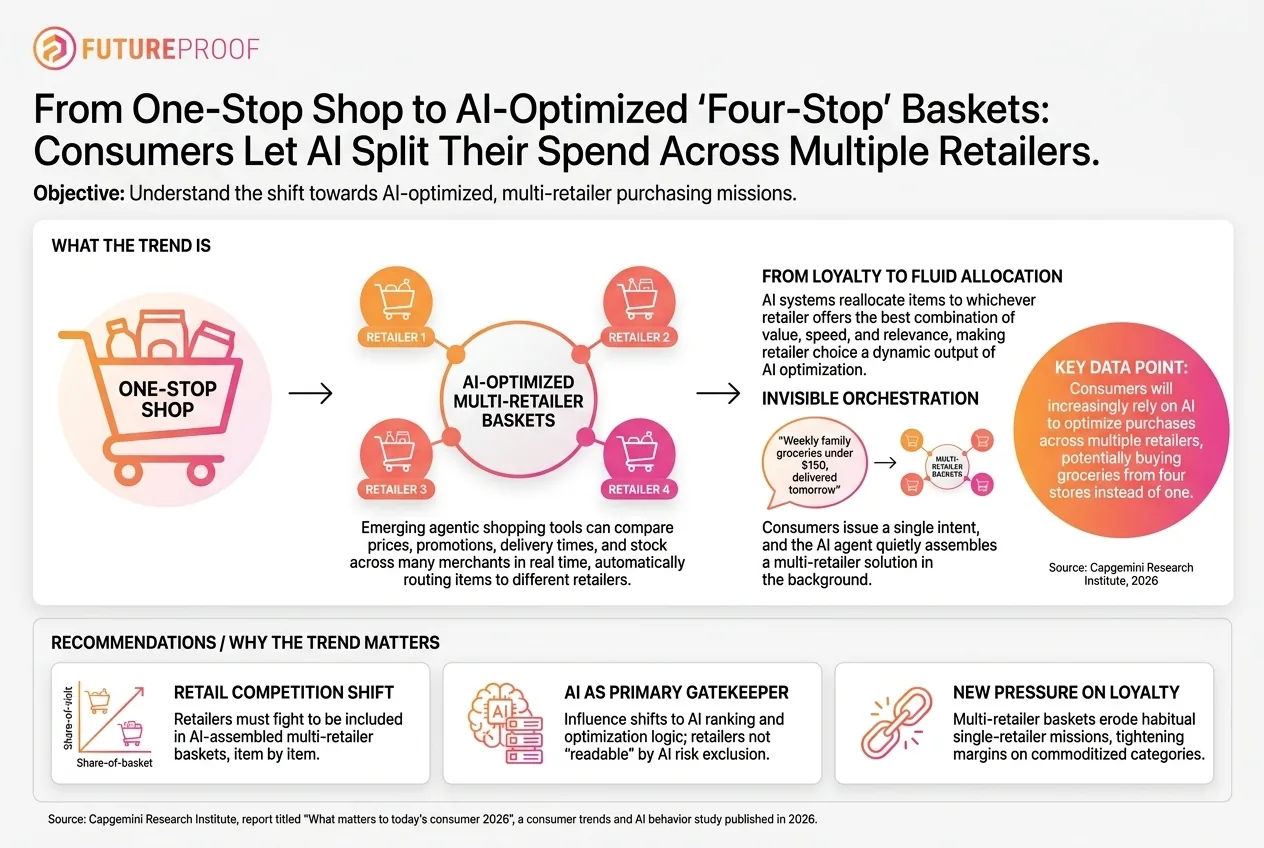
The landscape of consumer commerce, long governed by the familiar rhythm of the weekly grocery run or the dedicated department store visit, is undergoing a seismic transformation. For decades, retailers vied for "share of visit," striving to entice shoppers into their physical or digital storefronts, hoping to capture their entire purchase mission. Loyalty programs, curated aisles, and personalized recommendations were all designed to deepen the bond between consumer and single retailer. This era, however, is rapidly drawing to a close, supplanted by an emergent paradigm where AI-driven efficiency trumps traditional affinity. The journey from a one-stop shop to AI-optimized, multi-retailer “four-stop baskets” is not merely an evolution; it’s a revolution, fundamentally redefining how consumers shop and how retailers must compete.
At the heart of this shift are advanced agentic shopping tools. These are not mere price comparison websites of yesteryear. These sophisticated AI agents function as personal shopping bots, operating with unprecedented autonomy and intelligence. They meticulously comb through an astonishing array of data points across countless merchants in real-time. Imagine an AI sifting through prices, scrutinizing ongoing promotions, cross-referencing available stock, analyzing delivery windows, and even factoring in shipping costs from dozens of competing retailers – all for a single item on a shopping list. But their capability extends far beyond simple comparison. These AI tools possess the computational prowess to dynamically split a single purchase mission across multiple retailers, orchestrating a complex ballet of orders to maximize value, speed, or a specific combination of shopper priorities.
The most revolutionary aspect of this agentic AI is its capacity to deliver a seemingly singular, seamless experience to the shopper, even as it fragments their underlying purchase. A consumer might add twenty items to a digital "basket" within an AI-powered interface. Unbeknownst to them, the AI backend is simultaneously dispatching orders to four, five, or even more distinct retailers, each chosen for offering the optimal outcome for specific items. The shopper receives a unified confirmation, streamlined delivery updates, and potentially a consolidated payment summary. What feels like one cohesive transaction to the end-user is, in reality, a meticulously optimized, multi-threaded orchestration, completely invisible and effortless. This profound level of abstraction for the consumer marks a pivotal moment, shifting the focus from the act of shopping to the pure outcome of acquisition, detached from the traditional retailer connection.
This technological advancement unlocks a radically new shopper mindset. The era of unwavering loyalty to a "home grocer" or a preferred online marketplace is rapidly eroding. Spend becomes fluid, transactional, and ruthlessly optimized. The AI, acting as the consumer’s impartial, hyper-efficient agent, reallocates each item on a shopping list to the retailer that offers the indisputable best outcome for that specific purchase. This "best outcome" can be multifaceted: the lowest price, the fastest delivery, the freshest produce from a specialty store, or the most ethical sourcing from another. What used to be a single, monolithic cart at one store transforms into an AI-orchestrated set of cross-retailer orders, a collection of mini-missions executed with surgical precision.
The behavioral change this ignites is profound and accelerating. Consumers are increasingly comfortable, even eager, to delegate the complex trade-offs across competing merchants to AI. The weekly shop, once a ritual tied to a particular brand or store, evolves into a meticulously managed portfolio, with individual items allocated by an unseen algorithmic hand. The resulting fragmented baskets, while revolutionary in their operational complexity for retailers, become normalized and largely invisible to the buyer. Trust in the AI's ability to optimize value surpasses any lingering allegiance to a single brand. This trust is built on consistent delivery of better prices, greater convenience, and superior product availability, cementing AI's role as the definitive arbiter of consumer choice.
Why does this matter so fundamentally to the retail industry? The battleground for customer spend is irrevocably shifting. Retail competition moves decisively from competing for share of visit – simply getting a customer through the door or to a website – to aggressively vying for share of basket, winning item by item, within these AI-optimized flows. This means every single SKU, every product listing, every promotional offer becomes a micro-competition. Retailers can no longer rely on capturing an entire cart simply because a customer landed on their homepage. Instead, they must proactively win the individual components of that basket, demonstrating superior value for specific items in real-time.
Crucially, AI becomes the primary gatekeeper of demand. It’s no longer just search engines, social media algorithms, or traditional advertising directing shoppers. AI agents, acting on behalf of the consumer, are making the actual purchasing decisions, or at least narrowing the choices to an unparalleled degree. This elevation of AI to a gatekeeping role means that certain foundational elements of retail operations are no longer just "best practices" but mission-critical imperatives.
Firstly, product data quality moves from important to existential. The AI agent, designed to compare, differentiate, and optimize, relies entirely on the accuracy, richness, and completeness of product data. Vague descriptions, missing attributes, low-resolution images, or incorrect specifications will lead to an item being overlooked by AI, regardless of its intrinsic value or competitive price. High-quality, structured, and comprehensive product information management (PIM) becomes non-negotiable. Retailers must ensure every detail, from material composition to sustainability credentials, is accurately and consistently provided.
Secondly, availability accuracy becomes paramount. An AI agent will not recommend an item that is out of stock, or whose reported availability is unreliable. Real-time inventory synchronization, transparent stock levels, and precise delivery window estimations are crucial. Any discrepancy can result in the loss of a sale, not just for that item, but potentially for future considerations by the AI. If an AI "learns" that a retailer frequently misrepresents stock, it will deprioritize that merchant in future optimizations.
Thirdly, transparent pricing is fundamental. Hidden fees, unexpected shipping costs, or opaque pricing structures will be immediately flagged and penalized by AI. Pricing must be clear, competitive, and dynamic enough to react to real-time market shifts. AI agents are designed to uncover the true cost to the consumer, including all associated charges, making misleading pricing strategies untenable.
The consequences for traditional retail models are profound. Habit-driven loyalty declines precipitously as AI continuously optimizes for value. Consumers, once tied to a brand out of convenience or affinity, are now liberated by AI to pursue optimal outcomes item by item. This decline in sticky loyalty means margins tighten in commoditized categories. When AI can instantly find the lowest price for staple goods, retailers are forced into intense price competition, making it harder to maintain profitability unless they offer unique, AI-resistant value propositions. Finally, retailers must prepare to serve partial missions rather than assuming they will capture the entire weekly trip. This requires adapting logistics, fulfillment, and customer service to handle smaller, more frequent, and often multi-retailer orders.
This isn't merely theoretical speculation. A key data point underscoring this imminent future comes from the Capgemini Research Institute. Their report, "What matters to today’s consumer 2026," starkly predicts that consumers will increasingly rely on AI to optimize purchases across multiple retailers. Specifically, the report indicates a significant behavioral shift where consumers could potentially be buying groceries from four stores instead of one. This statistic is a direct challenge to the fundamental operating model of most traditional grocers and general merchandisers. It signifies a future where the average basket size per retailer shrinks dramatically, even as the consumer’s overall shopping list remains constant.
What does this Capgemini finding truly imply? It means that a consumer's "weekly shop" for groceries, for instance, might involve an AI agent ordering fresh produce from a local farm delivery service, pantry staples from a large online supermarket known for competitive pricing, specialty ethnic ingredients from an international grocer, and perhaps household cleaning supplies from a discount retailer – all seamlessly integrated and delivered. For retailers, this necessitates a fundamental rethinking of their strategies across the board.
Strategic Imperatives for Retailers in the AI-Optimized Era:
- Embrace Hyper-Accuracy in Data & Operations:
- Master Product Information Management (PIM): Invest heavily in robust PIM systems. Ensure every product has rich, accurate, and consistent attributes that AI agents can easily parse and compare. This includes dimensions, weight, ingredients, nutritional facts, sustainability certifications, country of origin, and high-quality multimedia.
- Real-time Inventory & Fulfillment Transparency: Implement advanced inventory management systems that provide real-time stock levels across all fulfillment nodes. Integrate these systems with AI platforms to ensure that promised availability and delivery windows are always accurate. Falsely advertising stock or delivery times will lead to AI blacklisting.
- Standardized Product Identifiers: Utilize and promote standardized identifiers (e.g., GTINs, UPCs, SKUs) to ensure seamless comparison across different retail platforms.
- Dynamic, AI-Driven Pricing and Promotion Strategies:
- Algorithmic Pricing: Move beyond static pricing. Implement AI-driven pricing engines that can dynamically adjust prices based on competitor actions, real-time demand, inventory levels, delivery costs, and even personalized consumer profiles.
- Optimized Promotions: Promotions must be strategic and targeted, designed to win specific items in an AI-orchestrated basket. This might involve hyper-personalized offers rather than broad, generic discounts. AI will test the efficacy of these promotions in real-time.
- Transparent Cost Breakdown: Ensure that the final price presented to the AI, and subsequently to the consumer, includes all taxes, shipping, and handling fees upfront. Hidden costs are an immediate disqualifier.
- Optimize Logistics and Fulfillment for Micro-Missions:
- Flexible Fulfillment Networks: Invest in micro-fulfillment centers, dark stores, and efficient last-mile delivery solutions that can profitably handle smaller, more frequent orders. The days of consolidating large orders for cost efficiency might be limited.
- Diverse Delivery Options: Offer a wide range of delivery windows, speeds, and methods (e.g., same-day, next-day, scheduled, click-and-collect) to meet varied consumer and AI preferences. Efficiency in fragmented order assembly and dispatch will be a key differentiator.
- Seamless Returns: Develop robust, easy-to-use return processes, even for items that were part of a larger, multi-retailer order. A smooth post-purchase experience can still build trust.
- Redefine Customer Experience (CX) Amidst Fragmentation:
- Focus on Post-Purchase Excellence: Since the initial purchase decision may be AI-driven, the retailer's opportunity to build direct customer relationships shifts to the post-purchase phase. Exceptional delivery, easy returns, proactive customer service, and personalized follow-ups become paramount.
- Brand Identity Beyond the Full Basket: How can a brand maintain its unique identity and appeal when only selling one or two items to a consumer? Focus on product quality, sustainable practices, unique services, or community engagement that AI cannot easily commoditize.
- Personalized Service and Recommendations (Post-Purchase): Use data from the partial interactions to offer relevant, non-sales-driven recommendations or content that builds affinity over time.
- Embrace Ecosystem Thinking and Partnerships:
- API-First Strategy: Develop open and robust APIs that allow AI shopping agents to seamlessly access product data, inventory, pricing, and fulfillment information. Being easy to integrate with will be a competitive advantage.
- Collaborate with AI Platforms: Actively seek partnerships with emerging agentic shopping tools and platforms. Understand how they operate, what data they prioritize, and how to optimize visibility within their ecosystems.
- "Co-opetition" with Other Retailers: In some cases, strategic partnerships with complementary retailers could create more attractive bundles for AI, or leverage shared logistics infrastructure. The mentality of zero-sum competition may need to evolve.
- Reinvent Loyalty Programs:
- Value Beyond Points: Traditional points-based loyalty programs, tied to single retailers, will struggle against AI's pure value optimization. Retailers need to offer loyalty benefits that AI cannot replicate or undermine. This could include exclusive access to limited-edition products, unique experiences, personalized advisory services, or elevated customer support that transcends transactional value.
- Networked Loyalty: Explore the possibility of loyalty programs that offer value across a network of complementary merchants, providing a more holistic benefit that might appeal to AI-driven shopping.
The future of retail is not just digital; it's agentic, intelligent, and highly fragmented. The shift from one-stop shopping to AI-optimized four-stop baskets represents a fundamental reordering of consumer behavior and the competitive dynamics of the marketplace. Retailers who cling to outdated models of "share of visit" and passive loyalty will find themselves increasingly marginalized. Those who proactively invest in data quality, dynamic pricing, agile logistics, and an AI-aware customer experience strategy will be the ones that thrive. This isn't just about technology; it's about a complete philosophical reorientation. The AI is coming for the basket, item by item. Retailers must be ready to win each and every micro-battle. The Capgemini report is a clarion call: the future of retail is already here, and it’s being orchestrated by AI, one perfectly placed item at a time.