How AI and Indulgence Are Shaping the New Emotion Driven Consumer Economy
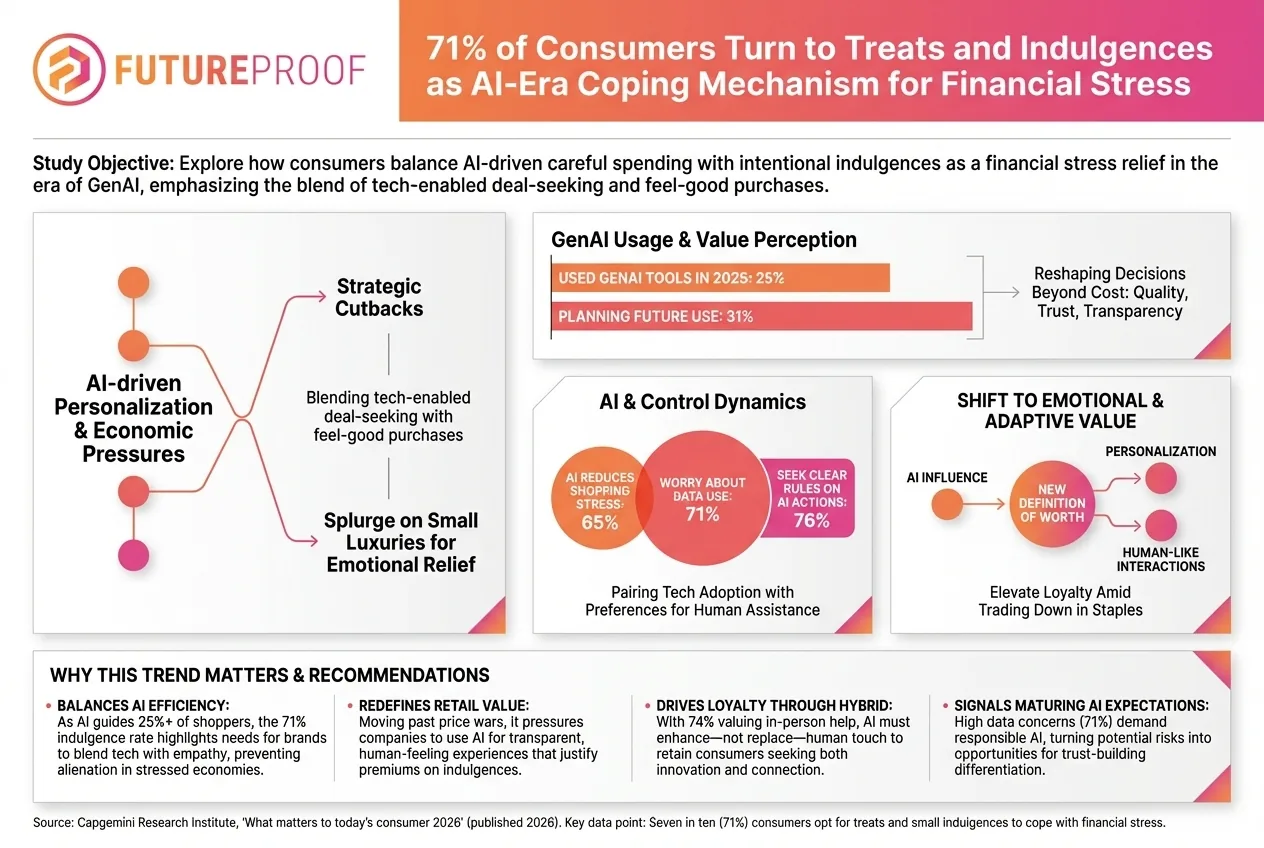
The modern consumer landscape is undergoing a profound transformation, shaped by the twin forces of economic uncertainty and technological innovation. We are witnessing a fascinating paradox: as financial pressures mount, a significant majority of individuals are not retracting entirely but rather strategically reallocating resources to bolster their emotional well-being. At the heart of this shift is the finding that a staggering 71% of consumers are turning to treats and small indulgences as a primary coping mechanism for financial stress, a crucial insight from Capgemini Research Institute’s "What matters to today’s consumer 2026." Simultaneously, artificial intelligence is rapidly redefining what value means to these same shoppers, blending a renewed emphasis on careful spending with an intentional pursuit of joy. For brands, this confluence presents both a formidable challenge and an unparalleled opportunity to forge deeper connections by designing AI-powered experiences that build trust, elevate the shopping journey, and genuinely support the emotional needs driving contemporary purchase decisions.
The Emotional Economy: Indulgence as a Coping Mechanism for Financial Stress
The statistic that 71% of consumers rely on treats and indulgences to manage financial stress is more than just a data point; it signals a fundamental recalibration of priorities in an increasingly uncertain world. This isn't about frivolous spending; it's a strategic, deeply human response to external pressures. When larger, aspirational purchases become unattainable or financially irresponsible, consumers seek solace and pockets of happiness in smaller, more accessible forms. This creates an "emotional economy" where the perceived value of a product extends far beyond its utilitarian function to encompass its ability to deliver comfort, escape, reward, or a moment of much-needed joy.
This behavior manifests as a distinct two-tiered approach to spending. On one hand, consumers are actively trading down in essentials, meticulously comparing prices, opting for private labels, or delaying necessary purchases to conserve funds. On the other hand, they are willing, even eager, to pay premiums for items that offer genuine emotional uplift, authenticity, and experiences. These indulgences are not merely luxuries; they are vital acts of self-care and resilience. What constitutes a "treat" in this new paradigm is also evolving. While traditional sweets and snacks remain popular, the spectrum has broadened to include premium coffee, artisanal chocolates, unique beauty products, small tech gadgets that enhance daily life, curated subscription boxes, or even micro-experiences like a special meal out. The common thread is their ability to provide an affordable sense of luxury, a temporary respite, or a significant emotional boost without breaking the bank. Brands operating in these spaces, from specialty food and beverage to beauty, wellness, and entertainment, are uniquely positioned to connect with consumers on a deeper level. They must understand that they are not just selling a product, but rather a feeling, an experience, a moment of reprieve. Authenticity in messaging, storytelling that resonates with emotional needs, and a clear articulation of the experiential value become paramount.
AI's Redefinition of Value: Smart Spending Meets Seamless Discovery
As consumers navigate this emotional economy, AI is simultaneously reshaping their understanding of value itself. Generative AI shopping tools are no longer futuristic concepts; they are rapidly becoming integral to the purchasing process. With 25% of consumers already leveraging these tools and a further 31% planning to adopt them, AI is establishing itself as a core component of the modern shopping journey. This signals a shift from passive browsing to active, AI-assisted discovery and decision-making.
AI redefines value in several critical ways. Firstly, it offers unparalleled personalization. Imagine an AI that understands not just your past purchases, but your mood, your stated preferences for stress relief, and your current financial context. It can recommend the perfect artisanal tea blend for a stressful evening, suggest a unique, affordable beauty product that aligns with your self-care routine, or even curate a small indulgence box tailored to your specific emotional needs – all while considering your budget. This hyper-relevant guidance saves consumers time and mental effort, making the shopping experience feel effortless and uniquely tailored. This personalization is, in itself, a form of value that traditional retail struggled to provide.
Secondly, AI enhances efficiency and convenience. From streamlined product search and comparison to intelligent deal alerts and frictionless checkout processes, AI reduces friction at every touchpoint. For consumers carefully managing their finances, AI-powered tools can optimize spending on essentials, freeing up discretionary funds for those all-important emotional treats. This "smart spending" capability, enabled by AI, allows consumers to feel more in control of their finances while still being able to indulge meaningfully. Thirdly, AI fuels discovery. It moves beyond simply showing what consumers already know they want, to proactively suggesting new brands, products, and experiences they might not have otherwise encountered. This is particularly powerful for indulgence categories, where consumers are often looking for novel ways to treat themselves. An AI assistant could introduce them to a small-batch chocolatier, a local artisan candle maker, or a unique digital experience designed for relaxation, effectively expanding their options for emotional uplift. The convergence of AI and indulgence means that brands can now leverage technology to not only identify consumers seeking emotional relief but also to precisely deliver the right, personalized "treat" at the optimal moment, transforming the act of shopping into a guided journey of self-care and discovery.
The Trust Imperative: Navigating the AI Paradox
While AI promises immense benefits, its widespread adoption also introduces a critical paradox that brands must expertly navigate: the simultaneous promise of stress reduction and the persistent specter of privacy concerns. On one hand, 65% of consumers explicitly state that AI reduces shopping stress. This reduction stems from AI’s ability to simplify complex choices, offer instant answers, automate repetitive tasks, and provide intelligent recommendations that cut through digital clutter. When implemented effectively, AI creates a smoother, more intuitive, and less overwhelming shopping environment, freeing up mental bandwidth for consumers already contending with financial anxiety.
However, this positive perception is tempered by significant reservations. A substantial 76% of consumers demand clear rules on how AI works, while 71% remain deeply concerned about data use. This signals a clear mandate for transparency and ethical deployment of AI. Consumers are willing to embrace the convenience and personalization AI offers, but not at the expense of their privacy or their understanding of how their data is being utilized. Brands cannot afford to treat AI as a black box; they must demystify its operations, clearly articulate its benefits, and establish robust data governance policies. This includes explicit consent for data collection, clear explanations of how data is used to personalize experiences, and assurances about data security. Without this transparency, the potential for AI to erode trust, rather than build it, is significant.
Furthermore, the human element remains irreplaceable "where it matters." While AI excels at efficiency, personalization, and data processing, it often falls short in areas requiring genuine empathy, nuanced problem-solving, and emotional intelligence. For complex customer service issues, highly sensitive inquiries, or situations demanding a human touch, consumers still expect and value direct interaction. Brands must strike a delicate balance: leveraging AI for automated tasks and personalized recommendations, but strategically integrating human support for moments that require a deeper connection or a more empathetic resolution. This hybrid model—tech-enabled efficiency seamlessly blended with human-centric assurance—is crucial for building enduring brand trust in the AI era. Ethical AI development, therefore, goes beyond mere compliance; it becomes a fundamental pillar of brand integrity, demonstrating a commitment to customer well-being and respect for individual autonomy.
The New Equilibrium: Crafting Experiences for the Modern Consumer
The confluence of financial stress, the pursuit of emotional uplift through indulgence, and the transformative power of AI is forging a new equilibrium in consumer behavior. This equilibrium is characterized by a strategic allocation of resources: consumers are trading down in essentials, exercising greater scrutiny over everyday spending, but simultaneously demonstrating a willingness to pay premiums for emotional uplift, authenticity, and experiences that resonate deeply. Brands must grasp this nuanced balance. The premium isn't just for a product; it’s for the feeling, the story, the connection, and the seamless, trust-filled experience surrounding that product.
For brands, this necessitates a fundamental rethinking of how they design and deploy AI. The goal isn't merely to optimize sales or streamline operations, but to design AI that genuinely builds trust, elevates the entire shopping journey, and supports the emotional needs that underpin modern purchase decisions. This means developing AI systems that are not just smart, but emotionally intelligent. Imagine AI that can detect subtle cues of stress from browsing patterns or direct feedback, and proactively suggest a personalized "comfort kit" of small indulgences, complete with curated content for relaxation. Or AI that understands the desire for authenticity, connecting consumers with small-batch producers or artisan creators whose stories resonate with their values.
The integration of tech-enabled and human-centric elements becomes paramount. AI can personalize product discovery, offer dynamic pricing relevant to individual budgets, and provide instant support for routine queries, making the purchasing process remarkably efficient. However, the human touch remains vital for fostering genuine connection. This might manifest as human customer service agents available for deeper emotional consultations, live virtual assistants offering styling advice for a celebratory outfit, or community managers facilitating shared experiences around indulgence products. The future of retail lies in creating seamless, intuitive journeys where AI handles the complexity and personalization, while human interaction provides the empathy, reassurance, and creative problem-solving that truly elevate the experience. By consciously designing AI to understand context, anticipate emotional needs, and offer transparent, trustworthy interactions, brands can move beyond transactional relationships to become invaluable partners in helping consumers navigate their financial anxieties and find moments of joy. This holistic approach, blending the best of technology with an unwavering focus on human well-being, is the key to unlocking sustained loyalty and growth in this evolving market.
Conclusion: A Call to Action for Brands in the New Consumer Era
The consumer landscape has fundamentally shifted, presenting brands with a complex yet exciting new reality. The data is clear: 71% of people are turning to treats and small indulgences to cope with financial stress, while simultaneously embracing AI as a powerful tool to redefine value and enhance their shopping experiences. This creates a fascinating paradox where consumers are meticulously cutting costs on essentials but are willing to invest in premium experiences that offer emotional uplift, authenticity, and moments of joy.
For brands, this is a clarion call to action. The future belongs to those who can master the delicate balance between technological innovation and human empathy. It demands a strategic approach to AI that transcends mere efficiency to become a cornerstone of trust, personalization, and emotional connection. Brands must consciously design AI systems that are not just intelligent, but also transparent, ethical, and respectful of consumer data. The 65% of consumers who say AI reduces shopping stress are looking for solutions that simplify their lives, but the 76% who demand clear rules and the 71% concerned about data use underscore the absolute necessity of building AI with integrity and accountability.
The opportunity for brands lies in recognizing that they are not just selling products or services, but facilitating well-being and providing essential moments of respite in challenging times. This means harnessing AI to offer hyper-personalized recommendations for treats and indulgences that truly resonate with individual emotional needs and financial contexts. It means leveraging technology to create seamless, intuitive shopping journeys that reduce stress, while always retaining a human touch for the moments that require genuine empathy and nuanced understanding. By embracing this new balance—trading down in essentials to pay premiums for emotional uplift, authenticity, and experiences that are both tech-enabled and deeply human—brands can move beyond transactional relationships. They can become trusted partners in consumers' lives, helping them navigate financial pressures while continuously discovering and savoring those small, vital moments of joy. This is the pathway to building enduring brand loyalty and achieving sustainable success in the dynamic, emotion-driven market of tomorrow.