Preparing for the Rise of AI as the New Consumer Buyer
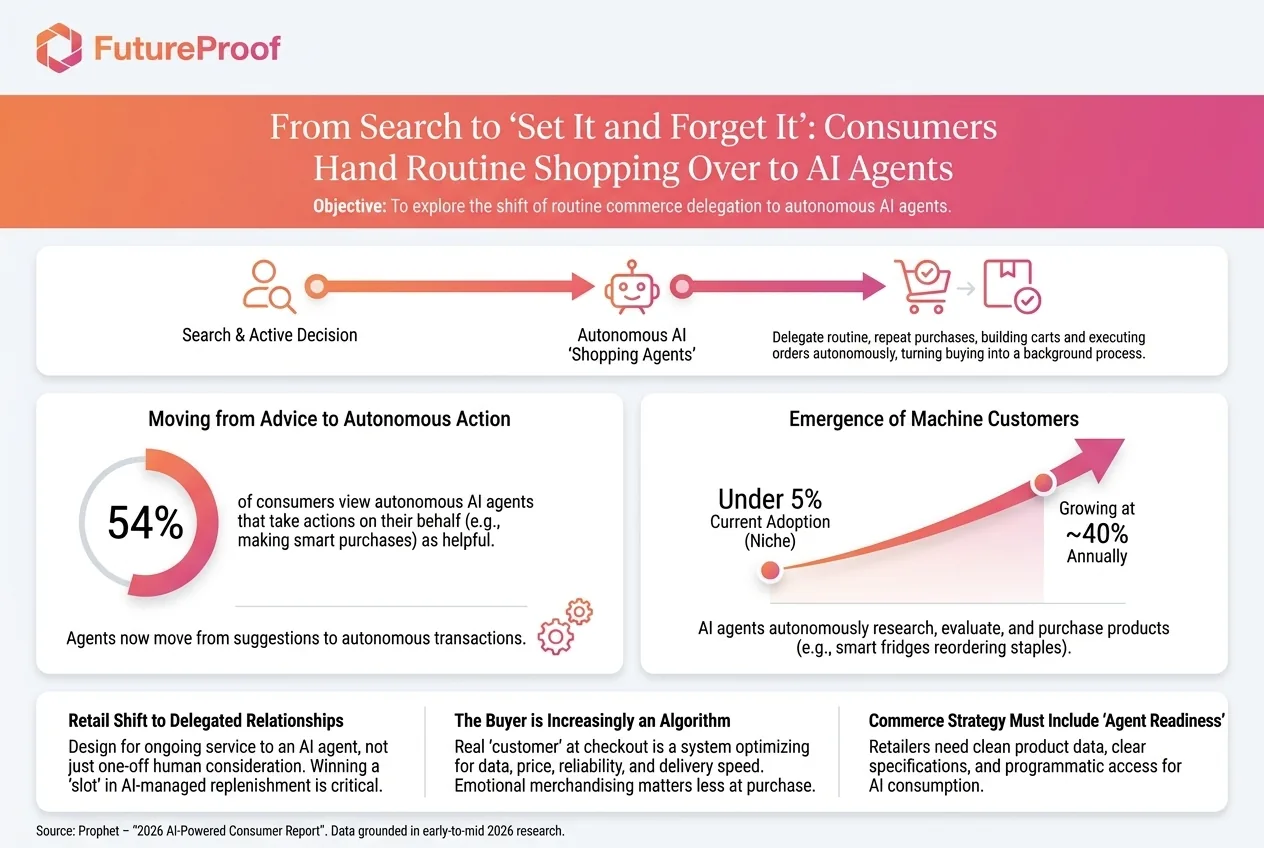
The landscape of consumer purchasing is undergoing a profound transformation, ushering in an era where artificial intelligence isn't just assisting shoppers but actively becoming the buyer. This isn't a futuristic fantasy; it's a rapidly accelerating reality where routine shopping tasks are increasingly handed over to autonomous AI agents. The traditional model of a consumer meticulously searching for individual items, comparing prices across multiple tabs, and manually adding to a cart is giving way to a more sophisticated, hands-off approach. Instead, individuals are now describing a need or a desired outcome, and an intelligent agent takes the reins, building the cart, sifting through countless options, comparing attributes, and ultimately preparing the entire order for a seamless, effortless transaction.
This seismic shift is not merely speculative; it is firmly rooted in current consumer behavior and emerging data. A compelling indicator of this trend comes from Prophet's insightful 2026 AI-Powered Consumer Report. This pivotal study revealed that a significant 54 percent of consumers already perceive autonomous AI agents – those capable of taking direct action on their behalf, such as making smart purchases – as genuinely helpful. This statistic is more than just a number; it underscores a growing willingness and trust among consumers to delegate their purchasing decisions to intelligent systems. People are no longer just interacting with AI for information; they are empowering it to act, recognizing the immense value in offloading mundane, time-consuming shopping chores. This burgeoning acceptance paves the way for AI to become an indispensable component of the daily shopping experience, fundamentally reshaping how products and services are discovered and acquired.
The omnipresence of AI assistants is no longer confined to niche tech gadgets; they are seamlessly integrating into the fabric of our digital lives. From the smartphones we carry in our pockets to the smart home devices that manage our environments, and from the sophisticated interfaces of leading retail applications to the hidden layers of our operating systems, AI is becoming an embedded presence. As these intelligent systems become more sophisticated and prevalent, the very "moment of purchase" is being redefined. It is increasingly handled not by human intuition or impulse, but by complex algorithms meticulously designed to optimize for a specific set of criteria. These algorithms prioritize clarity in product descriptions, reliability in availability, and, crucially, the presence of deeply structured and consistent product data. For brands, this represents a critical inflection point. The traditional methods of capturing consumer attention through compelling visuals or emotional storytelling, while still relevant for brand building, must now be complemented by a rigorous focus on data hygiene and algorithmic compatibility. The new buyer, in many instances, is an AI, and it speaks the language of data.
To thrive in this evolving landscape, brands must pivot their strategies to ensure their product catalogs are "agent-ready." This means going beyond mere listing and delving into meticulous data management, providing AI systems with the precise, reliable information they need to effectively recommend and purchase products. The concept of an agent-ready catalog hinges on three fundamental pillars: clean attributes, consistent availability, and transparent pricing.
Firstly, clean attributes are paramount. Imagine an AI agent tasked with finding a "waterproof running shoe for trail use, size 10, blue, with maximum cushioning." If your product data describes a shoe only as "trail runner" without specific attributes for waterproofing, cushioning level, or even a standardized color descriptor, the AI agent will simply bypass it. Clean attributes mean having meticulously defined, standardized, and consistently applied data points for every product characteristic. This includes not just obvious details like size, color, and material, but also more nuanced specifications such as compatibility with other devices, certifications, performance metrics, ingredients lists, sustainability information, and usage instructions. These attributes must be machine-readable, unambiguous, and comprehensive. They act as the very language through which AI agents understand and differentiate products. Without them, even the most innovative product remains invisible to the algorithmic buyer. Brands must invest in robust product information management (PIM) systems and adhere to industry-standard taxonomies to ensure their data is not just present but also perfectly intelligible to AI.
Secondly, consistent availability is non-negotiable. An AI agent, when tasked with fulfilling an order, is inherently designed to identify and select products that are immediately accessible and deliverable. There is no tolerance for recommending an item only for it to be out of stock, causing frustration and requiring the AI to restart its selection process. Such inefficiencies are detrimental to the user experience and, more importantly, break the trust between the AI and the brand. Brands must maintain real-time, accurate inventory data that is directly accessible and verifiable by AI systems. This means seamless integration between their e-commerce platforms, warehousing systems, and any third-party marketplaces. A product that frequently appears as "available" only to be out of stock upon attempted purchase will quickly be flagged by AI systems as unreliable, leading to its systematic exclusion from future recommendations. Consistent availability builds a reputation of dependability with the algorithmic buyer, ensuring that when an AI selects your product, it can indeed be acquired.
Thirdly, transparent pricing is critical for building trust with autonomous agents. AI systems are not swayed by flashy promotions or emotional appeals in the same way human shoppers might be. Their primary function often involves comparing options to find the best value based on defined parameters. This necessitates clear, unambiguous pricing, free from hidden fees or unexpected surcharges. AI agents will meticulously compare not just the base price but also shipping costs, taxes, and any other relevant charges to present a holistic cost. Dynamic pricing strategies must still maintain a level of clarity and predictability. If an AI agent consistently finds that a brand's quoted price differs significantly from the final checkout price, or if pricing structures are overly complex and opaque, it will learn to view that brand as untrustworthy. Transparent pricing fosters a sense of reliability and fairness, allowing AI systems to confidently present your products as viable, value-driven options to consumers. This transparency extends to discount policies and loyalty programs, which also need to be clearly structured and easily interpretable by an algorithm.
The implications of failing to make catalogs agent-ready are significant. Brands that neglect these critical steps risk becoming invisible to the very systems that are increasingly facilitating consumer purchases. An AI agent, unable to parse unclear attributes, encountering frequent stock-outs, or struggling with opaque pricing, will simply move on to a competitor whose data is structured for optimal algorithmic consumption. This isn't just about losing an individual sale; it's about being systematically overlooked by the gatekeepers of future commerce. The algorithmic buyer will develop preferences, building a "trust score" for brands based on the clarity, reliability, and consistency of their data. Brands with high trust scores will naturally be prioritized and recommended, while those with poor data hygiene will find themselves relegated to the digital shadows.
Building trust with this algorithmic buyer extends beyond mere data attributes. It involves a fundamental shift in how brands perceive their digital presence. It's about moving from an SEO strategy primarily focused on human search queries to an "AIO" (AI Optimization) strategy that caters directly to the needs of intelligent agents. This means understanding that the AI is optimizing for clarity, efficiency, and verifiable facts. Brands need to ensure their product descriptions are not just keyword-rich for human searches but also factually precise and structured for machine comprehension. This includes adopting schema markup, using standardized product identifiers (like GTINs or SKUs), and providing comprehensive metadata. The goal is to eliminate ambiguity and provide AI with all the information necessary to confidently select and present a product.
Furthermore, this shift from manual shopping to autonomous, situation-driven purchasing is accelerating at an unprecedented pace. The embedded nature of AI assistants across devices and platforms means that this mode of shopping will quickly become the default for routine and even moderately complex purchases. Consumers are actively seeking convenience, efficiency, and accurate recommendations, and AI agents are designed to deliver precisely that. The brands that proactively prepare for AI as the primary buyer are not just adapting; they are positioning themselves to lead the next phase of digital commerce. They understand that competitive advantage will increasingly stem from their ability to communicate effectively and reliably with artificial intelligence. This means investing in data infrastructure, training their teams on AI-compatible content creation, and regularly auditing their digital catalogs for agent readiness.
In conclusion, the era of AI-driven commerce is upon us, fundamentally reshaping the dynamics between consumers, brands, and the act of purchasing. The transition from human-centric to AI-centric buying for routine tasks is not a distant future but an immediate challenge and opportunity. The Prophet 2026 AI-Powered Consumer Report serves as a clear beacon, highlighting consumers' readiness to embrace autonomous agents for smart purchases. As AI assistants become the ubiquitous arbiters of product selection, brands face an imperative to transform their digital storefronts. The future belongs to brands that cultivate "agent-ready" catalogs, characterized by impeccable data hygiene, clean and comprehensive product attributes, consistent availability, and transparent pricing. These are the foundational elements that build trust with the algorithmic buyer. By prioritizing these aspects, brands will not only ensure their visibility in the AI-powered marketplace but will also cement their leadership position in the burgeoning landscape of autonomous digital commerce. The time to prepare for AI as your most important buyer is now; those who lead this charge will undoubtedly define the success stories of tomorrow's retail environment.