AI Driven Commerce and the Collapse of the Traditional Shopping Funnel
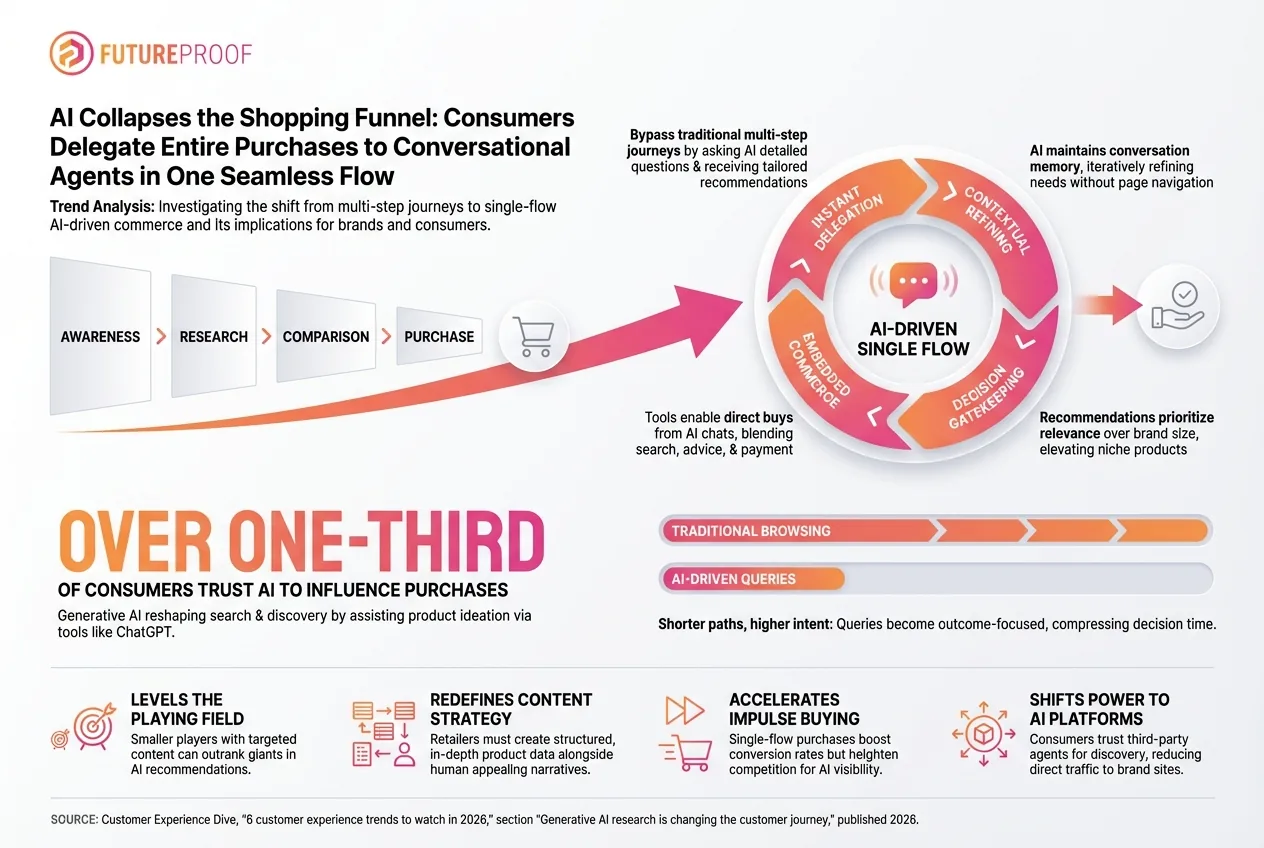
The retail landscape is undergoing a profound and irreversible transformation, a shift driven by the accelerating capabilities of artificial intelligence. For decades, the traditional shopping funnel served as the bedrock of consumer journeys: awareness, interest, desire, action. Consumers navigated a multi-step process, browsing countless pages, comparing products across various sites, reading reviews, adding items to carts, and finally clicking through multiple screens to complete a purchase. This established paradigm, once sacrosanct, is now collapsing under the weight of AI’s efficiency and personalization, giving way to a new era of single chat-driven purchases that promise unparalleled convenience and immediate gratification.
No longer is the consumer journey a protracted expedition across numerous digital touchpoints. Instead, it has distilled into a streamlined, conversational interaction with an AI agent. Imagine a shopper needing a new pair of running shoes. In the traditional model, they might visit several brand websites, filter by size and type, read product descriptions, check reviews on third-party sites, and then return to a preferred retailer to finalize the purchase. In the AI-driven future, this entire complex process collapses into a dynamic dialogue. The shopper asks an AI agent a detailed question, perhaps "I need lightweight running shoes for marathon training on asphalt, I overpronate slightly, and my budget is around $150." The AI agent, leveraging vast datasets and sophisticated algorithms, doesn’t just return a list of products; it engages in a conversation. It might ask follow-up questions: "Do you have a preferred brand or color?" or "What's your current shoe size, and have you experienced any specific issues with past shoes?" Through this iterative refinement, the AI understands the user's nuanced needs, receiving tailored options that precisely match their criteria, complete with rich media and specifications. Crucially, the entire transaction, from initial inquiry to final payment, is completed within this single conversational flow. This seamless, integrated experience marks the definitive end of fragmented shopping journeys and ushers in an era where discovery, comparison, and purchase converge into a single, intuitive interaction.
This radical shift fundamentally redefines how brands compete for consumer attention and loyalty. In the traditional funnel, marketing budgets often dictated visibility, with larger brands dominating search results and ad placements. Brand recognition, historical trust, and extensive advertising campaigns were paramount. However, in the AI-first commerce environment, the rules of engagement are different. AI recommendations prioritize precision and relevance above all else. The algorithms are designed to deliver the best possible match for a user’s expressed and inferred needs, not simply the most popular or heavily advertised product. This leveling of the playing field means that niche products, which might once have struggled to gain traction against marketing behemoths, now have a significant advantage. If a smaller brand offers a highly specialized product with strong, meticulously structured data and exceptionally clear use case content, it can and often will outrank larger, more generic brands. The AI agent, focused on utility and fit, will recommend the product that most accurately fulfills the user's specific query, irrespective of the brand's overall market share or advertising spend. Brands must now demonstrate not just their existence, but their exact relevance to specific, granular consumer needs, supported by robust, machine-readable product information.
The very infrastructure of online shopping is also evolving at breakneck speed. We are witnessing the pervasive emergence of embedded commerce, exemplified by features like Instant Checkout. This means the entire journey – from the moment a consumer expresses a need or interest to the final confirmation of payment – is happening inside conversational interfaces. Whether it's a chatbot on a brand's website, a virtual assistant on a smart device, or an AI agent embedded within a social media platform or a third-party discovery tool, the purchase is no longer relegated to a separate, dedicated e-commerce site. The AI agent facilitates the dialogue, presents the choices, and then enables the payment directly within the chat window. This drastically reduces friction points, eliminates cart abandonment stemming from complex checkout processes, and provides an unparalleled level of convenience. For consumers, it’s about instant gratification; for businesses, it’s about maximizing conversion rates by removing every conceivable barrier between intent and action. The integrity and security of these embedded payment systems are paramount, driving innovation in secure, single-click purchasing within diverse digital environments. This evolution demands a re-evaluation of security protocols, payment gateway integrations, and data privacy practices to ensure trust in these omnipresent transaction points.
For retailers, the implications of this seismic shift are immediate and profound. The era where human-facing storytelling and compelling ad copy alone could drive sales is waning. While powerful narratives will always resonate, they must now be underpinned by an equally robust, if not more critical, foundation: structured, rich product data. This data is the lifeblood of AI-driven commerce. It includes detailed specifications, material composition, dimensions, compatibility information, user manuals, warranty details, customer reviews parsed for sentiment, and high-quality images and videos tagged with comprehensive metadata. Every attribute that a consumer might inquire about, every edge case, every specific scenario, must be cataloged and presented in a machine-readable format. Brands optimized for AI parsing will be the undisputed winners in this new landscape. Their products will be accurately understood, correctly categorized, and precisely recommended by AI agents, securing those high-intent moments when a consumer is actively looking to solve a problem or fulfill a need.
Consider the competitive advantage: a brand with meticulously detailed product data, explaining not just what a product is, but how it solves specific problems and for whom, will inherently be favored by AI algorithms. These algorithms can process and interpret this structured information with incredible speed and accuracy, translating it into relevant recommendations. Conversely, brands with incomplete, inconsistent, or poorly structured data will effectively become invisible to these powerful AI agents, regardless of their brand equity or marketing budget. Decision cycles for consumers are shortening dramatically. The laborious research phase is largely absorbed by the AI agent, which processes vast amounts of information and presents curated options almost instantaneously. Discovery no longer primarily begins on a brand's own website or through generic search engines; it starts inside third-party AI agents, virtual assistants, and conversational platforms. This mandates a strategic pivot: brands must ensure their product information is optimized not just for human readability, but for AI comprehensibility, anticipating the myriad ways an AI might interpret and present their offerings. This shift requires investments in data science, product information management (PIM) systems, and content management systems (CMS) that are built for multi-channel, AI-first distribution.
A compelling data point underscores the urgency of this transformation: over one-third of consumers say they trust AI to influence their purchases. This statistic, highlighted by Customer Experience Dive in their "6 customer experience trends to watch in 2026," is not merely a passing trend; it signifies a fundamental shift in consumer behavior and perception. The trust in AI stems from its ability to process information beyond human capacity, to personalize recommendations with uncanny accuracy, and to simplify complex decisions. Generative AI, in particular, is reshaping search and discovery by moving beyond keyword matching. It understands intent, synthesizes information from diverse sources, and generates novel solutions or product bundles tailored to individual preferences. It’s no longer about finding a needle in a haystack; it’s about the AI agent building the ideal needle specifically for you, based on your implicit and explicit cues. This growing consumer trust validates the shift towards AI-driven commerce and signals that brands and retailers must adapt or risk obsolescence. Those who embrace AI as a trusted advisor, rather than just a tool, will unlock unprecedented opportunities for engagement and sales.
To thrive in this AI-first retail future, brands and retailers must embark on a multi-faceted strategic overhaul. Firstly, invest heavily in robust Product Information Management (PIM) systems. These systems are essential for centralizing, standardizing, and enriching product data with every conceivable attribute, ensuring it is comprehensive, accurate, and machine-readable across all digital touchpoints. This means going beyond basic descriptions to include detailed material compositions, ethical sourcing data, environmental impact metrics, comprehensive FAQs, usage scenarios, and troubleshooting guides. Secondly, develop clear, concise, and compelling use case content. Brands must articulate not just what their product is, but how it solves specific problems for specific customer segments, anticipating the kind of detailed questions an AI agent will field. This content needs to be optimized for both human understanding and AI parsing, leveraging semantic markup and structured data formats like Schema.org. Thirdly, cultivate a deep understanding of natural language processing (NLP) and conversational design. Brands need to anticipate how consumers will phrase their queries to AI agents and ensure their product data and content are structured to provide optimal responses. This also involves exploring partnerships with third-party AI platforms and conversational commerce providers to ensure product visibility and seamless integration.
Furthermore, retailers must reassess their entire customer journey mapping. The focus needs to shift from directing traffic to owned websites towards optimizing for discovery and purchase within third-party AI interfaces. This means rethinking traditional SEO to encompass "AI-centric optimization," where the goal is to be recommended by intelligent agents rather than just ranked by search engines. Embrace embedded commerce solutions and instant checkout capabilities, ensuring that transactions are frictionless and secure regardless of the platform. Finally, build trust with AI by being transparent about data usage and ensuring ethical AI practices. As consumers increasingly rely on AI for purchasing decisions, their trust in the underlying technology and the brands it recommends will become paramount. The collapse of the traditional shopping funnel is not merely a technological upgrade; it is a fundamental redefinition of commerce. The brands and retailers that proactively adapt to this AI-driven, single-chat paradigm, prioritizing rich data, precision, and seamless conversational experiences, are the ones that will capture the imagination and wallets of the next generation of consumers. This is not a future possibility, but a present imperative, demanding immediate and decisive action to secure a winning position in the evolving retail ecosystem.